


On January 5, the NMPA website showed that repotrectinib capsules, licensed by Zai Lab from Bristol Myers Squibb (BMS), were approved in China for a new indication: treatment of adult patients with solid tumors harboring neurotrophic tyrosine receptor kinase (NTRK) gene fusions whose disease is locally advanced or metastatic, or for whom surgery would likely cause severe complications, and who have progressed after prior treatment or have no satisfactory alternative treatment options. This indication had previously been granted priority review by the CDE.
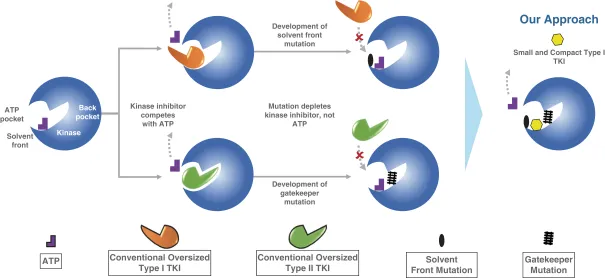
Repotrectinib is a next-generation tyrosine kinase inhibitor (TKI) that targets the oncogenic drivers ROS1 and NTRK. Patients with ROS1- or NTRK-fusion solid tumors, including non-small cell lung cancer (NSCLC), often develop resistance mutations after currently approved targeted therapies, limiting drug-target binding and ultimately driving tumor progression. Repotrectinib was uniquely designed as a next-generation ROS1/NTRK TKI to improve the durability of benefit, including in the brain.
In July 2020, Zai Lab entered into an exclusive licensing agreement worth US$176 million with Turning Point, which was later acquired by BMS, obtaining exclusive development and commercialization rights to repotrectinib in Greater China.
Outside China, repotrectinib has been approved by the FDA and the European Medicines Agency for two indications: treatment of adults with locally advanced or metastatic ROS1-positive NSCLC, and treatment of adults and children aged 12 years and older with NTRK-positive locally advanced or metastatic solid tumors.
The U.S. approval of repotrectinib for NTRK-positive solid tumors was based on positive results from the Phase I/II TRIDENT-1 study, which evaluated efficacy in adults with NTRK-positive solid tumors. The study enrolled 40 TKI-naive and 48 TKI-pretreated patients with NTRK-positive solid tumors across 15 different cancer types. The primary endpoint was objective response rate (ORR).
Results showed a confirmed ORR of 58% in TKI-naive patients, with median duration of response (mDOR) not yet reached, and a confirmed ORR of 50% in TKI-pretreated patients, with an mDOR of 9.9 months.
At the 2025 European Society for Medical Oncology (ESMO) Congress, BMS presented updated TRIDENT-1 data with a September 3, 2024 data cutoff. Median follow-up was 33.6 months in the TKI-naive cohort (n=60) and 29.6 months in the TKI-pretreated cohort (n=87), with NSCLC being the most common tumor type.
In the TKI-naive cohort, confirmed ORR was 58%; mDOR and progression-free survival (PFS) were not estimable; and median overall survival (OS) was 55.6 months. Among patients with measurable intracranial lesions confirmed by blinded independent central review (BICR) at baseline (n=4), intracranial ORR was 50%.
In the TKI-pretreated cohort, confirmed ORR was 52%; mDOR, PFS, and OS were 9.6 months, 7.4 months, and 16.9 months, respectively. Among patients with measurable intracranial lesions at baseline by BICR (n=8), intracranial ORR was 63%. In patients previously treated with a TKI and harboring solvent-front mutations (n=32), confirmed ORR was 50%.
In terms of safety, the most common treatment-related adverse event was dizziness, occurring in 58% of patients; grade 3 or higher treatment-related adverse events occurred in 30% of patients.
In China, repotrectinib first received NMPA approval in May 2024 for adults with locally advanced or metastatic ROS1-positive NSCLC. In the 2025 Chinese Society of Clinical Oncology (CSCO) Guidelines for Non-Small Cell Lung Cancer, repotrectinib was upgraded to a Category 1 recommendation for both first-line and second-line treatment of stage IV ROS1 fusion-positive NSCLC. This is the second approved indication for repotrectinib in China.

