


"Zhejiang Second Eye Center" recently reported that Professor Yao Ke has performed another first-in-China intraocular lens implantation surgery.
69-year-old Aunt Guo had been suffering from eye fatigue in recent years, to the point where she sometimes struggled to keep her eyes open when feeling unwell. More troubling was her increasingly severe double vision.
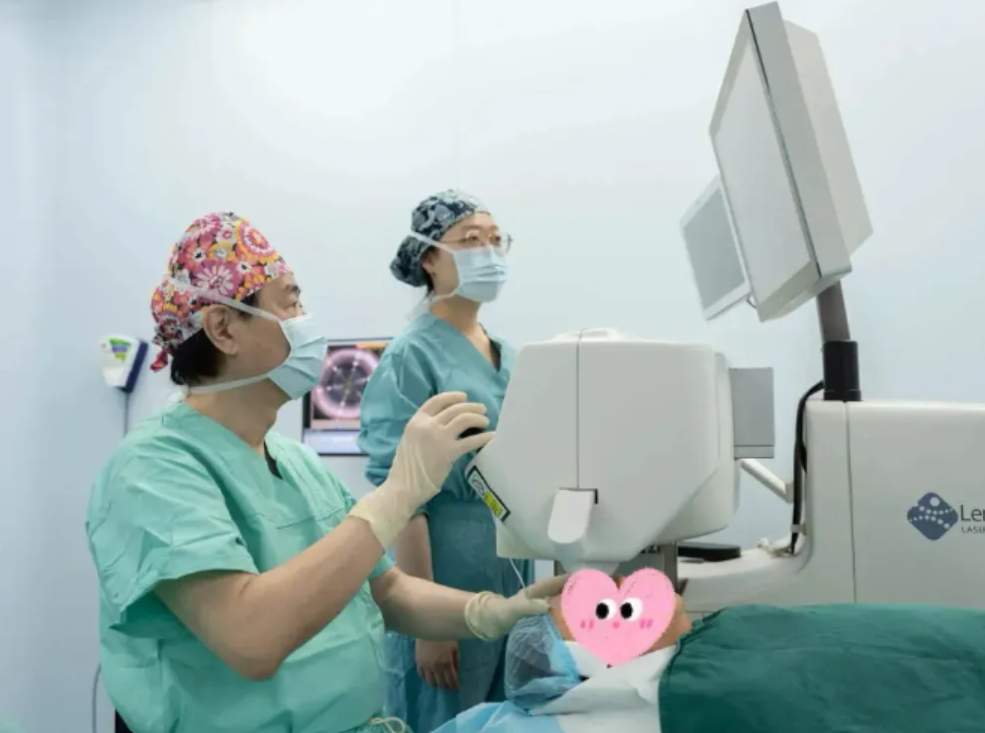
Fig.1 Professor Yao Ke (first from left) performing femtosecond laser-assisted surgery / Image credit: Zhejiang Second Eye Center
Fearing her condition might worsen rapidly, Aunt Guo sought treatment at the Eye Center of Binjiang Campus, the Second Affiliated Hospital of Zhejiang University School of Medicine.
After examination, the outpatient doctor noted that the patient had relatively severe cataracts in both eyes, along with hyperopia (farsightedness) and presbyopia (age-related vision decline), and that surgery was necessary.
59-year-old Aunt Jin had a similar condition. Despite wearing reading glasses, her near vision remained poor, and her left eye experienced significant double vision at night.
"Neither patient had extremely hardened cataract nuclei, but the cortex was severely clouded, and the double vision was already affecting their daily lives. The goal was to completely resolve this issue. Since their post-surgery lifestyle would primarily involve mid-to-long distance vision… the procedure needed to restore clear distance and intermediate vision. Given their good retinal condition, we considered implanting functional intraocular lenses," explained Professor Yao Ke.
He recommended that both Aunt Guo and Aunt Jin undergo surgery with a new extended-depth-of-focus (EDOF) intraocular lens made of advanced materials. According to the "Zhejiang Second Eye Center" report, these were the first two such cases in China.
On the morning of June 12, in the operating room on the fourth floor of Zhejiang University Eye Hospital, Professor Yao performed the surgeries on both patients. This marked another breakthrough in refractive cataract surgery following this year’s National Eye Care Day. The procedure utilized the world’s most advanced femtosecond laser-assisted cataract surgery technology and was completed smoothly, with significant postoperative recovery.Professor Yao likened each first-in-China implantation of a new intraocular lens to "test-flying a new fighter jet into uncharted airspace."
"I enjoy taking the lead in experimentation and exploration—first, because I have confidence in my experience and surgical skills, but also because I approach it as a challenge. For instance, determining which type of lens is most suitable for which patient is crucial. I hope my clinical practice can provide valuable insights for other experts and young scholars," said Professor Yao.
It is reported that Professor Yao’s team has spent years researching embryonic stem cell-directed differentiation and hybrid carrier materials to regenerate intraocular lenses in animal models. This breakthrough may eventually address the challenges of treating congenital cataracts in children.
Public records show that Professor Yao is an academician of the International Academy of Ophthalmology (AOI) and serves as the Chair of the Scientific Committee for the 40th World Ophthalmology Congress (WOC2026). He has long been dedicated to advancing global academic exchange and collaboration in eye health and enjoys a prestigious reputation in the international ophthalmology community.
On October 19, 2024, Professor Yao was awarded the Taishan Award for Value-Based Healthcare—Public Service Honor, in recognition of his leadership in establishing the "Mobile Eye Hospital," one of China’s "earliest-initiated, longest-running, and most widely beneficial" gold-standard public welfare projects.
Since its inception, Professor Yao and his team have traveled tirelessly through mountainous regions, remote islands, and border deserts, covering hundreds of thousands of kilometers. They have provided free eye examinations to over 100,000 people and performed more than 10,000 free sight-restoring surgeries.
After receiving the Taishan Award, Professor Yao attended the ceremony and delivered an acceptance speech: "In the future, the 'Mobile Eye Hospital' will continue its journey, benefiting more patients. At the same time, I hope to pass on its technology and philosophy to more doctors, bringing light to even more people."
It is worth noting that this year’s Taishan Award has restructured its categories, merging the former Public Health Award, Public Service Honor, and Medical Journalism Award into a single "Public Service Award." This recognizes contributors in Greater China (including Hong Kong, Macau, and Taiwan) who have significantly improved public health by advancing medical awareness, promoting health policy innovation, and supporting medical science or public health initiatives—all aligned with the principles of value-based healthcare.

