


China’s biopharmaceutical clinical research entered a phase of rapid expansion in 2025. Annual registered clinical trials reached 5,200+, with nearly 3,000 new drug clinical trials representing 18% year-over-year growth. Class 1 innovative drug trials accounted for more than 72% of new drug trials, while cell and gene therapy trials reached 149, growing nearly 30% year-over-year. Behind these numbers lies an accelerating shift in Chinese biopharmaceutical innovation, from research quantity to clinical value. Yet uneven distribution of clinical research resources, inefficient patient recruitment, friction in intra-hospital coordination, and gaps between preclinical evidence and human efficacy are increasingly real obstacles as innovative drugs move from the laboratory to the patient.
“The factor that most affects real progress is not necessarily a single link.” At the 5th Biomedical Industry Chain China (BIC China) conference, MedJ Drug Innovation sat down with Dr. Xuhui Bao — Principal Investigator (PI) at the Cancer Center of Fudan University-affiliated Pudong Hospital, Adjunct Professor at Duke University School of Medicine, and Global Clinical Research Scholar at Harvard Medical School — for a deep-dive on how innovative drugs can cross the clinical-translation “last mile.”
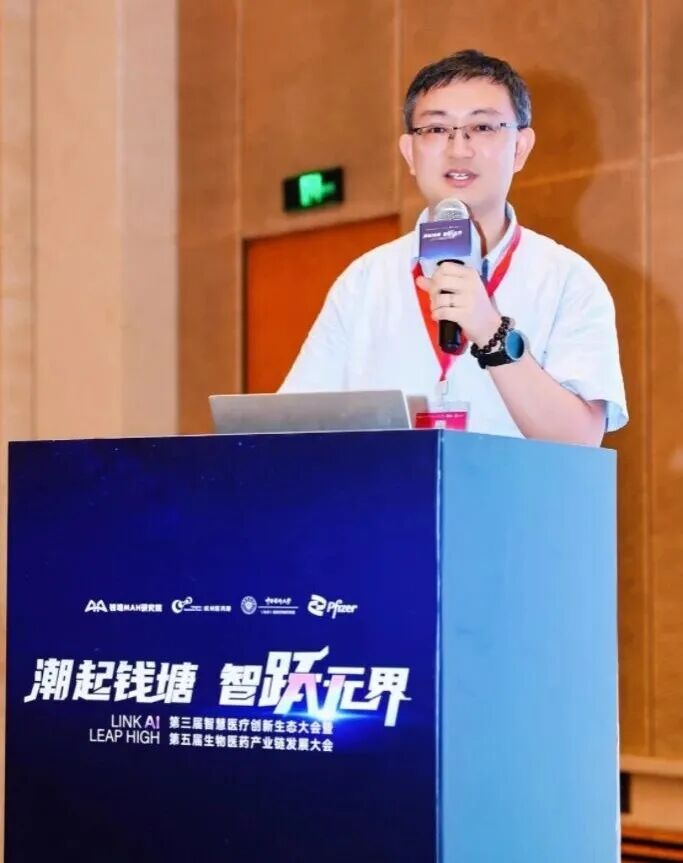 Fig.1.Dr. Xuhui Bao
Behind 5,200+ Clinical Trials, the Real “Last Mile” Is System Coordination
Over the past decade, China’s clinical research capacity has grown rapidly, but a gap remains between “having a study completed" and "patients having access to it.”
Dr. Bao frames this gap as the “last mile.” In his view, it is not a single step in CMC, ethics review, or patient recruitment, but a complete system-transformation process — from a research protocol becoming implementation-ready, through stable enrollment and standardized execution, to the formation of an accessible therapy. For complex modalities such as cell and gene therapies, a project entering the clinic requires coordinated participation from medical, ethics, research, and management departments.
“Each individual link is actually performed well, so why does the whole coordination system struggle to function? It may be an interface problem,” he explained. Scientific review, ethics review, and clinical execution resemble different interfaces along a pipeline; even a “one-millimeter deviation” at any one stage can ultimately shape the trajectory of the entire project.
“The ‘last mile,’ in my view, is not a single link as many assume, but a process-standardized system composed of many small links,” Dr. Bao said. Only when these links are truly connected can innovative drugs ultimately benefit more patients. Accordingly, the next competitive phase in clinical research capacity may no longer be “who runs more projects” but “who can most rapidly establish a more stable, efficient, and compliant clinical research system.”
Animal-Model “Cures” Do Not Equal Patient Benefit — Pre-Clinical Evidence Chains Need Careful Scrutiny
The leap from laboratory to human studies is among the hardest in innovative drug R\&D, and animal experiments are particularly prone to overreach. A candidate therapy that excels in mice or even non-human primates may still face efficacy shortfalls or safety issues once it enters humans.
Dr. Bao does not advocate simply dismissing animal experiments; their existence, he notes, is well supported by decades of development. However, he emphasizes that before running an animal study, investigators must first answer a question: how closely does this experimental model approximate real patients?
“In our early research we need to consider, when we eventually return to the clinic, what kind of patient we will face and under what conditions the benefit will be greatest and the risk the smallest,” he said.
In oncology, for example, tumor status in some animal models diverges sharply from that of real-world patients. Experimental animals may be treatment-naive models with relatively uniform backgrounds, while real-world cancer patients have typically already received first-, second-, or even multi-line therapy — a fundamentally different biological environment.
For cell therapy, this “from model back to patient” reasoning matters even more. Researchers in cell therapy may track cell expansion kinetics and phenotypic changes after infusion as indicators that the therapy is working, yet for solid tumors, expansion in blood does not guarantee trafficking into the tumor; even when cells do reach the tumor, additional evidence is required to demonstrate meaningful tumor-killing activity.
Accordingly, evaluating a new therapy, in Dr. Bao’s view, should not focus on whether animal experiments look “beautiful,” but on whether the entire evidence chain is complete. Tumor heterogeneity must also be factored in: within a single tumor, target expression can vary markedly across regions, and the uniformly high target expression seen in animal models cannot be simply replicated in patients.
This is also his basic attitude toward emerging preclinical tools such as organoids and AI: the goal is not to use new tools to replace old ones, but to make research models more faithful to real clinical conditions and to weave different evidence components into a more complete chain.
Nearly Half of Resources Concentrated in Beijing and Shanghai — Clinical Research Still Needs to Expand Its “Network”
If preclinical research faces “the distance between model and real patient,” then clinical research faces “the distance between resources and patients.”
In 2025, China recorded nearly 3,000 new drug clinical trials and 149 cell and gene therapy trials, yet lead study sites (Group PI institutions) remained heavily concentrated in a few developed regions: Beijing ~27.4%, Shanghai ~18.6%, with the two cities together accounting for nearly half.
The more fundamental issue, however, is structural imbalance in high-quality clinical research capacity. Some leading teams shoulder large numbers of projects, Dr. Bao noted, while other hospitals — even those already possessing patient resources and research conditions — cannot fully take on these studies because of gaps in research-team maturity, reputation, or infrastructure.
This structural imbalance is particularly visible in oncology. As the number of new oncology drugs grows rapidly, the same mutation or disease subtype may correspond to multiple concurrent trials, and at some centers multiple projects compete for the same pool of patients. Meanwhile, qualified hospitals elsewhere may have underutilized research capacity.
The solution, Dr. Bao believes, is not simply to add more research institutions, but to consider building a larger clinical research network — expanding the network of high-quality clinical research, training more mature PIs and research teams, and using regional collaboration to achieve better resource allocation.
He has discussed patient-recruitment mechanisms with U.S. colleagues. Within the Harvard Medical School and affiliated hospital system, once a patient enters the core care system, the system matches potential clinical studies to the patient’s condition, and the primary physician helps connect the patient with the relevant PI for further evaluation. This model then radiates from the core hospitals outward across greater Boston, Massachusetts, and the broader United States.
By comparison, Dr. Bao suggested that China’s compact medical alliances and county-level medical groups could become the infrastructure to push clinical research networks further down into the system.
Building a network, however, is not simply a matter of linking hospitals. Are primary physicians aware of ongoing clinical studies? How are patient referrals handled? How is patient trust and participation cultivated? Who shoulders the additional workload? These are all practical questions that remain to be addressed.
“Development cannot happen overnight,” Dr. Bao said. The U.S. clinical research infrastructure has been built since before and after the Second World War, accumulating over nearly a century. China can gradually develop a clinical research network suited to its national conditions through policy, legislation, and medical-education-research coordination.
The Doctor Has a Good Idea — Then What?
Beyond clinical research networks, a deeper question is: who completes the translation from clinical problem to innovative product?
Dr. Bao turns the spotlight on the “physician-scientist.” Physicians carry both clinical duties and research responsibilities, a heavy load. A mature physician-scientist system needs to provide young clinicians talent with sustained support, sufficient time, and tolerance for failure, so they can accumulate continuously rather than being pushed to switch identities every few hours within a finite 24-hour day. “Letting each person play to their strengths and find their own growth path — that is the key.”
But giving physicians more room to grow is not enough on its own, because “translation is not a solo effort; it requires systemic support.” From idea to patent application, intellectual property rights, technology transfer, corporate partnering, and product development, a single protocol passes through multiple distinct professional stages.
He cited CAR-T translation as an example, noting that top PIs such as Steven Rosenberg are typically backed by large, specialized translation teams — “these teams fight as a system, bringing together the strongest talent in each area rather than requiring one person to do everything from start to finish.”
In Dr. Bao’s vision, clinical research, regional medical networks, real-world data, AI and big-data analytics, and professional technology-transfer systems are far from isolated modules. Large real-world patient datasets can help investigators optimize inclusion-exclusion criteria and reduce unnecessary trial risk; regional collaboration can match patients with studies more efficiently; a professional translation team can move clinical problems further toward product development and ultimate clinical use.
Closing
For innovative drug translation, this may also be the simplest answer to “how to bridge the ‘last mile’”: innovation does not end with a discovery in the laboratory, nor with a positive result in a clinical trial. Only when evidence, talent, hospitals, industry, regulators, and patients are truly linked can innovative drug translation cross the final step from “being discovered” to “being used.”

