


Xi'an People's Hospital (Xi'an Fourth Hospital) has successfully performed a cesarean section on a patient with an extremely rare case of simultaneous double uterine pregnancy, delivering healthy twins—a boy and a girl. The procedure was led by Chief Physician Ying Cai and her medical team. A case report detailing the delivery has been published in the Chinese Journal of Perinatal Medicine, attracting significant attention from MedJ.
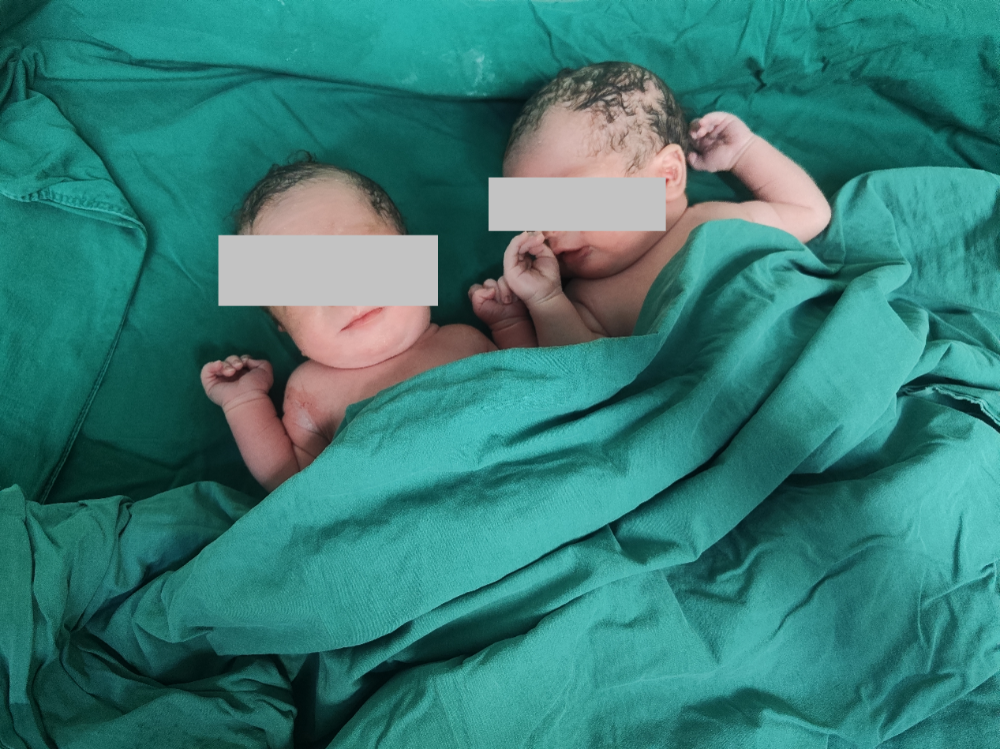
The successful delivery of twins from a spontaneous pregnancy in both uteri of a didelphys uterus. / Image credit: Interviewee
The 30-year-old patient was diagnosed with congenital reproductive tract anomalies, including a double uterus, double cervix, and vaginal septum. Such structural abnormalities occur in only 0.01% to 0.3% of women, with very few documented cases worldwide of natural conception and full-term simultaneous pregnancy in both uteri. Dr. Ying Cai remarked, "This situation is comparable to winning the top prize in the lottery."
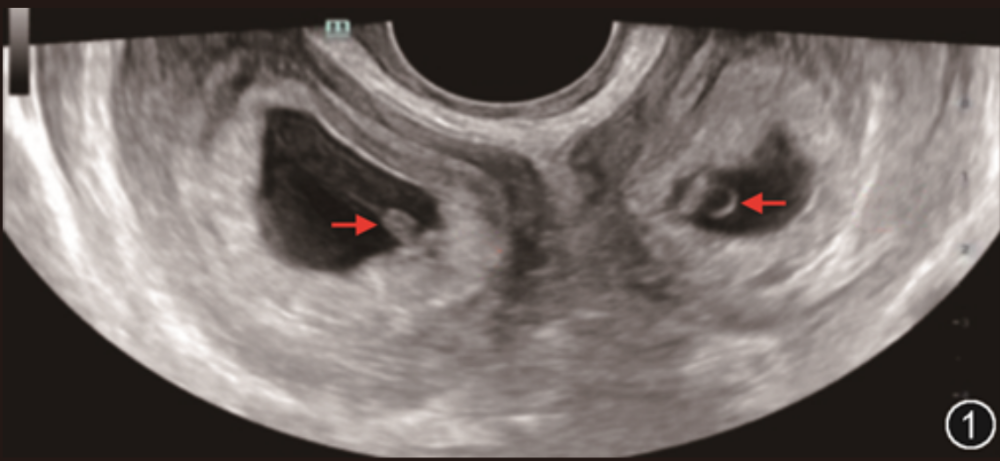
Ultrasound image from Ms. Li at 5 weeks and 6 days of pregnancy shows one gestational sac in each uterine cavity (left and right), both containing a yolk sac (arrow), embryonic bud, and cardiac activity. / Image credit: Interviewee
The patient had experienced a previous adverse pregnancy outcome, with an intrauterine fetal death occurring at 27 weeks. This pregnancy was further complicated by antiphospholipid syndrome, which classified it as high-risk. Given the complex anatomical conditions and comorbidities, Dr. Cai’s team developed a stringent individualized management plan, which included anti-immune therapy, heparin anticoagulation, and strict weight and nutrition control. Throughout the pregnancy, the patient’s weight gain was limited to 14 kilograms, with no occurrence of common complications such as gestational hypertension or diabetes.
At 37 weeks and 1 day of gestation, after comprehensive evaluation, the team decided to proceed with a planned cesarean section. Due to the abnormal uterine development and reduced intrauterine space, coupled with one fetus being in cephalic presentation and the other in breech, vaginal delivery was deemed extremely high-risk. During the surgery, transverse incisions were made on both uteri, successfully delivering the boy (3.26 kg) and a girl (2.4 kg). The team effectively managed challenges including uterine atony and significant bleeding, ensuring the safety of both the mother and newborns.
Dr. Cai emphasized that the success of this case relied on standardized pregnancy management, particularly weight control and complication prevention. She noted that such rare cases represent emerging challenges in modern obstetrics, requiring a return to clinical fundamentals and the implementation of personalized diagnosis and treatment strategies to "turn difficulty into ease."
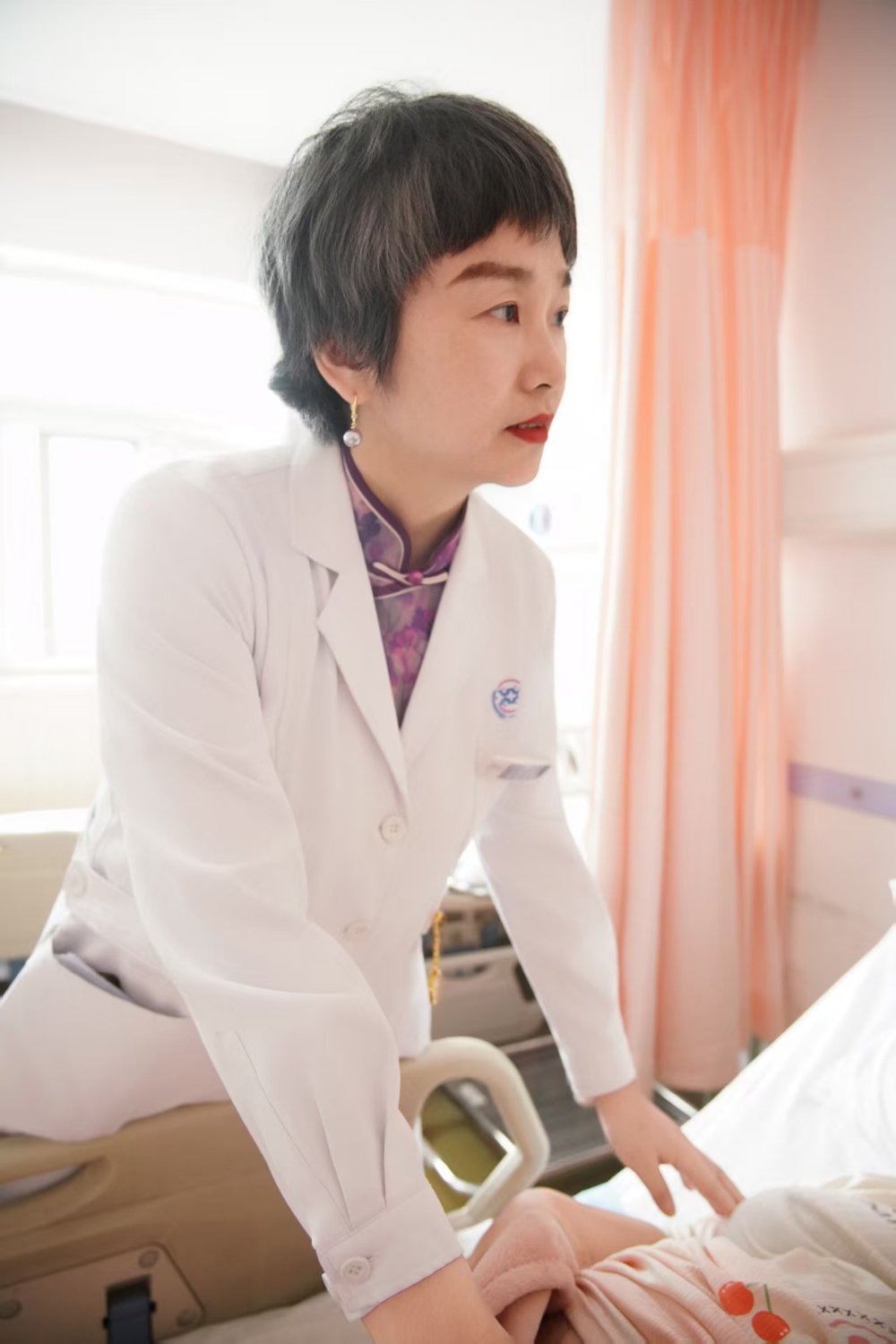
Dr.Cai/Image credit: Interviewee
The mother and twins are in good condition and were discharged on the fourth day after delivery. This case offers valuable experience for managing similar complex obstetric conditions in the future.
Reference
1. Lan, X., et al. (2025). Successful delivery of a simultaneous dichorionic diamniotic pregnancy in a didelphys uterus: A case report.Chinese Journal of Perinatal Medicine, *28*(6), 520–522. https://doi.org/10.37690/cma.j.cn113903-20241112-00753
2. Chinese Society of Perinatal Medicine. (2020). Expert consensus on diagnosis and management of obstetric antiphospholipid syndrome. Chinese Journal of Perinatal Medicine, *23*(8), 517–522. https://doi.org/10.3760/cma.j.cn113903-20200402-00299
3. Wu, W., et al. (2017). Research progress on weight control during pregnancy. Chinese Journal of Obstetrics & Gynecology and Pediatrics, *13*(3), 369–372. https://doi.org/10.3877/cma.j.issn.1673-5250.2017.03.023

