


In December 2024, a 35-year-old traffic police officer, Mr. Liu, from Fuyu City, Jilin Province, suffered a severe spinal cord injury in a traffic accident, resulting in complete loss of sensation and movement from the neck down. Had he not participated in a cutting-edge clinical trial for a "Spinal Cord Neural Interface" at the Second Hospital of Jilin University (hereinafter "JLU Second Hospital"), he might have spent the rest of his life bedridden. In early October, JLU Second Hospital announced that a team led by Dr. Minfei Wu, Vice President of the hospital and Chief Physician of Spinal Surgery, had, for the first time globally, utilized a spinal interface for precise neural modulation to restore voluntary walking ability in a patient with high-level quadriplegia.
"Less than a year post-surgery, the patient's recovery has far exceeded our expectations. He continues to improve and shows signs of neural function remodeling," Dr. Wu told MedJ. It is understood that because nerve fibers cannot regenerate, spinal cord injury treatment has long been a "century-old challenge" in medicine. Treating quadriplegia is far more difficult than treating paraplegia. Therefore, the innovative breakthrough by the JLU Second Hospital team is expected to open a new chapter in spinal cord injury treatment.
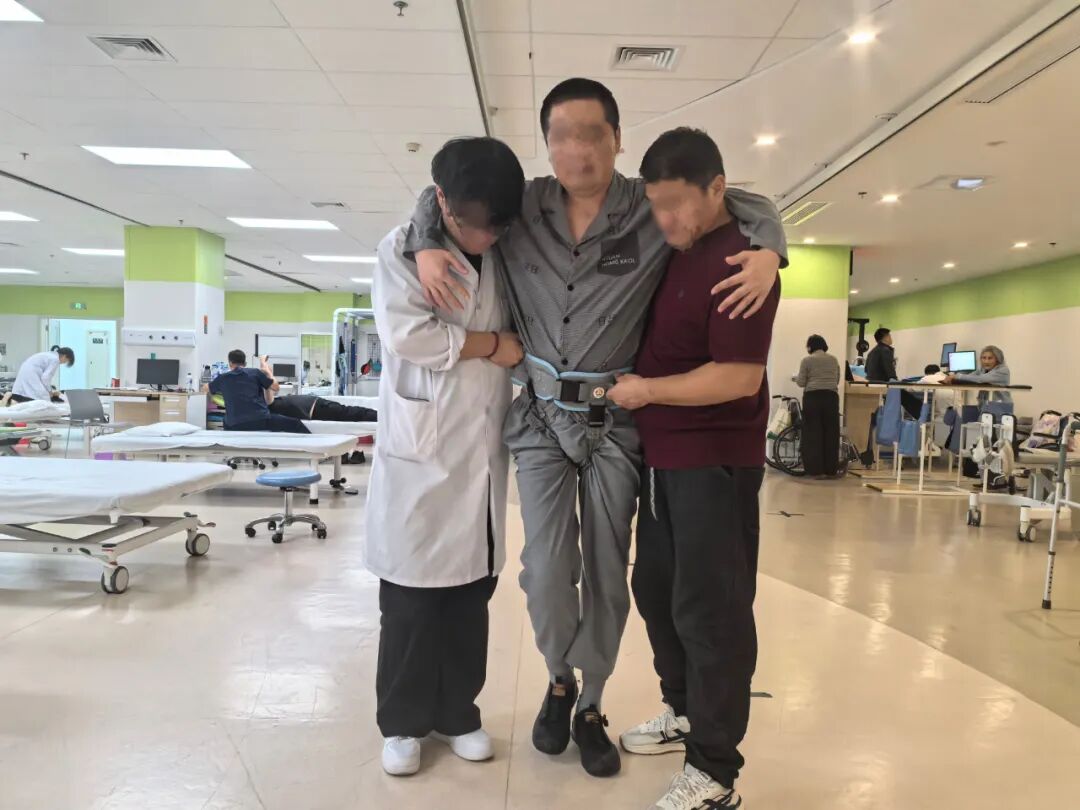
Mr. Liu is now able to walk independently with assistance.
A Medical Miracle After Severe Paralysis
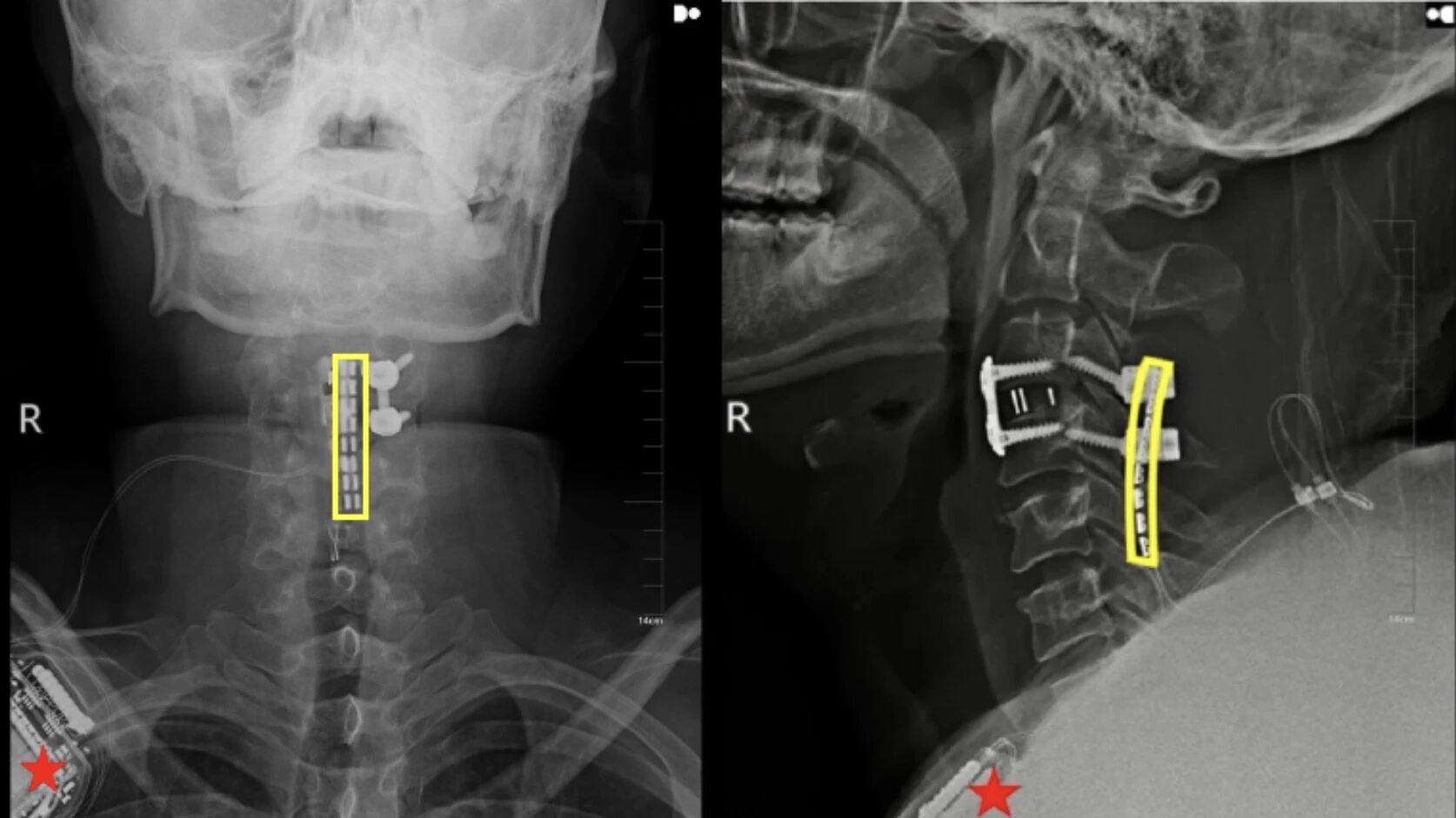
Mr. Liu was injured while on duty. Examinations after emergency admission to JLU Second Hospital revealed severe lung contusions, significant pleural effusion, a severe fracture and dislocation of the third cervical vertebra (C3), and respiratory failure—his life was in critical danger. A C3 fracture-dislocation is an extremely critical condition involving the high cervical spinal cord. "Many patients with injuries above C4 don't even make it to the hospital; they pass away at the scene," Dr. Wu told MedJ. Saving his life was the immediate priority. Upon admission, JLU Second Hospital activated a green channel for critical trauma care. Dr. Wu performed a neurodecompression and internal fixation surgery. Notably, considering the potential for future spinal cord neural interface implantation, Dr. Wu simultaneously reserved an "interface" at the injured cervical segment during this initial surgery.
The surgery was highly successful. One month post-operation, Mr. Liu was recovering well with stable vital signs. However, due to the complete paralysis caused by the severe cervical injury, he had lost all motor function and sensation below the neck and experienced incontinence.
"Unlike patients with paraplegia affecting only the lower limbs, his condition meant he couldn't even use a wheelchair and was confined to bed all day," Dr. Wu said. This was an unbearable situation for the family. Mr. Liu was only 35, with young children. After full communication and ensuring informed consent, in January 2025, Dr. Wu led the team in performing a second surgery—the world's first attempt to implant a spinal cord neural interface in a quadriplegic patient.
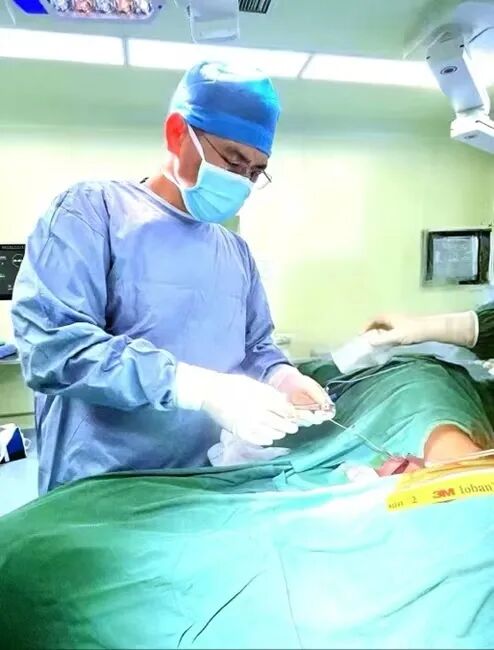
Minfei Wu Leads Team in Performing Spinal Cord Neural Interface Implantation
A spinal cord neural interface is a technology designed to establish a direct communication pathway with the spinal cord nervous system. By implanting micro-electrodes to deliver electrical signals, it aims to activate and control motor neurons, potentially allowing patients to regain voluntary control over paralyzed limbs.
According to Dr. Wu, within just six hours after the implant surgery and the initiation of electrophysiological modulation, Mr. Liu achieved slight voluntary movement in his fingers. Furthermore, about six hours post-op, "we observed that when the modulation program was turned off—meaning the stimulation stopped—his fingers and toes could also contract slightly on their own. This suggests the electrical stimulation might also be promoting the repair and regeneration of damaged neurons," Dr. Wu explained. "It was miraculous. "Initially, we suspected it might be residual electrical effects after stopping the stimulation. But as rehabilitation progressed and the modulation stimuli were intensified and optimized, his limb movements became more subject to voluntary control. A few simple adjustments produced significant effects," Dr. Wu said.
Moreover, the changes kept occurring.
Three months post-surgery, Dr. Wu's team further customized an "exoskeleton robot" for Mr. Liu, helping him achieve standing and walking. "For paralyzed patients, standing aids in restoring cardiopulmonary circulatory function. To some extent, improved spinal cord blood circulation also stimulates neural repair and regeneration," Dr. Wu noted.
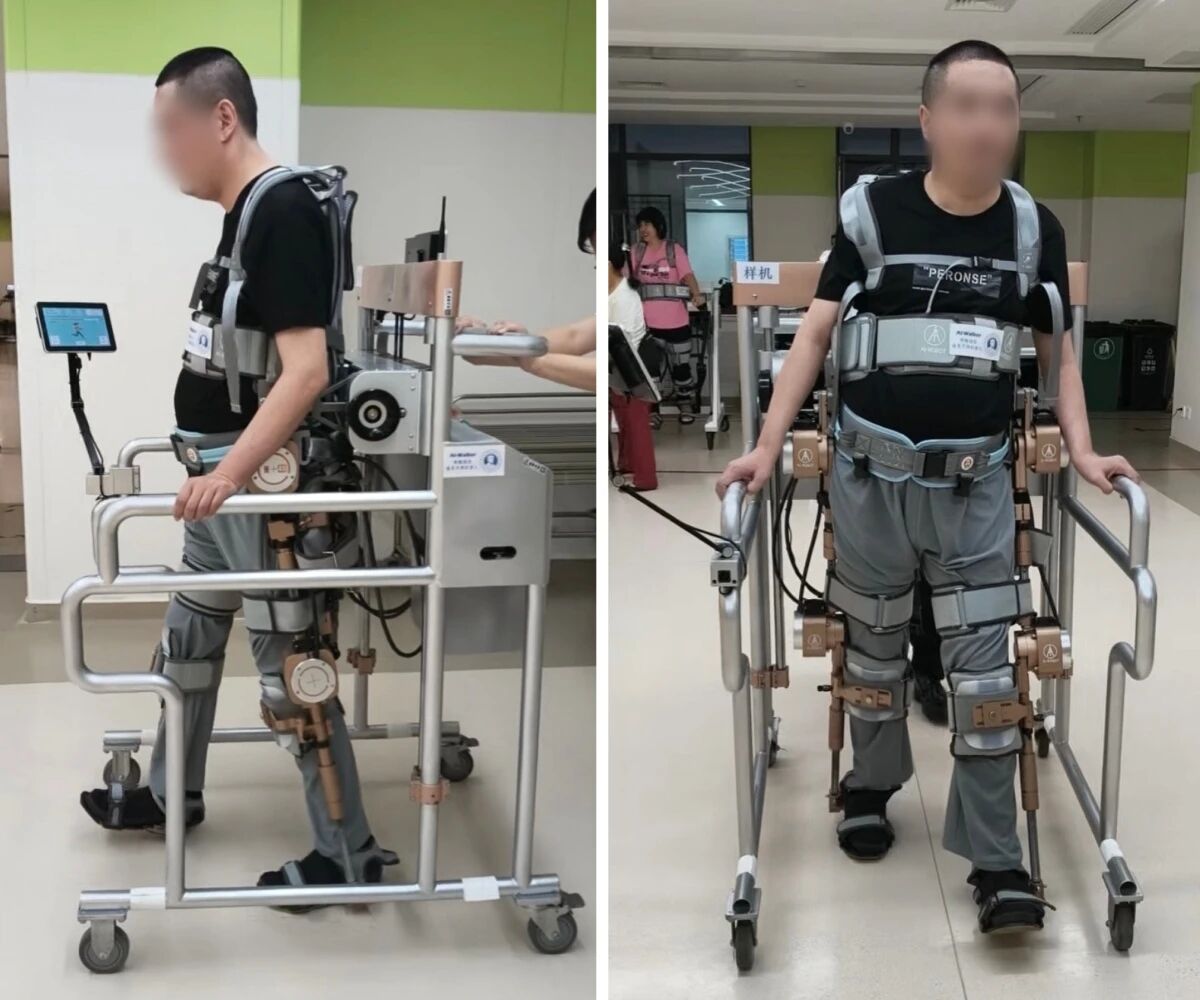
By the fifth month post-op, Mr. Liu could walk with the aid of a walker, independent of the exoskeleton. In early September this year, he completely discarded the walker and, with only support from others for balance, took his first voluntary steps since the injury.
"Recovering to this extent in such a short time means the treatment outcome has far exceeded our initial expectations," Dr. Wu told MedJ. Based on the current progress, it is highly likely that Mr. Liu will eventually be able to walk independently without support.
Globally Pioneering Concept
This is not the first time the academic community has attempted to treat paralysis from spinal cord injury using implanted spinal cord electrical stimulation.
A leading figure in this field globally is Professor Grégoire Courtine of the Swiss Federal Institute of Technology Lausanne (EPFL). Over the past two decades, Professor Courtine's team has repeatedly used brain-computer or brain-spine interface technologies to help several spinal cord injury patients regain some motor function, publishing their results six times in the top journal Nature.
The innovative "Spinal Cord Neural Interface" technology applied this time by the JLU Second Hospital spinal surgery team, however, is a concept first proposed globally by Dr. Wu. According to Dr. Wu, compared to brain-computer or brain-spine interfaces which rely on collecting, decoding, and transmitting brain signals, the spinal cord neural interface directly modulates spinal motor neurons. It does not require electrode implantation in the cerebral cortex, resulting in less trauma and better safety. "Additionally, because spinal neurons are surrounded by numerous nerve fibers, signal acquisition is very challenging. With the spinal cord neural interface, we simply input pre-existing programs to modulate different neural nuclei and activate motor neurons," Dr. Wu said.
What is even more encouraging for the field is that previous global progress primarily focused on patients with lower limb paralysis (paraplegia). This study is the first to demonstrate the feasibility of restoring upper limb motor function in quadriplegic patients through neural modulation technology, opening a new direction for the field.
Dr. Wu explained that unlike paraplegia, in quadriplegia, the neural control centers for the lower limbs are located below the level of injury. Although disconnected from the brain, their inherent neural structures often remain intact, making partial recovery of motor function relatively easier to achieve. Conversely, the upper limbs, especially the fingers, are the body's most delicate and complex motor organs, relying on extremely fine commands from the cerebral cortex. Once this fine control is interrupted by spinal cord injury, rebuilding it is extremely difficult. "Therefore, the fact that our patient achieved finger movement demonstrates that the entire pathway from the brain through the spinal cord to the hand has been re-established. This showcases the immense potential of the spinal cord neural interface and represents a major clinical breakthrough," Dr. Wu said.
This breakthrough wasn't achieved overnight; it stems from years of dedicated research and technological accumulation by the team.
Global data indicates approximately 20 million people live with spinal cord injury, with about 900,000 new cases annually, and the incidence of traumatic spinal cord injury is rising yearly. Since 2014, Dr. Wu's team has been conducting related research, exploring various technological pathways and producing a series of scientific achievements in spinal cord nerve repair.
By 2023, Dr. Wu formally finalized/determined the "Spinal Cord Neural Interface" technical direction. Through industry-academia-research collaboration, they successfully completed validation studies in mice and subsequently in non-human primates. Before proceeding to human trials, Dr. Wu told MedJ that because humans are bipedal, animal experiments couldn't fully replicate the human condition. The team therefore used AI technology to build a large-scale model of the healthy Chinese human spinal cord, using it to continuously optimize the technical details of neural modulation. "Achieving upper limb functional recovery through high spinal cord modulation was something we didn't even dare to imagine in the past," Dr. Wu stated. Initially, the recruitment plan for the research also targeted patients with lower limb paralysis. However, given Mr. Liu's critical and desperate situation, the team decided to take the chance, ultimately achieving this astonishing result.
Helping More Paralyzed Patients Return to Normal Life
Currently, Mr. Liu continues to receive comprehensive rehabilitation therapy, and his motor functions are still improving.
Dr. Wu told MedJ that the next core challenge for the team is how to further restore fine motor skills in the patient's hands, helping him achieve basic life abilities like eating and drinking independently.
"We are also advancing the development of more convenient command systems, like 'voice control'," Dr. Wu said. Currently, the commands to stimulate Mr. Liu's movements are primarily input manually on an external device. "If control via voice or other means can be achieved, the patient would gain greater 'autonomy'."
Furthermore, "using electrical stimulation to promote the self-repair of damaged neural circuits is also a key research direction for us. Currently, Mr. Liu's spinal cord nerve function already shows signs of remodeling. We hope that over time, he can gradually reduce dependence on the machine and return to daily life."
Looking further ahead, the parallel development of technologies like brain-computer interfaces also opens up broader possibilities for spinal cord neural interfaces.
In recent years, Chinese scientific teams have repeatedly achieved breakthrough progress in the clinical application of brain-computer and brain-spine interfaces. On the policy front, supportive measures for brain-computer interface development have been successively implemented.
Earlier this year, the Beijing and Shanghai Municipal Science and Technology Commissions released "Brain-Computer Interface Action Plans," emphasizing the goal to produce significant original achievements by 2027. The Shanghai commission further proposed achieving comprehensive clinical application of brain-computer interface products by 2030.
Dr. Wu indicated that due to remaining technical challenges in extracting and decoding brain signals, the speed and accuracy of issuing motor commands via "thought" alone currently cannot match manual or voice control for the spinal interface.
"But in the future, once brain-computer interface technology makes major strides, patients implanted with a spinal cord neural interface could also connect to a BCI system. They wouldn't rely on external commands but could use signals from their own brain to achieve voluntary control of their body," Dr. Wu said.
It is understood that this investigator-initiated trial (IIT) is still recruiting participants. Dr. Wu stated that during the process, the team will accumulate more real-world data, iterate algorithms, and continuously upgrade the spinal cord neural interface system to achieve better performance control.
"Actually, compared to the highly publicized brain-computer interface, the spinal cord neural interface is a highly advanced but relatively niche research direction. Our goal is to deepen industry-academia-research collaboration over the next five years, offering the possibility for paralyzed patients with different types of injuries to regain standing and improve their quality of life," Dr. Wu stated.

