


Can Pigs Grow Human Hearts?
After frequent breakthroughs in pig organ transplantation in recent years, this month, "human-animal chimeric" organ cultivation has also made significant progress.
On June 13, Nature reported on the front page that Professor Lai Liangxue from the Guangzhou Institute of Biomedicine and Health at the Chinese Academy of Sciences and his team successfully cultivated a pig heart containing human cells in a pig embryo for the first time globally, and the heart was able to beat.
This result was announced at the International Society for Stem Cell Research (ISSCR) annual meeting in Hong Kong on June 11. It is worth noting that during the same conference, researchers from the Anderson Cancer Center in the U.S. also announced that they had successfully embedded human cells into the intestines, liver, and brain of mouse embryos.
"This is a crazy experiment; we weren't expecting much," said Professor Shen Xiling, a Chinese-American biomedical engineer at the Anderson Cancer Center. However, two months after the mice were born, the human cells remained, and "were very stable."
Cultivating Human Organs in Animals
The human-animal chimeric technology uses gene editing and other methods to prevent animal embryos from developing specific organs. Then, human stem cells are introduced into the embryos, hoping that the experimental animals will grow "human organs" for medical research and clinical use.
According to Nature, in Lai Liangxue's team's research, the researchers first reprogrammed human stem cells, introducing genes to prevent cell death and promote cell growth, enhancing their survival ability in pig bodies.
In the subsequent construction of pig embryos, the team knocked out two genes crucial for heart development, preventing normal pig hearts from developing. They then implanted human stem cells, which had been pre-modified, into the embryos at the early morula stage and placed the embryos into surrogate pigs.
Since the cells were fluorescently labeled in advance, the research team could accurately identify the human cells in the embryos' hearts. According to Lai Liangxue, the "modified pig embryos'" hearts developed normally, with the same size as a human heart at the same developmental stage, and they continued to beat.
However, the team has not disclosed the exact proportion of human cells in the study. Moreover, these "modified embryos" could only survive for up to 21 days before they could no longer survive. "The human cells may have disrupted the pig heart's function," Lai Liangxue said.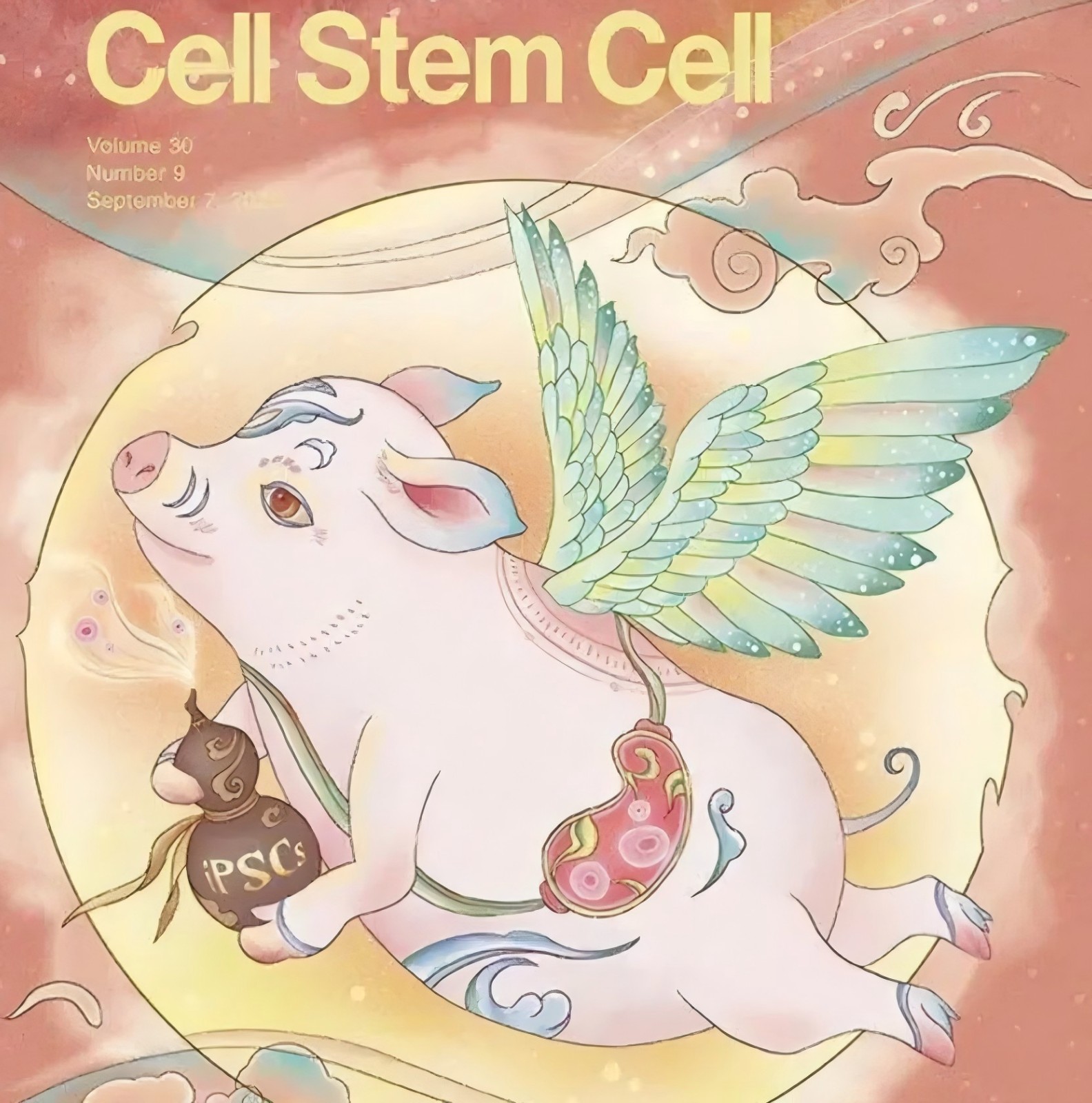
Unlike the approach used by Lai Liangxue’s team, the Anderson Cancer Center team, after reprogramming human stem cells, first cultivated intestinal, liver, and brain organoids in petri dishes. The researchers believe that if the cells are allowed to develop into human tissue before injection, "they might be more resilient."
"We didn’t even damage the embryo wall; we directly introduced human cells into the embryo," said Shen Xiling. When these organoids were injected into the amniotic fluid of pregnant mice, they began to infiltrate the growing embryo and proliferate in specific regions within a few days.
After successful delivery, about 10% of the mice’s intestines contained human cells, accounting for about 1% of the total intestinal cells, while the proportion of human cells in the liver and brain was lower.
Although the success rate of this "human-mouse chimerism" is still low in terms of cell proportion, Nature reports that the liver, composed of a small number of human stem cells, has already produced human albumin in the mice, and the cells are very stable.
Human-Animal Chimeras Are Still in the Early Stages
After the announcement of these two major studies, Nature published an editorial on June 16, stating, "Human-animal chimerism is an exciting yet challenging research field. The growth of human cells in animal embryos allows researchers to study human tissue development, with the long-term goal of cultivating human organs for transplantation."
As early as May 2006, a research team from Shanghai Jiao Tong University School of Medicine published in Proceedings of the National Academy of Sciences, announcing the successful cultivation of the world's first "human-goat chimeric" organism, proving that human stem cells can survive in goat bodies, and there is hope of obtaining human-cell-containing organs like the liver, kidneys, and hearts from animals in the future.
Over the past decade, with the development of gene editing, stem cell regenerative medicine, and especially the emergence of induced pluripotent stem cell (iPSC) technology, the techniques for human-animal chimerism research have become increasingly mature.
MIT Technology Review once reported that in 2015 alone, the U.S. completed at least 20 cases of "human-pig" or "human-sheep" chimeras. In one study, human cells were injected into a pig fetus, and at 62 days, the eyes of a pig fetus, which was "congenitally blind," seemed to show signs of development.Using human-animal chimeric models, scientists hope to deepen their understanding of human development and diseases, promoting the development of new therapies.
In 2022, researchers from Stanford University announced that they had successfully implanted human organoids into newborn mice's brains, where they integrated with the host's brain neural circuits. The breakthrough of the "human-mouse chimeric brain model" may provide a new research platform for major brain diseases such as autism and Alzheimer's.
Another major use of human-animal chimeric models is organ transplantation.
In September 2023, Lai Liangxue's team successfully cultivated early human kidneys in pig embryos for the first time, with human-derived cells accounting for 70%. This research was published in Cell Stem Cell as a cover story.
"The most exciting moment was when we took out the chimeric fetus and observed large red fluorescence in its waist using a fluorescent microscope. This means that after five years of repeated experimental exploration, success was within reach," Lai Liangxue said in an interview.
Ethical Challenges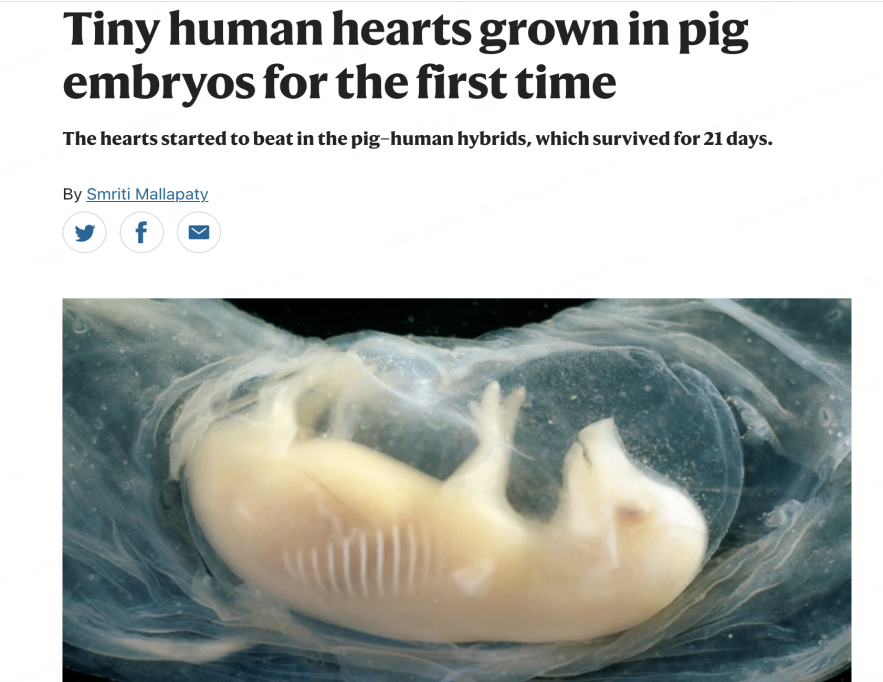
In addition to technical difficulties, ethics remains an unavoidable topic in human-animal chimeric research, with different regulations in different countries.
In 2015, the U.S. National Institutes of Health (NIH) issued a funding ban, prohibiting grants for any human-animal chimeric embryo research. However, at the federal level, there is no unified law prohibiting such research, and regulations vary between states.
Apart from the reproductive system, the most contentious issue in human-animal chimeras is the creation of neural system chimeras — the public is concerned that this could lead to the creation of "monsters" with human consciousness.
In response, Louisiana has set a rule that human cells in animal brain tissue must not exceed 51%. Illinois, on the other hand, has no "hard rule" but emphasizes that individual review and evaluation should be conducted before research begins.
In 2019, Japan relaxed its restrictions and revised its human-animal chimeric research guidelines, allowing neural system chimerism and breaking the "14-day" limit, permitting chimeric embryos to develop to full term and be born.
In response to widespread social controversy, Japan's Ministry of Health stated at the time, "This new regulation will not create any new risks because, from a technical perspective, it is impossible to create a 'half-human, half-animal' organism in this research."
In China, the "Ethical Guidelines for Human-Non-Human Animal Chimeric Research" issued in February 2024 stipulate that human stem cells or their derivatives may only be implanted into non-human animal embryos or fetuses for research when no other method can answer the research question.
The guidelines also emphasize that chimeric embryos must not be implanted into humans or great apes, and chimeric organisms that could produce human reproductive cells must not be allowed to mate and reproduce. The potential ethical risks of neural system chimerism should be highly considered, and risk control plans should be formulated in advance.
In response to ethical concerns about introducing human cells into other animals' brains, Shen Xiling said during an ISSCR conference interview that in the current experiment, the proportion of human cells in the mouse brain is very low. However, if more human tissue were introduced, the cognition of the mice might become a point of concern.

