


On January 30, Sciwind Biosciences’ GLP-1 receptor agonist ecnoglutide was approved in China for glycemic control in adults with type 2 diabetes, becoming the world’s first cAMP-biased GLP-1 receptor agonist to be approved.
Ecnoglutide injection (development code XW003, formerly known as enoglutide) is a globally first-in-class cAMP-biased long-acting GLP-1 receptor agonist independently developed by Sciwind Biosciences.
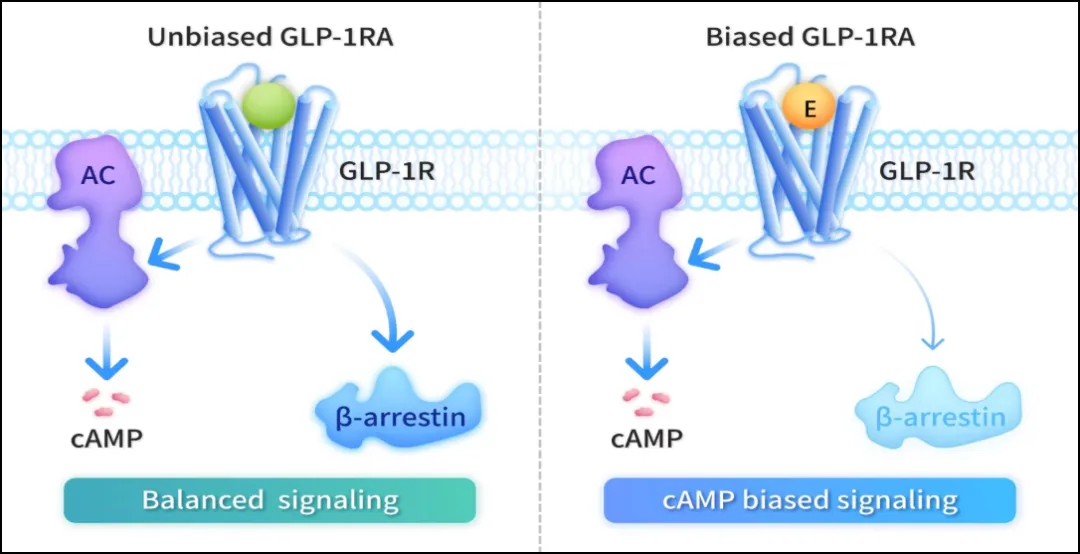
Unlike non-biased GLP-1 receptor agonists, ecnoglutide selectively activates the cAMP signaling pathway while minimizing beta-arrestin recruitment. This unique mechanism may be a key factor behind its improved clinical efficacy and metabolic benefits.
Compared with non-biased agonists, biased agonists have shown greater glucose-lowering effects in multiple basic and clinical studies and have also performed better in reducing food intake and achieving greater weight loss.
Insight database shows that ecnoglutide was first publicly disclosed for clinical development in March 2020, filed for marketing in China in November 2024 for type 2 diabetes, and filed again in December of the same year for a weight-loss indication.
As Sciwind’s first marketed product, today’s approval in China opens a new chapter in the company’s commercialization. According to Insight database, in addition to the injectable formulation, Sciwind is also developing oral ecnoglutide tablets (XW004), which have already entered Phase II clinical development.
Ecnoglutide injection currently has five Phase III trials publicly disclosed, three of which have already reported results, including the EECOH-1 and EECOH-2 studies in type 2 diabetes and the SLIMMER study in obesity.
EECOH-1 (NCT05680155/CTR20223156) is a multicenter, randomized, double-blind, placebo-controlled Phase III trial evaluating ecnoglutide in adults with type 2 diabetes inadequately controlled after diet and exercise intervention. A total of 211 patients were randomized to once-weekly ecnoglutide 0.6 mg, 1.2 mg, or placebo for 24 weeks including dose escalation. The primary endpoint was the change in glycated hemoglobin (HbA1c) from baseline at Week 24.
Results showed that after 24 weeks of treatment, ecnoglutide significantly reduced HbA1c. Specifically, HbA1c fell by 1.957% (95% CI, -2.18 to -1.73) and 2.426% (95% CI, -2.65 to -2.20) in the 0.6 mg and 1.2 mg groups, respectively, versus 0.870% (95% CI, -1.09 to -0.65) in the placebo group. The proportions of patients achieving HbA1c below 7% were 68.1%, 80.3%, and 21.1%, respectively.
EECOH-2 was a multicenter, randomized, open-label, dulaglutide-positive-controlled Phase III trial enrolling 623 adults with type 2 diabetes inadequately controlled on metformin. Patients were randomized 1:1:1 to once-weekly ecnoglutide 0.6 mg, ecnoglutide 1.2 mg, or dulaglutide 1.5 mg for 52 weeks. The primary endpoint was the change in laboratory-measured HbA1c from baseline at Week 32.
Results showed that at Week 32, HbA1c reduction in each ecnoglutide dose group was greater than with dulaglutide 1.5 mg, with an average decrease of up to 1.91% from baseline, and efficacy remained stable through Week 52. At Week 52, the proportions of subjects with HbA1c <7.0% and HbA1c ≤6.5% were significantly higher in the ecnoglutide 1.2 mg and 0.6 mg groups than in the dulaglutide 1.5 mg group.
Compared with dulaglutide 1.5 mg, all ecnoglutide dose groups significantly improved multiple cardiometabolic risk factors, including fasting glucose, 2-hour postprandial glucose, body weight, waist circumference, hip circumference, triglycerides, and BMI, providing comprehensive metabolic benefit.
Overall safety and tolerability were good and similar to other marketed GLP-1 receptor agonists. The most common adverse events were gastrointestinal reactions and decreased appetite, most of which were mild to moderate and occurred mainly during dose escalation. The discontinuation rate due to adverse events was low, and no severe hypoglycemia occurred.
The Phase III SLIMMER obesity trial has also been published in The Lancet Diabetes & Endocrinology and was presented orally at the 2025 American Diabetes Association Scientific Sessions.
SLIMMER is a multicenter, randomized, double-blind, placebo-controlled Phase III trial enrolling 664 patients with obesity (BMI ≥ 28 kg/m²) or overweight (BMI ≥ 24 to <28 kg/m²) plus at least one weight-related comorbidity. Patients received once-weekly ecnoglutide 1.2 mg, 1.8 mg, 2.4 mg, or placebo for 48 weeks. The primary endpoints were percentage change in body weight from baseline at Week 40 and the proportion of subjects achieving at least 5% weight loss from baseline.
Based on the treatment-regimen estimand, ecnoglutide showed dose-dependent weight reduction at Week 40. In the highest-dose 2.4 mg group, mean body weight decreased 13.2% from baseline versus an increase of 0.1% with placebo (p<0.0001). By Week 48, weight reduction further improved to 15.4% and 15.1% after placebo adjustment.
In the ecnoglutide groups, 92.8% of subjects achieved clinically meaningful weight loss of at least 5%, about seven times the proportion in the placebo group; 79.6% and 63.5% achieved at least 10% and at least 15% weight loss, respectively, exceeding results reported for other non-biased GLP-1 receptor agonists in similar populations.
In addition to marked weight reduction, ecnoglutide significantly improved other key cardiometabolic risk indicators. Mean uric acid fell by as much as 54.3 µmol/L, and the incidence of hyperuricemia was lower than in the placebo group.
Notably, ecnoglutide also significantly reduced liver fat content. Among subjects with baseline liver fat content ≥8%, the mean percentage change from baseline at Week 40 in the 2.4 mg group was -53.1%. Liver enzyme levels also decreased significantly in all dose groups compared with placebo.
Metabolic drugs led by GLP-1 are surging globally, helping propel Eli Lilly to a market capitalization above USD 1 trillion. In 2024, Novo Nordisk’s semaglutide posted nearly USD 30 billion in global sales, while Eli Lilly’s tirzepatide delivered USD 16.5 billion.
In China, Insight database shows that 11 GLP-1 receptor agonists have now been approved. Except for Eli Lilly’s tirzepatide and Innovent’s mazdutide, all others are single-target agents. As an innovative cAMP-biased GLP-1 receptor agonist, ecnoglutide may carve out a place in this crowded market.

