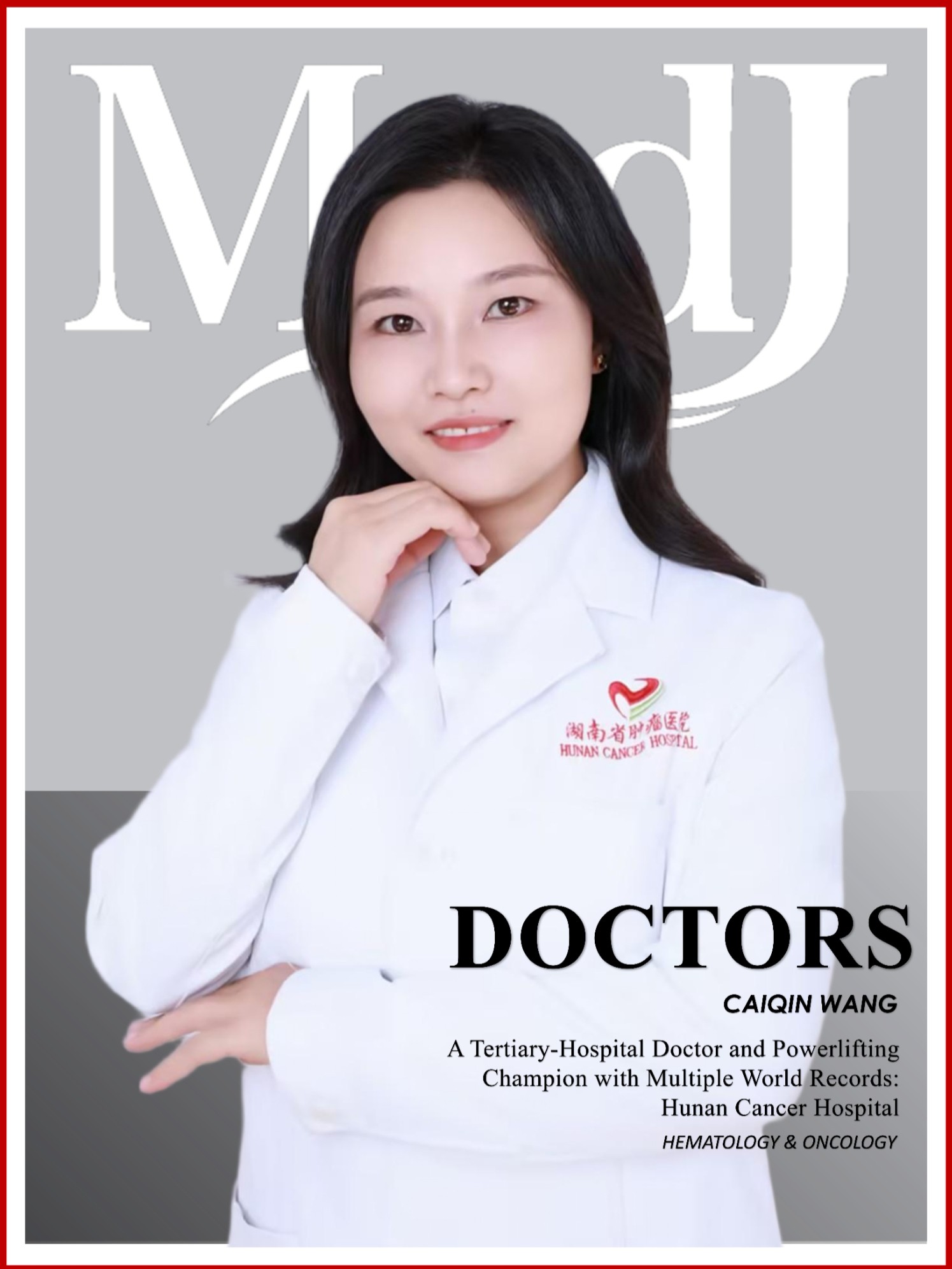
With a squat of 110.5 kilograms, a bench press of 62.5 kilograms, a deadlift of 127 kilograms, and a total of 300 kilograms, Dr. Caiqin Wang set the women's 44-kilogram world records recognized by the China Powerlifting Association in 2020, and they remain unbeaten.
At the time, she weighed only 42 kilograms. Today she is an attending physician in lymphoma and hematology at Hunan Cancer Hospital. When she broke those records, she had just completed her doctoral training in medical oncology and was carrying out both postdoctoral research and standardized residency training.
She Lifted Four World Records
Dr. Wang says she has always loved exercise. As an undergraduate she joined the campus ceremonial guard and also practiced belly dance. During her master's years she shifted to long-distance running, often covering about ten kilometers a day and taking part in marathons.
In 2017, after entering doctoral training at Sun Yat-sen University Cancer Center, she wanted to add strength work to her routine and went to a more professional gym. There she encountered powerlifting for the first time and immediately showed unusual talent. Her coach recognized that ability, and she soon began systematic training under high-level guidance.
Her formal debut came in 2018 at a raw powerlifting meet in Hong Kong, where she won both her weight class and the overall women's title. After that, she repeatedly placed first by coefficient in domestic competitions and was at one point regarded as the strongest woman in China by GPA coefficient.
The four world records she set in 2020 made her widely known. People were impressed not only by her small body and massive strength, but also by the discipline behind it.
Balancing Powerlifting and Medicine
Dr. Wang says the hardest part of training is not simple muscle fatigue but the demand for control and movement quality. She once met a long plateau in squatting at 90 kilograms and had to analyze force patterns and perform large amounts of compensatory training before breaking through.
Her best competitive period, in 2020 and 2021, overlapped with the busiest years of her medical training. She developed a way of managing time by weaving training into work. For example, if a laboratory experiment required several hours of waiting, she would use that interval for training.
Her medical background also gave her an advantage. Knowledge of anatomy, biomechanics, nutrition, and rehabilitation helped her understand movement better, support training more precisely, and avoid unnecessary injury.
In return, exercise also supported her medical work. It reduced physical discomfort from long hours of clinical labor and helped relieve stress. As her clinical work has become busier, she no longer competes, but she still maintains regular exercise, now focusing more on aerobic activity and lighter strength work.
Medicine and Sport Both Depend on Persistence
Dr. Wang's medical path has been built step by step through undergraduate study, master's training, doctoral training, residency, and postdoctoral work. After finishing residency in 2023, she returned to Hunan and joined the province's largest lymphoma diagnosis and treatment center.
Her current research focuses on reprogramming of tumor-associated macrophages and mechanisms of immune regulation. In 2024 she published work on mantle cell lymphoma and ibrutinib resistance, offering a possible new therapeutic strategy for resistant patients.
Only a short time after formally becoming a doctor, she has already published more than ten SCI papers, led multiple research projects, and received several honors. In her words, neither scientific research nor training rewards you all at once. You keep accumulating bit by bit, and one day the change becomes qualitative. She believes clinical work and research are no different from sport in that respect.