


Walk into most large hospitals in China and you will likely find a staff member stationed at the elevator — someone who asks which floor you need and presses the button for you. Many visitors find this puzzling. After all, pressing a button takes seconds. Is this role really necessary?
Zhang Ye, Director of the Support Services Department at Shanghai Children's Hospital, explained to MedJ that this position, commonly known as an elevator operator, is deployed based on each hospital's operational needs. It does carry a cost, but the job involves far more than pressing floor buttons. Elevator operators manage patient flow, prevent unauthorized access to staff-only lifts, support emergency transfer protocols, and help keep the elevator environment safe.
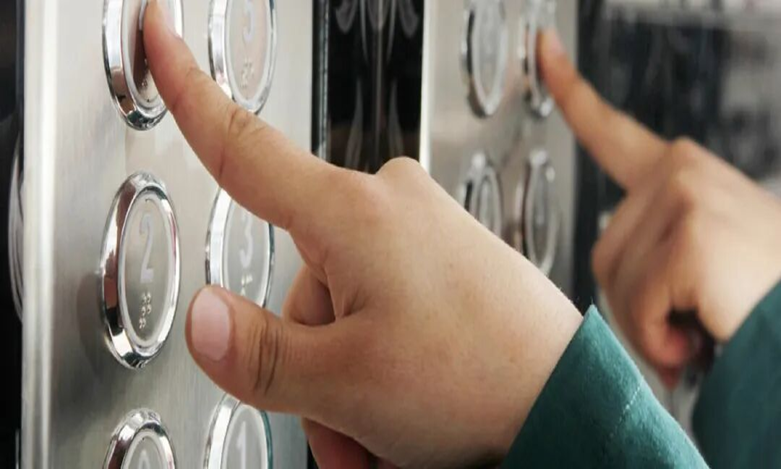
More Than Just a Button
In large hospitals, elevators typically serve different floors on separate routes — some stop only on odd-numbered floors, others run express to upper levels. The goal is to distribute traffic and keep elevators moving efficiently. During peak hours, the volume of people is significant, and the mix often includes pregnant women, wheelchair users, and patients with medical devices. Without someone managing the space, conditions inside a small elevator can quickly become chaotic.
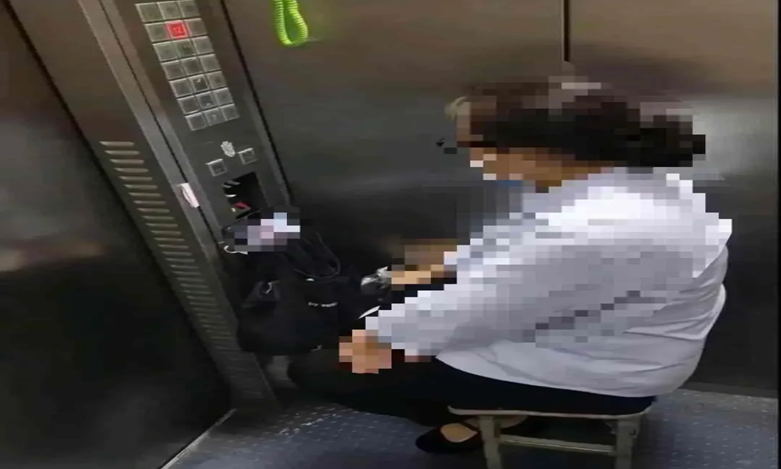
Elevator operators step in as the key point of order in this confined environment. According to a public recruitment notice from one tertiary hospital, elevators must run safely around the clock, with operators responsible for driving, passenger guidance, and cleaning and disinfection. Separate maintenance staff handle technical upkeep.
Zhang Ye noted that patient demographics shape elevator demand in specific ways. At children's hospitals, for example, each young patient is typically accompanied by two or more family members, sometimes as many as four or five — placing considerably more pressure on the elevators.
Beyond directing passengers, operators also help priority groups — elderly patients, children, and people with disabilities — board safely and reach their destinations. They keep non-clinical staff out of medical-staff lifts, maintaining dedicated access for care teams.
A Critical Link in Emergency Response
Elevator operators also serve as key nodes in the hospital's emergency transport chain. On May 3, 2017, at Beijing You'an Hospital, a young man collapsed inside a patient elevator. Operator Gao Xiuzhi stopped the elevator at the nearest floor, identified from the button he had pressed that he was likely a patient from the eighth floor, and immediately notified the nursing staff there. The man was revived in time, and Gao then operated the elevator directly to take the medical team and patient to the eighth floor for continued treatment. The hospital noted that the incident demonstrated how elevator operators can activate emergency response protocols quickly and calmly when seconds matter.
Zhang Ye told MedJ that elevator operators play an important coordination role and provide what he calls "specialized service." When his hospital designs emergency green channels, elevator operators are built into the workflow so patients can reach their destination without delay. Operators are required to attend all relevant training sessions.
One physician at a tertiary hospital added another benefit: infection control. "Elevator operators wear gloves and handle the buttons themselves," the physician noted. "This reduces how often passengers touch the buttons, which limits the buildup of pathogens on button surfaces." A study conducted across nine Level III hospitals in Yibin, Sichuan found that frequently touched elevator surfaces had a contamination rate of 54.58%, with samples testing positive for methicillin-resistant Staphylococcus aureus (MRSA) and extended-spectrum beta-lactamase (ESBL)-producing organisms.
Certification, Training, and Pay
Public perception of elevator operators often focuses on assumed easy working conditions, low qualifications, or even suggestions that the role is a sinecure for personal connections. Some people anonymously admit to envying what they see as light, well-compensated work.
In practice, these assumptions are mostly wrong. Zhang Ye explained that since the 1990s, the healthcare sector has progressively outsourced support services. In Shanghai, hospital support functions — including elevator operation — are now procured through competitive tendering from qualified third-party vendors. These positions do not count against hospital staffing quotas.
A public procurement notice from Changping District Hospital of Integrated Chinese and Western Medicine in Beijing illustrates the scale: one contract covered 21 operators for 12 elevators across the main hospital building — 10 elevators on an eight-hour shift and two running around the clock. "As long as surgery is ongoing, the elevator operator in the surgical building cannot leave," a physician at one tertiary hospital told MedJ. In outpatient areas, operators often stand throughout their shifts in crowded elevator cars, calling out directions and managing passenger behavior continuously. The work is demanding.
Pay is also more modest than often assumed. The Changping procurement was capped at RMB 1.25 million for one year, implying average monthly wages that are not particularly high. A 2015 posting at Xiaotangshan Hospital in Beijing listed salaries of approximately RMB 2,500 per month after a three-month probationary period, with a RMB 150 meal allowance and quarterly performance bonuses.
Certification is required. The Xiaotangshan posting specifically asked for a Beijing-issued elevator operator qualification certificate. Changping authorities noted in 2023 that elevators rated above 2.5 m/s — including hospital patient bed elevators — must be operated by personnel holding the relevant special equipment operator certificate. Multiple hospitals also require operators to complete regular training to handle medical emergencies that may occur inside the elevator.
When Elevators Become the Weak Link
Zhang Ye told MedJ that elevator services — like all hospital support functions — exist to serve patients. "We take input from clinical departments and area managers and adjust elevator operations dynamically," he said.
Research backs up the stakes. A systematic study of elevators in 15 tertiary hospitals found that only one had an average wait time under 60 seconds; 66% of elevators kept passengers waiting more than 120 seconds. Studies have shown that passenger frustration rises in proportion to the square of wait time. Once waiting exceeds 60 seconds, patient anxiety escalates sharply; beyond 120 seconds is typically classified as an excessive wait. Inside a crowded elevator, privacy is further compromised and personal space disappears, compounding patient stress.
Several hospital administrators told MedJ that elevator management remains one of the most persistent operational challenges — and the issue most frequently cited in inpatient feedback.
In response, many hospitals have introduced zone control: "high-zone" and "low-zone" elevators stopping at different floor ranges, with dedicated lifts for surgery suites and clinical staff. Without elevator operators, wear and maintenance needs would likely accelerate, adding further disruption to hospital operations.
One patient in Shanghai, Ms. Zhou, recalled being trapped in a hospital elevator. The emergency call button, she said, showed visible scratches from being jabbed with a key and would not respond when pressed repeatedly. A 2022 article in China Elevator noted that improper passenger behavior is among the most common and significant sources of elevator management problems in hospitals.
"Very often, when people complain about the elevators, the root cause is somewhere else entirely," Zhang Ye said. "We need to analyze what's actually driving the problem." He observed that newer hospitals built in recent years have noticeably improved human-centered design and physical infrastructure, which may help ease the elevator challenge over time.
As artificial intelligence continues to develop, elevator operators may one day become a product of their era. For now, they remain a quiet but important part of how hospitals function.

