


After two years, the global monkeypox epidemic is once again on edge.
Local time on August 14, the World Health Organization (WHO) announced that the rapid spread of monkeypox epidemic in Africa constitutes a “public health emergency of international concern (PHEIC)”. This is the highest level of global outbreak alert under the framework of the International Health Regulations, which has previously been used to warn of major outbreaks such as Ebola and New Crown.
According to WHO Director-General Tandace, the decision was taken in light of the growing monkeypox outbreak in eastern and central Africa, which has spread to previously unaffected areas and has the potential for further spread in Africa and other parts of the world.
Tandesse added that of particular concern is the rapid spread of a new mutant strain in multiple locations. In May of this year, African scholars were the first to report a new strain of monkeypox virus Ib. In the last month, four neighboring countries of the Democratic Republic of the Congo (DRC) have broken the “monkeypox zero infection record”, about 90 cases of infection related to the new mutant strain.
In China, the cumulative number of monkeypox cases reported from January 1, 2022 to June 30, 2024 was 2,460, according to the WHO's Global Monkeypox Epidemic Information Report. “The number of cases in China is small. However, if the global epidemic, especially the situation in Africa, continues to deteriorate, there is a potential risk of an increase in the number of infections in China.” Chen Liyu, deputy chief physician of the Center for Infectious Diseases at West China Hospital of Sichuan University, told Medical Daily.
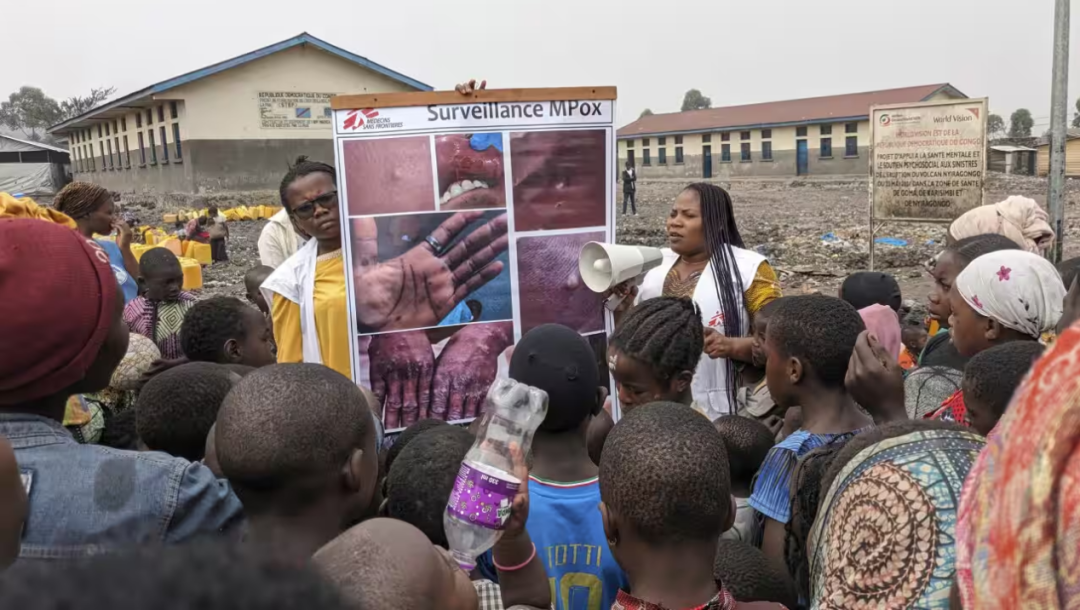
The World Health Organization has declared monkeypox a “public health emergency of international concern”. Source/AAP
Underage children are the most infected in this round of the epidemic
Just a day before WHO's official announcement, the Centers for Disease Control and Prevention (CDC) in Africa classified the monkeypox outbreak as an “African Public Health Emergency” and called on African countries to take urgent action to prevent the outbreak from spreading. This is the first time that such a warning has been issued in all of Africa.
Monkeypox is a viral zoonotic infection, with the first human case reported in Africa in 1970. In the decades since, the monkeypox virus has been circulating or in localized outbreaks in more than a dozen countries in Central and West Africa, so a history of travel in Africa and contact with infected animals are considered the main routes of infection.
Symptoms of monkeypox infection are similar to smallpox and are characterized by fever, headache, muscle aches, malaise, swollen lymph nodes, and a widespread rash. The disease is usually mild, with most patients recovering within a few weeks, but there have been cases of severe illness and even death. According to the 2023 issue of “Advances in the Study of Re-emerging Infectious Diseases - Monkeypox,” the death rate of the disease has been in the range of 1-10 percent in different time and region populations.
But the current situation is markedly different. “All members of the committee agreed that the surge in the number of monkeypox cases was an 'extraordinary event'.” Dimie Ogoina, chair of the WHO Monkeypox Emergency Committee, said.
Most worrisome is the rapid increase in the number of infected cases. According to the African CDC, the number of locally reported cases of monkeypox has increased by 160 percent this year compared to the same period in 2023. The situation is particularly striking in the Democratic Republic of Congo (DRC). So far this year, the number of local infections is at an all-time high, with more than 15,000 suspected and confirmed cases reported and 537 deaths. All relevant figures exceed the total for 2023.
As of August 8, at least 16 African countries have been affected by the monkeypox epidemic, with Burundi, Kenya, Rwanda and Uganda breaking the “zero infection record”.
Secondly, the route of infection and the affected population have also changed.
In July 2022, WHO issued a PHEIC on the monkeypox outbreak, which was lifted in May of the following year. This outbreak affected nearly 100,000 people in 116 countries/regions and caused about 200 deaths. At that time, the main infected populations were homosexual men and bisexual men, and close contact such as sexual behavior was the main transmission route.
So far this year, the populations most affected by the monkeypox epidemic have become women and children under the age of 15. This is especially true for children under 15, who account for more than 70 percent of infections in Africa and 85 percent of deaths. According to the African CDC, nearly 40% of the affected children are under 5 years old, even newborns born as young as two weeks old.
Chen Liyu is also concerned about the situation. He told Medical Daily that it may be related to the immunization status of minors, their general physical condition and vaccination.
Boghuma Titanji, an epidemiologist at Emory University in the United States, said that it may also stem from some social factors, such as overcrowding in the residence, parents infected and transmitted to their children. There are also analyses that hinder diagnostic techniques, etc., and do not rule out that some cases of children infected with what is suspected to be monkeypox are actually chickenpox or measles.
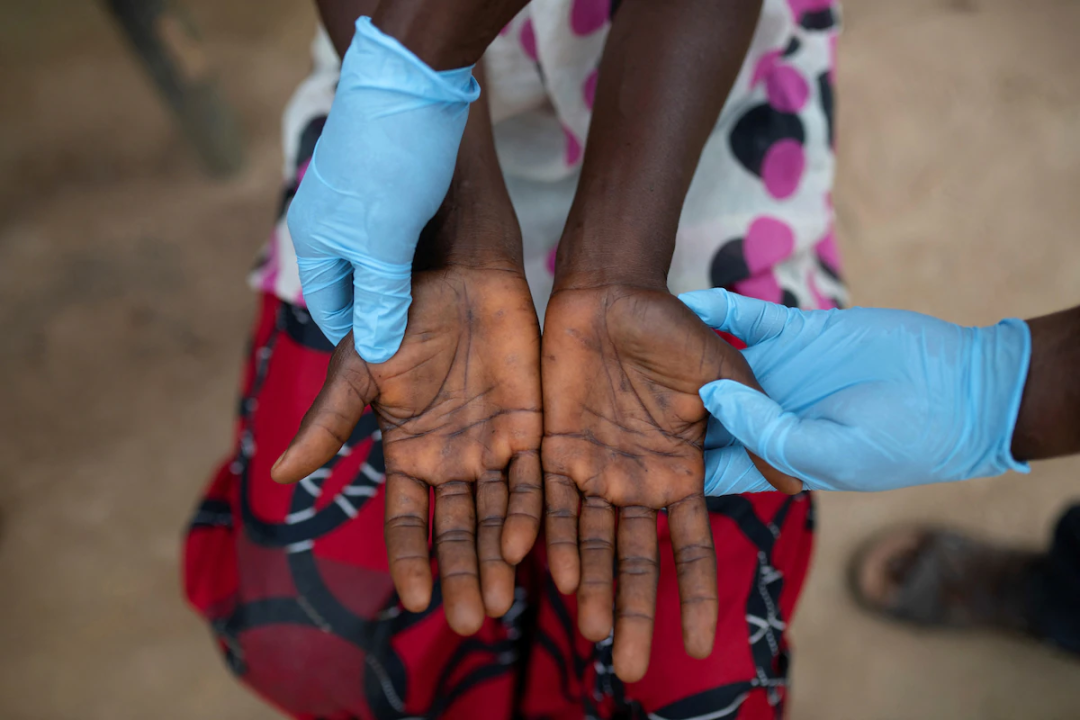
Healthcare professionals are examining a 41-year-old patient for a hand lesion. Photo credit/Reuters
Worrisome new mutant strain
“The monkeypox virus mutated and adapted to a new mode of transmission.” Jean Kaseya, director of the CDC in Africa, explained in an online conference on Aug. 8 that while it's not clear why the current round of monkeypox outbreaks has been so virulent for children, it's suspected to be related to the newest mutated strain. To date, no cases of infection with the new strain have been detected outside of Africa.
According to Chen Liyu, there are two branches of the monkeypox virus spectrum, namely branch Ⅰ (Clade Ⅰ) and branch Ⅱ (Clade Ⅱ). The former is now only prevalent in some areas of Central Africa, with more severe clinical symptoms and higher lethality after infection.
In May of this year, African virologist Placide Mbala-Kingebeni told the media that a new strain had been identified in the Democratic Republic of the Congo (DRC), and was subsequently recognized as being in the Clade Ib lineage. At the time, the strain may have caused more than 240 infections and at least three deaths. Some of the key site mutations occurred around September 2023, according to genetic sequencing analysis.
Placide Mbala-Kingebeni explains that with spectrum Ib infections, lesions are more likely to be found in the genital area rather than obvious areas such as the hands and chest. This results in the virus being more likely to be transmitted unintentionally.
In a related announcement, WHO noted that Kenya, Rwanda, and Uganda have confirmed detection of spectrum Ib, which is more lethal than other previously prevalent strains of monkeypox. This is evidenced by the number of deaths in the DRC.
“Some studies have found that the Ⅰb spectrum appears to have APOBEC3-type variants, which are more infectious and easier to miss with existing detection reagents.” Chen Liyu said this may mean the emergence of a new type of monkeypox virus in the DRC with “global pandemic potential”.
However, Chen Liyu emphasized that the pathogenicity and transmissibility of different strains may be affected by a variety of factors, such as geographic location, medical conditions, and the immunization status of the population. “China's disease surveillance system, treatment capacity, and health conditions are significantly better than those of most African countries. Even if spectrum Ib is imported into China, the outbreaks it causes are within manageable limits.”
Jean Kaseya also said in the aforementioned online conference that factors such as untimely detection, treatment, and climate change can exacerbate the spread of monkeypox virus.
Notably, the Ib spectrum is not the only strain that is circulating on the African continent. Cameroon, Côte d'Ivoire, Nigeria and South Africa are also experiencing a large number of cases of infection with the branch II strain.
Tandesse emphasized that we are now facing several outbreaks of different clades of the virus in different countries, with different modes of transmission and levels of risk.
After WHO declared the monkeypox emergency, the United States, the European Union and others said one after another that they would take special quarantine measures for people returning from the Democratic Republic of the Congo and other African countries.
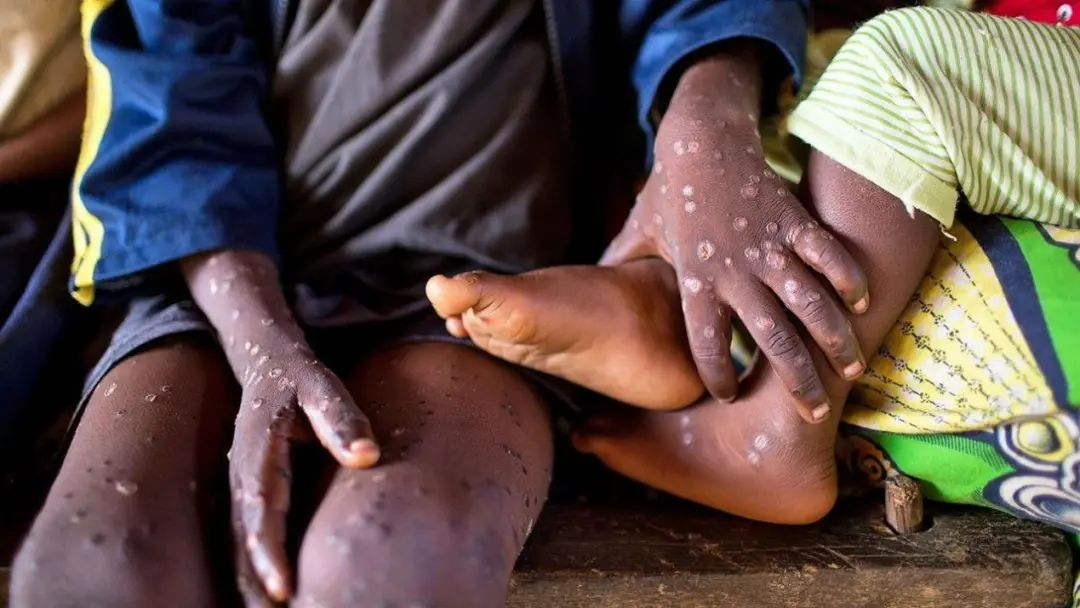
Image source/PANOS
No need for the general public to panic
On September 10 and 16, 2022, the first imported cases of monkeypox were reported in Hong Kong and Chongqing, China. On September 20 of the following year, monkeypox was included in China's Class B infectious diseases for management, taking the preventive and control measures of Class B infectious diseases.
Lu Hongzhou, director of the Third People's Hospital of Shenzhen, told Medical Daily that the transmission route of monkeypox virus is very clear and the public need not panic. “In Asia, men who have sex with men are considered to be a high-risk group for monkeypox infection, and cases of aggregation of men who have sex with men have occurred from time to time. It is important to prioritize preventive and control measures for this high-risk group to prevent the virus from spreading to the general population.”
According to Lu Hongzhou, individuals with compromised immune systems or advanced cancer may experience serious illness or even death after infection. It is recommended that such high-risk groups receive the monkeypox vaccine as soon as possible.
WHO's Strategic Advisory Group of Experts on Immunization has recommended two monkeypox vaccines, and in the second week of August, Tandesay initiated a marketing process for the emergency use of monkeypox vaccines.
Chen Liyu told Medical Daily that several monkeypox vaccines from the United States, Europe and Japan are currently on the market, but there are some limitations. For example, some vaccines are used in immunodeficient patients, the incidence of adverse reactions is higher, and safety risks are greater; others are relatively limited in production and supply due to the preparation process. To address these challenges, scientists at home and abroad are stepping up research and development of a new generation of monkeypox vaccines.
Other scholars have indicated that China only stopped universal vaccination against cowpox in 1982, so most people over 40 years old have been vaccinated against cowpox/smallpox. Considering that the initial transmission index of monkeypox virus is quite small, it is more difficult to cause a large-scale epidemic in China. Once an outbreak is detected, people under the age of 40 should be vaccinated as a matter of urgency.
WHO said one of the main purposes of designating the outbreak as PHEIC is to prompt member states to begin preparations to share vaccines, treatments and other key resources with poorer countries.
“Clinical efforts in China may need to strengthen outbreak surveillance, enhance pre-screening and triage for monkeypox, upgrade and popularize nucleic acid testing technology, provide training for clinicians to improve their ability to diagnose and treat monkeypox, and further promote research and use of vaccination and treatment options.” Chen Liyu told Medical Daily.
Because most clinical symptoms of monkeypox infection are relatively mild and self-limiting, the current treatment of monkeypox mainly focuses on symptomatic supportive therapy, with a small number of severely ill patients requiring antiviral drugs, he said. China is currently accelerating the research and development of antiviral drugs for monkeypox.
Reference
1.彭嘉怡,等. 再发传染病-猴痘研究进展. 中华临床感染病杂志. DOI:10.3760/cma.j.issn.1674-2397.2023.01.010.
2.全国医疗机构感染监测网. 猴痘医院感染防控专家共识. 中国医学杂志. DOI:10.3760/cma.j.cn112137-20230723-00075

