


Another "national first" has been accomplished at West China Hospital of Sichuan University.
Recently, a patient presenting with a giant Kommerell's diverticulum, an aortic root aneurysm, and severe aortic valve regurgitation sought treatment at West China Hospital. The attending physician, Dr. Zhenghua Xiao, who has performed four to five thousand cardiac surgeries, had never encountered a similar case. "The situation was complex and carried significant risks."MedJ learned from West China Hospital that Dr. Xiao's team successfully performed multiple highly complex procedures during a single nine-hour operation, including an aortic root replacement and Kommerell's diverticulum resection, enabling the patient to return to normal life. Each procedure alone is considered a major challenge in the field of cardiovascular surgery. Performing them simultaneously is akin to conducting a "comprehensive overhaul" of the heart's vital "thoroughfares," testing the surgeon's skill and the team's experience.
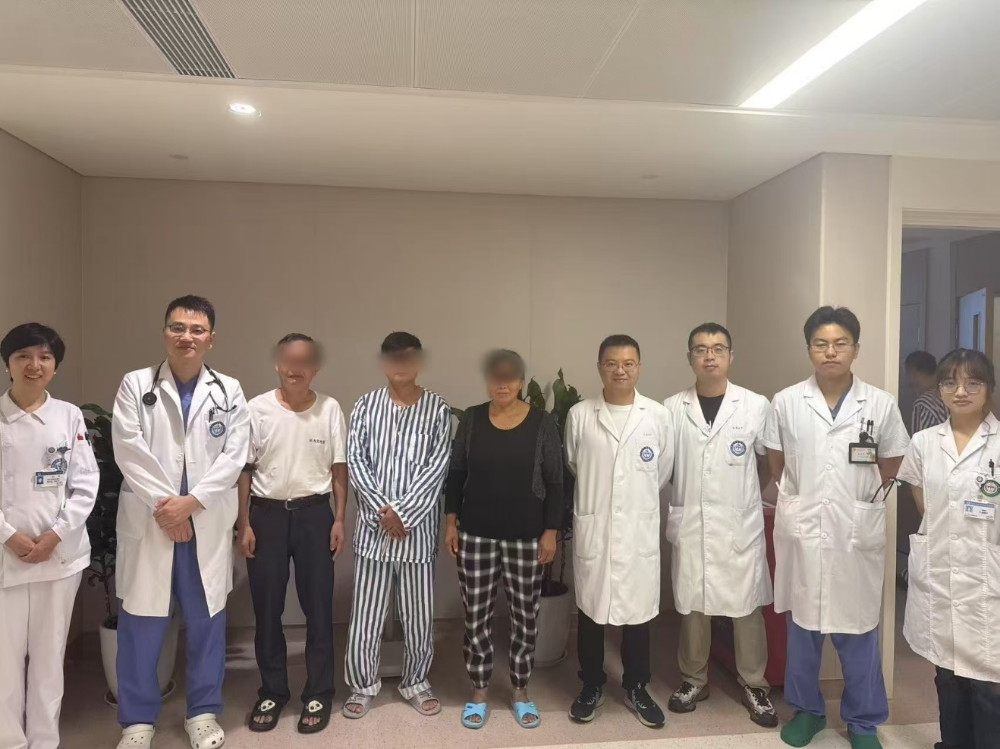
Photo of the team from the Department of Cardiac and Great Vascular Surgery, West China Hospital of Sichuan University, led by Dr. Xiao Zhenghua, together with the patient and family members. / Image Source: Interviewee
Patient with Three Cardiac Conditions Posed Major Surgical Challenge
In June 2025, 28-year-old Mr. Chen sought out Dr. Zhenghua Xiao based on his reputation. For over a decade, Mr. Chen had experienced symptoms like dyspnea on exertion and dizziness, which had gradually worsened in recent years. Local hospital examinations had identified an aortic root aneurysm and severe aortic valve regurgitation. The former refers to an abnormal bulging and thinning of the part of the aorta closest to the heart, forming a sac. The latter means the heart's "gate" doesn't close tightly, causing blood to leak back and forcing the heart to work overloaded. Based on this, Mr. Chen required surgery to replace the aortic valve and aortic root. Considering the complexity, he followed his local hospital's advice and came to West China Hospital.
Further investigations revealed more issues. Mr. Chen had a series of vascular anomalies, including a right-sided aortic arch and an aberrant left subclavian artery. A right-sided aortic arch means the aortic arch, which normally curves to the left, curves to the right within the chest. More critically, he had a giant Kommerell's diverticulum in the descending aortic arch, a congenital developmental anomaly with a rupture risk of 6%. If it progressed to an aortic dissection, the rupture risk would soar to 44%. Literature suggests the incidence of a giant aortic diverticulum with an aberrant right subclavian artery is 0.04%-0.4%. A case like Mr. Chen's, with multiple superimposed cardiovascular anomalies, is even rarer.
Dr. Xiao, with his vast experience of four to five thousand cardiac surgeries, had never encountered a similar case. "The patient's cardiovascular anomalies involved both the proximal and distal parts of the heart and required prompt surgical correction," Dr. Xiao told MedJ. The surgery could be performed in multiple stages or address all problems in a single stage, each approach having its pros and cons. A significant drawback of staged surgery is that adhesions from the first procedure make tissues like blood vessels, bones, and muscles less distinct for the second surgery, requiring more time for dissection.
"Sometimes, even endotracheal intubation for a second thoracic surgery can be difficult," Dr. Xiao said.
Furthermore, if the aortic valve issue was corrected first, the Kommerell's diverticulum could rupture at any time, causing rapid blood loss and a high risk of mortality. Addressing the diverticulum first would leave the patient at increasing risk of heart failure related to the severe aortic regurgitation. This increases anesthesia risks for the second surgery and complicates brain protection during cardiopulmonary bypass. Another major issue with staged surgery is cost. "Each procedure, regardless of which problem is addressed first, is expensive, and the total cost increases significantly," Dr. Xiao estimated roughly that staged surgery could cost 400,000 to 500,000 RMB. He understood that Mr. Chen's family circumstances were modest, requiring financial support from relatives.
A single-stage operation places extremely high demands on the medical team. It requires repeated adjustments of the patient's position and cardiopulmonary bypass strategy, utilizing deep hypothermic circulatory arrest, focusing on brain protection strategies like retrograde superior vena cava perfusion, while also protecting the spinal cord and abdominal organs. "The anatomical location of the Kommerell's diverticulum in the descending aortic arch and the aberrant left subclavian artery is very deep, and it also tests surgical anastomotic skills," Dr. Xiao told MedJ.
He explained the various surgical options in detail to the patient and family. After discussion, they decided on a single-stage operation aiming for a definitive cure.
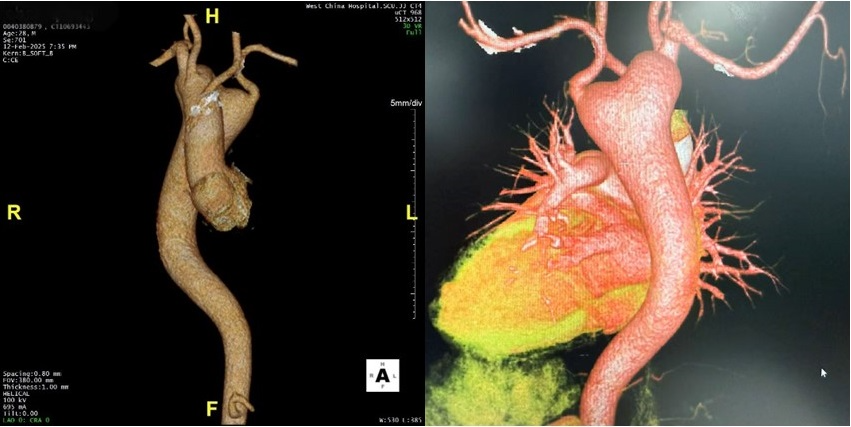
Preoperative CTA revealed aneurysmal dilation of the aortic sinuses, right-sided aortic arch, Kommerell's diverticulum, and descending aortic aneurysm. / Image Source: Interviewee
Reconstructing the Surgery, Even the Tattoo Was Carefully Sutured
For Mr. Chen's case, the Department of Cardiac and Great Vessel Surgery at West China Hospital held pre-operative discussions on the treatment plan. They conducted an extensive literature search. "We first wanted to understand what surgical approaches existed for similar complex anomalies, whether others had done it, how they did it, and what the key post-operative observation indicators and rehabilitation focuses were. We wanted to develop a more comprehensive plan to ensure a smooth procedure," Dr. Xiao told MedJ.
The reality was that no similar cases were reported domestically or internationally, offering no precedent to follow.
Finally, after repeated deliberations by a multidisciplinary expert team, Mr. Chen's surgical plan was confirmed: a single-stage surgical correction performing a Bentall procedure (aortic root replacement), resection of the giant Kommerell's diverticulum, replacement of the posterior segment of the right aortic arch and the descending aorta, and reconstruction of the aberrant left subclavian artery.
On the day of surgery, Dr. Xiao gathered the anesthesia team, cardiopulmonary bypass team, intensive care team, and operating room nurses early. The surgery was planned in four steps.
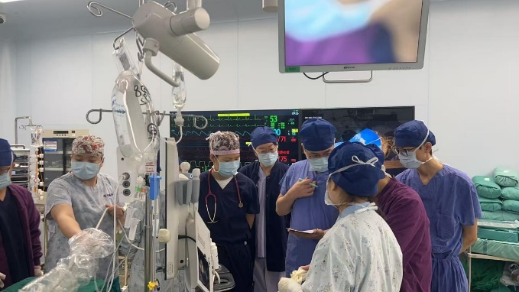
Prior to surgery, the multidisciplinary team convened in the operating room to review procedural details and surgical plan. / Image Source: Interviewee
Step 1: Precise Combined Incision for Optimal Exposure. Initially, the patient was placed in a left semi-lateral position. Via a right anterolateral incision, the surgical team fully mobilized the descending aorta and the aortic diverticulum. Then, Dr. Xiao's team adjusted the operating table, turning the patient supine. A median sternotomy was performed, and cardiopulmonary bypass was established via cannulation of the ascending aorta, superior vena cava, and inferior vena cava. After transecting the ascending aorta and arresting the heart with antegrade cardioplegia, clear dilation of the aortic root and ascending aorta was visible, along with redundant, prolapsed aortic valve leaflets causing severe regurgitation. Dr. Xiao's team resected the damaged aortic valve, mobilized the left and right coronary ostia of the aortic root, while cardiopulmonary bypass continued cooling. "The patient positioning and combined incision were points of focus in our pre-operative discussions," Dr. Xiao told MedJ. The team chose a median sternotomy combined with a right anterolateral incision, resembling a T-shape, to provide excellent exposure.
Step 2: Removing the Diverticular 'Bomb,' Transplanting the Left Subclavian Artery. This was the most critical step of the entire operation. The patient was again positioned in a left semi-lateral position. The team mobilized, ligated, and divided the azygos vein. A cannula was placed in the distal descending aorta, and cooling continued until the nasopharyngeal temperature reached approximately 20°C. Under deep hypothermic circulatory arrest and brain protection via retrograde superior vena cava perfusion, the team resected the giant Kommerell's diverticulum, part of the right-sided distal aortic arch, and the dilated distal descending aorta. A four-branched vascular graft was anastomosed end-to-end to the proximal aortic arch. "Trouble arose with the very first suture," Dr. Xiao told MedJ. The patient's vascular wall tissue, stretched and thickened by the diverticulum, was as fragile and thin as paper. Using the conventional continuous suture technique, the tension on the suture line acted like a saw, instantly "tearing" the vessel wall. "I was momentarily stunned, my heart sank," Dr. Xiao recalled. He knew the anastomotic site was extremely deep, and delayed closure risked major hemorrhage.
He decisively switched to a complete interrupted suture technique.
Unlike the seamless continuous suture, each stitch in an interrupted suture is independent and requires individual tying. It's more time-consuming but offers controlled risk and higher safety. If one stitch isn't perfect, it affects only a single point, avoiding a "chain reaction." The planned duration for this second-stage anastomosis was about 30 minutes. Using the complete interrupted technique, it took approximately 50 minutes. During the reconstruction of the aberrant left subclavian artery, another challenge arose. The structure was located directly behind the esophagus, in a very deep and invisible position. Dr. Xiao had an idea: he asked for a Foley catheter balloon, inserted it behind the esophagus for intraluminal blockade, to fully expose the aberrant left subclavian artery. "We still used the interrupted suture for the anastomosis. After completion, we ensured meticulous hemostasis and gradually rewarmed to a nasopharyngeal temperature of 34°C," Dr. Xiao said. The charm of surgery lies here: "In the operating room, especially with complex cases like this, you always encounter the unexpected. It's quite stimulating."
Step 3: Replacing the Aortic Root and Ascending Aorta (Bentall procedure).
Final Step: Weaning from Cardiopulmonary Bypass, Hemostasis, and Chest Closure.
After addressing all pathologies, the team unclamped the aorta. The heart resumed beating spontaneously, returning to sinus rhythm. As cardiopulmonary bypass was gradually withdrawn, the patient's heart rate and blood pressure remained stable. Transesophageal echocardiography showed good cardiac contractile function and proper opening and closing of the prosthetic aortic valve.
A minor detail: "The patient had a large chest tattoo. I reminded the team to match the pattern and suture carefully to preserve the tattoo's integrity," Dr. Xiao said with a smile, noting this as part of medical humanities. During post-operative review, Dr. Xiao noted the scar over the tattoo was very fine, barely noticeable.
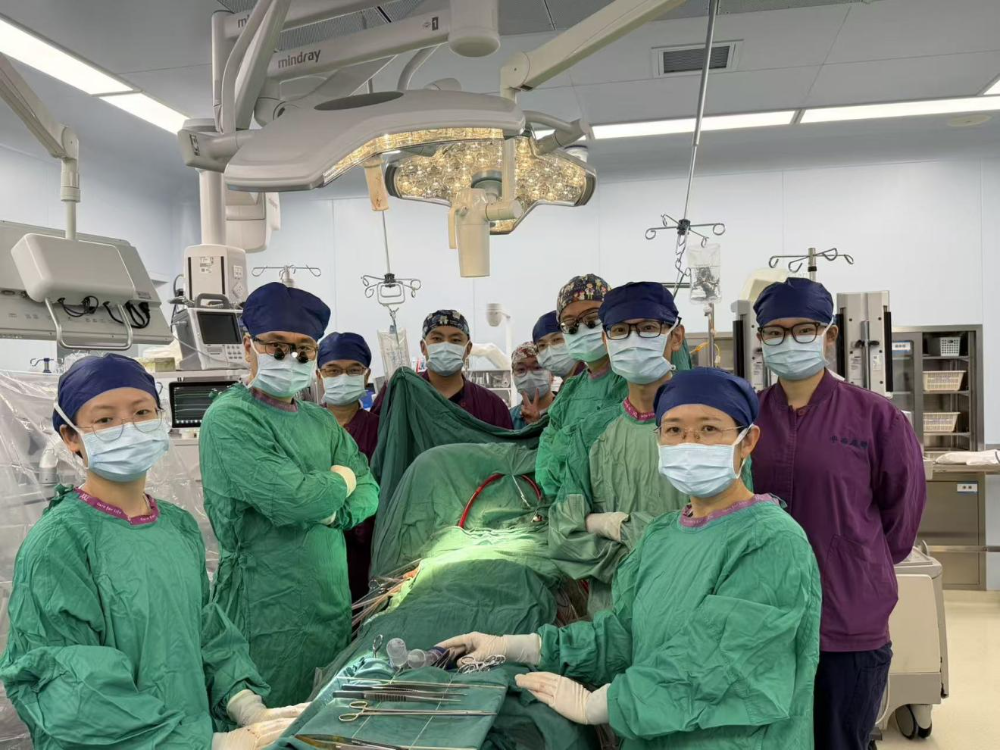
Photo of Key Surgical Team Members / Image Source: Interviewee
'Major Cardiac Overhaul': Patient Mobilized on Day 7
The surgery was successfully completed after nine hours.
Post-operatively, Mr. Chen was transferred to the ICU. Under the care of Deputy Chief Physicians Dr. Ge Cao and Dr. Jingxiu Fan, among others, he regained consciousness that same evening, with normal limb movement and minimal drainage (300ml). The endotracheal tube was removed on the second post-operative day. On post-operative day 7, Mr. Chen was transferred back to the general ward, free of related complications, and was able to get out of bed for light activity the same day. Follow-up chest CT angiography confirmed perfect resection of the aortic root aneurysm and Kommerell's diverticulum. Cardiac ultrasound showed good function of the prosthetic aortic valve.
Mr. Chen was discharged smoothly on August 1. The total cost of the single-stage surgery was just over 100,000 RMB, significantly lower than estimated staged surgery costs. As of this writing, Mr. Chen has completed three outpatient follow-ups. He reports having returned to work normally, with a rosy complexion and a light gait, showing no signs of his past serious illness.
"Under the best circumstances, we hope he can follow up for life. At 10 or 20 years, we can verify the long-term stability and effectiveness of the surgery through his recovery," Dr. Xiao said. This case highlights the importance of thorough pre-operative case discussion and multidisciplinary collaboration.
Thus, the West China team demonstrated the feasibility of single-stage surgery for multiple complex cardiovascular anomalies. Their related strategies for cardiopulmonary bypass and cerebral protection were also validated as safe and effective. Dr. Xiao and his team are compiling the case details and writing a report. "We are detailing the specific processes and nuances to facilitate peer learning."
He emphasized that medical progress requires every doctor to be willing to attempt new approaches and share more experiences, whether successful or not.

