


At the 2026 World Conference on Lung Cancer (WCLC) in Seoul, South Korea, Prof. Li Zhang of Sun Yat-sen University Cancer Center presented the complete results of the phase 3 TAISHAN-302 study during a plenary session (abstract PL02.03). The conference data showed that tambotatug pelitecan (tam-peli), a novel B7-H3-directed antibody-drug conjugate (ADC), improved efficacy outcomes and had a more favorable safety profile than standard topotecan in patients receiving second-line treatment for relapsed small-cell lung cancer (SCLC).
Prof. Li Zhang

- Professor of Medical Oncology and Chief Physician at Sun Yat-sen University Cancer Center
- PhD Supervisor in Medical Oncology
- Specializes in the treatment of primary lung cancer and nasopharyngeal carcinoma, with expertise in chemotherapy, targeted therapy, immunotherapy, multidisciplinary treatment, and palliative care; extensive experience in the organization and implementation of clinical trials of novel anticancer agents
- President-Elect, Committee of Cancer Rehabilitation and Palliative Care, Chinese Anti-Cancer Association (CACA)
- Vice Chair, Clinical Trials Committee, Chinese Anti-Cancer Association (CACA)
- Standing Council Member, Chinese Society of Clinical Oncology (CSCO)
- Chair-Elect, CSCO Expert Committee on Immunotherapy
- Chair, Cancer Chemotherapy Committee, Guangdong Anti-Cancer Association
- Vice Chair, Lung Cancer Committee, Guangdong Anti-Cancer Association
- Director of the Phase I Ward, Sun Yat-sen University Cancer Center
- Deputy Director, Lung Cancer Research Institute, Sun Yat-sen University
- Principal Investigator of the National Key R&D Program of China project on precision diagnosis and treatment of lung cancer (Project No. 2016YFC0905500)
- Principal investigator of multiple international and national multicenter clinical studies
- Author of more than 100 research articles published in oncology journals including The Lancet, The Lancet Oncology, Journal of Clinical Oncology, JAMA Oncology, Annals of Oncology, Journal of the National Cancer Institute (JNCI), and Journal of Thoracic Oncology (JTO)
- Research findings presented in oral sessions at major international conferences, including the American Society of Clinical Oncology (ASCO) Annual Meeting, the European Society for Medical Oncology (ESMO) Congress, and the World Conference on Lung Cancer (WCLC)
- Recipient of the Second Prize of the National Science and Technology Progress Award, the First Prize of the Guangdong Provincial Science and Technology Research Achievement Award, and the Third Prize of the Guangdong Medical and Health Science and Technology Progress Award
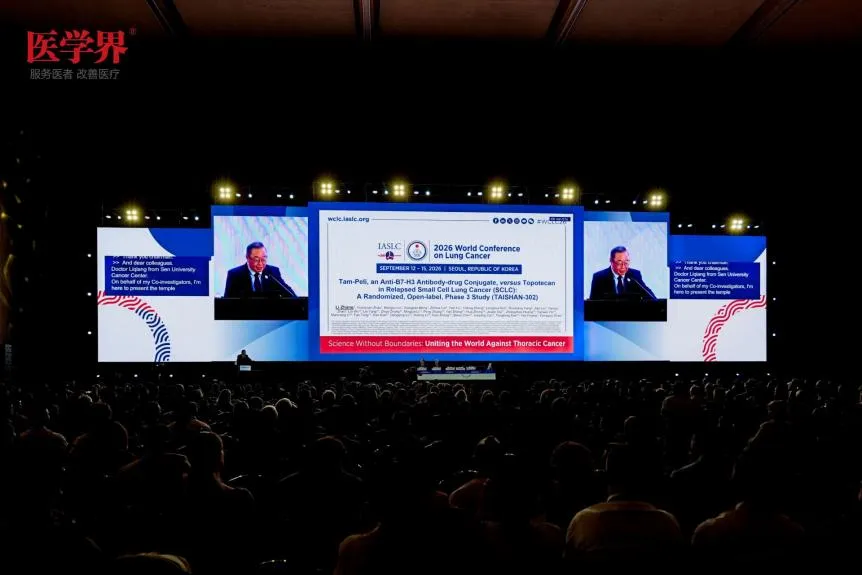
Fig. 1. Prof. Li Zhang Presenting the TAISHAN-302 Results at WCLC 2026
Phase 3 Data Support Efficacy and Safety of Tam-Peli in Second-Line SCLC
TAISHAN-302 is a multicenter, randomized, open-label, prospective phase 3 clinical trial. It enrolled adults with SCLC whose disease had relapsed after first-line therapy, an Eastern Cooperative Oncology Group (ECOG) performance status of 0 or 1, and measurable disease at baseline. Participants were randomly assigned 1:1 to receive tam-peli or standard topotecan until disease progression or unacceptable toxicity. Stratification factors included disease stage (limited-stage or extensive-stage), brain metastasis status, and chemotherapy-free interval (CTFI).
Efficacy Analysis
The study enrolled 451 patients with relapsed SCLC, with balanced baseline clinical characteristics between the two treatment groups. At the May 20, 2026 data cutoff, after a median follow-up of 9.4 months, tam-peli showed improvements across three key efficacy outcomes: overall survival (OS), progression-free survival (PFS), and objective response rate (ORR).
Median OS was 13.3 months with tam-peli and 9.4 months with topotecan, corresponding to a reported 54% reduction in the risk of death. Prespecified subgroup analyses showed a consistent OS benefit with tam-peli regardless of brain metastases, liver metastases, or CTFI, suggesting activity across the evaluated patient subgroups.
Median PFS was 7.4 months with tam-peli versus 2.8 months with topotecan, corresponding to a reported 71% reduction in the risk of disease progression. The ORR was 59.1% with tam-peli and 9.7% with topotecan.
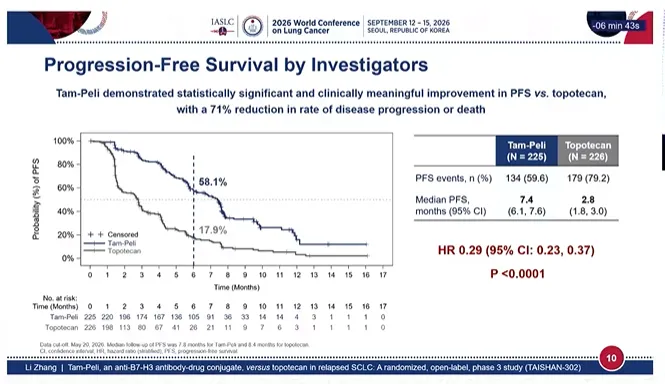
Fig. 2. Progression-Free Survival Results From the TAISHAN-302 Study
Safety Analysis
No new safety signals were identified with tam-peli, and the adverse-event profile was consistent with previous studies and was considered manageable.
Grade 3 or higher treatment-related adverse events (TRAEs) occurred in 46.4% of patients in the tam-peli group and 74.7% of those in the topotecan group. No treatment-related deaths were reported. Interstitial lung disease occurred at a low frequency; the incidence of severe cases was the same in both groups, and no grade 4 or 5 events were reported.
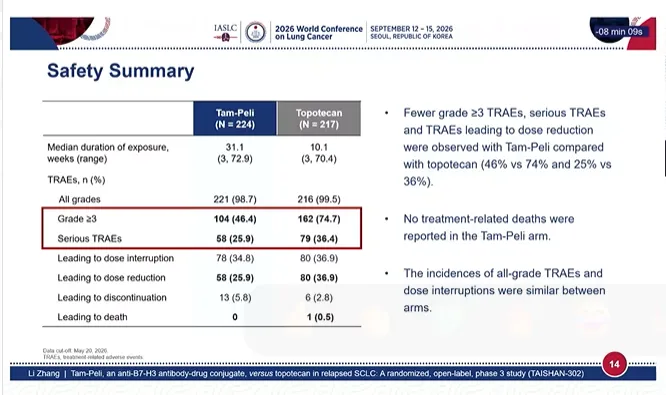
Fig. 3. Safety Results From the TAISHAN-302 Study
Conclusion
The phase 3 TAISHAN-302 results presented at WCLC 2026 indicate that tam-peli may offer an effective and comparatively well-tolerated second-line option for relapsed SCLC. The findings also support further evaluation of B7-H3 as a therapeutic target in SCLC. Because the results were reported as conference data, their interpretation should remain aligned with the full study analysis and subsequent peer-reviewed publication.

