


From September 6 to 9, 2025, the World Conference on Lung Cancer (WCLC) 2025, hosted by the International Association for the Study of Lung Cancer (IASLC), was held in Barcelona, Spain. The conference showcased the latest clinical research advances and academic achievements in lung cancer to global experts, scholars, and professionals.
Study Highlight:
A study led by Dr. David Planchard from the Gustave Roussy Cancer Institute in France, titled “Osimertinib Plus Chemotherapy Versus Osimertinib Alone as First-Line Treatment in Patients with EGFR-Mutated Advanced Non-Small Cell Lung Cancer (NSCLC): Final Overall Survival (OS) Analysis of FLAURA2” (Abstract Number: PL.02.06), was prominently presented at the plenary session.
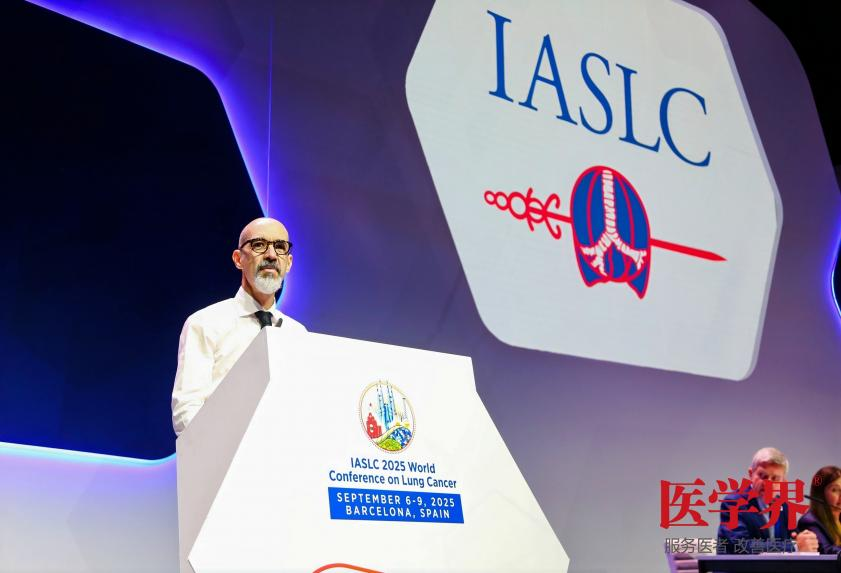
Figure 1: David Planchard
Osimertinib Plus Chemotherapy Achieves Breakthrough Survival for First-Line Treatment of EGFR-Mutated Advanced NSCLC
The FLAURA2 study is a global multicenter, open-label, randomized Phase III clinical trial. It evaluated the efficacy and safety of third-generation EGFR-TKI osimertinib combined with chemotherapy versus osimertinib alone as first-line treatment for EGFR-sensitive mutated advanced NSCLC.
Efficacy Results
Compared with osimertinib monotherapy, the combination therapy demonstrated statistically significant and clinically meaningful improvement in overall survival (OS) (HR = 0.77; 95% CI: 0.61–0.96; p = 0.02; data maturity 57%). The median OS in the combination group reached 47.5 months, significantly longer than 37.6 months in the monotherapy group. The 36-month OS rates were 63% and 51%, respectively, representing one of the longest survival benefits observed in this population in global Phase III studies.
This OS advantage was consistent across all predefined subgroups, including different EGFR mutation types and baseline brain metastasis status.
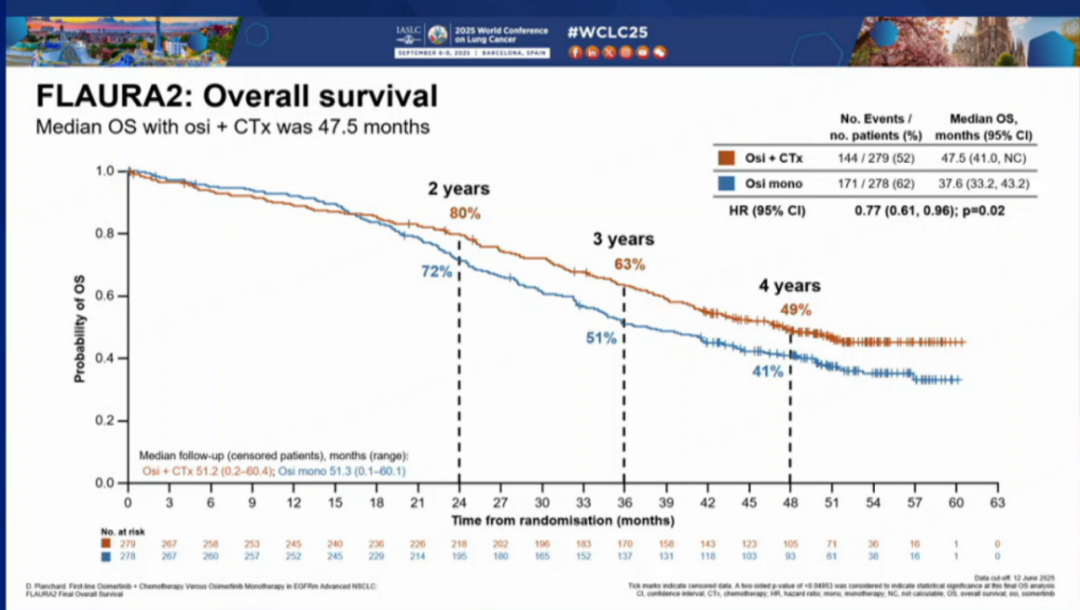
Figure 2: Survival Benefit Curves: Osimertinib Plus Chemotherapy vs. Osimertinib Monotherapy
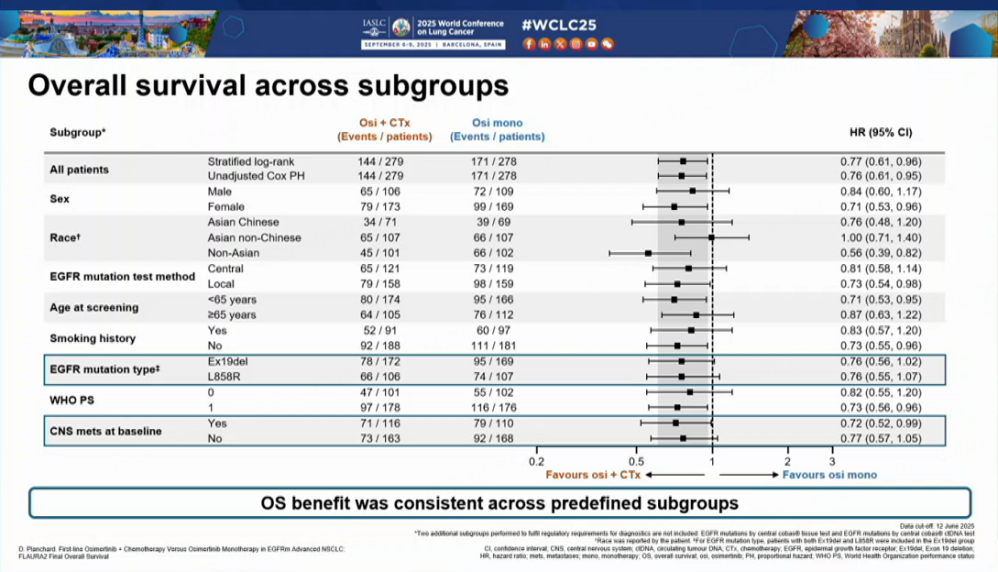
Figure 3: Subgroup Survival Benefit Analysis of Osimertinib Plus Chemotherapy
Treatment Exposure & Safety
Patients in the combination group also had a longer chemotherapy-free interval. The median treatment duration of osimertinib in the combination group was 30.5 months (range: <1–59), compared with 21.2 months (range: <1–59) in the monotherapy group. Meanwhile, the median exposure time to pemetrexed in the combination group was 8.3 months (range: <1–59).
With prolonged treatment, osimertinib combined with chemotherapy continued to demonstrate manageable safety and favorable tolerability, consistent with the known safety profiles of the individual drugs. Since the primary progression-free survival (PFS) analysis was published two years ago, no new safety signals have been observed, and no treatment-related deaths occurred in the combination group.
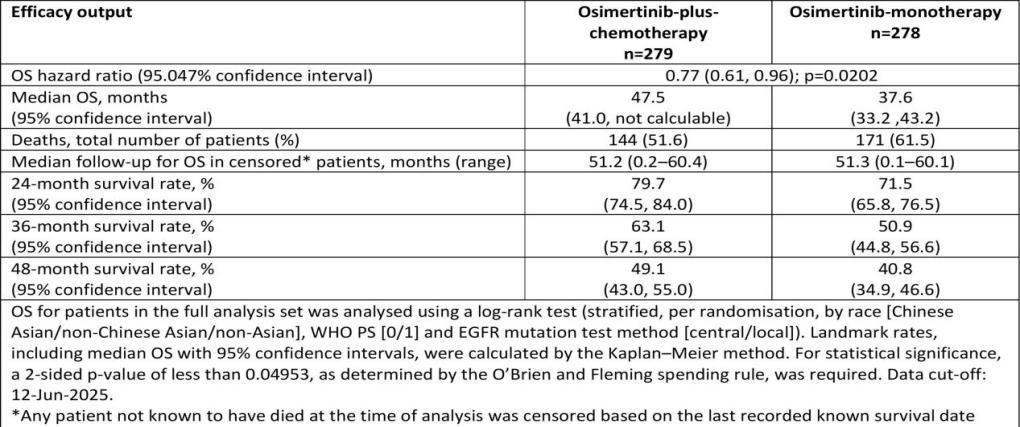
Figure 4: Data of Safety
Expert Commentary:
Dr. David Planchard stated:"In patients with EGFR-mutated advanced NSCLC, first-line treatment with osimertinib combined with chemotherapy achieved a clinically meaningful improvement in overall survival, confirming osimertinib's core role in this treatment regimen. These compelling results from the FLAURA2 study further establish osimertinib combined with chemotherapy as a new standard first-line therapy for patients with EGFR-mutated advanced NSCLC."
Reference:
-
P. Janne, et al. Osimertinib With/Without Platinum-Based Chemotherapy asFirst-line Treatment in Patients with EGFRm Advanced NSCLC (FLAURA2). 2023 WCLC. Abstract PL03.13.
-
David Planchard, et al. FLAURA2: safety and CNS outcomes of first-line osimertinib±chemotherapy inEGFRm advanced NSCLC.2023 ESMO. LBA68.

