


Milestone
This is a platform milestone rather than a drug approval story. The field reached a new stage in 2025 with the release of large virtual-cell models such as CZI's TranscriptFormer and Arc Institute's STATE. The importance of these systems lies not in flashy terminology, but in the transition from rule-based cellular simulation to deep-learning models trained on enormous multimodal datasets. In biopharma terms, that shift matters because it changes virtual cells from an academic modeling ambition into a potential operating system for earlier and cheaper experimental decision making.
Why the concept matters
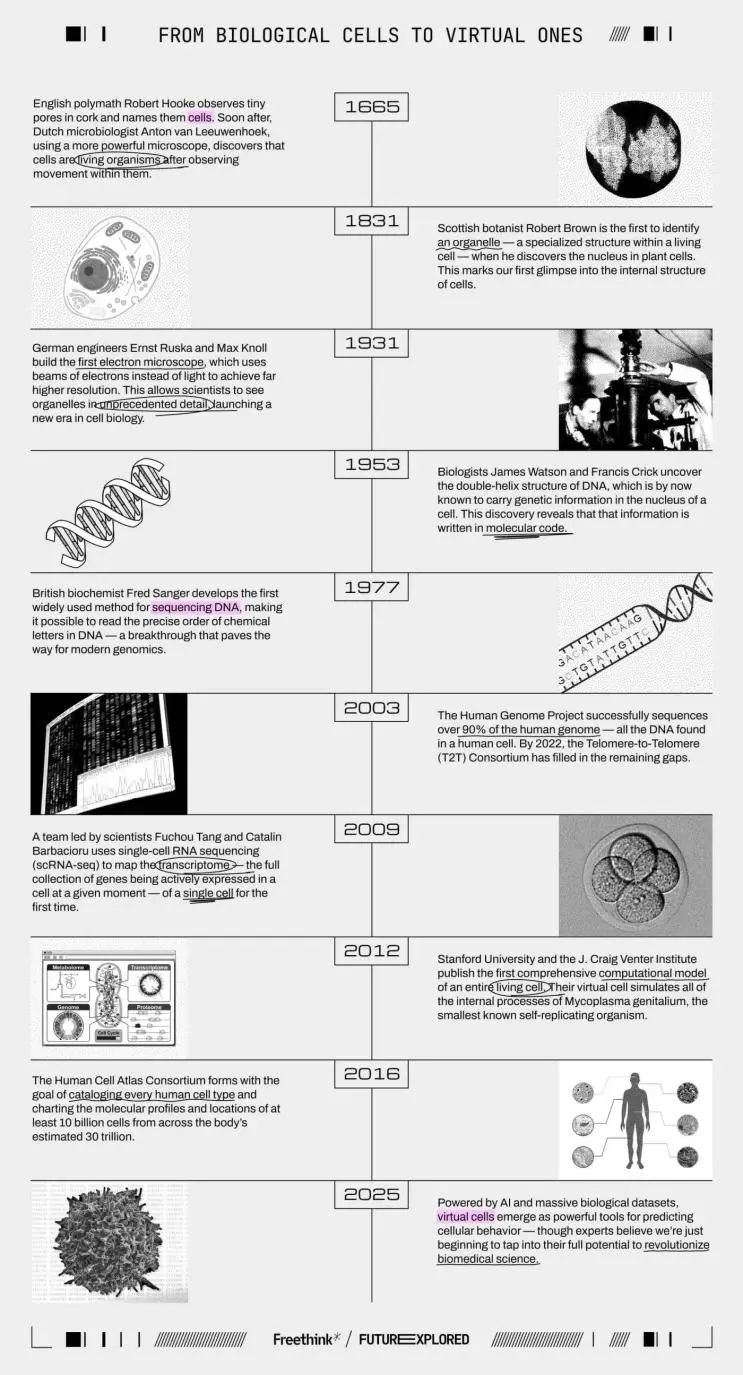
A virtual cell is not merely a digital picture of a cell. It is a computational system intended to model cell state, response to perturbation and, ultimately, causal biological behavior. The concept sits on a long arc of scientific progress, from microscopy and cell theory to whole-genome sequencing and the Human Cell Atlas. That history is important because virtual-cell performance is inseparable from the quality and scale of the biological observations used to train it. Earlier systems depended heavily on experts manually encoding rules.
What AI changes
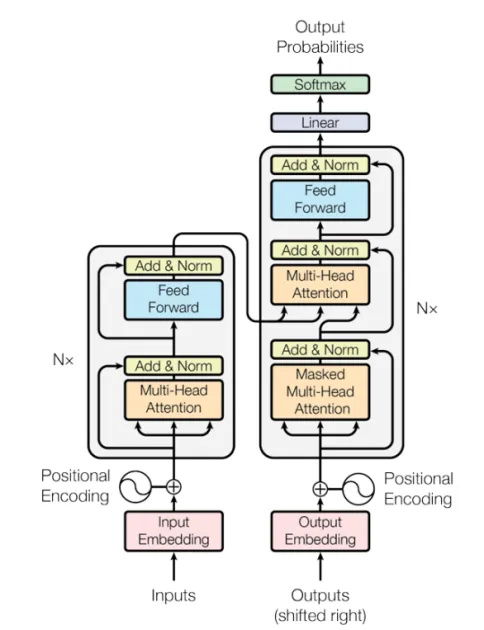
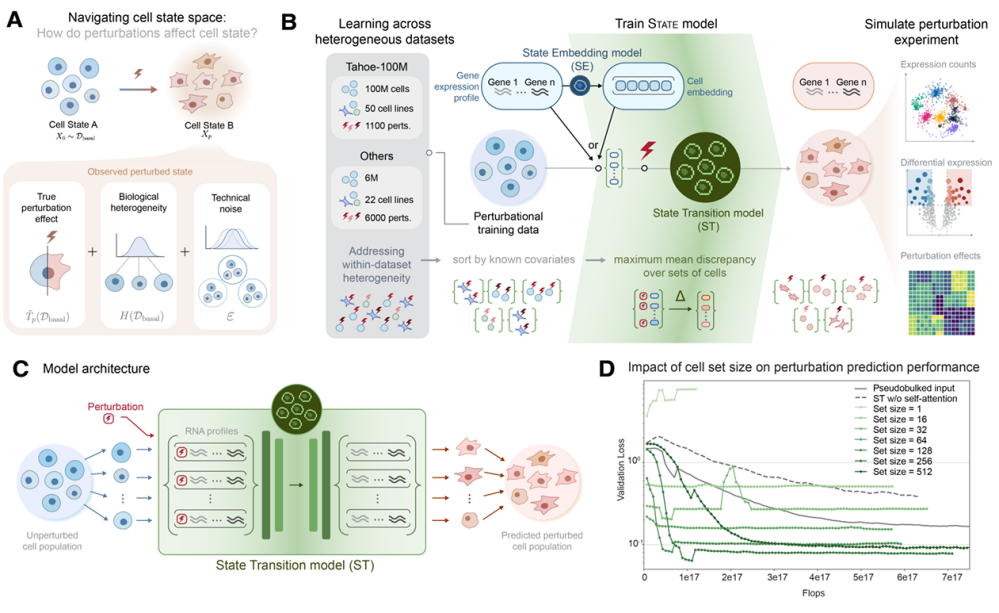
Transformer architectures altered the trajectory by making it possible to infer cellular relationships from large tokenized datasets rather than requiring explicit handcrafted causal diagrams. TranscriptFormer was trained on 112 million cells across 12 species spanning roughly 1.5 billion years of evolution, while STATE used 170 million static cell observations and more than 100 million perturbation samples. These are not just large datasets; they are the raw material for generalization. A model that can infer how an unseen cell may respond to a drug, gene edit or pathogen challenge moves virtual biology much closer to practical utility.
Current evidence and technical limits
Developers have been careful not to oversell maturity. STATE reportedly operates with prediction accuracy in the 40% to 60% range, and its developers view 75% as an important threshold approximating inter-laboratory consistency. That is not yet "virtual patient" reliability. But it is enough to begin restructuring preclinical workflows around prioritization. If a model can triage perturbations, suggest reversions of disease-associated states and nominate unreported combinations, it may substantially reduce experimental burden even before it becomes fully explanatory.
Why this matters for drug development
The most direct implication is earlier-stage R&D efficiency. Drug discovery remains expensive partly because target hypotheses, combination choices and toxicity liabilities are tested too late and too manually. Virtual cells promise a lower-cost loop of prediction, explanation and discovery. Early examples include modeling vorinostat-related tumor suppressor gene activation and exploring combination logic around pembrolizumab. Whether those exact examples scale broadly is less important than the underlying point: if virtual-cell models can simulate perturbation before wet-lab execution, the economics of hypothesis testing change materially.
Risks and reasons for caution
Three barriers remain. First, high-quality standardized spatial and temporal data are still scarce. Second, interpretability remains incomplete; black-box prediction has limits in regulated drug development where mechanism and safety matter. Third, cross-scale integration - from single cells to tissues, organs and whole physiology - is still unresolved. For that reason, virtual cells should not yet be treated as a replacement for experimental pharmacology. They are an augmentation layer, not a substitute.
Outlook
Even with those caveats, the strategic trajectory is strong. Virtual cells have likely moved past the stage of scientific curiosity and into the stage of industrial infrastructure under construction. The next milestone will not be a single model release, but the first clear demonstration that virtual-cell-guided discovery materially improves hit selection, target validation or trial-relevant biomarker strategy. When that happens, biopharma will no longer view these systems as computational side projects. They will become core components of how modern medicines are designed.

