


Using abdominal fat to reconstruct a breast is considered the "pinnacle of breast surgery."
Recently, the Department of Surgical Oncology at Sir Run Run Shaw Hospital, affiliated with Zhejiang University School of Medicine (hereinafter referred to as "Sir Run Run Shaw Hospital"), successfully performed this cutting-edge technique in a clinical setting. They transplanted approximately 3-4 kilograms of excess fat from a patient's lower abdomen to her chest, creating a "flesh-and-blood" breast.
The surgery, known as "Deep Inferior Epigastric Perforator (DIEP) flap breast reconstruction," involves transferring a section of skin and subcutaneous fat from the lower abdomen, along with its blood supply, to the chest to reconstruct a new breast.
According to Dr. Teng Rongyue, Deputy Chief Physician of the Department of Surgical Oncology at Sir Run Run Shaw Hospital, the patient, Ms. Chen, is in her 30s. Five years ago, she underwent a radical mastectomy at a local hospital after being diagnosed with breast cancer.
After years of endocrine therapy, follow-up examinations showed no recurrence of breast cancer, and the tumor treatment was successful. However, the loss of one breast significantly impacted Ms. Chen's quality of life.
In fact, many breast cancer patients experience sadness, anxiety, and other negative emotions after undergoing a mastectomy due to the loss of a body part.
After researching online and consulting with specialists, Ms. Chen visited the breast reconstruction clinic at Sir Run Run Shaw Hospital. Following a comprehensive evaluation by the hospital's surgical oncology team, the DIEP breast reconstruction surgery was determined to be the best option.
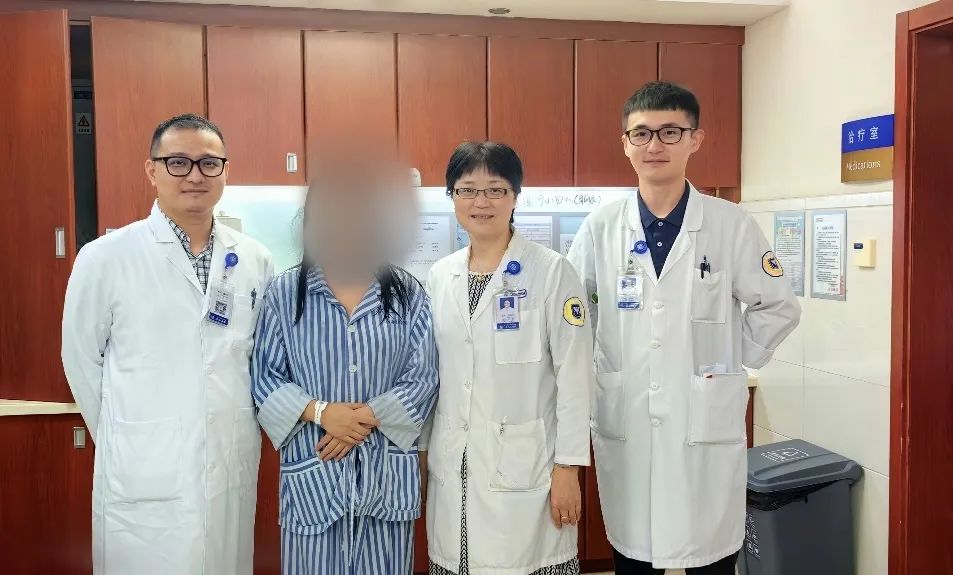
Chief Physician Zheng Heming (second from the right), Deputy Chief Physician Teng Rongyue (left), and Attending Physician Wu Di (right) take a group photo with the patient. All images in this article are provided by the interviewee
There are various types of breast reconstruction techniques available in clinical practice, including artificial implant-based reconstruction. Compared to these methods, DIEP breast reconstruction offers distinct advantages.
Experts explain that, on one hand, the surgery uses the patient's own abdominal fat tissue for breast reconstruction, resulting in a breast that looks and feels almost identical to a natural one. On the other hand, since autologous tissue is used, there is no risk of rejection as with implants, and postoperative complications are minimal.
Additionally, this procedure not only reconstructs the breast but also removes excess skin and fat from the lower abdomen, providing an abdominal contouring and slimming effect. It is particularly suitable for women with excess abdominal fat and loose skin after childbirth.
Despite its significant advantages in postoperative outcomes and functional recovery, DIEP breast reconstruction is highly complex and requires exceptional surgical skills and team collaboration.
Dr. Teng Rongyue told MedJ that the greatest challenge of DIEP breast reconstruction lies in identifying blood vessels of matching caliber under a microscope and shaping the breast after successful vascular anastomosis.
Typically, the surgery involves harvesting a free flap with blood vessels from the patient's lower abdomen, transplanting it to the breast defect area, and performing vascular anastomosis under a microscope. The difficulty lies in reconstructing the flap's circulatory system, i.e., anastomosing the chest wall vessels with the flap vessels.
During this surgery, Dr. Teng Rongyue's team adopted a collaborative approach, dividing into two groups: one group meticulously dissected the recipient site to prepare the vessels for anastomosis, while the other group harvested the viable flap with blood vessels from the abdomen.
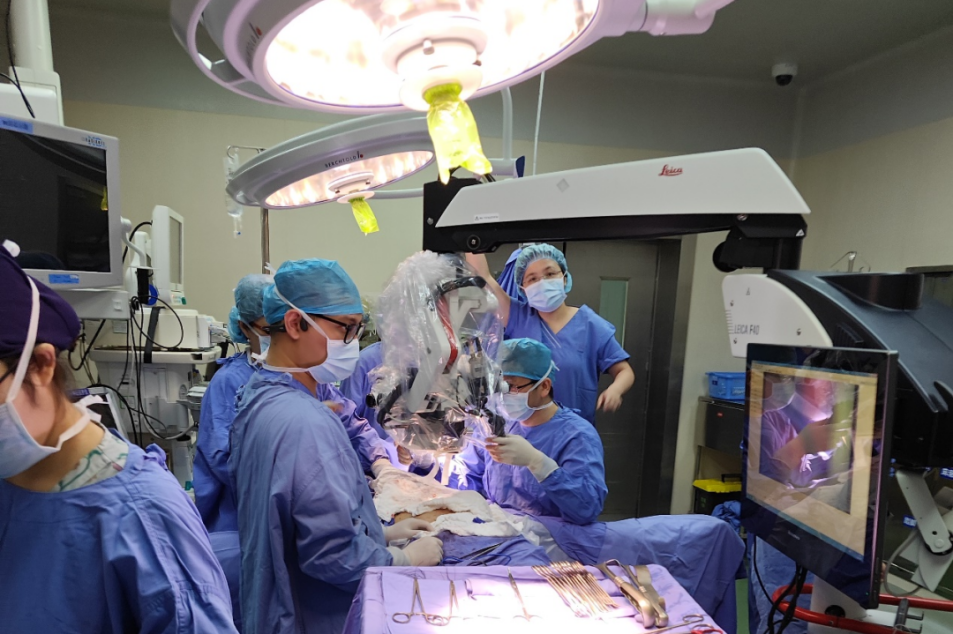
the surgical oncology team at Sir Run Run Shaw Hospital, Zhejiang University, performs surgery on Ms. Chen
"The surgery took seven hours. A significant amount of time was spent on vascular dissection and preparation for anastomosis, with the majority of the time dedicated to shaping the transplanted fat to match the contralateral breast," Dr. Teng explained.
Dr. Teng emphasized the importance of protecting the anastomosed vessels during the surgery. Newly anastomosed vessels are very fragile and must not be overstretched or compressed. If the vessels rupture or become thrombosed, it could lead to flap necrosis and surgical failure.
In China, due to its high technical difficulty and stringent requirements for microsurgical skills, DIEP breast reconstruction typically requires a hospital to have a specialized microsurgical team and multidisciplinary collaboration.
According to Dr. Teng, Sir Run Run Shaw Hospital established a Breast Disease Diagnosis and Treatment Center in 2011. The team has previously collaborated with the hospital's microsurgery department to perform several DIEP breast reconstruction surgeries.
However, the microsurgery team is not specialized in breast surgery and may lack experience in breast shaping and symmetry. In contrast, breast surgeons have a better understanding of the importance of achieving an aesthetically pleasing breast for the patient.
Therefore, the Breast Disease Diagnosis and Treatment Center at Sir Run Run Shaw Hospital has recently established its own microsurgery team, enabling them to independently perform DIEP breast reconstruction surgeries.
Breast cancer is one of the most common malignant tumors among women worldwide, and its incidence is relatively high in China. According to the latest data released by the National Cancer Center, breast cancer is the second most common cancer among women, accounting for 15.6% of new cancer cases in women. In recent years, the incidence of breast cancer in China has shown a trend toward younger patients.
Dr. Teng Rongyue told MedJ that younger breast cancer patients generally have higher demands for quality of life, which is why they are seeing an increasing number of patients seeking breast reconstruction in clinical practice.
Based on his observations, since last year, there has been a significant increase in the number of patients consulting the breast reconstruction clinic at Sir Run Run Shaw Hospital about this surgery. However, he cautioned that the procedure is not suitable for all patients.
"To undergo DIEP breast reconstruction, patients must meet certain criteria. For example, whether the patient smokes or drinks excessively, has underlying conditions such as diabetes, or has undergone radiation therapy during the mastectomy or a cesarean section, as these factors can affect the feasibility and safety of the surgery."

