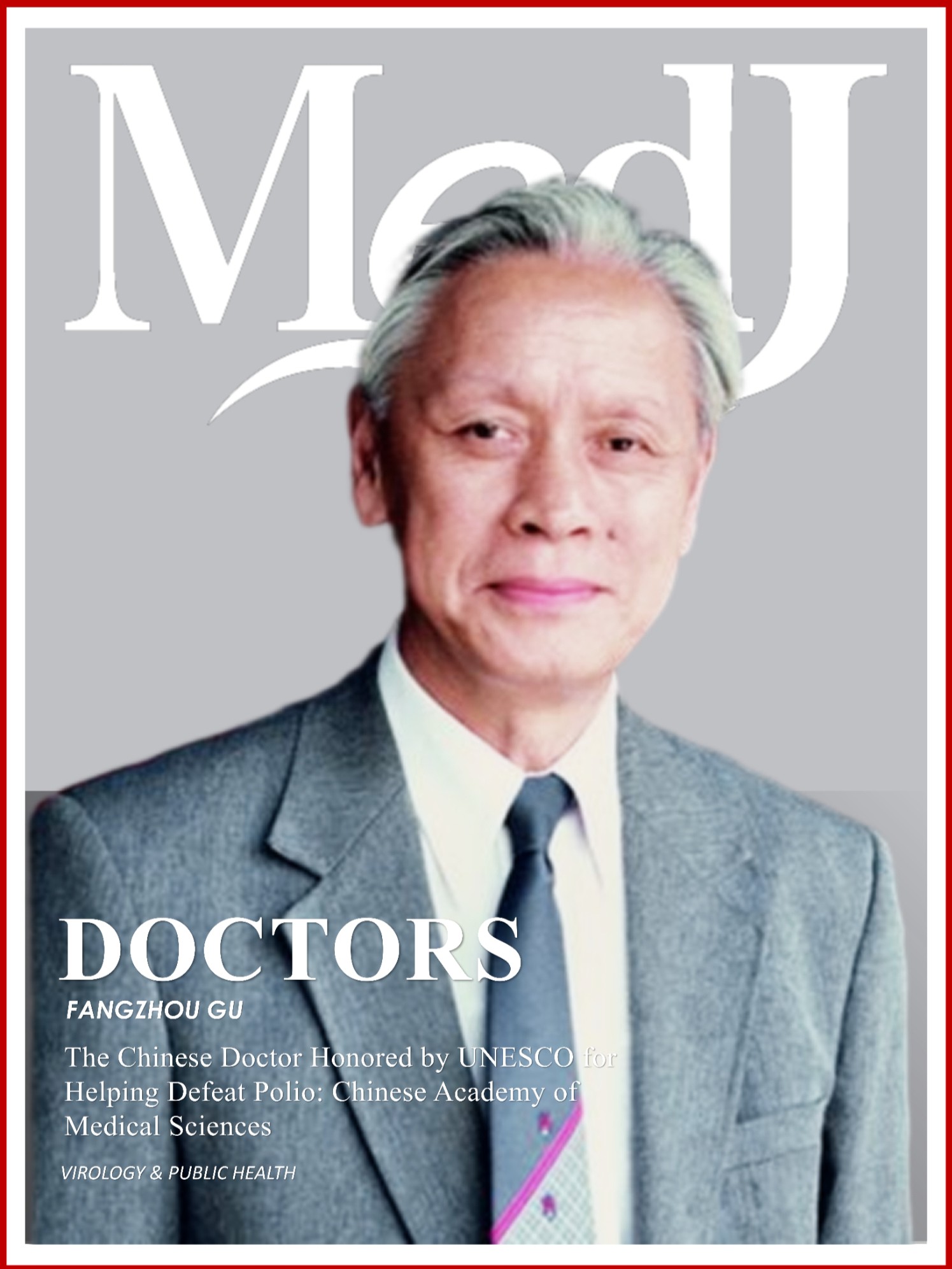
At its forty-third session, the UNESCO General Conference adopted a resolution officially incorporating activities commemorating the 100th anniversary of Prof. Fangzhou Gu's birth into UNESCO's series of memorial events.
Prof. Gu is remembered in China as the 'Grandfather of the Sugar Pill.' The small white pill he helped create protected generations of Chinese children from poliomyelitis and played a decisive role in making China a polio-free country.
Devoting Himself to Public Health
Born in Ningbo, Zhejiang Province, in 1926, Prof. Gu lost his father to kala-azar when he was still a child. His mother later became a midwife, and her path planted the seed of medicine in him.
After entering Peking University Medical School in 1944, he was strongly influenced by public health teaching and came to believe that while one doctor can save many people, public health can benefit millions. Upon graduating in 1950, he chose epidemic prevention work over becoming a clinician.
He later studied virology in the Soviet Union and returned to China in 1955. The same year, a devastating poliomyelitis outbreak struck Nantong in Jiangsu Province, followed by further outbreaks in several other cities. By the late 1950s, polio had become one of the country's gravest public health crises.
Developing the Polio Vaccine
Prof. Gu and his team first isolated poliovirus from patient stool using monkey kidney tissue culture and showed that the epidemic strain in China was predominantly type I. This established an important laboratory basis for diagnosis and control.
After studying vaccine development in the Soviet Union, he concluded that for China, the inactivated vaccine used in the United States was too costly and difficult to scale, whereas the live attenuated route, though not yet mature, was the only realistic option if the country hoped to eliminate polio.
He then led a national collaborative effort, and in 1960 the first pilot-produced batch of vaccine was created in Kunming. Animal tests showed safety and effectiveness, but the next step required human trial.
Testing It on Themselves
Prof. Gu and his colleagues first drank the vaccine solution themselves. Then, facing enormous uncertainty, they also allowed their own children to take it. After no severe adverse reactions were seen, larger trials in children were carried out.
By the end of 1960, millions of doses had been used in several cities and the vaccine proved both safe and effective. Prof. Gu then confronted a practical challenge: the liquid vaccine was hard to store and transport in a vast country. To solve that problem, he and his colleagues transformed it into the now famous sugar-pill form, which children could take easily and which was far more suitable for nationwide promotion.
The sugar-pill vaccine was rolled out across China in 1965. With continued vaccination, cases fell rapidly. After the final indigenous wild-virus case was recorded in 1994, no further cases of that kind were seen. In 2000, China formally certified elimination of poliomyelitis.
Prof. Gu later said with characteristic modesty that in his whole life he had really done only one thing: he made one tiny sugar pill. The new UNESCO commemoration is therefore both international recognition and a tribute to a lifetime devoted to disease prevention.