


At the 29th CSCO Annual Meeting in Jinan, China (Sept 17–19, 2026), Prof. Heinz-Josef Lenz of USC Norris Comprehensive Cancer Center and Prof. Suzhan Zhang of the Second Affiliated Hospital of Zhejiang University School of Medicine joined MedJ’s “China–World Top Talk” session, “Colorectal Cancer · Traceability & Verification: Two-Decade Global Validation of Molecular Stratification From CMS Classification to Primary Tumor Site in East–West Populations.” The discussion traced two decades of evidence in colorectal cancer molecular classification, from consensus molecular subtypes (CMS) to primary tumor location, while examining how findings have been validated across East–West populations and how international collaboration has evolved.
Article Key Points
- CMS classification (CMS1-CMS4) identifies biologically distinct CRC subtypes; not yet approved for routine clinical use
- Anti-EGFR improves OS vs bevacizumab in left-sided RAS/BRAF wild-type mCRC; right-sided benefit is smaller
- CSCO guidelines have not adopted CMS; MSI/dMMR testing is now mandatory for all newly diagnosed CRC patients in China
- Xu Ruihua-led PD-1 neoadjuvant trial for dMMR CRC approved; CSCO recommends MMR testing before treatment
- China has full testing capability; bottleneck is the pathway between test approval and guideline recommendation
Twenty Years of Molecular Stratification
Lenz opened by framing the central consensus of two decades of molecular stratification: colorectal cancer is not a single disease but a group of biologically distinct entities. He noted that the original value of CMS classification lies not in prognosis prediction but in dissecting underlying biology. Earlier research had focused on DNA-level mutations such as KRAS and BRAF, while CMS took a different approach, with the central goal of identifying biologically heterogeneous subgroups within colorectal cancer. The four subtypes CMS1 through CMS4 are each driven by independent pathways, breaking what was once “one cancer” into multiple independent biological narratives.
Lenz acknowledged that CMS classification has not yet entered routine clinical use. One reason, he said, is that the United States has not approved its use for clinical decision-making, leaving physicians unable to base treatment on RNA expression subtypes. In practice, he still reviews RNA sequencing results because differences in inflammatory, WNT, and BRAF pathways across subtypes are clearly recognizable, but this “seeing” has not yet translated into tools that directly guide treatment.
The core value of CMS classification, Lenz said, lies on the drug development side. When a drug targets a specific pathway defined by CMS, prespecifying the subtype substantially increases the hit rate in development. He suggested that future CMS classification will be refined further, with more granular inflammatory gene expression or angiogenic features used to select better-matched targets and populations.
Beyond molecular subtypes, the prognostic and predictive differences between left-sided and right-sided primary tumors have been repeatedly confirmed. Right-sided tumors overall carry a worse prognosis, and treatment choices also differ: in first-line treatment of RAS/BRAF wild-type metastatic colorectal cancer (mCRC), anti-EGFR monoclonal antibodies such as cetuximab yield significantly better efficacy in left-sided tumors, with chemotherapy combinations delivering superior overall survival compared with bevacizumab-based regimens; in right-sided tumors, anti-EGFR benefit is markedly reduced. Therefore, when making first-line targeted therapy decisions, primary tumor location must be considered alongside RAS and BRAF status.
Right-sided colon cancer, however, remains in a predicament of “knowing it is hard to treat but lacking a dedicated regimen.” Lenz said the field has identified which drugs perform poorly in right-sided tumors but has not yet found a treatment that is clearly effective specifically for right-sided colon cancer, and progress remains at the stage of “deepening the understanding of biological differences.” The irreplaceable clinical value of primary tumor location, he added, lies precisely in its independent prognostic and predictive value beyond molecular markers, which molecular markers alone cannot fully capture.
Expert Profile: Prof. Heinz-Josef Lenz

- Associate Director for Research Programs and Director, Gastrointestinal Cancer Program, USC Norris Comprehensive Cancer Center
- Doctor of Medicine, Johannes Gutenberg University Mainz, Germany
- Chair, Translational Medicine Subcommittee, SWOG Gastrointestinal Committee
- Member, NCI Gastrointestinal and Esophageal Working Group, Clinical Trial Planning Committee, and Investigational Drug Steering Committee
- Co-Principal Investigator, UG1 CA 062505 (past 20 years)
- Site Leader, NCI UM1 Project at USC Norris Comprehensive Cancer Center
- Principal Investigator of an NCI-funded laboratory developing novel agents based on gastrointestinal cancer preclinical models
- Pioneered measurement of intratumoral RNA levels associated with 5-fluorouracil/oxaliplatin efficacy
- Led the first randomized phase II prospective trial, to his knowledge, based on gene expression in formalin-fixed paraffin-embedded (FFPE) specimens
- Demonstrated primary tumor location as an independent predictive/prognostic biomarker, subsequently incorporated into NCCN guidelines
- Co-established the consensus molecular subtype (CMS) classification defining new predictive/prognostic subgroups in colorectal cancer, now broadly used in global drug development
Why China Can “See It but Cannot Use It”
Zhang reflected that CMS classification in China took a path almost synchronous with the West, heating up around ten years ago, but similarly stalling at the clinical end. He recalled that at the time, large volumes of Western research data confirmed that colorectal cancer is not a single disease and requires gene- and location-based stratification. The field had then hoped that colorectal cancer would become a flagship for precision medicine, with genomic typing directly matched to differentiated treatment plans.
Looking back over the decade, Zhang’s conclusion aligns closely with Lenz’s: scientifically established, clinically absent. He noted that CMS classification is a valuable research tool but has not entered routine clinical practice, and the CSCO guideline has not adopted CMS classification, with the consensus remaining that “more clinical evidence is needed.”
The barrier to implementation, Zhang said, is not conceptual but a dual absence at both the basic and clinical ends. At the basic end, there is a shortage of local data and a need for more accessible and affordable testing technologies; at the clinical end, there is a lack of precision therapies targeting the different CMS subtypes. In addition, clinical habit inertia is significant: surgeons are accustomed to treating colorectal cancer with a uniform surgical approach, while medical oncologists emphasize subtype-stratified therapy, and the resulting conceptual gap naturally slows clinical adaptation.
Compared with the implementation struggles of CMS classification, microsatellite instability/deficient mismatch repair (MSI/dMMR) testing in China has completed the leap from “should we test” to “must test.” Zhang outlined the guideline implementation pathway: the CSCO guideline serves both clinical drug-use guidance and medical insurance alignment, so genetic testing is layered. Baseline screening is recommended for newly diagnosed patients, with additional gene tests added for recurrent or metastatic disease based on clinical context, while actual execution depends on regional insurance capacity and hospital testing capability.
A milestone, Zhang said, was the inclusion of dMMR/MSI status as a mandatory test for all newly diagnosed patients. This update, he emphasized, builds on Lenz’s work and on trials such as NICHE-2. A domestic PD-1 monoclonal antibody neoadjuvant trial for dMMR colorectal cancer led by Prof. Xu Ruihua has received domestic regulatory approval, and the CSCO guideline now recommends that all patients complete MMR gene status testing before any treatment decision. For metastatic colorectal cancer, he added, this testing has “completely transformed clinical practice.”
Implementation at the primary care level remains uneven, and Zhang said this is the core urgency he hopes to convey through this CSCO session. He acknowledged that some primary care physicians are still unfamiliar with this standard requirement, and his team continues to see dMMR patients referred after 2-3 cycles of chemotherapy with poor response, requiring treatment plan adjustments. This “chemotherapy first, typing later” sequence error is a direct reflection that the test-first concept has not yet penetrated downward.
Lenz added a common misconception: what China lacks is not testing technology, but the pathway between test approval and guideline recommendation. China has the technical capability to perform all relevant tests, he said; the key variable is which tests receive official approval and guideline endorsement. Guidelines themselves are the strongest driving tool: in the United States, NCCN-recommended tests or drugs are typically covered by insurance even without FDA approval, and China’s CSCO guideline is also driving the translation from scientific consensus to patient benefit.
Expert Profile: Prof. Suzhan Zhang
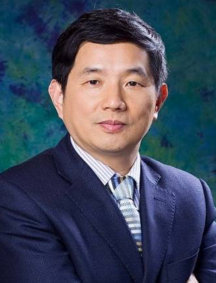
- Professor and Doctoral Supervisor
- Director, Cancer Center, Second Affiliated Hospital of Zhejiang University School of Medicine
- Former Chair, Colorectal Cancer Committee, China Anti-Cancer Association (CACA)
- Former Chair, Colorectal Cancer Expert Committee, Chinese Society of Clinical Oncology (CSCO)
- Group Leader, Expert Group on Early Diagnosis and Treatment of Colorectal Cancer, National Health Commission
- Editor-in-Chief, Journal of Practical Oncology
- Regional Chair, International University Colon and Rectal Surgeons Association
- Led the development of the National Health Commission Technical Protocol for Early Diagnosis and Treatment of Colorectal Cancer
- Led the development of National Health Commission standards and guidelines for colorectal cancer multidisciplinary team (MDT) care
- Led the development of National Health Commission and CSCO colorectal cancer diagnosis and treatment guidelines
- Principal Investigator of National Natural Science Foundation of China major research projects, 863 Program, National Science and Technology Support Program, and Zhejiang Province major science and technology projects
- Corresponding author of dozens of SCI publications in Clinical Cancer Research, Cancer Letters, BBCR, and Cancer Prevention Research, among others
- Recipient of one National Science and Technology Progress Award (Second Class), one National Science and Technology Progress Award (Third Class), one Zhejiang Province Science and Technology Progress Award (First Class), and two Zhejiang Province Science and Technology Progress Awards (Second Class)
Global Standards and China’s Local Realities
Lenz said the core proposition of international multicenter studies and guideline development is how to balance population differences within a unified framework. The value of global trials, he said, lies precisely in exposing those differences. Oncology research and drug development are now a global collaborative enterprise, with multiple new drugs and clinical studies from China moving toward global reach. Clinical trial design for novel targeted agents is becoming a standardization opportunity, he added, and biomarker stratification is now common practice. Systematic collection of tissue and blood samples in studies enables deeper dissection of efficacy and resistance mechanisms, and this in itself is the ongoing deepening of global collaboration.
Drug efficacy and toxicity profiles do differ across populations, Lenz noted, citing experience with multiple drug classes including immunotherapy. Only by completing global trials can these differences be fully captured and the optimal use of a drug defined. Population diversity, he said, is the strength of research, not a weakness.
In developing clinical guidelines in China, scientific evidence alone is not enough; policy environment and drug supply realities must also be considered. Zhang said that after global research data are released, the international community updates guidelines quickly, but China must additionally weigh two core factors: whether medical insurance can accommodate the new therapy, and whether drug supply is stable. In earlier years, even high-quality clinical data often failed to translate into drug access in China, with patients resorting to special channels; this situation has gradually improved in recent years.
Volume-based procurement (VBP) policy introduces additional constraints on hospital access. Even after a drug is approved, VBP and other policies may still affect its entry into hospitals, Zhang said, and this is also a consideration in guideline development. Lenz added that this is precisely an access challenge that global collaboration needs to address: the scientific consensus is clear enough, but the difficulty lies in getting payment and supply systems across countries to keep pace with technological progress.
From One-Way Learning to a Two-Way Handshake
Lenz described CSCO as a special platform for exchange. He said CSCO brings together Chinese oncology colleagues, and that genuine collaboration often emerges in the breaks between sessions—the discussions with Prof. Zhang and other teams are where collaboration truly begins. Chinese pharmaceutical companies’ drug development is opening new space for global R&D, he added: multiple Chinese new drugs have already been licensed to Europe and the United States, where American physicians can directly use them. In return, he said, he would also like to learn about these drugs’ real clinical experience in Chinese populations, since “no one holds all the answers,” and clinical trial design is the area where collaboration is most readily initiated.
Zhang sketched the changing role of Chinese scholars through personal experience. He recalled that earlier in his career, he attended ASCO annual meetings in the United States as if reading the “Bible,” learning the latest progress and returning with insights each time. Now, at CSCO, he can invite Prof. Lenz to China, and they jointly discuss clinical trials, exchange views, and contribute patient data to export Chinese experience to the global community. He expressed hope that such two-way exchange continues to deepen, allowing knowledge to flow faster for the benefit of patients worldwide.
Lenz concluded: “This is a two-way road. We can give each other a great deal of help.”
Closing Note
From CMS classification to primary tumor location, the central thread of 20 years of molecular stratification has remained consistent: affordable precision testing and tailored targeted therapies must advance together, global unified trial frameworks must accommodate population differences, and East-West academic collaboration is moving from “one-way learning” toward genuine “two-way handshake.”

