


The ESMO 2026 Annual Meeting was held Oct 23 to 27, 2026, in Madrid, Spain. On Oct 24, Prof. Yuankai Shi of the National Cancer Center, Chinese Academy of Medical Sciences, presented the results of the first-in-human phase 1 study of TRS005 (abstract 1458O) in transformed diffuse large B-cell lymphoma (t-DLBCL), a disease for which no standard treatment is supported by randomized data.
Article Key Points
- Phase 1, 29 hospitals in China: 146 patients with CD20-positive B-cell lymphoma treated; 31 had t-DLBCL
- Dose escalation 0.1 to 2.1 mg/kg; recommended phase 2 dose 1.8 mg/kg; DLT occurred at 2.1 mg/kg
- t-DLBCL (n=28 evaluable): ORR 50.0% (95% CI 30.7-69.4), DCR 71.4% (95% CI 51.3-86.8)
- Median PFS 8.67 months (95% CI 1.81-13.50), median DoR 12.91 months, median OS 19.29 months
- At 1.8 mg/kg: ORR 50.0%, DCR 70.8%, median PFS 9.43 months, median OS 17.08 months
- Target lesion shrinkage in 64.3% (18/28) of evaluable patients with t-DLBCL
- Grade 3 or higher TRAEs: neutrophil count decreased 58.1% (18) and white blood cell count decreased 41.9% (13)
- Peripheral neuropathy: TEAE 15.1%, TRAE 14.4% across 146 patients; all grade 1 or 2, none grade 3 or higher
- Evidence status: phase 1 results reported as abstract 1458O at ESMO 2026; not yet peer-reviewed
 Fig.1. Prof. Yuankai Shi Presenting the TRS005 Phase 1 Results at the ESMO 2026 Meeting
A Limited Treatment Landscape in Transformed DLBCL
t-DLBCL arises from transformation of an indolent B-cell lymphoma and was recognized as a separate disease entity in the fifth edition of the World Health Organization classification in 2022. Compared with de novo DLBCL, t-DLBCL carries a worse prognosis and shorter overall survival. No standard treatment is supported by randomized clinical trial data, and after failure of rituximab-based chemotherapy, treatment options are extremely limited. The prognosis is poor enough that most such patients are seen in the clinic after several lines of systemic therapy.
TRS005 is an antibody-drug conjugate (ADC) composed of an antibody, a cleavable linker and the cytotoxic payload monomethyl auristatin E (MMAE). After binding CD20 on the surface of B-cell lymphoma cells, the conjugate is internalized and releases MMAE in the lysosome, directly killing tumor cells and producing a bystander effect. The investigators also described immune-mediated activity, with calreticulin (CRT), ATP and high mobility group box 1 (HMGB1) signaling contributing to activation of innate immune cells, cytokine release and induction of a tumor-specific cytotoxic T-lymphocyte (CTL) response.
Study Design and Dose Escalation
This was a first-in-human, multicenter phase 1 study conducted at 29 hospitals across China. Eligible patients had CD20-positive B-cell lymphoma and had received failure of at least two prior lines of standard therapy. For t-DLBCL, patients were required to provide histologic evidence of transformation from an indolent B-cell lymphoma to DLBCL.
Six dose levels were evaluated: 0.1, 0.5, 1.0, 1.5, 1.8 and 2.1 mg/kg, with a dose-escalation phase followed by a dose-expansion phase. TRS005 was given intravenously once every 21 days on day 1 of each cycle, continuing until disease progression, with safety and efficacy assessed every two cycles.
Between Aug 24, 2020 and Apr 1, 2024, 146 patients received treatment, including 19 in dose escalation and 127 in dose expansion; 31 of these patients had t-DLBCL. The data cutoff was Sept 19, 2025. Among the 31 patients with t-DLBCL, the median age was 60 years, 19 were male and 12 female, 17 were aged 60 years or older, 20 had an Eastern Cooperative Oncology Group (ECOG) performance status of 1, and 22 had a lactate dehydrogenase level above the upper limit of normal.
The primary endpoints were the maximum tolerated dose (MTD) and the recommended phase 2 dose (RP2D). Secondary endpoints included efficacy measures: objective response rate (ORR), disease control rate (DCR), progression-free survival (PFS), duration of response (DoR) and pharmacokinetics.
Efficacy in Transformed DLBCL
Among 28 evaluable patients with t-DLBCL, ORR was 50.0% (14/28, 95% CI 30.7-69.4) and DCR was 71.4% (20/28, 95% CI 51.3-86.8). Target lesions decreased in size in 64.3% (18/28) of patients. Tumor shrinkage was already evident at the first response assessment and was maintained with continued treatment.
In the RP2D group of 1.8 mg/kg, ORR was 50.0%, DCR was 70.8%, median PFS was 9.43 months and median OS was 17.08 months.
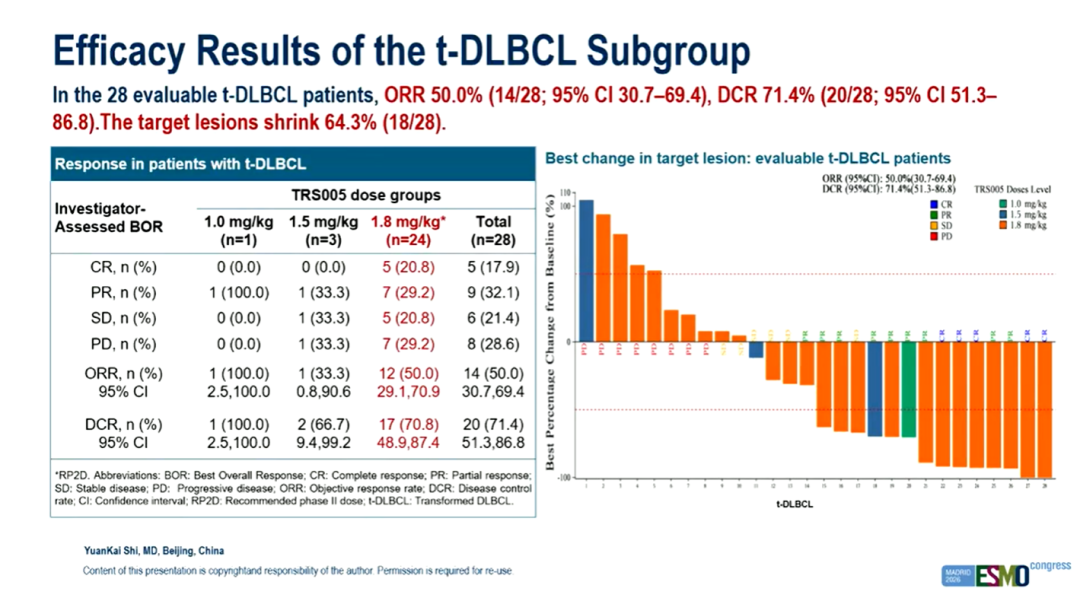 Fig.2. Response Outcomes in 28 Evaluable Patients with Transformed DLBCL
Across the 28 evaluable patients with t-DLBCL, median PFS was 8.67 months (95% CI 1.81-13.50), median DoR was 12.91 months (95% CI 3.84-NE) and median OS was 19.29 months (95% CI 11.33-NE).
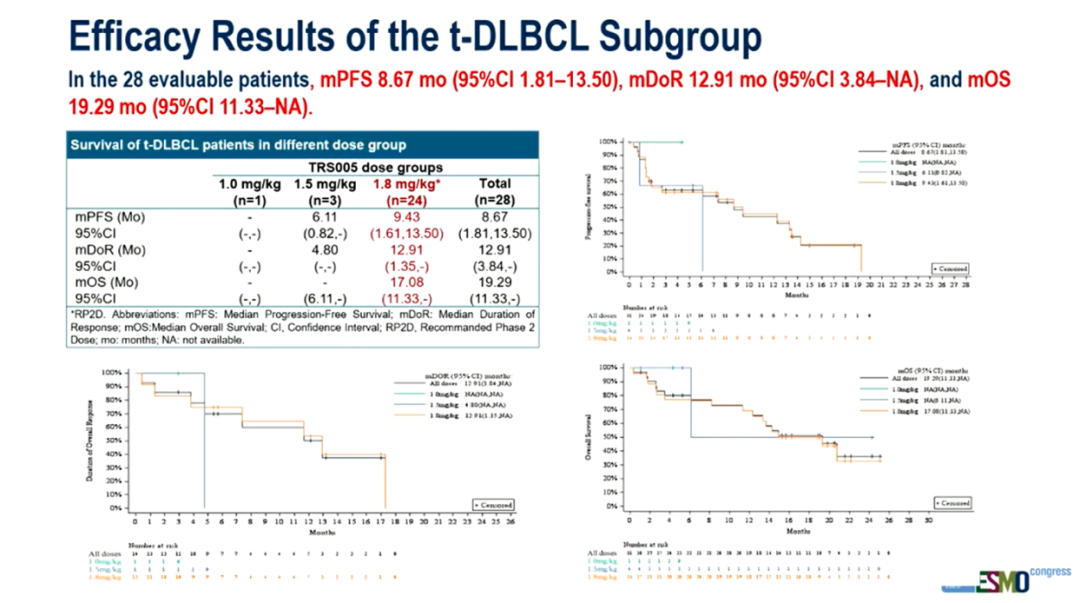 Fig.3. Kaplan-Meier Survival Curves for the Transformed DLBCL Subgroup
Safety
In the 31 patients with t-DLBCL, the most common treatment-related adverse events (TRAEs) of any grade were decreased neutrophil count (80.6%) and decreased white blood cell count (77.4%). Grade 3 or higher TRAEs were also dominated by decreased neutrophil count (18 patients, 58.1%) and decreased white blood cell count (13 patients, 41.9%).
Peripheral neuropathy was an adverse event of special interest. Across all 146 patients, the incidence of treatment-emergent adverse events (TEAEs) of peripheral neuropathy was 15.1% and that of TRAEs was 14.4%. All were grade 1 or 2, with no grade 3 or higher events, and median time to onset ranged from 3.8 to 4.2 months. Only a small number of patients required dose reduction or treatment interruption.
Dose-limiting toxicity occurred in the 2.1 mg/kg group, and the RP2D was set at 1.8 mg/kg. That dose group also had the longest mean duration of treatment, at 199.1 days.
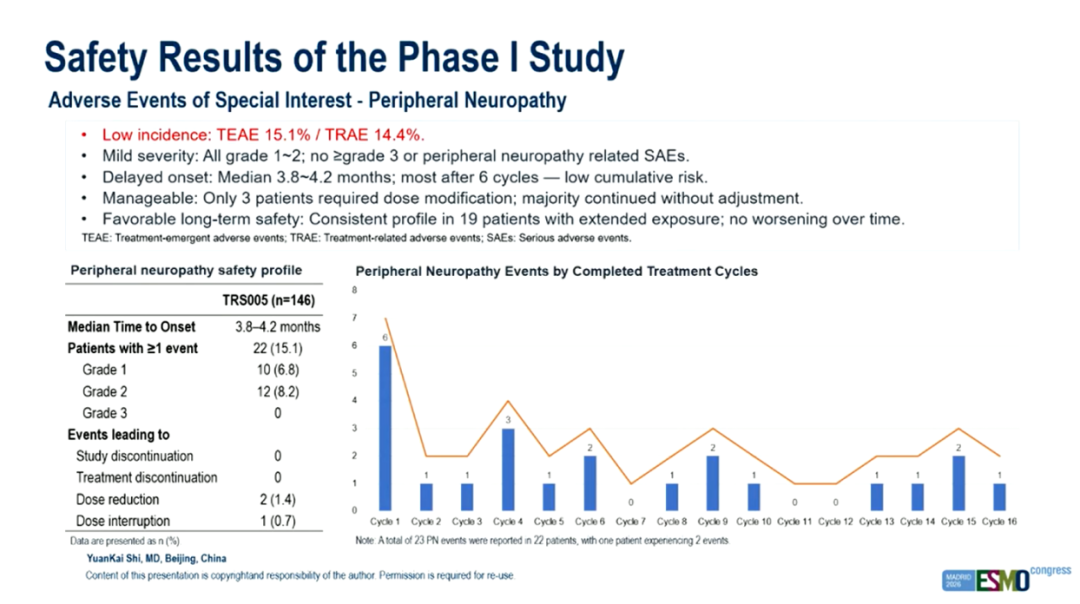 Fig. 4. TRS005-related Peripheral Neuropathy: Incidence, Grade and Outcome
Conclusions
The investigators concluded that TRS005 showed encouraging activity in the t-DLBCL subgroup, with ORR of 50.0%, DCR of 71.4% and median PFS of 8.67 months, and that peripheral neuropathy occurred at a low and manageable rate of 14.4%. The team plans to proceed with a pivotal phase 2 study.

