


At71, Prof. Youlin Qiao speaks as if racing to catch up with something. He walks fast, eats fast, and once he starts talking, the words pour out — but beneath this urgency lies a rare patience.
For nearly 30 years, he has led his team in tireless travels across dozens of Chinese cities and counties — Shanxi, Henan, Xinjiang, Qinghai, Inner Mongolia... “We’ve been everywhere in China” — for one purpose: to make cervical cancer, a preventable disease, disappear from China.
Prof. Qiao is a Distinguished Professor at the Chinese Academy of Medical Sciences / Peking Union Medical College. He does not run outpatient clinics, does not perform surgery. Instead, he uses two “prescriptions” — screening and vaccination — to bring cervical cancer prevention to under-resourced villages and the most remote pastoral regions.
He led China’s first large-population HPV infection study, discovered the bimodal age pattern of HPV infection, and filled in core local data on vaccines and screening. He pushed for the introduction of two imported and one domestic HPV vaccine in China. He led the development of the WHO-certified portable careHPV testing device, enabling cervical cancer screening to reach any remote corner of China and other developing countries...
He likens himself to a “kindler” — using value-based and evidence-based medicine as his basis to discuss with local decision-makers the value of a national cervical cancer screening program and a national HPV vaccination program, igniting hope for universal vaccine access. The first free HPV vaccination for middle-school girls in China, launched in Jungar Banner in 2020, and HPV vaccine inclusion in the National Immunization Program in 2025 — these two milestone breakthroughs are inseparable from the dedication of this public health medical expert.
For his series of contributions, on August 9, Prof. Qiao received the Public Service Award at the 7th Mount Tai Value-Based Healthcare Awards, in recognition of “outstanding contributions to eliminating cervical cancer and safeguarding the health of Chinese women, with science and conscience.”
A “Failure to Find Funding” That Forced a Career Pivot
Few people know that one of China’s most important drivers of cervical cancer prevention did not initially study cervical cancer at all.
In 1983, when Prof. Qiao began his career, he worked on occupational lung cancer. Tin miners in Gejiu, Yunnan had strikingly high lung cancer rates — an issue that had even drawn the attention of Premier Zhou Enlai. He later turned to esophageal cancer and other upper gastrointestinal cancers, with his main battlefield in the Taihang Mountains and western China.
In 1997, after completing his PhD at the Johns Hopkins Bloomberg School of Public Health and further training at the U.S. National Institutes of Health / National Cancer Institute, Prof. Qiao was recruited back to China by the Chinese Academy of Medical Sciences / Peking Union Medical University as a “cross-century discipline leader.”
Once home, he needed to find a research topic. Prof. Qiao turned his attention to cervical cancer, which at the time few in China were studying, and applied to the National Natural Science Foundation of China for a cervical cancer epidemiology / etiology study — only to be turned down.
The reviewers’ comments remain unforgettable to this day: “Chinese people have already solved the cervical cancer problem — it’s just early marriage and high fertility; promoting family planning is enough.” Yet by that time, evidence on the relationship between HPV and cervical cancer had become quite strong abroad.
“With1% hope, I’ll give 100% effort.” This is Prof. Qiao’s creed.
Unconvinced, he wrote a letter to the Foundation, attached three foreign papers, and asked the reviewers to “study them.” With no domestic funding available, he turned abroad. With funds secured from the Cleveland Clinic in the United States, in 1999, a head-to-head cervical cancer screening methodology study was launched in Xiangyuan County, Shanxi.
The results were shocking: the high-risk HPV infection rate among Chinese adult women reached 14.2%, while HPV testing detected 95.2% of cervical cancer and precancerous lesions — a remarkable yield.
Almost on a whim, Prof. Qiao submitted the paper to the 2000 European Congress on Gynecological Infections and Cancer, was selected for a fully funded trip to Paris, and came home with the only Eurogin International Award.
“That award changed my research direction overnight,” Prof. Qiao told MedJ.
Cervical cancer is caused by HPV, has a clear precancerous lesion stage, and can be intercepted before it becomes cancer. Among the few cancers that are both “preventable and treatable,” it is the one most worth focusing on.
From then on, he threw himself into it — for 28 years and counting.
The Plight of Grassroots Service Facilities and Cuilan Shen’s Tears
In the first decade after his pivot to cervical cancer, Prof. Qiao’s anti-cancer battlefield was China’s under-resourced countryside.
In the late 20th century, the arid mountain regions of Shanxi, Gansu, Xinjiang, Qinghai and other provinces — where water was scarce, nutrition poor, residents’ immunity low, and standardized screening and treatment services largely unavailable — became cervical cancer high-prevalence areas.
Prof. Qiao’s parents both came from the Shangdang Taihang Mountain area of Shanxi, and the combination of his hometown ties and the high-prevalence region drew him to plant his research in Xiangyuan, where cervical cancer mortality was once eight times the national average.
The hardship exceeded imagination.
Recalling to MedJ, Prof. Qiao said that with limited funding, the team could not afford hotels and slept in empty wards at the county maternal and child health hospital. He, as team leader, slept in the hospital director’s office; another senior physician, Dr. Zhang, slept in the Party secretary’s office. They had to shower at the county public bathhouse; the toilet was a pit latrine. Foreign collaborating physicians were so put off that they dared not drink water in the morning, holding it in until they could get back to the county government’s guesthouse at noon. There were no flights between Beijing and Xiangyuan; the only option was an overnight long-distance bus.
Harder than the hardship, though, was the human side. On the team’s first trip to the countryside, they publicized the most cutting-edge free testing, but village cadres did not believe it: “Free medical services must be a scam.”
The way to win people’s hearts was simple but effective. Prof. Qiao and local doctors would avoid the busy farming season, and when the women came home from work in the evening, village doctors would lead the team door-to-door, explaining HPV in casual conversation — comparing the cervix to an apple, saying that a small bad spot can just be cut out. To avoid interfering with farm work, he rented a minibus, picked people up at dawn to the county maternal and child health hospital, examined them, and then sent them back to the village.
Only when the women who had been examined spread the word — “the experts from Beijing are so thorough, and the treatment is free” — did those who had not signed up get upset, crowding around the brigade Party secretary to complain. The secretary had no choice but to ride his motorcycle, carrying bottles of Jianlibao sports drink, to the health hospital to apologize to Prof. Qiao and to ask that his village’s women also be examined.
It was this very screening campaign that gave him a glimpse into the real circumstances of Chinese women across the country.
He often tells the story of a woman named Cuilan Shen. In 1999, the 36-year-old had not wanted to be examined, but a test revealed early-stage cervical cancer — and she was treated promptly. Yet when CCTV interviewed her, she cried — her mother and sister had both died of cervical cancer early, simply because they “did not believe in science” and missed early detection and treatment. Cuilan Shen’s daughter, however, benefited from the two-cancer screening program, and her granddaughter received the HPV vaccine.
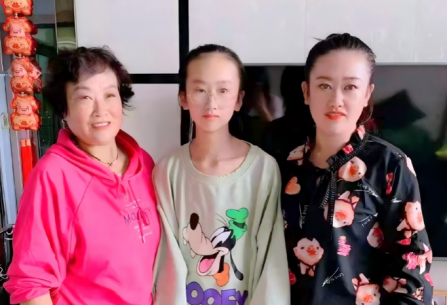 Fig.1.Cuilan Shen with Her Daughter and Granddaughter
Four generations of one family — a microcosm of the health services available to Chinese women in different eras.
The scientific return from those years was equally substantial. Prof. Qiao found that HPV testing could detect 95.2% of cervical cancer and precancerous lesions, far higher than the traditional cervical cytology (Pap smear) approach.
Building on this approach suitable for low-resource areas, his cervical cancer screening demonstration sites expanded from 2 (rural Xiangyuan in Shanxi and urban Shenzhen) to 43 by 2008 — at least one per province — training the first generation of screening doctors at the grassroots level. In 2009, China’s rural women’s “cervical and breast two-cancer” screening was incorporated into a national healthcare reform major initiative, officially launched in 221 counties. By 2019, it had been included in basic public health services, covering all 296 million Chinese women aged 35–64 in both urban and rural areas.
“Kindling” in Ordos
In 2006, the world’s first HPV vaccine was launched, giving humanity its first vaccine indicated for the prevention of cancer. But for Prof. Qiao, the real challenge had just begun.
For a long time, the vaccine was slow to gain marketing approval in China and reach the country’s many women. Imported vaccines only entered mainland China in 2016, with prices as high as several thousand yuan for three doses — out of reach for families in central and western high-prevalence regions.
As an international cervical cancer prevention expert, Prof. Qiao was repeatedly asked when HPV vaccination could be included in the National Immunization Program (NIP). His judgment was sober: high-tech vaccines need to recoup costs in developed countries first before prices come down; within five or ten years, don’t count on it.
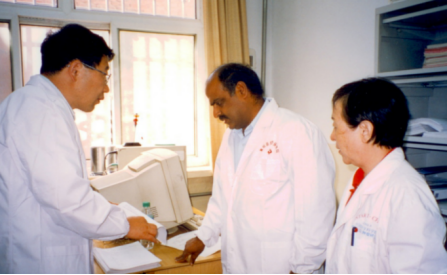 Fig.2.2004: Prof. Youlin Qiao discusses examination results with WHO cancer prevention experts in Xiangyuan, Shanxi
Watching generation after generation of girls miss the optimal vaccination window, he could no longer sit still. “Pushing top-down is too hard; I’ll change strategy and go bottom-up.”
He turned his attention to his long-time partner, Chief Physician Duan Xianzhi, who had deep roots in Ordos — where the cervical cancer burden was heavy, but where free two-cancer screening for all women aged 35–64 had already been implemented in 2016, and the local finances were solid.
In 2019, a negotiation with the Ordos health authorities secured a price concession from the manufacturer: the original three-dose regimen was offered at the price of just one dose.
However, concerns that “Beijing, Shanghai, Guangzhou and Shenzhen hadn’t yet done this,”coupled with the COVID-19 pandemic that erupted at the end of 2019, put the project on hold.
At a critical moment, Zhang Yinyin, the deputy banner chief of Jungar Banner in charge of culture, education and health, stepped forward. Having attended many of Duan Xianzhi’s lectures and deeply aware of the toll of cervical cancer, she seized the opportunity of the local “Caring for Girls on Campus” livelihood project to greenlight a pilot, and even extended the vaccination range from junior high school students all the way to senior high school students.
She said: “I’ve been in charge of health work for more than ten years and have not been able to provide this health service to the children earlier — I feel I owe them.” Prof. Qiao remains moved to this day, and has said outright, “She is truly great.” For a long time, he worried that this act of responsibility might jeopardize her career.
On August 1, 2020, Jungar Banner administered the first free HPV vaccine in China. The launch was low-key — no media invited. The night before, Prof. Qiao was still worried it might be called off. Fortunately, the first shot went smoothly, and subsequent positive coverage by national Chinese and foreign media such as Health News and China Daily reassured all parties. Soon after, the program was rolled out across Ordos, with the first-dose vaccination rate exceeding 80%.
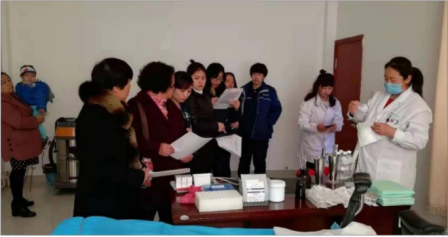 Fig.3.Ordos Women of Eligible Age Receiving Cervical Cancer Screening
A single stone cast into a calm lake — ripples quickly spread.
In 2021, the National Health Commission, taking healthy city construction as a starting point, launched pilot programs for comprehensive cervical cancer prevention and treatment in 15 cities; subsequently, Guangdong, Hainan, Fujian and other provinces rolled out the program across their entire territories, and free vaccination expanded steadily.
At the same time, the price of the domestic bivalent vaccine kept falling under a “volume-for-price” strategy, with a Shandong tender in 2024 even setting a price as low as 27.5 yuan per dose — described as “less than a cup of milk tea.” The biggest cost barrier to inclusion in the NIP had thus been cleared.
On November 10, 2025, the National Health Commission formally incorporated the HPV vaccine into the National Immunization Program, providing the domestic bivalent HPV vaccine free of charge to all 13-year-old girls nationwide, reaching an estimated 7.51 million girls that year. From the first dose in Ordos, this road took five years; from the vaccine’s global launch, it took a full twenty years.
In Prof. Qiao’s view, this step carries four layers of significance: it is the first vaccine to be newly added to the National Immunization Program in 17 years, opening up space for other vaccines; it is the first time the program has covered chronic-disease prevention; it is a rare bottom-up public health practice; and it extends the age range of national free services from 0–6 years to 13 years.
Taking China’s Experience to the World, and an Unfinished Mission
In Prof. Qiao’s view, China learned modern medicine from the West and benefited from it, and now that China has grown strong, it should give its experience back to the world, especially developing countries.
But this is by no means a matter of throwing money at the problem. “My projects oppose throwing money around.” He is more committed to a “small but beautiful” path: sharing China’s affordable, high-quality technologies and products with the world, even for a fee.
The careHPV rapid screening technology he led in developing was precisely tailored for low-resource areas.
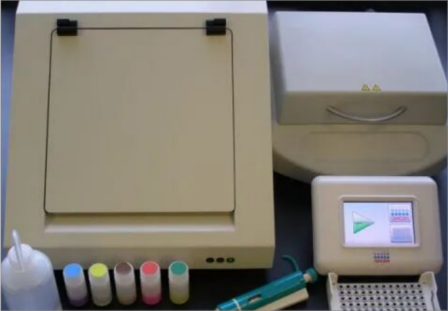 Fig.4.careHPV has Saved Thousands of Lives
In 2002, Prof. Qiao’s Chinese team, together with India, the WHO International Agency for Research on Cancer, and the U.S. Program for Appropriate Technology in Health, secured a USD 13 million international collaboration project funded by the Bill & Melinda Gates Foundation, titled “Global Multicenter Cervical Cancer Rapid Screening Technology and Prevention Study.”The goal was to develop a product with “no blind spots in the world”: simple, practical, affordable, easy to operate — usable in the Sahara Desert and on the Qinghai-Tibet Plateau.
In this project, the front-running teams were from China and India. India was delayed for two years due to unforeseen circumstances and ultimately could not complete on time; the Chinese team, however, overcame difficulties and pushed ahead, advancing steadily in high-prevalence areas such as Xiangyuan in Shanxi, Xiushui in Jiangxi, and Longnan in Gansu. After the project concluded successfully in 2007, the results were published in top international medical journals.
This is also the only Chinese product to date to receive WHO Prequalification (PQ) certification, with manufacturing based in Shenzhen. Now, careHPV has followed his footsteps into South Africa, Uganda, Nicaragua, El Salvador, Kyrgyzstan, Mongolia, Central Asian countries, the Shanghai Cooperation Organization...
He is also leading the translation of a smart colposcopy training textbook developed with Tencent into six UN languages, for distribution to different countries. “This is China’s contribution to world medicine,” Prof. Qiao told MedJ.
Yet he is well aware that, on the road to eliminating cervical cancer, gaps remain. Among the WHO’s “90-70-90” targets, the two “90s” — vaccination rate and precancerous-lesion treatment rate — do not worry him: China’s disease-prevention-and-control system has strong execution capacity, and vaccination plus catch-up can reach target within three years; relevant treatment is also supported by medical insurance policy.
What troubles him most is the “70%” for screening, because a large number of women across the country have never been screened, and the disease is still silently progressing. To address this, he will continue to push forward, making screening more convenient, faster, and cheaper — so that a result within 30 minutes becomes possible.
At 71, an age when most people might be enjoying grandchildren or traveling the world, Prof. Qiao says his mission is not yet finished.
He handed over the research baton to the younger generation back in 2018. What he really cannot let go of is the “cervical cancer prevention map of China’s low-resource areas”stored in his heart. He has set himself a five-year deadline: he will go county by county, because “eliminating cervical cancer requires reaching every single person, and touching every corner of the motherland.”
From an accidental pivot when he could not secure funding from the National Natural Science Foundation, to pushing a cancer toward its twilight, Prof. Qiao has spent nearly 30 years kindling flame after flame. He has always believed that, as long as someone dares to throw a stone into the calm water, dares to jump in, the waves will rise.

