


A premature baby once considered to have “virtually zero chance of survival” by the medical community has broken the world record for the earliest gestational age at birth to survive.
Recently, Guinness World Records certified that Nash Keen set a new record, being born at just 21 weeks’ gestation. At birth, he weighed only 285 grams—less than a can of cola—and measured 24 centimeters, roughly the length of a pencil.
If a full-term pregnancy is 280 days, Nash was born 133 days before his due date. The previous record was held by Curtis Zy-Keith Means from the U.S., born at 21 weeks and 1 day.
In medical terms, babies born before 28 weeks are “extremely preterm,” and those weighing less than 1,000 grams are classified as “extremely low birth weight.” A gestational age of 21 weeks is considered the “threshold of viability,” where, historically, no babies have survived.
As of this report, Nash has celebrated his first birthday. Guinness World Records stated that his survival is the result of collaborative efforts from multiple medical teams and marks another milestone in maternal-fetal medicine.
From “Zero Chance” to Survival
On the evening of July 4, 2024, Mollie Keen—pregnant and just shy of 21 weeks—was lying in a hospital bed under close observation by a medical team at the University of Iowa Stead Family Children’s Hospital. She had one goal: to make it past midnight to July 5 to give her baby a chance.
Mollie had been diagnosed with polycystic ovary syndrome (PCOS), making conception difficult. Her first pregnancy ended in miscarriage at 18 weeks, and she was found to have cervical insufficiency, a condition that increases the risk of second-trimester preterm birth.
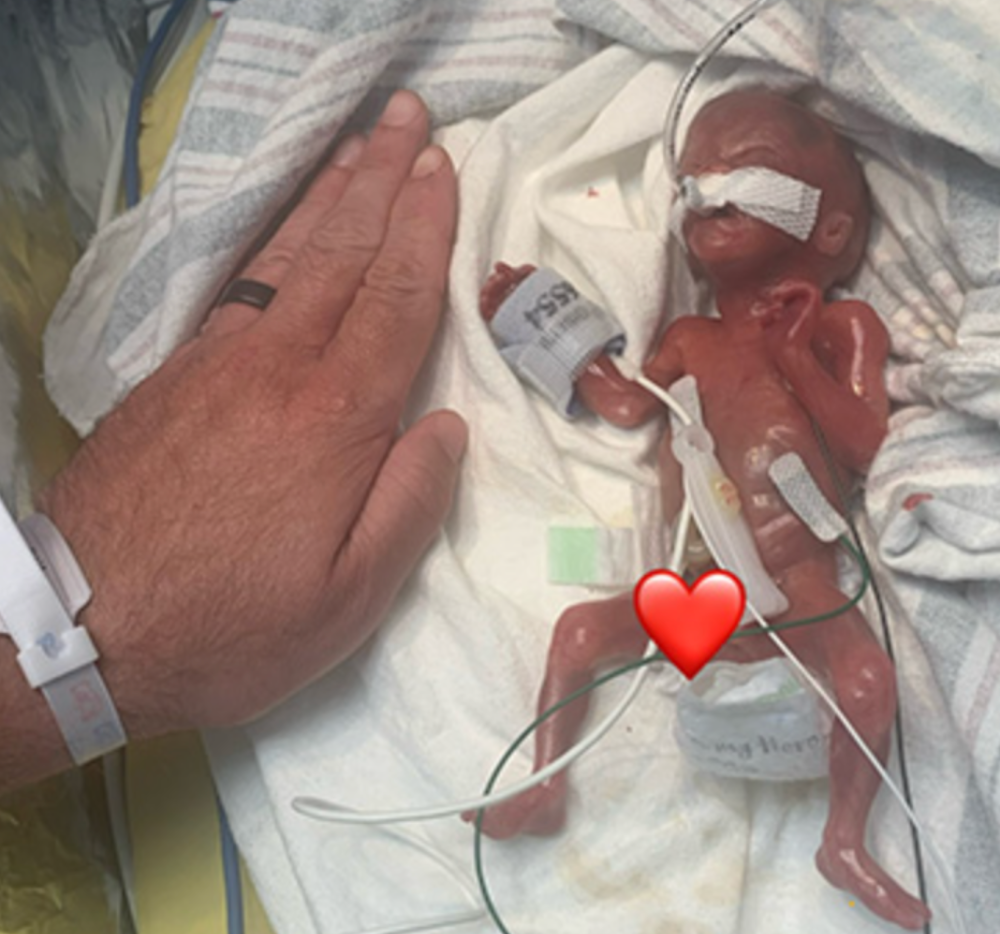
Newborn Nash
During her second pregnancy, at 20 weeks, she experienced contractions and was found to be in preterm labor with her cervix dilated two centimeters. She was rushed to Stead Family Children’s Hospital—one of the few centers in the world capable of caring for babies at the threshold of viability.
Dr. Amy Stanford, a neonatal expert, explained that the hospital’s extensive experience in treating extremely preterm infants has allowed them to lower their gestational age limit for active intervention to 21 weeks. The hospital’s hemodynamics team uses advanced ultrasound techniques to assess blood flow and heart function for precision care.
A Historic Birth
On July 5, 2024, at around 10:00 a.m., Nash was born at 21 weeks’ gestation and quickly admitted to the NICU.
“Babies this small sometimes can’t even be fitted with the smallest breathing tubes or IV lines,” said Dr. Stanford. “Luckily, we were able to intubate him successfully, and his heart rate and oxygen levels stabilized immediately.”To mimic the womb environment, the NICU team placed Nash in a specialized care setting.
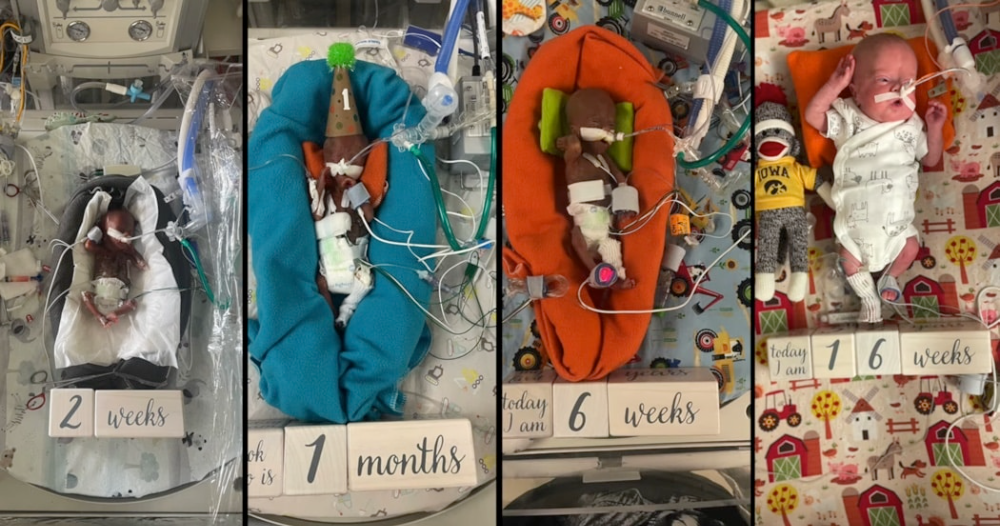
Nash Keen’s Growth Record / Image Source: Internet
Still, he faced numerous crises due to his immature lungs and heart. He also underwent a high-risk surgery for intestinal perforation—a procedure with a 30–40% mortality rate.After 189 days in the NICU, Nash was discharged home in January 2025.
Life After Discharge
Now one year old, Nash still requires supplemental oxygen, feeding via a tube, and hearing aids for mild hearing loss. Doctors are optimistic his mild heart condition will improve as he grows.
The next medical goal is to gradually wean him off oxygen so he can breathe independently. Importantly, Nash avoided severe brain hemorrhage, which gives hope for normal cognitive development.
The Role of Hemodynamic Monitoring
MedPageToday reported that the hemodynamics team played a critical role in Nash’s care. At birth, his blood pressure was extremely low, which some suspected was due to heart problems.
However, monitoring revealed normal heart function, allowing the team to adjust treatment appropriately.Research at the hospital shows that such monitoring can halve the risk of death or severe brain hemorrhage in extremely preterm infants.
Global Progress in Preterm Care
Advances in neonatal care have shifted the lower limit of viability in countries like the U.S., Japan, Sweden, and the U.K. from 25–26 weeks in the 1990s to as early as 20–24 weeks today.
In China, hemodynamic monitoring is also developing rapidly, with multiple reports of successful survival of babies at 21–22 weeks.For example, in March 2024, a baby nicknamed “Rou Rou” was discharged from Shenzhen Maternal & Child Healthcare Hospital at 21 weeks and 4 days’ gestation, weighing just 450 grams at birth and growing to 4,000 grams by discharge—setting a national record for the smallest gestational age survivor.

While survival rates have improved dramatically, experts stress that the long-term outcomes for such premature infants remain uncertain, and risks for severe complications remain high.
“Every critically ill baby teaches us something,” said Dr. Patrick McNamara, director of neonatology at Stead Family Children’s Hospital. “Nash’s survival was built on decades of knowledge from both successes and failures.”

