


Yesterday (December 17th), New York University Langone Medical Center announced that 53-year-old Towana Looney has become the only person in the world with a pig kidney. Looney, who had been on dialysis for kidney failure for eight years, received a genetically modified pig kidney in late November. Just 11 days after the surgery, Looney was successfully discharged, no longer requiring dialysis, and her recovery has been better than the previous four patients who received pig kidneys or hearts.
The lead surgeon stated that her pig kidney function is normal. Looney also said at a press conference yesterday (17th), "After eight years, I have never felt this good before." In the coming months, Looney will continue to undergo follow-up assessments, and she will become a focus of international academic attention. Previously, New York University and Johns Hopkins University announced that if everything goes well, the team will officially launch clinical trials for xenotransplantation of large organs within the next two years, aiming to ultimately solve the global shortage of organ transplant donors.
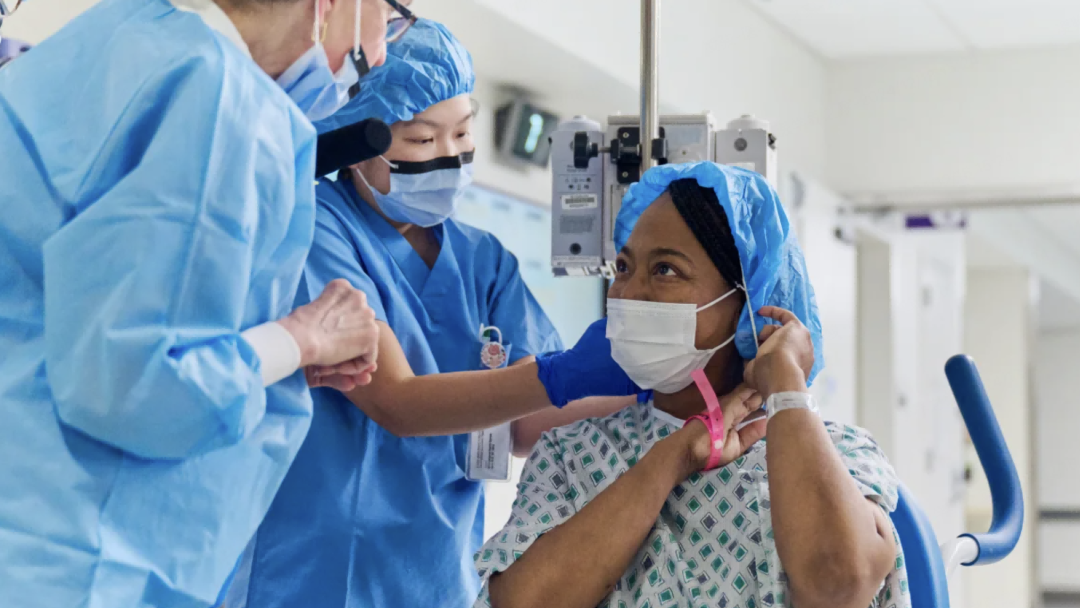
Towana Looney received a pig kidney transplant surgery at NYU Langone Medical Center / Photo source: CNN
"Even if the surgery fails, I can advance medical development."
Looney is no stranger to organ transplantation. In 1999, at the age of 28, she donated a kidney to her mother, saving her life.
Unfortunately, Looney developed preeclampsia, a severe form of pregnancy-induced hypertension, during her pregnancy in 2002, which damaged her remaining kidney and led to chronic kidney disease. By 2016, doctors assessed that Looney was in severe kidney failure and had to start dialysis immediately, placing her on the kidney transplant waiting list.
Since Looney had donated a kidney, she theoretically had priority for organ transplantation. However, her high blood pressure has never been effectively controlled over the past eight years, and she has undergone continuous blood transfusions due to underlying diseases, leading to a high level of antibodies in her body, making it impossible to find a matching kidney.
"She is almost sensitive to all types of tissues, and it is almost impossible to find a matching organ," said Dr. Robert Montgomery, director of the New York University Langone Transplant Institute. "She has struggled with dialysis for eight years and began to experience problems related to chronic dialysis dependence."
A turning point came in 2022 when the University of Alabama at Birmingham announced that doctors had successfully transplanted a pig's kidney into a brain-dead man and indicated that trials on living people would soon follow. Upon hearing the news, Looney immediately consulted with various teams and eventually established contact with the lead surgeon, Jayme Locke.
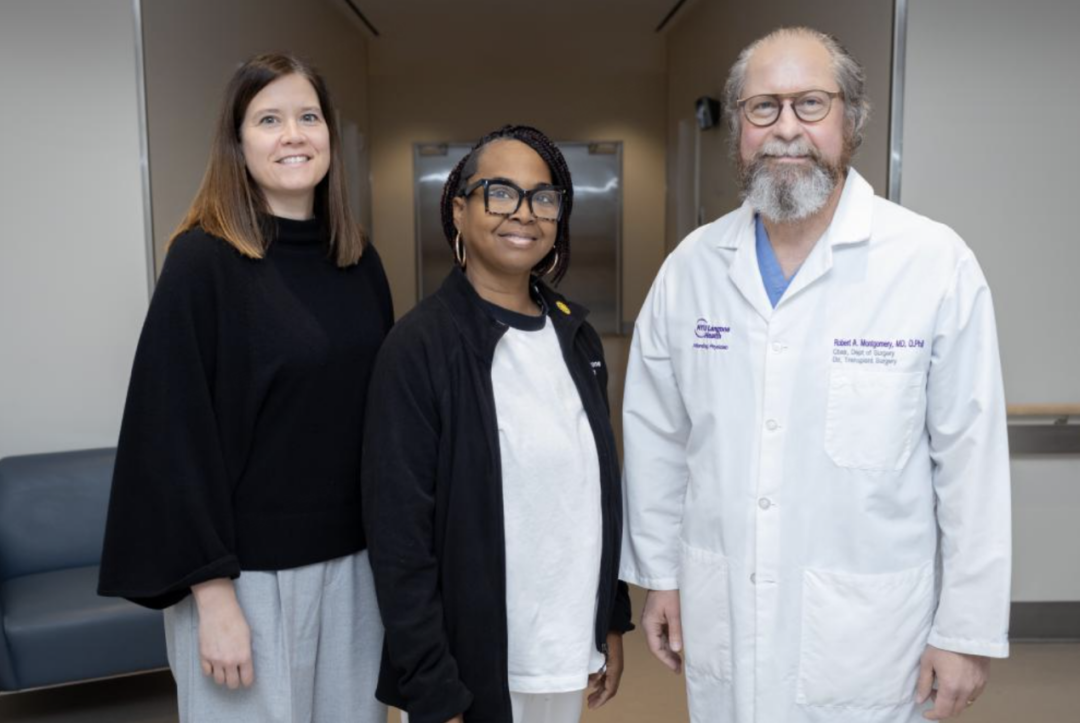
A group photo of Dr. Locke (left), Towana Looney, and Dr. Montgomery (right) / Photo source: NYU Langone Medical Center
Initially, the U.S. FDA did not immediately approve the application but approved two other surgeries first.
Earlier this year, Massachusetts General Hospital and New York University performed the world's first two pig kidney transplant surgeries on two more critically ill patients. The former recovered well initially but later died of a cardiac arrest unrelated to the pig kidney. The latter had to have the pig kidney removed in May due to complications from underlying heart disease, which damaged the transplanted pig kidney, and passed away shortly after.
The seemingly "disappointing" results did not affect Looney's decision. On the one hand, doctors said that the deaths of these two patients were mostly caused by poor underlying diseases, while Looney's primary disease was much milder. On the other hand, Looney's condition on dialysis was getting worse, and she couldn't wait any longer.
Ultimately, the U.S. FDA approved the surgery, which took place at New York University, performed by Dr. Montgomery, who had completed the previous pig kidney transplant, and Dr. Locke. In Looney's words, even if the surgery failed, doctors could gain valuable experience from her case and advance medical development.
Genetically Modified Pig Transplantation
The choice of pig kidney transplantation is because scientists can genetically modify pigs to make their physiological compatibility with the human body as close as possible, overcoming rejection and other related challenges – this is the key reason why Looney could not wait for a human kidney transplant.
The U.S. biotechnology company Revivicor provided a pig kidney for Looney, which underwent editing of 10 genes, including the removal of three immunogenic antigens (α-Gal, Sda, and Neu5Gc) to avoid rejection reactions. The pig's growth hormone receptor gene was also knocked out, which limits the pig's growth, making the pig kidney similar in size to a human kidney.
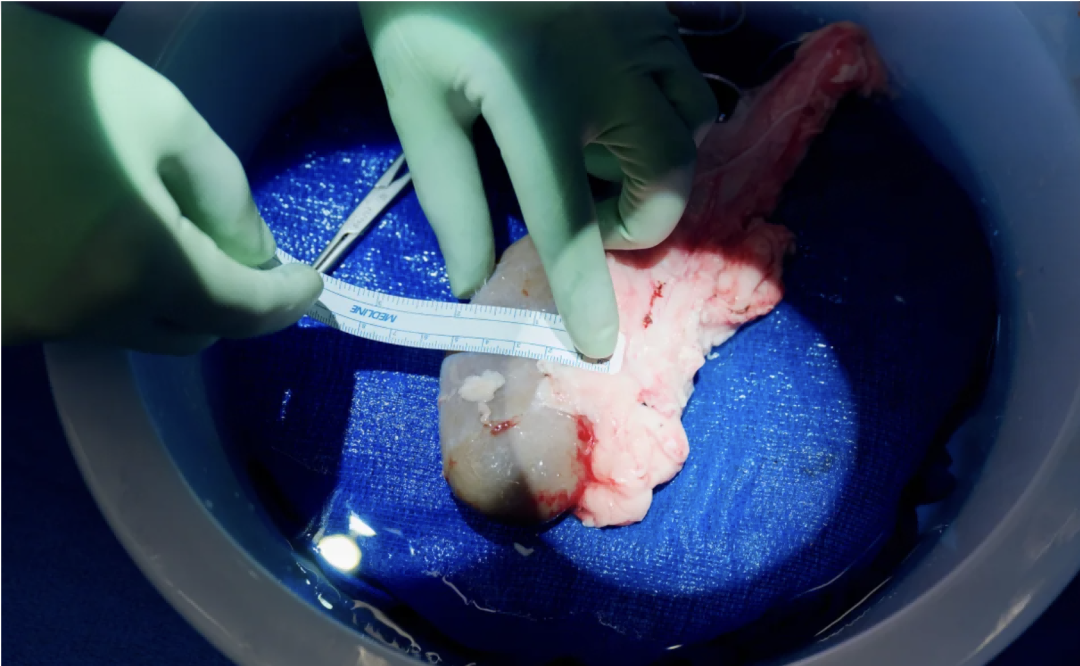
Surgeons measure the genetically edited pig's kidney before the surgery / Photo source: NYU Langone Medical Center
At the same time, scientists added six human genes to the pig, making the genetically modified pig kidney more compatible with human recipients. It is worth mentioning that in 2003, Revivicor also bred the world's first generation of α-Gal gene-knockout pigs, marking the beginning of a new era for xenotransplantation.
The surgery took place on November 25th, and according to New York University, it lasted 7 hours, with the kidney being transplanted into Looney's lower abdomen. After Dr. Montgomery sutured the kidney in place, the pig kidney immediately turned a healthy pink and began to produce urine.
The surging urine even splashed onto Dr. Montgomery, "It was fantastic, spectacular," said Dr. Montgomery, and the operating room erupted in cheers and applause.
"After the surgery and back in the ward, Looney's husband said that he had never seen her so 'energetic' in so many years. Looney also made a video call with relatives; this is the miracle of pig kidney transplantation," said Dr. Locke. "It restores people's health; Looney feels it, her family feels it, and now people all over the world feel it."
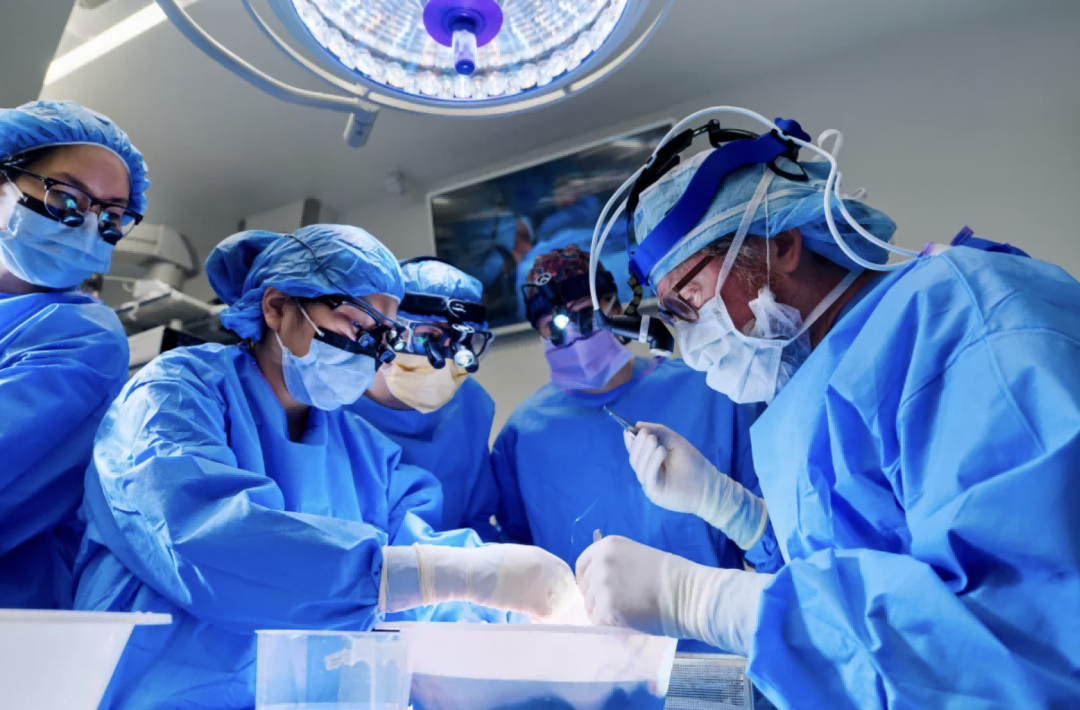
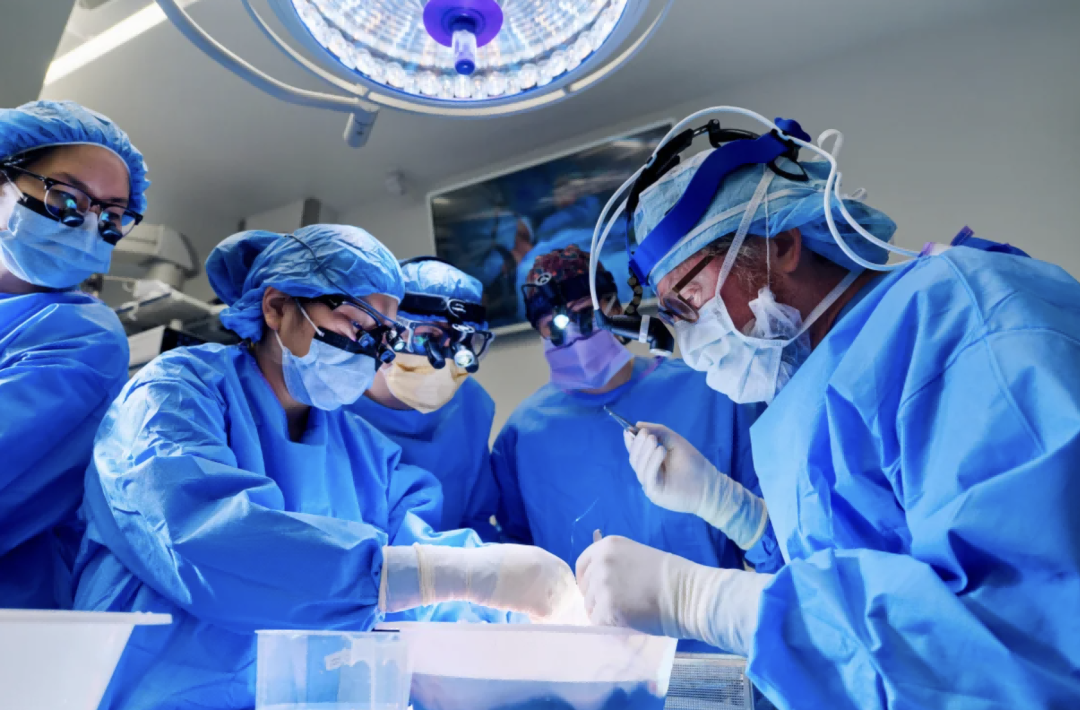
Dr. Montgomery (right) with the transplant team / Photo source: NYU Langone Medical Center
It is understood that in addition to kidney disease, Looney's original physical condition was fair. After staying in the ward for 11 days, she was successfully discharged on December 6th and no longer needed dialysis. Her blood pressure, which had never been effectively controlled for more than a decade, has also returned to normal.
After discharge, Looney temporarily lived near the hospital and underwent postoperative daily medical supervision for three months. Doctors equipped her with a monitor to track blood pressure, heart rate, and other bodily functions, and regularly performed blood tests and other tests for her, comparing the data with previous cases, hoping to detect and handle any issues as early as possible.
During the most recent check, doctors found a slight thrombus in her kidney, and Looney was readmitted to the hospital last Friday, expected to stay for a few days to adjust her anti-rejection treatment plan. However, the hospital also stated that her pig kidney function remains normal.
If everything goes well, Looney will then leave New York and return home. Currently, she is already planning a trip to Disneyland. Looney also said that the moment she will remember for a lifetime is the first time she went to the bathroom to urinate on her own after the surgery. After eight years, she has never enjoyed this familiar "right" of healthy people.
Full Launch of Pig Kidney Transplant Clinical Trials
The pig kidney transplant surgery Looney received is called "compassionate treatment." It is not a formal clinical trial but an FDA allowance for hospitals to try potentially effective therapies for patients in critical condition who have no better treatment options, even if the therapy is not approved.
Yesterday, United Therapeutics (the parent company of Revivicor) announced that the company plans to formally apply to the FDA soon to start clinical trials on 10 gene-edited pig kidneys as early as next year.
According to the World Health Organization, about 1.2 million people worldwide need kidney transplants, but only less than one-third of patients can wait for a suitable donor organ each year, with the rest relying on kidney dialysis and other treatments for the rest of their lives. Xenotransplantation offers a highly imaginative prospect, turning qualified pig organs into a kind of "ready-made commodity," allowing patients to receive transplant treatment at any time.
Previously, the U.S. scientific team has completed two cases of pig hearts and two cases of pig kidneys for "compassionate treatment."
Since this year, China's large organ xenotransplantation has also entered an acceleration period, with the Air Force Military Medical University Xijing Hospital, Kunming Medical University First Affiliated Hospital, and Tsinghua University Affiliated Beijing Longqiao Hospital successively announcing the completion of pig kidney and liver brain-dead body transplant trials.
According to the relevant standards of the U.S. regulatory agency, formal approval for clinical trials requires at least 4 out of 6 consecutive animal experiments to survive for half a year or more than a year. China has not yet introduced corresponding standards.
Earlier this year, Mo Ling, deputy director of the Sichuan Provincial Association of Laboratory Animals Medical Pig Professional Committee, said at a xenotransplantation academic conference that Chinese scientists need to benchmark internationally, make top-level designs, summarize their own data, and promote the construction of industry consensus and system standards in this field in China.
Pan Dengke, professor and founder of Chengdu Zhongke Aogu Biology, the inventor of China's first α-Gal gene knockout pig, said to "Medical World," "Xenotransplantation clinical translational research is a systematic project, comparable to the 'Apollo program,' requiring the cooperation of experts in organ transplantation, genetic engineering, animal husbandry, immunology, ethics, and other aspects to complete. The existing cases have provided us with good references."
It is understood that the current genetic modification of pigs is designed according to human biological characteristics, including the addition of humanized genes, which means that animal experiments alone cannot fully reflect the safety, feasibility, and efficacy of pig organ transplantation.
Zhu Tongyu, professor and director of the Shanghai Organ Transplantation Laboratory at Fudan University Shanghai Medical College, said that before officially starting clinical trials, it is impossible to have everything ready, and the answers still need to be found in real-world studies. "From the recent progress in the field of medical research, once strict approval procedures such as ethics are passed, humanity has the conditions to explore."

