


How much did women physicians earn in the past year?
According to the latest "Women Physicians Compensation Report" released by the renowned medical media Medscape, in 2023, the average annual salary of women physicians in the United States is $309,000 (approximately 2.244 million yuan).
The survey involved 7,000 respondents from 29 specialties. The report shows that the average income of women physicians has increased compared to the previous year, but the pay gap with male physicians remains significant. Although their income is not low, women physicians also face heavy financial pressures as they support their families, repay substantial mortgages and student loans, and life is not easy.
Women Physicians Compensation Report / All images in this article are from Medscape.
How satisfied are women physicians with their compensation?
Medscape's report indicates that in 2023, the average income of women physicians (primary care physicians + specialists) in the United States increased by about 3% compared to 2022, reaching $309,000 (approximately 2.244 million yuan). If they are specialist women physicians, the average annual income is higher, at about $333,000 (approximately 2.424 million yuan).
The report did not rank women physicians' compensation by department, but listed several departments as representatives: anesthesiology $406,000 (approximately 2.945 million yuan), and the average annual salary of women physicians in obstetrics and gynecology, psychiatry, internal medicine, family medicine, and pediatrics ranges from $334,000 (approximately 2.423 million yuan) to $246,000 (approximately 1.785 million yuan).
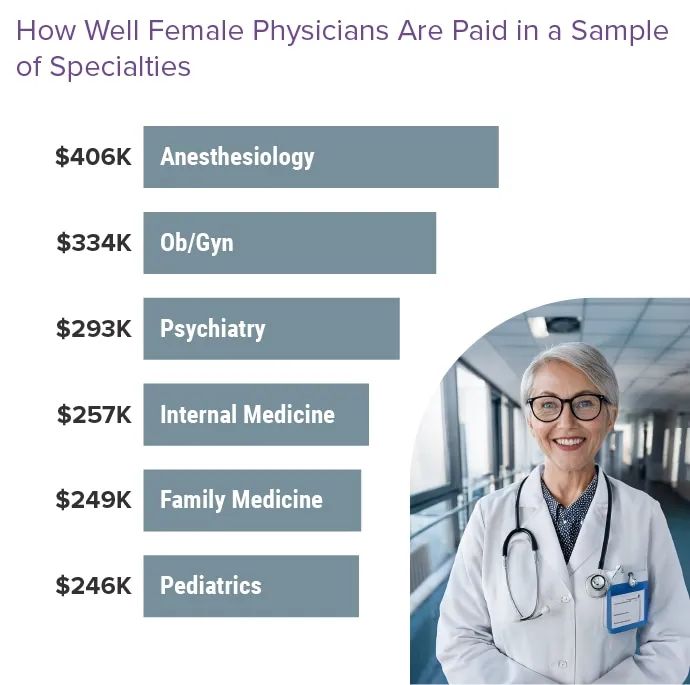
Compensation Situation of Female Specialists in the Survey Sample
Behind the high salaries, more and more women physicians are joining surgical departments.
A study published online in the Journal of the American Medical Association (JAMA) in September found that the number of women physicians choosing high-paying departments is increasing. In 2022, more than 40% of women physicians chose high-income surgical departments, and the proportion of women physicians in departments such as plastic surgery and urology is increasing.
In terms of income composition, performance bonuses are an important part of physicians' income, and the same is true in the United States. In 2023, the average performance bonus for women physicians in the United States is $29,000 (approximately 211,000 yuan). If they are specialist women physicians, the average annual performance bonus rises to $32,000 (approximately 233,000 yuan).
In terms of compensation satisfaction, women physicians in neurology rank the highest, and the compensation satisfaction of women physicians in dermatology, oncology, public health, and preventive medicine all exceeds 60%. The lowest compensation satisfaction is among women physicians in pediatrics, internal medicine, obstetrics and gynecology, infectious diseases, and diabetes and endocrinology.
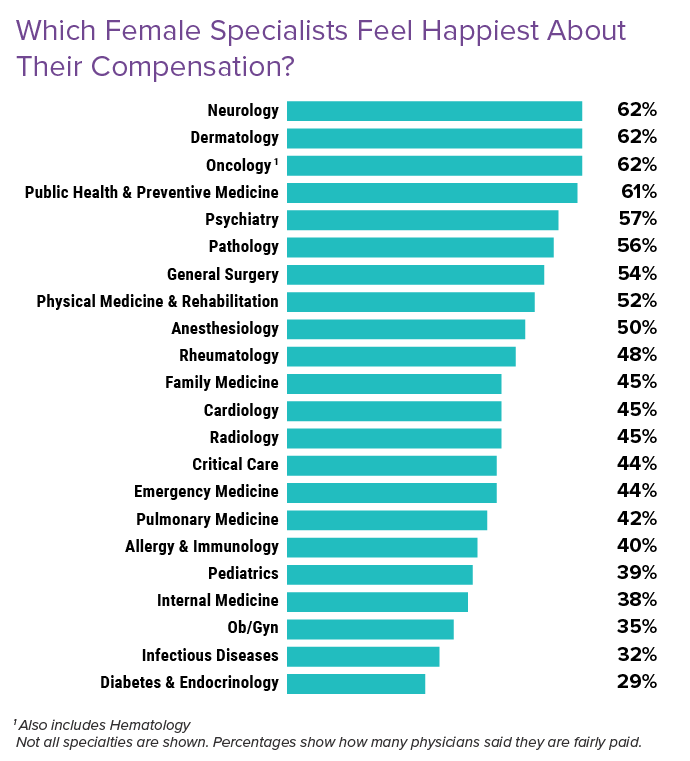
The highest satisfaction is in neurology, and the lowest is in diabetes and endocrinology.
Everyone works very hard and thinks that the more money they have, the happier they will be. But what's more important is to maintain a balance and find meaning in what we do," said a woman physician.
Dr. Shikha Jain, a physician at the University of Illinois College of Medicine and founder of a non-profit organization for women physicians, believes that compensation satisfaction is closely related to overall job satisfaction. Some women physicians in certain departments may not have the highest salaries, but they are satisfied with their mental health and work-life balance, thereby "beautifying" their satisfaction with their income.
The pay gap between male and female physicians remains significant
It is worth noting that the pay gap between male and female physicians in the United States remains significant. Medscape's report shows that in 2023, male physicians' average income is 29% higher than that of female physicians.
In last year's report, this gap was 32%. However, in the view of Dr. Susan Thompson Hingle, president of the American Medical Women's Association, this slight decrease does not truly narrow the pay gap between male and female physicians, and this phenomenon will persist throughout their lives.
A study published in Health Affairs in 2021 showed that, calculated over a 40-year career, the total pay gap between male and female physicians in the United States is as high as $2 million (approximately 14.5 million yuan).
This unfair phenomenon has become a consensus among male and female physicians. The report shows that 56% of female respondents believe that women physicians are underpaid, and this proportion is also as high as 47% among male physicians. In order to maintain income fairness, a woman physician had to sue her employer, which was disheartening for her.
In fact, the pay gap between male and female physicians has been evident from the beginning of their practice and only begins to narrow significantly after the age of 50. Dr. Hingle believes that this leads to a lack of confidence in women physicians when they start working, and they do not feel that they can make a career. In the mid-career, the enthusiasm of women physicians decreases significantly, and as they approach retirement, their enthusiasm wanes even more.
"The pay gap is not just about money, but also makes women physicians feel unvalued and disrespected, which is closely related to job satisfaction and burnout," Dr. Hingle pointed out. This deeply ingrained attitude results in women physicians lacking the assistance of nurses or physician assistants and receiving less administrative support and research help.
In terms of the proportion of performance bonuses, there is not much difference between male and female physicians. However, the report shows that the performance bonuses received by women physicians in 2023 have decreased compared to the previous year. Dr. Hingle analyzed that the possible reason is that women physicians spend more time on patients and see fewer patients per week.
Is this because women physicians are more patient with patients? The report points out another possibility: women physicians are less adept at dealing with difficult patients. Diana Lautenberger, director of the gender equality initiative at the American Medical Association, said that patients and their families are the most frequent perpetrators of sexual harassment against women physicians.
Under the multiple influences of income and work pressure, about one-third of women physicians said that if they could live their lives over, they would not want to be physicians again. From a realistic perspective, the turnover rate of women physicians is indeed higher.
Women physicians take more care of the family and have a heavy debt burden
"I owe $1.3 million (approximately 9.46 million yuan) in mortgage and loans for medical school."
"I have paid off $180,000 (approximately 1.31 million yuan) in medical school loans."
"I am not satisfied with my current assets. I thought I would be more financially stable at this stage."
These are the true feelings of the women physicians who confided in Medscape. The "2024 Women Physicians' Assets and Debt Report" released by Medscape on December 5 shows that although the income of women physicians in the United States is not low, 74% of them are burdened with debt to varying degrees.
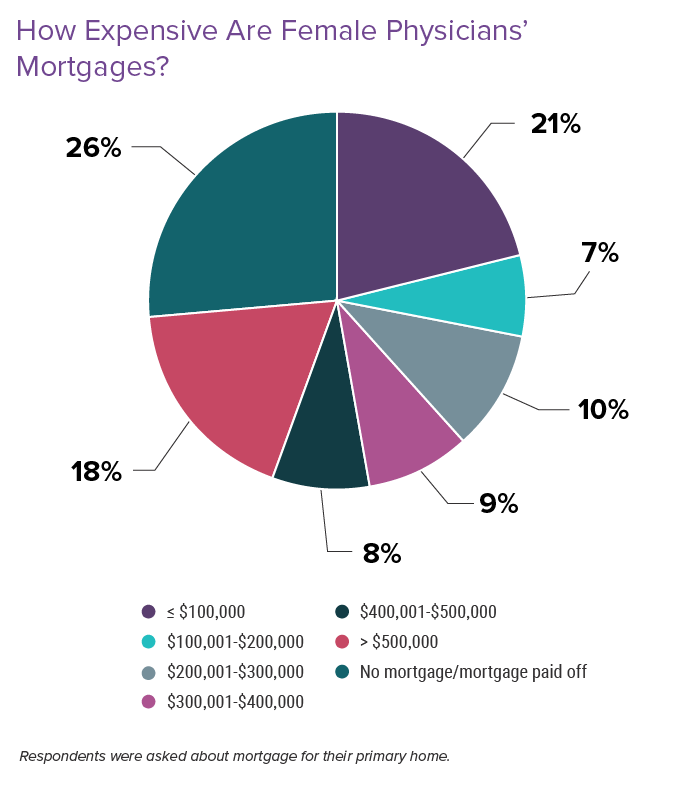
Only 26% of female physicians are "debt-free."
The debts of women physicians include mortgages, car loans, student loans, as well as the cost of their children's college education, and their own and their families' medical expenses. Although many people believe that the main debt of American physicians is student loans, Medscape's report shows that the biggest debt faced by women physicians is actually mortgages.
In addition, a survey published in PLoS One found that women physicians still bear more family responsibilities than men, so they are less likely to hold senior positions early in their careers.
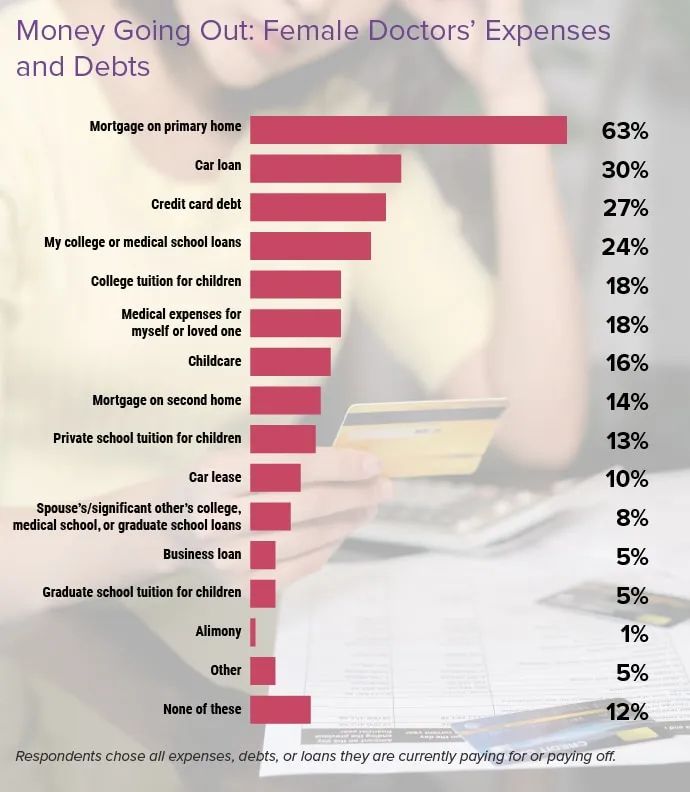
Sixty-three percent of female physicians are burdened with the mortgage for their first home.
"We see more and more women physicians supporting their families or becoming the head of the household, which may indicate that they need additional income," Lautenberger said.
Under the heavy pressure of debt, 38% of women physicians try to "earn extra money," some work part-time in medical-related jobs, such as primary care physicians voluntarily extending working hours, and some do non-medical-related part-time jobs. Some women physicians also hope to benefit from investments, but some have lost a lot of money due to investment failures, even going bankrupt.
To combat gender-based income disparities, some women physicians choose to practice on their own, but this is also a risky decision.
A doctor practicing in Honolulu said that the median house price in the area is over $1 million (approximately 7.28 million yuan). When she and her husband, an ophthalmologist, first moved here, they tried various methods but could not find work, so they had to borrow two loans to buy an existing ophthalmology clinic, and it took 10 years to slowly pay off the loans.
Last year, they changed to a new financial company and lost hundreds of thousands of dollars in a short period, and had to take out loans again to repay the debt.
"Although the earning potential of women physicians has increased, they still face unique challenges and opportunities in accumulating wealth and dealing with debt. While accumulating wealth, they also have to deal with heavy student loans and the persistent income gap, which is still a complex issue for women," the Medscape report wrote.

