


A piece of testicular tissue, dormant in liquid nitrogen at -196°C for 17 years. When reawakened and reimplanted into its owner's body, it produced sperm once again.
Recently, Vrije Universiteit Brussel (VUB) in Belgium, in collaboration with Brussels University Hospital, completed a groundbreaking procedure: immature testicular tissue cryopreserved from a patient during childhood (at age 10) was successfully autotransplanted after 17 years of low-temperature storage, generating mature sperm.
This marks the first time this technology has been proven feasible in humans. The related paper has been published on the medRxiv preprint platform. Although it has not yet undergone peer review, it opens a completely new path for fertility preservation in prepubertal children with diseases.
Chemotherapy and radiotherapy have saved millions of children worldwide, yet they have also planted the seeds of lifelong infertility. Clinical data show that approximately one-third of males who received chemotherapy, radiotherapy, or other gonadotoxic treatments during childhood are diagnosed with azoospermia after puberty.
For prepubertal boys, whose testes have not yet developed, sperm cryopreservation is not possible as it is for adult men. Fertility preservation for this population has long been a medical challenge.
Prof. Mingzhe Song, Director of the Reproductive and Urological Andrology Department at Shenzhen Zhongshan Obstetrics and Gynecology Hospital, told MedJ that this achievement brings new hope to countless pediatric oncology patients. However, he cautioned that the technology still has numerous limitations, and a series of issues—including the safety of long-term cryopreservation of prepubertal immature testicular tissue—remain to be overcome. Widespread clinical adoption is still a long way off.
Fig.1 Screenshot of the paper
Cryopreserved Testicular Tissue “Resurrected” After 17 Years
According to the paper, the anonymous patient who underwent the procedure was diagnosed with sickle cell anemia in childhood. This is a hereditary blood disorder for which curative treatment requires allogeneic hematopoietic stem cell transplantation. Prior to transplantation, high-intensity chemotherapy agents such as busulfan and cyclophosphamide must be used for myeloablative conditioning.
These drugs are highly gonadotoxic and can cause irreversible damage to testicular germ cells, easily leading to permanent infertility in adulthood. As the patient was only 10 years old at the time of diagnosis and treatment, and had not yet entered puberty, his testes could not produce mature sperm, making conventional semen cryopreservation completely impractical.
To maximize the preservation of future fertility potential, in 2008, after three years of hydroxyurea conservative treatment and with full informed consent from the patient and his family, the medical team performed a unilateral orchiectomy.
During the procedure, the team divided the excised testicular tissue into small fragments, added professional cryoprotectant solution, and stored it long-term in liquid nitrogen using a controlled-rate slow-freezing technique. Pre-cryopreservation histological examination confirmed that the seminiferous tubule structure of the sample was intact and contained spermatogonial stem cells with differentiation potential.
After completing fertility preservation, the patient underwent allogeneic hematopoietic stem cell transplantation as scheduled, was ultimately clinically cured of sickle cell anemia, and passed through childhood and adolescence smoothly.
In 2022, the now-adult patient presented to the Reproductive Medicine Center at Brussels University Hospital due to fertility needs. Between 2022 and 2024, he underwent semen analysis three times, all of which indicated azoospermia. The team further performed tissue sampling of the remaining testis in his body and found only two morphologically abnormal, non-functional sperm—the possibility of natural conception was virtually nil.
The turning point came at the end of 2024. In December of that year, the patient passed preoperative screening, met surgical criteria, and formally entered the proof-of-concept clinical trial of "testicular tissue autotransplantation for fertility restoration."
In 2025, physicians thawed the testicular tissue samples that had been cryopreserved for 17 years, selected 11 appropriately sized fragments, and implanted them into 4 sites within the patient's residual testis and 4 sites under the scrotal skin, to compare the effects of two different microenvironments on tissue survival and spermatogenic function. The entire procedure lasted nearly three hours.
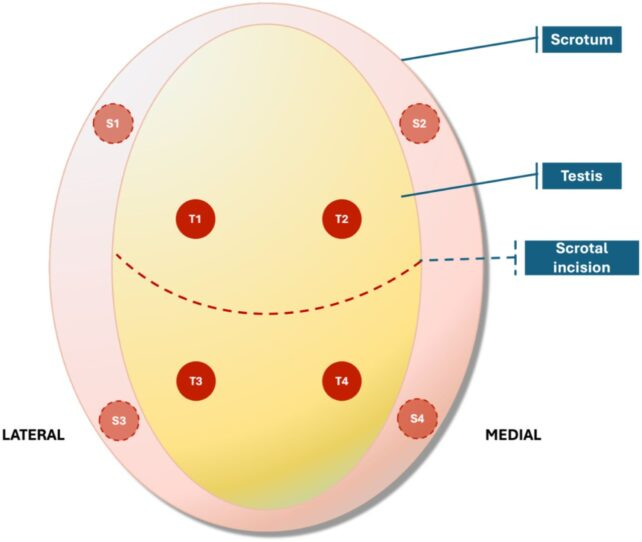
Fig.2 Diagram of Testicular Tissue Removal and Implantation Sites
For the following year, the team conducted comprehensive follow-up visits every three months, continuously monitoring the patient's serum sex hormone levels, semen parameters, and the morphology and blood flow of the grafts. Data showed that the patient's sex hormone levels remained stable, and no sperm was detected in semen.
One year after transplantation, physicians removed all grafts for laboratory analysis as planned.
The results were encouraging: grafts implanted within the testis showed dense structure and strong tissue viability, with active spermatogenesis detected and mature, motile sperm isolated through enzymatic dissociation; in contrast, grafts under the scrotal skin showed significant fibrosis with no germ cells detected.
Notably, the number of spermatogonial stem cells in the patient's cryopreserved tissue was "exceptionally scarce," yet it was this extremely small population of cells that reignited the spark of spermatogenesis after reimplantation.
"This is a major discovery that will allow more people to hope for biological children of their own," commented Prof. Ellen Goossens of VUB, who led the study.
The research team also explained that the transplanted tissue was not connected to the body's vas deferens, which is the core reason why sperm could not enter the semen and the patient could not achieve natural conception. However, the sperm obtained in this procedure have been cryopreserved, and the patient may achieve fertility through assisted reproductive technology in the future.
Bringing Fertility Hope to Tens of Thousands of Pediatric Patients
Upon learning of this "world's first" procedure, Prof. Song commented: "This is indeed a shot in the arm for the reproductive medicine community."
He explained that previous related research had long remained at the animal model level. As early as 2018, the world's first non-human primate born using this technology—a rhesus macaque named Grady—was reported, and primate experiments confirmed that cryopreserved prepubertal immature testicular tissue could successfully produce sperm after transplantation. However, this technology had never truly been applied in humans.
In clinical practice, Prof. Song has also encountered many parents of children with such needs. "A father once brought his child with leukemia to consult about fertility preservation options, but I could only regretfully tell him that the technology of cryopreserving prepubertal immature testicular tissue for later transplantation had not yet reached clinical application. Due to safety and uncertainty concerns, most parents would not choose to take the risk."
More challenging is the safety hazard that has been difficult to avoid with this technology. Prof. Song explained that testicular tissue from tumor patients may contain residual microscopic tumor cells, and once reimplanted into the body, there is a potential risk of tumor recurrence and disease rebound—this is also an important reason why many parents ultimately declined after learning the details.
Fig.3 Prof. Jiang Jiyao and Dr. Feng Junfeng, Chief of Neurosurgery, Renji Hospital; Photo courtesy: Renji Hospital
And the base of demand is not small. According to the National Childhood Cancer Surveillance Annual Report (2024), from 2021 to 2022, there were 63,218 newly diagnosed pediatric cancer cases nationwide in the 0–19 age group, of which boys accounted for 54.96%; the top three cancers were leukemia (30.68%), central nervous system tumors (18.41%), and malignant epithelial tumors and melanoma (10.41%).
Currently, the curative treatment of the vast majority of pediatric tumors relies on standardized chemotherapy.
Prof. Song pointed out that germ cells in the male testis are extremely sensitive to chemotherapeutic drugs. In the treatment of pediatric leukemia, lymphoma, and other tumors, alkylating agents and other drugs directly kill spermatogonial stem cells in the testis, leading to permanent loss of sperm production ability in adulthood, and there is still no effective clinical countermeasure.
Unlike adult men who can freeze sperm before chemotherapy, prepubertal boys (approximately under 13 years old) have undeveloped testes with no suitable sperm retrieval methods. Parents are also often reluctant to accept invasive testicular biopsy, concerned about surgical trauma, developmental risks, and other issues. This population has long been a blind spot in the field of fertility preservation.
According to ScienceAlert, since 2002, Brussels University Hospital has been the first in the world to launch a cryopreservation program for prepubertal immature testicular tissue, aimed at preserving future fertility possibilities for pediatric patients.
Since then, multiple medical institutions worldwide have followed suit, and currently more than 3,000 boys have completed testicular tissue cryopreservation.
Prof. Song introduced that domestically, only a very few institutions such as the Sixth Affiliated Hospital of Sun Yat-sen University are currently exploring testicular tissue cryopreservation for children with leukemia and other conditions. With the success of this world's first human transplantation, pediatric cancer patients under 12 years old with undeveloped testes finally see hope.
Significant Limitations Remain
It is worth noting that Prof. Song repeatedly emphasized that this technology still has obvious limitations at present.
After autologous testicular tissue transplantation back into the testis, although spermatogenesis can be completed and mature sperm can be produced, the connecting structure between the seminiferous tubules and the efferent ductules has not been restored. This means that the generated sperm cannot be expelled through the body's natural ejaculatory ducts, and the patient cannot achieve natural conception for the time being.
Children who received this technology will still need to undergo surgical sperm retrieval in adulthood, combined with intracytoplasmic sperm injection (ICSI, i.e., second-generation IVF technology) to achieve fertility.
If this technology is to enter routine clinical application in the future, it will not only require the support of assisted reproductive technology but also repeated validation through large-scale, long-term clinical trials.
At the same time, this study remains at the preprint stage, has not yet undergone peer review, and the level of clinical evidence is relatively limited. There are still many critical issues to be answered before the technology can be clinically implemented.
Prof. Song pointed out that first, large-sample, multicenter controlled studies are still needed to verify the stability and safety of transplanted tissue, and to confirm that sperm produced after transplantation can result in healthy offspring through ICSI, forming a complete, closed-loop clinical evidence chain.
Second, the risk of residual tumor cells requires more sophisticated screening and elimination techniques; finally, the cryopreservation duration of some testicular tissues can reach up to 17 years. Whether sperm generated after long-term cryopreservation and thawing have genetic mutations or epigenetic changes, and whether they affect the health of offspring, all require long-term follow-up data for corroboration.
This prudence is also shared by researchers.
“This technology is designed specifically to restore fertility, but we cannot yet guarantee that it will succeed or that patients will definitely be able to have children,” admits Veerle Vloeberghs, a fertility specialist at the Centre for Reproductive Medicine at Brussels University Hospital. “However, these young people now have options that did not exist until recently.”
Rod Mitchell, a paediatric endocrinologist at the University of Edinburgh in the UK who leads a similar trial, has always believed this path would work.
He says: “If you freeze tissue and keep the cells alive, they should have potential. You are putting the tissue back into the environment most suited to it, to activate it. Scientifically and biologically, it makes sense—and yet, when it actually happens in reality, it is still astonishing.”
Perhaps in the not-too-distant future, as technical barriers are overcome one by one, clinical data continues to accumulate, and technical standards become increasingly refined, this breakthrough technology will truly move beyond the experimental stage, allowing countless children who have endured illness to still hold complete control over their lives and reproductive choices after overcoming their diseases.

