


On June 8, 2026, the National Medical Products Administration (NMPA) of China approved telitacicept for the treatment of Sjögren disease (SjD), putting an end to decades without approved targeted therapies for this disorder. This approval was supported by a multicenter Phase 3 trial conducted across 79 clinical centers in China, and the drug is now incorporated into Chinese expert consensus documents. Invited by the Medical Community journal, Professor Xiaomei Leng (Department of Rheumatology and Immunology, Peking Union Medical College Hospital, Chinese Academy of Medical Sciences) delivered an in-depth interpretation covering standardized disease assessment and breakthrough targeted therapeutics for SjD. She elaborated clinical management strategies based on evidence-based data and provided systematic references for routine clinical practice. Clinicians regard this approval as a milestone prompting re-evaluation of SjD classification and patient management pathways.
Expert Profile: Prof. Xiaomei Leng

·Professor and Chief Physician, Department of Rheumatology and Immunology, Peking Union Medical College Hospital
·Doctoral and Postdoctoral Supervisor
·Deputy Group Leader, Sjögren’s Disease Group, Rheumatology Branch, Chinese Medical Doctor Association
·Director of the Department of Internal Medicine, Peking Union Medical College Hospital Macau Medical Center
·Member of GRAPPA (Group for Research and Assessment of Psoriasis and Psoriatic Arthritis)
·Deputy Editor-in-Chief, International Journal of Rheumatic Diseases (IJRD)
·Has published nearly 100 articles in journals including Lancet Rheumatology, JAMA Internal Medicine and Annals of the Rheumatic Diseases (ARD).
Beyond Symptom Relief: Reframing Sjögren Disease as a Systemic Autoimmune Disorder
In 1933, Swedish ophthalmologist Henrik Sjögren described a clinical presentation featuring dry eyes, xerostomia, parotid gland enlargement and arthritis. His birthday, July 23, is designated as World Sjögren’s Day globally. The historical term "Sjögren’s syndrome (SS)" obscured the independent autoimmune pathology of this condition. Per the 2023 International Rome Consensus published in 2025, the official nomenclature was revised to "Sjögren disease (SjD)" to reflect its distinct autoimmune pathogenesis [1].
This nomenclature update addresses a longstanding clinical gap. Most patients initially present with mucosal dryness and only receive symptomatic interventions such as lubricants or muscarinic agonists, while underlying systemic autoimmune pathology remains unrecognized. According to Professor Xiaomei Leng (PUMCH), SjD is characterized by lymphocytic tissue infiltration and aberrant B-cell activation, and its pathological damage is not limited to exocrine glands. Disease progression may involve the pulmonary, renal, nervous and hematologic systems, which can lead to cumulative organ injury, impaired quality of life and elevated long-term disease morbidity [2].
Epidemiological data from Chinese patient cohorts indicate a SjD prevalence of approximately 0.33%–0.77%, with higher incidence observed among middle-aged and elderly women [3]. Therapeutic options remained limited until recently. Patients with isolated sicca manifestations are generally managed with artificial tears and muscarinic agonists; those with systemic organ involvement receive glucocorticoids and conventional immunosuppressants primarily via empirical regimens [2]. For decades, no drug had been specifically approved for SjD, leaving standardized targeted treatment strategies unmet in clinical practice.
Standardized Assessment as the Foundation for Targeted Therapy
Diagnostic classification criteria have evolved to better identify patients with systemic SjD manifestations. The 2002 American-European Consensus Group (AECG) criteria remain widely adopted in China, with a reported sensitivity of 87.0% and specificity of 97.8% in Chinese populations [3]. The 2016 American College of Rheumatology/European League Against Rheumatism (ACR/EULAR) Classification Criteria built upon the AECG and 2012 ACR criteria: it includes oral and ocular symptoms as entry criteria, adds extra-glandular organ manifestations, and highlights the diagnostic value of minor salivary gland biopsy and serum autoantibody testing. Its reported sensitivity reaches 96.0% and specificity 95.0% [3], though its performance in early-stage disease remains suboptimal.
Beyond diagnostic confirmation, structured disease activity assessment is critical for treatment selection. The EULAR Sjögren’s Disease Activity Index (ESSDAI) is a clinician-reported tool that quantifies systemic disease involvement across domains including cutaneous, articular and central nervous system manifestations, with scoring grounded in objective clinical and laboratory findings. The EULAR Sjögren’s Disease Patient Reported Index (ESSPRI) complements ESSDAI by capturing patient-perceived burdens of dryness, pain and fatigue. Combined, these two indices enable clinicians to convert subjective symptom burden into quantifiable therapeutic targets [3, 4]. The Sjögren’s Tool for Assessing Response (STAR) was developed specifically to measure treatment efficacy across systemic activity, patient-reported outcomes, lacrimal/salivary gland function and serological biomarkers [5].
Professor Leng emphasizes that systematic disease activity assessment is insufficiently standardized at many Chinese clinical centers. Accurate implementation of ESSDAI, ESSPRI and STAR is essential for patient risk stratification and treat-to-target management strategies. She recommends medical institutions integrate structured assessment tools into routine care, rather than treating evaluation as a one-time diagnostic procedure.
Dual BLyS/APRIL Blockade: Mechanistic Rationale
Sjögren disease is driven by chronic hyperactivity of B lymphocytes, making B-cell-targeted therapeutics a core focus of drug development [7]. Telitacicept is a recombinant TACI-Fc fusion protein that simultaneously binds B-lymphocyte stimulator (BLyS, also termed BAFF) and a proliferation-inducing ligand (APRIL) [7, 8]. By neutralizing both ligands, telitacicept inhibits autoreactive B-cell maturation and reduces differentiation of mature B cells into antibody-secreting plasma cells, thereby lowering production of pathogenic autoantibodies. This dual-pathway inhibitory mechanism is particularly relevant for patients presenting with hypergammaglobulinemia and multi-organ involvement, including hematologic, pulmonary, renal and neurological complications.
Phase 3 Clinical Evidence: The NCT05673993 Trial
The approval was supported by a multicenter, randomized, double-blind, placebo-controlled Phase 3 trial (NCT05673993) led by Professor Xiaofeng Zeng of PUMCH, with 79 participating centers across China. The trial enrolled anti-SSA–positive patients with active disease, defined as ESSDAI ≥ 5 [6]. The primary analysis compared telitacicept 160 mg with placebo on top of standard care.
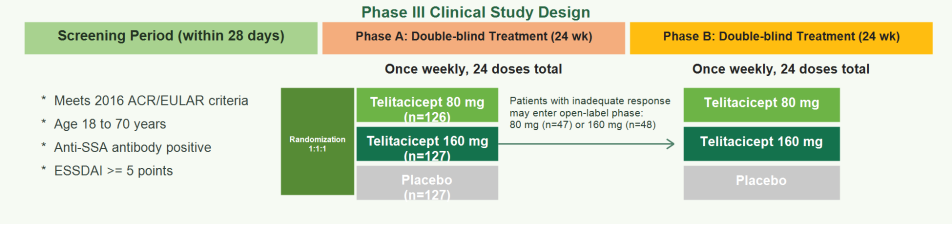
Fig. 1. Schematic of the Phase 3 Trial Design (NCT05673993): Randomized, Double-blind, Placebo-Controlled Evaluation of Telitacicept 160 mg in Anti-SSA–positive Adults with ESSDAI ≥ 5
Original figure caption outlines trial design schema, including enrollment eligibility, randomization stratification, treatment arms and follow-up timepoints through Week 48.
Reduction in Systemic Disease Activity
At Week 24, the telitacicept 160 mg group achieved a least-squares mean ESSDAI reduction of 4.4 points from baseline, compared with a 0.6-point reduction in the placebo group (P < 0.0001), reflecting clinically meaningful therapeutic efficacy. This treatment response was sustained through Week 48, with a mean ESSDAI decrease of 4.6 points observed in the 160 mg arm. The proportion of patients attaining a clinically meaningful ESSDAI reduction of ≥ 3 points was 71.8% at Week 24 and 73.0% at Week 48 [6].
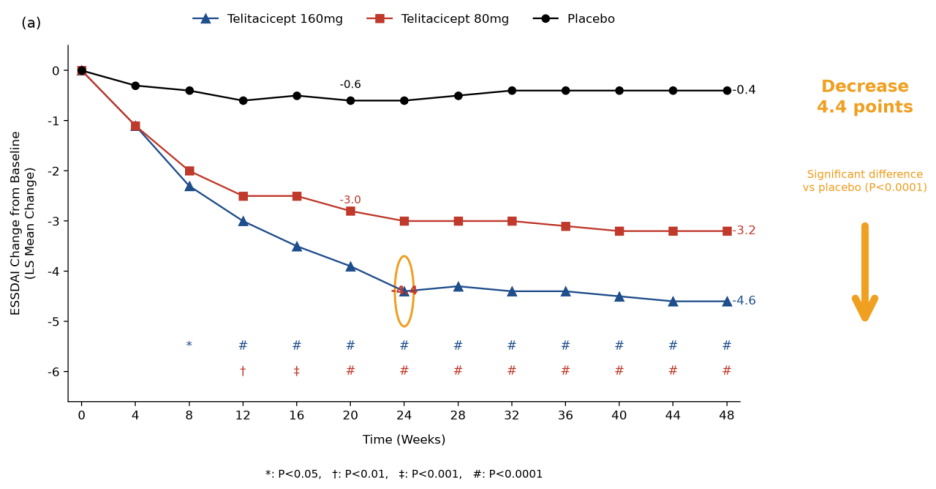
Fig. 2. Mean Change from Baseline in ESSDAI in the Phase 3 Trial of Telitacicept 160 mg Versus Placebo through Week 48
Line graph illustrating least-squares mean ESSDAI changes from baseline at Week 24 and Week 48 across telitacicept 160 mg, telitacicept 80 mg and placebo arms. Statistical annotations: T1: P < 0.05; T2: P < 0.01; T3: P < 0.001; #: P < 0.0001.
Patient-Reported Symptom Improvement
Patient-reported outcomes improved alongside disease activity. At week 48, 89.1% of patients in the telitacicept 160 mg group achieved an ESSPRI improvement of at least 1 point or a relative reduction of at least 15%. On the Multidimensional Fatigue Inventory (MFI-20), the telitacicept arm recorded a mean reduction of 12.3 points from baseline (P < 0.0001) [6].
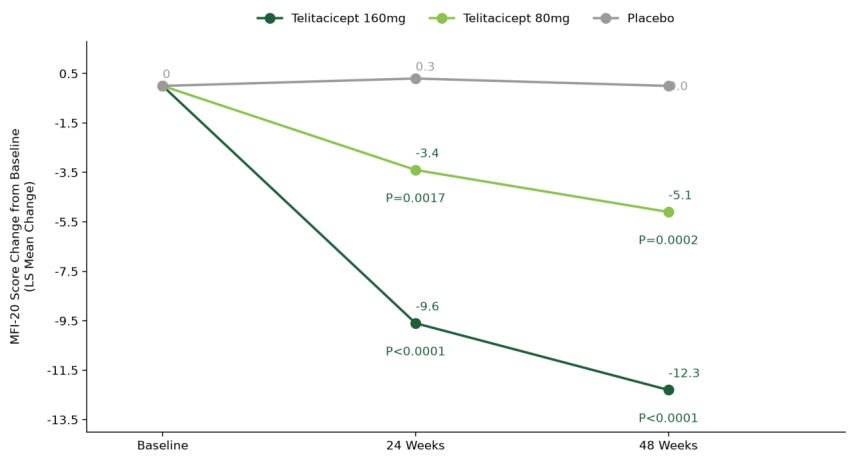
Fig. 3. MFI-20 Fatigue Score Change from Baseline in the Phase 3 Trial of Telitacicept 160 mg Versus Placebo at Week 48
Line chart presenting least-squares mean MFI-20 score changes from baseline across treatment groups at Week 24 and Week 48.
Immunoglobulin Trends and Safety Profile
Serum IgG, IgA and IgM levels declined during telitacicept treatment, consistent with its mechanism of suppressing B-cell maturation. Most adverse events were mild to moderate in severity, and no unanticipated safety signals emerged throughout the trial observation period [6].
"The Phase 3 data provide high-quality clinical evidence that telitacicept enables control of systemic disease activity alongside improvements in patient-reported symptoms among individuals with SjD," Professor Leng commented. "This marks a critical advance toward evidence-based targeted therapy, yet further clinical data are still required, particularly long-term efficacy and safety data beyond Week 48 of treatment."
Integration Into Chinese Clinical Guidelines
Telitacicept is now incorporated into several Chinese consensus documents and clinical practice guidelines:
· The 2023 Chinese Clinical Practice Guideline for Off-Label Drug Use in Sjögren’s Syndrome notes that B-cell–targeted biologics, including telitacicept, may be effective in patients with refractory and severe systemic involvement [9].
· The 2024 Chinese Expert Consensus on B-Cell–Targeted Therapies for Rheumatic Diseases lists telitacicept as the only B-cell–targeted agent specifically recommended for Sjögren disease among its approved indications [10].
· The 2024 Chinese Expert Consensus on Multidisciplinary Diagnosis and Treatment of Primary Sjögren’s Syndrome recommends telitacicept for patients with renal, neurologic, hematologic, or articular involvement, or with hypergammaglobulinemia (including cryoglobulinemia) [11].
· The Integrated Chinese and Western Medicine Guideline for Sjögren’s Syndrome provides a strong recommendation for telitacicept in patients with hypergammaglobulinemia, or with fatigue accompanied by systemic involvement [12].
Professor Leng interprets these recommendations as part of a broader shift in Sjögren disease management: away from empirical symptomatic treatment and toward standardized, evidence-based targeted therapy. She argues that combining structured ESSDAI assessment with timely initiation of targeted therapy may help maximize clinical benefit, and that improving assessment literacy is a prerequisite for guideline implementation.
Evidence Limitations and Future Research Directions
Several key limitations of the current evidence base require acknowledgment:
1. The Phase 3 trial exclusively enrolled Chinese participants; generalizability to other ethnic populations remains unvalidated within this study.
2. Long-term clinical outcomes beyond Week 48, including the agent’s impact on lymphoma risk (a well-documented complication of chronic B-cell hyperactivation in SjD), have not yet been characterized.
3. Head-to-head comparative trials against alternative B-cell-targeted agents (e.g., anti-CD20 monoclonal antibodies) are not yet available.
4. Biomarker-based responder subgroup analyses remain in early exploratory stages.
Looking forward, investigational strategies including gene therapy, broad-spectrum immune modulation and stem cell intervention are under evaluation for SjD, though most candidates remain at preclinical or early translational research stages. Larger, longer-duration clinical trials, biomarker-guided patient stratification frameworks and international collaborative research programs are required to validate these novel therapeutic modalities. Following China’s NMPA approval of telitacicept, global clinical and regulatory experience with this agent is expected to accumulate as multinational trial data mature.
References
[1] Ramos-Casals M, Baer AN, Brito-Zerón MDP, et al. 2023 International Rome consensus for the nomenclature of Sjögren disease. Nat Rev Rheumatol. 2025;21:426-437.
[2] Zhang W, Chen Z, Li XM, et al. Diagnostic and treatment specifications for primary Sjögren’s syndrome. Chin J Intern Med. 2023;62(9):1059-1067.
[3] Jiang Q, Zhou XY, Tang XP, et al. Guideline for pattern-based diagnosis and treatment of Sjögren’s syndrome. J Tradit Chin Med. 2024;65(4):434-444.
[4] Luo J, Tao QW, Leng XM, et al. Expert recommendations on integrated Chinese and Western medicine management of Sjögren’s-syndrome-related xerostomia. Chin J Exp Tradit Med Formulae. 2026:1-12.
[5] Seror R, Baron G, Camus M, et al. Development and preliminary validation of the Sjögren’s Tool for Assessing Response (STAR): a consensual composite score for assessing treatment effect in primary Sjögren’s syndrome. Ann Rheum Dis. 2022;81(7):979-989.
[6] Xu D, Zhang S, Qiao L, et al. Efficacy and safety of telitacicept in patients with Sjögren’s disease: results from a multicenter, randomized, double-blind, placebo-controlled, Phase 3 clinical study [abstract]. Arthritis Rheumatol. 2025;77(suppl 9).
[7] Gordon RA, McCoy SS. Sjögren disease — B cells at the brink: from autoimmunity to lymphomagenesis and the rise of novel B-cell–targeted therapies. Arthritis Rheumatol. 2026;78:1393-1402.
[8] Liu H, Yu H, Lü J, et al. Dual BAFF/APRIL inhibition with telitacicept in systemic lupus erythematosus and IgA nephropathy: pharmacological rationale, clinical efficacy, and safety on female fertility preservation. Front Pharmacol. 2026;17:1794203.
[9] Rheumatology and Immunology Committee of the China Primary Health Care Foundation. Chinese clinical practice guideline for off-label drug use in Sjögren’s syndrome (2023 edition). Chin Med J. 2023;103(43):3445-3461.
[10] National Clinical Research Center for Skin and Immune Diseases, Peking Union Medical College Hospital, Chinese Academy of Medical Sciences, Chinese Medical Doctor Association Rheumatology Branch, et al. Chinese expert consensus on B-cell–targeted therapies for rheumatic diseases (2024 edition). Chin J Rheumatol. 2024;28(10):706-722.
[11] Cheng F, Zhao FT, Shen XM, et al. Chinese expert consensus on multidisciplinary diagnosis and treatment of primary Sjögren’s syndrome (2024 edition). J Intern Med Concepts Pract. 2024;19(6):357-362.
[12] Liu W, He DY, Zhang W, et al. Integrated Chinese and Western medicine guideline for Sjögren’s syndrome. Chin Tradit Herb Drugs. 2025;56(15):5333-5346.

