


At the 64th Annual Meeting of the Japan Society of Clinical Oncology (JSCO) and the 6th International Congress of the Asian Oncology Society (AOS), held in Kobe, Japan, from October 22 to 24, 2026, Dr Wei Peng Yong, Associate Director (Research) and Senior Consultant in the Department of Haematology-Oncology at the National University Cancer Institute, Singapore (NCIS), and Adjunct Associate Professor at the Yong Loo Lin School of Medicine, National University of Singapore, presented a talk on taking a gastric cancer antibody-drug conjugate (ADC) from the laboratory to the clinic in Singapore, described in the session as the country’s first.
Article Key Points
• Dr Yong’s team helped develop EBC-129, an ADC targeting a glycosylation epitope shared by CEACAM5 and CEACAM6
• Phase 1 response rate 27.8% (5/18) in patients with IHC 2+ or 3+ in at least 20% of cells
• In 10 patients with antigen expression in at least 50% of cells, 5 responded, an objective response rate of 50.0%
• The analysis was single-arm, without a randomised comparator, and the presented slide stated no data cut-off date
• DESTINY-Gastric04, reviewed at the session, showed median OS of 14.7 months with T-DXd versus 11.4 months
Expert Profile: Dr Wei Peng Yong

• Associate Director (Research) and Senior Consultant, Department of Haematology-Oncology, National University Cancer Institute, Singapore (NCIS)
• Adjunct Associate Professor, Yong Loo Lin School of Medicine, National University of Singapore
• Leads the therapeutic arm of the Singapore Gastric Cancer Consortium at the National University Hospital
• Clinical work on drug treatment and Phase 1 trials in gastrointestinal, liver and pancreatic cancer
• Research interests in personalised therapy for gastric cancer, and in pharmacogenetics and epigenetics in cancer
• MB ChB, University of Aberdeen; specialist training in medical oncology at National University Hospital; clinical pharmacology fellowship at the University of Chicago
• Member, American Society of Clinical Oncology (ASCO)
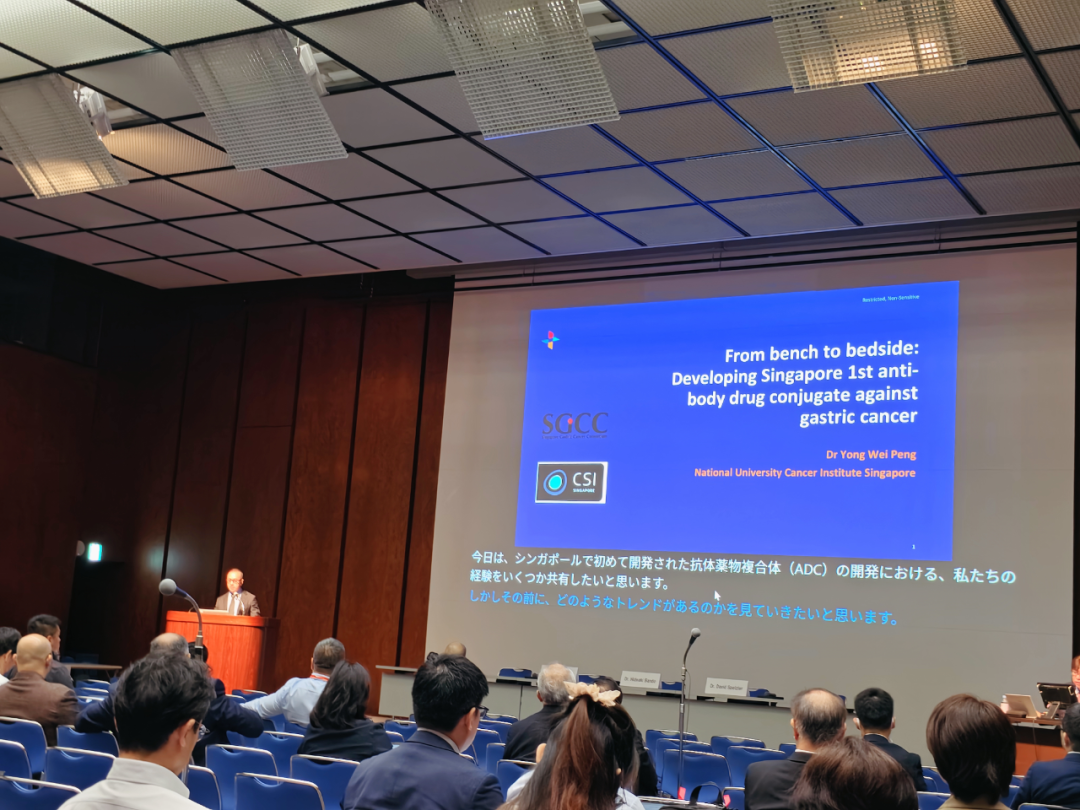 Fig. 1. Dr. Yong Introducing the Translational Development of Gastric Cancer ADCs at JSCO 2026 and AOS 2026
The report opened with the use of ADCs in clinical practice and returned to a specific question: how should a drug be designed, and how should patients be selected, so that the cytotoxic payload reaches the tumour effectively? EBC-129, in whose development his team had participated, offered an early example of exploring those questions.
Gastric Cancer ADC Progress Has Put Delivery in the Spotlight
An ADC comprises an antibody, a linker and a cytotoxic payload. The antibody recognises the target, the linker connects the antibody to the drug, and the payload carries the killing function. After the drug binds its target, it usually still has to undergo internalisation, trafficking and release before it can act. Detecting the target is therefore only the starting point; delivering enough drug to the right place also affects efficacy.
Clinical studies have already shown the value of this approach. The DESTINY-Gastric04 study reviewed by Dr Yong was a randomised phase III trial that enrolled 494 patients with unresectable or metastatic gastric or gastro-oesophageal junction adenocarcinoma who had progressed on or after first-line trastuzumab-containing therapy and remained HER2-positive on a biopsy taken after progression. Median overall survival (OS) was 14.7 months with trastuzumab deruxtecan (T-DXd) against 11.4 months with ramucirumab plus paclitaxel, with a hazard ratio for death of 0.70 (95% CI 0.55-0.90, P=0.0044) (Shitara et al., N Engl J Med 2025;393:336-348). This was a review of published results rather than a first disclosure at this meeting.
The benefit came with risks that have to be managed. In the same study, treatment-related adverse events of grade 3 or higher occurred in 50.0% of the T-DXd group and 54.1% of the ramucirumab plus paclitaxel group; interstitial lung disease or pneumonitis related to T-DXd was the adverse event requiring closest monitoring, and most cases were of low grade. As ADC development moves into first-line and earlier treatment settings, the development goal becomes clearer: antitumour activity has to be preserved while patients remain able to stay on treatment.
Patient Selection Requires Mapping the Distribution of Targets
Target expression in tumour cells is often uneven. Within a single tissue block, some areas stain strongly while others stain weakly, and differences may also exist between a primary tumour and its metastases. Summarising expression as positive or negative alone risks discarding that information.
Some payloads released by ADCs can enter neighbouring cells, producing a bystander effect. This offers a possible route for dealing with uneven target expression and also helps explain the clinical benefit seen in specific populations such as HER2-low breast cancer. The mechanism does not guarantee that heterogeneity will be overcome, however, and results obtained in breast cancer cannot be applied directly to gastric cancer. How many positive cells there are, how far apart they lie and how far the payload can diffuse all continue to influence treatment.
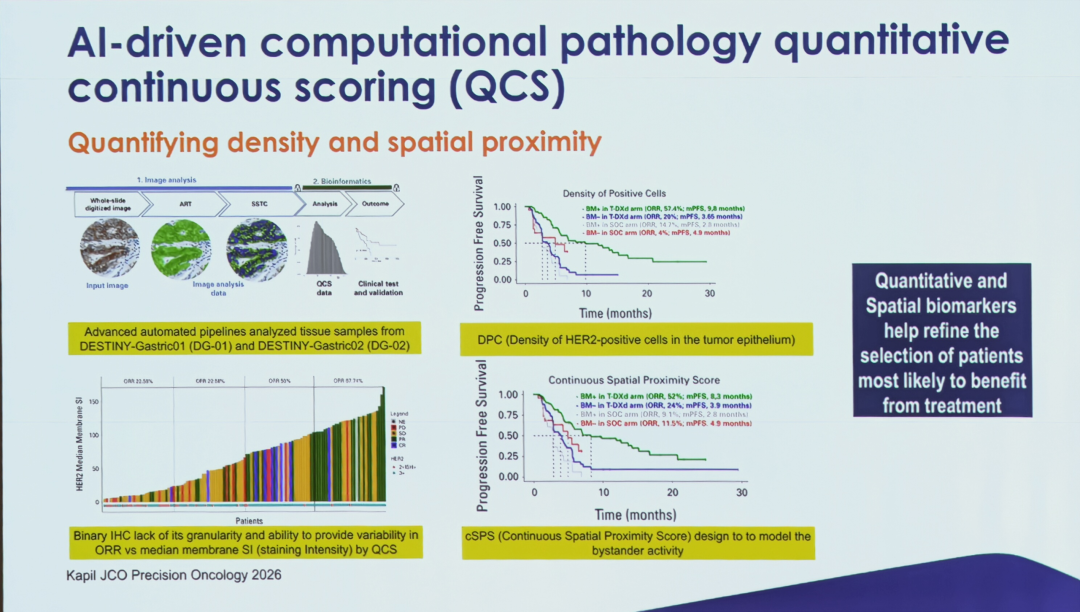 Fig. 2. Session Slide on HER2 Quantification and Spatial Analysis, Based on Samples from DESTINY-Gastric01 and DESTINY-Gastric02; Such Scores Are Exploratory Biomarkers That Require Further Validation
Dr Yong described an approach based on artificial intelligence-assisted computational pathology: digitising whole tissue slides, then quantifying staining intensity, the density of positive cells and the spatial relationships between cells. A study using tissue samples from DESTINY-Gastric01 and DESTINY-Gastric02, for example, explored the density of HER2-positive cells in the tumour epithelium and a continuous spatial proximity score, with the aim of identifying potential beneficiaries more precisely than a single immunohistochemistry (IHC) grade allows (Kapil et al., JCO Precis Oncol 2026;10:e2500823).
The talk also used the earlier TROPION-Lung01 study in lung cancer to illustrate that the distribution of a target between the cell membrane and the cytoplasm may carry additional information (IASLC, WCLC 2024). Such methods help in studying ADC sensitivity, but the distribution seen on a static slide cannot be equated directly with the rate of internalisation in a living tumour. The focus now is on establishing whether the assay can be reproduced reliably, and whether selecting treatment on the basis of the result genuinely improves patient outcomes. Identifying an association and establishing a clinical selection rule remain separated by a distance.
Designing New Drugs by Identifying Tumour Epitopes
These development questions take a more concrete form in EBC-129. The drug recognises a specific glycosylation epitope shared by CEACAM5 and CEACAM6, and delivers the microtubule inhibitor MMAE through a cleavable linker (National Cancer Institute, Drug Dictionary). Beyond targeting two antigens, its design also turns on which epitope on those antigens is chosen.
The report set out several obstacles to CEACAM-targeted therapy: soluble antigen circulating in the blood may bind the drug ahead of time and affect delivery to the tumour; insufficient internalisation of the target may limit entry of the payload into cells; and the expression of CEACAM6 on normal granulocytes raises concern about damage to normal tissue.
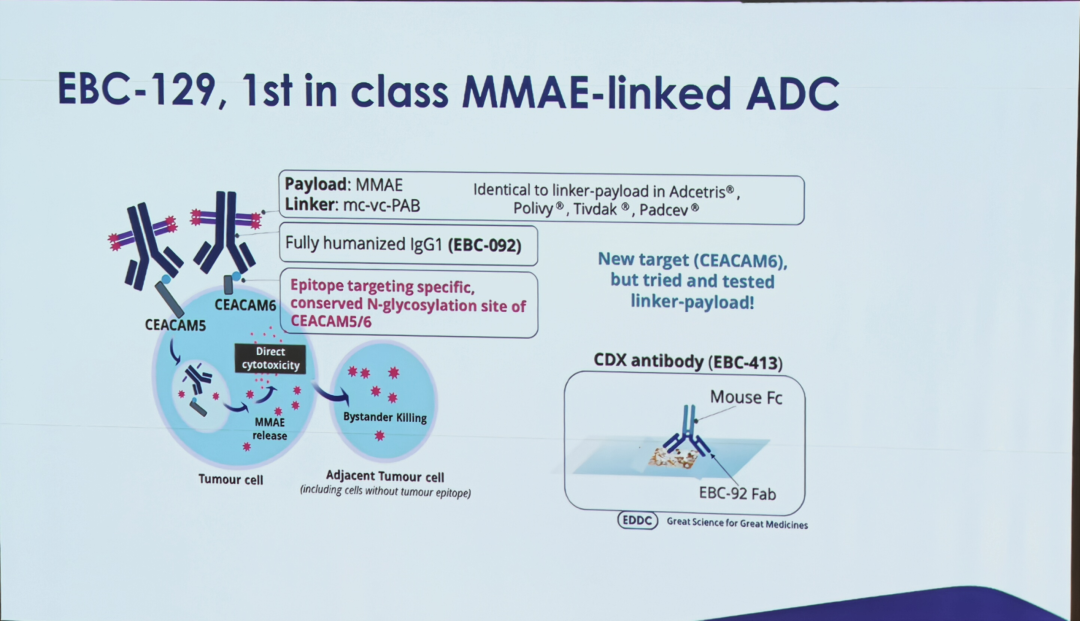 Fig. 3. Schematic of the Structure and Mechanism of Action of EBC-129, Recognising Glycosylated CEACAM5/6 Epitopes and Delivering MMAE through a Cleavable Linker; The Schematic Explains the Development Mechanism and Cannot Substitute for Clinical Efficacy and Safety Evidence
Against these obstacles, the team presented binding, cellular internalisation and animal-model results. The design logic is to use recognition of a specific glycosylation epitope to reduce binding to soluble antigen and to normal granulocytes, while retaining internalisation by tumour cells and release of the payload. These observations are preclinical evidence that supports moving the programme into clinical research; they cannot establish that patients will be spared myelosuppression or other toxicity.
Response Signals in 18 Patients Still Require Validation
EBC-129 is in Phase 1 clinical development. The registry study, a Phase 1A/B trial of EBC-129 as a single agent and in combination with pembrolizumab in advanced solid tumours (NCT05701527), includes single-agent dose escalation, expansion and fractionated dosing, with the aim of further characterising safety, dosing regimens and antitumour activity.
The efficacy analysis presented in this session, in gastro-oesophageal adenocarcinoma, provided an early indication of how antigen expression relates to treatment response. Among 18 patients evaluable for efficacy whose IHC showed 2+ or 3+ staining in at least 20% of tumour cells, 5 achieved an objective response, an objective response rate of 27.8%. The presented table listed a median of 3 prior lines of treatment for the overall population, with a range of 1 to 9, and prior taxane exposure in 60.0% of patients.
In the subgroup whose antigen expression covered at least 50% of cells, 10 patients were assessed and 5 achieved an objective response, an objective response rate of 50.0%. The same table reported a disease control rate of 83.3% for the overall population and 90.0% for the subgroup, with median progression-free survival of 17.9 and 26.5 weeks respectively.
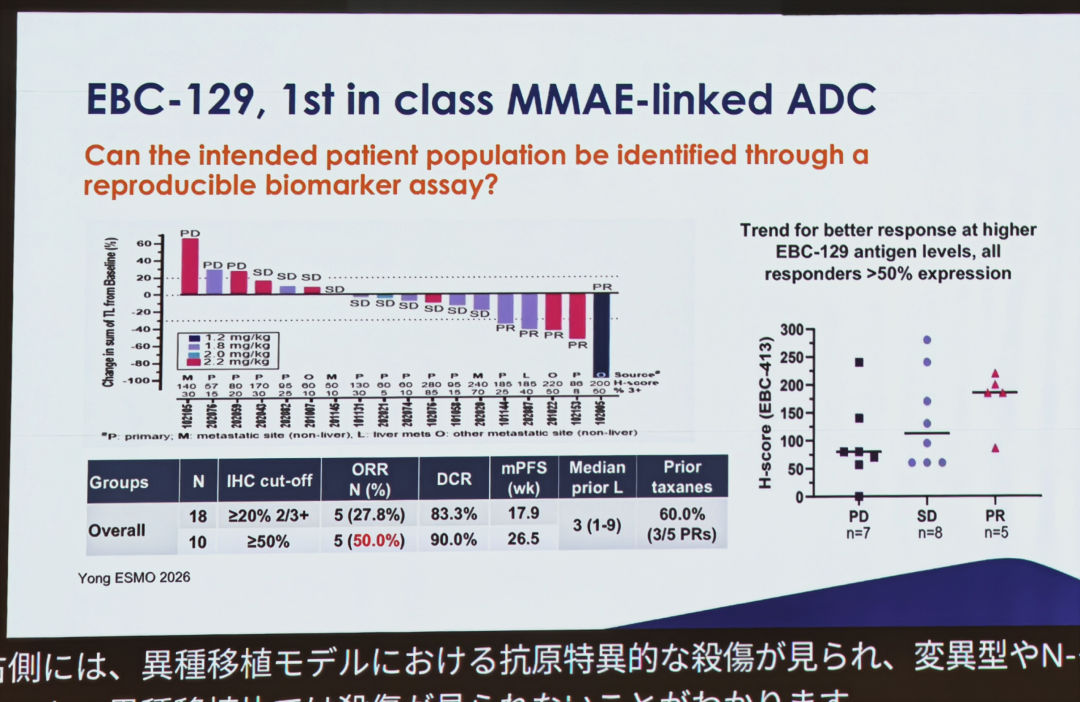 Fig. 4. Early Efficacy Analysis of EBC-129 Presented in This Session; The Table at the Lower Left Sets Out the Overall Population of 18 Patients and the High-Expression Subgroup of 10, with Response Rates Read as 5/18 and 5/10; The Slide States No Data Cut-off Date
The point of interest is the more concentrated response signal in the high-expression subgroup. It must also be seen against the fact that the subgroup contained only 10 patients and that the study had no randomised control. A response rate of 50.0% cannot be used to claim that the agent is superior to other treatments, nor to establish 50% as a settled clinical threshold for use. Larger, prospective studies are needed to confirm the consistency of the assay and to verify whether the selection strategy reliably identifies patients who benefit.
A separate slide in the session showed safety observations by dose cohort as of March 31, 2026, focusing on neutropenia or a reduced neutrophil count and on infusion-related reactions such as chills and fever. The speaker described the management measures used, including premedication and granulocyte colony-stimulating factors, and noted that fractionated dosing was still being explored. Because the population in this safety analysis differs from that in the efficacy analysis of 18 patients, the two should not be combined and read as one dataset.
The Right Dose Must Balance Long-Term Tolerability
For ADCs, identifying the maximum tolerated dose does not mean that the best way of using the drug has been found. The stability of the linker affects when the drug is released, and the potency and membrane permeability of the payload affect the range of the killing effect and the extent of systemic exposure. Raising one of these parameters need not raise overall benefit.
Drawing on the dose-optimisation concepts of the US Food and Drug Administration’s Project Optimus, Dr Yong argued that early development should integrate drug exposure, efficacy and tolerability when choosing a dose and a dosing regimen (FDA, Clinical Pharmacology Considerations for Antibody-Drug Conjugates, March 2024). Adverse events such as interstitial lung disease, ocular toxicity or cumulative neuropathy may not become apparent until treatment has continued for a longer period. Safety evaluation therefore has to extend beyond the initial dose-limiting toxicity observation window, with continuing attention to whether patients can tolerate treatment.
Conclusion
Moving gastric cancer ADCs from the laboratory towards the clinic requires answers to three questions: whether the drug can reach the tumour effectively, which patients are more likely to benefit, and whether treatment can be maintained over the long term. The early exploration of EBC-129 shared by Dr Yong links these questions together. Bispecific and dual-payload ADCs are widening the range of approaches under development, but moving from early response signals to reliable treatment choices still requires more substantial clinical evidence.
References
[1] National University Cancer Institute Singapore. At the Helm; National University Health System. Profile of Dr Wei Peng Yong; National University of Singapore. Academic Promotions 2023.
[2] Shitara K, et al. Trastuzumab Deruxtecan or Ramucirumab plus Paclitaxel in Gastric Cancer. N Engl J Med. 2025;393:336-348. doi:10.1056/NEJMoa2503119
[3] Kapil A, et al. Human Epidermal Growth Factor Receptor 2 Quantification Using Computational Pathology to Identify Novel Biomarkers for Trastuzumab Deruxtecan-Treated Human Epidermal Growth Factor Receptor 2-Positive Gastric Cancer. JCO Precis Oncol. 2026;10:e2500823. doi:10.1200/PO-25-00823
[4] IASLC. Normalized Membrane Ratio of TROP2 by Quantitative Continuous Scoring Is Predictive of Clinical Outcomes in Patients With NSCLC in TROPION-Lung01. Official research release, WCLC 2024, September 8, 2024.
[5] National Cancer Institute. Anti-CEA/anti-CEACAM6 antibody-drug conjugate EBC-129. NCI Drug Dictionary.
[6] ClinicalTrials.gov. A Phase 1A/B Study To Evaluate The Safety And Tolerability Of EBC-129 As A Single Agent And In Combination With Pembrolizumab In Advanced Solid Tumours. NCT05701527.
[7] US Food and Drug Administration. Project Optimus; Clinical Pharmacology Considerations for Antibody-Drug Conjugates: Guidance for Industry. March 2024.

