


A 14-year-old boy who fell from the fourth floor, after 10 hours of progressive clinical deterioratioIntraoperatively used hemostatic gauze / Image source: Intervieween, ultimately triumphed over death thanks to two critical emergency surgeries performed through the collaboration of a multidisciplinary team including the Pediatric Surgery Department, Pediatric Intensive Care Unit (PICU), Emergency Department, and Anesthesiology Department at Henan Provincial People's Hospital.
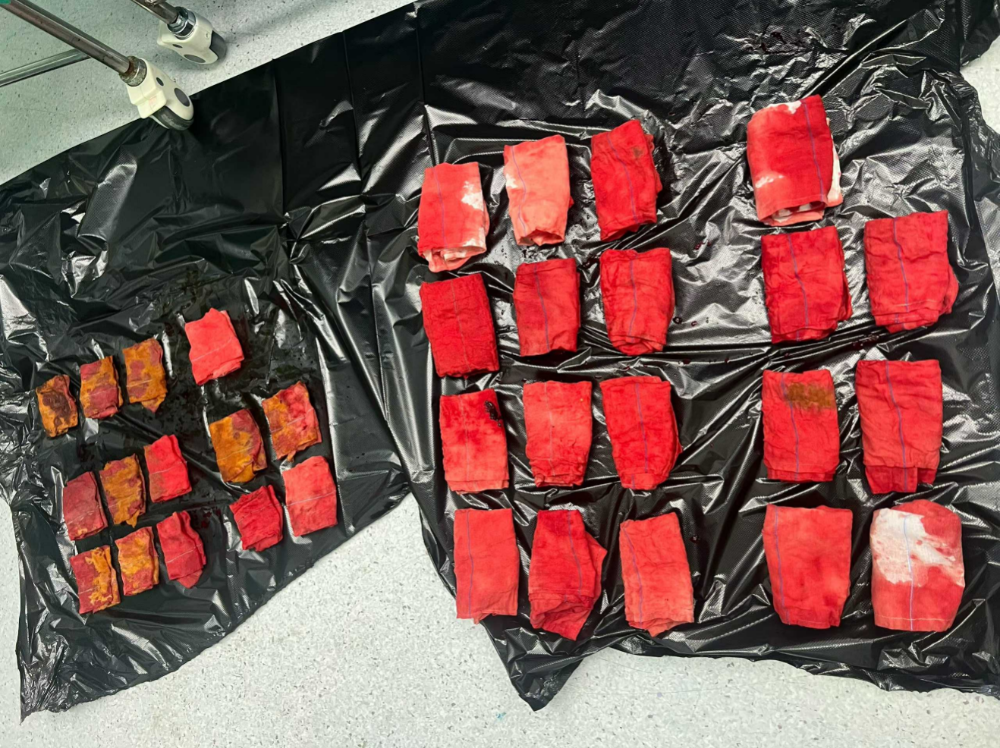
Intraoperatively used hemostatic gauze / Image source: Interviewee
A Precipitous Drop in Blood Pressure After a High Fall
Around noon on October 12, 2023, the overweight adolescent accidentally fell from the 4th floor, hitting the ground headfirst, followed by impacts to his chest and abdomen. An emergency CT scan at a local hospital showed only brain tissue swelling, with no obvious abnormalities such as fractures, intracranial hemorrhage, or abdominal organ injuries. The local hospital adopted conservative treatment measures.
However, the situation took a sharp turn for the worse in the evening. The child's blood pressure and blood count began to drop continuously. At 9:30 PM, Dr. Dongliang Cheng, Chief Physician of the PICU at Henan Provincial People's Hospital, received an urgent request for help and immediately activated an emergency response. Upon arrival, despite the administration of three vasopressors, the child's systolic blood pressure was dangerously low, maintained at only 40-50 mmHg, far below the normal range of 90-139 mmHg for healthy children his age.
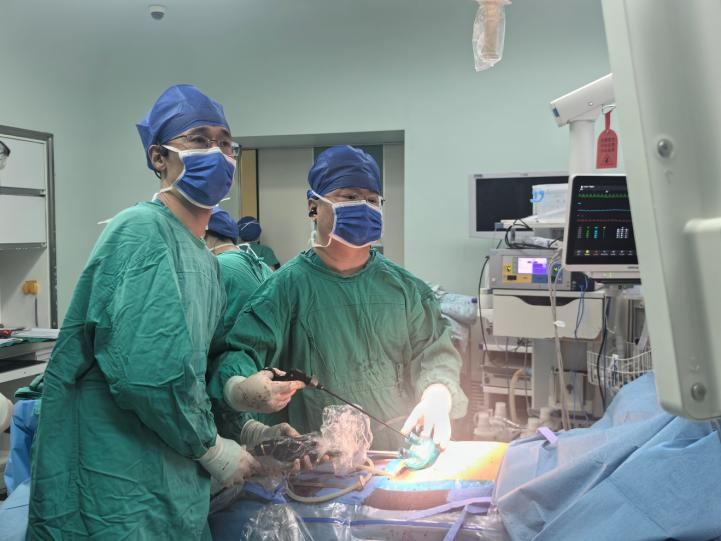
Wang Xiaohui et al. performing emergency surgery / Image source: Interviewee
Life-Threatening Challenges During Surgery
Faced with the critical situation of "collapsed" blood vessels and a central venous pressure of only 0.1 kPa, the medical team made an unconventional decision: to proceed directly to surgery, bypassing further imaging studies. Dr. Xiaohui Wang, Chief Physician of Pediatric Surgery, explained: "It was like the parable of the blind men and the elephant, an extreme test of the doctor's clinical experience and courage."
The surgical team, consisting of six or seven doctors including Dr. Shufeng Zhang, Director of Pediatric Surgery, and Dr. Xiaohui Wang, along with over a dozen PICU, Anesthesiology, Blood Transfusion Department staff, and scrub nurses, launched the rescue effort without a precise "roadmap."
Dr. Wang explained that the 10-hour interval from the incident to the deterioration suggested slow, continuous bleeding, ruling out the rupture of a major blood vessel.
Entering surgery, the first challenge emerged immediately: Where was the bleeding point, and how should the incision be made?
Organs most prone to bleeding from trauma in the abdominal cavity include the liver, spleen, and pancreas, each located in different areas. For instance, the liver is on the right side of the abdomen, while the spleen is on the opposite left side.
"We couldn't make one long enough incision down the midline of the abdomen," Dr. Wang explained. On one hand, such a large incision, almost spanning the entire abdomen, is not cosmetically ideal, causes significant trauma, and the child might not withstand it. On the other hand, at that moment, the child's abdomen was like a "pressure cooker"; opening it rashly would be like unscrewing the final "safety valve" sustaining life.
As blood accumulated, the pressure within the abdominal cavity kept rising. To some extent, this internal pressure acted like a hand pressing on the wound, compressing the bleeding points and helping to slow the hemorrhage. Simultaneously, the abdominal hypertension barely maintained blood supply to the heart and brain, preventing an instantaneous blood pressure collapse.
If the abdomen were opened hastily, the intra-abdominal pressure would release instantly: previously compressed bleeding points would lose restraint, potentially causing blood to gush forth like a burst dam, obscuring the surgical field.
More severely, this could lead to a sharp decrease in venous return to the heart, causing blood pressure to plummet like a rollercoaster. The child could immediately fall into shock, experience cardiac arrest, and lose any chance of rescue.
After discussion, the surgical team first made a small incision near the umbilicus to observe the abdominal cavity with a laparoscope. After aspirating blood and clots, they roughly visualized that the front surfaces of the liver and spleen were intact. However, there was a contusion and laceration on the dorsal side of the liver near the diaphragm, and a bleeding laceration where the spleen connected to its blood vessels.
Identifying the problems, the surgical team made a vertical midline incision based on the umbilicus, followed by a short transverse extension towards the liver, forming a "T-shaped" incision. Dark red blood instantly gushed out. A 2000ml negative pressure drainage bottle filled quickly, and hemostatic gauze pads were changed repeatedly.
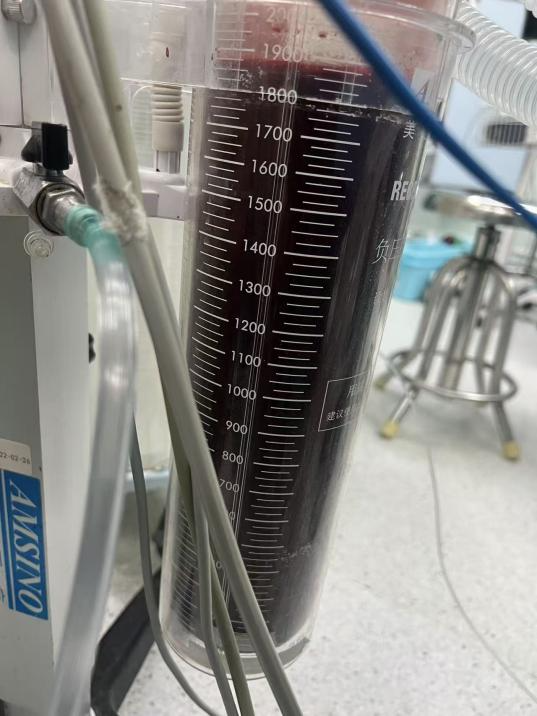
Negative-pressure drainage bottle nearly filled with blood / Image source: Interviewee
Reportedly, during the surgery, the child's blood pressure once dropped to 35-50 mmHg, with blood loss exceeding 3000ml. Dr. Shufeng Zhang, Director of Pediatric Surgery, immediately emphasized: "Increase the transfusion speed, ensure the input volume exceeds the output." Circulating nurses Jun Li and Qiulin Wang jogged to fetch blood, while scrub nurses Qihan Chen, Chaoli Guo, and Rui Liu precisely coordinated with the doctors, passing instruments and gauze efficiently.
Subsequently, the surgical team clamped the bleeding vessels with hemostats, removed the ruptured spleen, and then carefully inspected and repaired the damaged liver and stomach one by one, thoroughly eliminating other bleeding points.
"The child had a thick abdominal wall, making the process of opening the abdomen, exposing the surgical field, and dissecting tissues both difficult and time-consuming," Dr. Wang stated. After completing the repair of damaged organs and hemostasis, the team placed a drainage tube in the abdominal cavity, irrigated the wound for 30 minutes, and confirmed the irrigant was clear and without bleeding before beginning to suture the incision.

Surgery concluded in the early hours of the next day / Image source: Interviewee
The Misleading Nature of "Delayed Hemorrhage"
Around 5:00 AM on the 13th, a new crisis emerged. The child's drainage tube suddenly showed bloody output, and his blood pressure dropped. "Our first guess was that the child might have developed acute hemorrhagic coagulopathy," Dr. Wang said. Severe trauma can cause an acute impairment of blood clotting ability, and bleeding is the most common clinical manifestation.
However, a repeat coagulation function test soon ruled out this suspicion. The pediatric surgery team then urgently performed an exploratory laparotomy, finding oozing blood from the liver wound site, with blood seeping slightly from the suture needle holes from the previous surgery.
Dr. Wang explained to MedJ that the core reason from the onset to the first surgery was precisely "delayed hemorrhage." He elaborated: "'Delayed' does not mean the problem appeared late, but that the injury actually existed all along, only hidden initially."
This is because abdominal organs like the liver, spleen, and kidneys have a texture similar to soft tofu. After a massive impact, the surface might appear intact, but internal concussive tearing may have occurred. Furthermore, these organs are covered by a membrane akin to sausage casing, which can temporarily contain the shattered tissue and oozing blood.
"The organ trauma likely already existed during the first CT scan at the local hospital. But at that time, the bleeding was minimal and confined within the capsule, and the child's blood pressure and heart rate were normal," Dr. Wang emphasized. The clinical symptoms of delayed hemorrhage are very insidious and highly misleading.
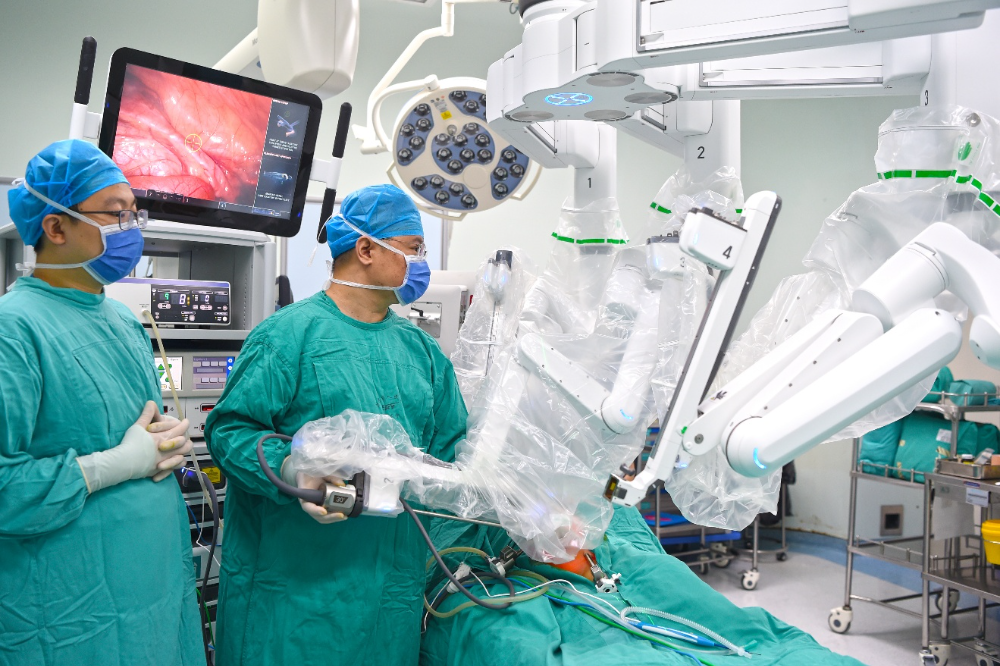
Wang Xiaohui specializing in minimally invasive surgery, particularly robotic procedures / Image source: Interviewee
Over time, the child's agitation and crying continuously increase the pressure within the organ contents. When this pressure exceeds the capsule's tolerance limit, it eventually causes hemorrhage and rupture of the capsule.
Additionally, the occurrence and duration of delayed organ hemorrhage vary depending on the type and location of the injury and individual differences. Sometimes, a previously stable injury can suddenly worsen, causing "secondary hemorrhage"—which is exactly why the child's liver wound started oozing again after the first surgery.
Addressing this, the surgical team performed reinforcement sutures on the child. "The child's organ tissues were very fragile, making suture repair quite difficult. We used biological patches to cover the wound, preventing the sutures from cutting into the organ and the wound surface. It's like laying down newspaper before using packing rope to move furniture, preventing the rope from damaging the furniture," Dr. Wang explained, describing the technique.
Statistics show the child received over 4000ml of blood transfusion during the initial surgery period, equivalent to replacing his entire blood volume. As of this report, the child's vital signs have stabilized, with many indicators returning to normal.

