


At the American Diabetes Association (ADA) 2026 Scientific Sessions, Sciwind Biosciences announced that its cAMP-biased GLP-1 receptor agonist ecnoglutide had topped semaglutide in the head-to-head SLIMMER-UP-SWITCH trial, with results presented as a Late Breaking abstract. The findings have placed the drug — already approved in China for type 2 diabetes and obesity, and partnered with Pfizer China for commercialization — under closer industry scrutiny. At the 5th Biomedical Industry Chain China (BIC China) conference, MedJ Drug Innovation sat down with Dr. Xinle Wu, Chief Scientific Officer of Hangzhou Sciwind Biosciences, to unpack two questions: which endpoints in SLIMMER-UP-SWITCH actually demonstrate differentiation, and whether the cAMP-biased GLP-1 RA label is a compelling mechanism story or a fully evidence-backed causal chain. Wu also laid out Sciwind’s thinking on the GLP-1 second half, pipeline trade-offs, and international strategy.
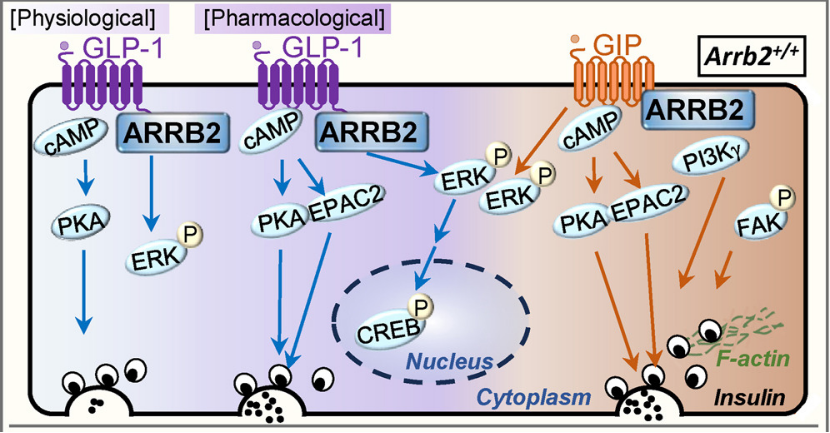 Fig.1.Dr. Xinle Wu
Chief Scientific Officer, Hangzhou Synvista Biotech Co., Ltd
Head-to-Head Hard Endpoints: More Than the 35% Relative Lift
SLIMMER-UP-SWITCH (NCT07073417) is a randomized, open-label, multicenter Phase II trial conducted in China. It enrolled 163 Chinese adults with obesity (body mass index [BMI] ≥30 kg/m²). Participants were randomized 1:1 to once-weekly subcutaneous ecnoglutide or semaglutide for 60 weeks. At week 20, both arms were titrated to the 2.4 mg maintenance dose for 4 weeks, at which point a pre-specified interim analysis evaluated efficacy and safety in all enrolled participants.
At week 20, mean body weight reductions were 12.8% in the ecnoglutide arm vs 9.5% in the semaglutide arm (P<0.0001), a 35% relative improvement in weight loss. The proportion of participants achieving ≥10% weight reduction was 74% with ecnoglutide vs 40% with semaglutide (P<0.001). Body circumference metrics also favored ecnoglutide: waist circumference fell by a mean of 10.5 cm vs 8.7 cm from baseline (P<0.05), a 20% greater reduction, with arm and neck circumference showing similar advantages.
The “12.8% vs 9.5%” headline is the most-cited figure, but Wu argued that no single number captures the differentiation. “When we evaluate a weight-loss drug, we focus on two dimensions,” he explained. “One is the absolute and relative magnitude of weight loss, and how many people reach 5% or 10% thresholds. The other is safety, particularly gastrointestinal tolerability and discontinuation rates.” Weight loss and response rates answer “is efficacy good enough”; GI tolerability and discontinuation answer a different, often-overlooked question: was the efficacy edge bought at the cost of tolerability?
This trade-off was central to the head-to-head design. Wu noted that ecnoglutide’s discontinuation rate due to intolerance appeared similar to semaglutide’s in the interim analysis. Sciwind’s goal, he emphasized, was not to claim “a more potent drug,” but to demonstrate a meaningful efficacy gain within a comparable safety envelope.
cAMP-Biased GLP-1 RA: Mechanism Story or Evidence Chain?
Ecnoglutide’s defining scientific label is “cAMP-biased GLP-1 receptor agonist,” meaning it activates the receptor’s canonical cAMP signaling pathway while minimizing recruitment of the β-arrestin pathway. The concept is attractive but invites a recurring critique: do the clinical advantages reflect genuine signal bias, or simply differences in half-life, systemic exposure, or formulation?
Wu addressed the exposure question directly: ecnoglutide’s measured exposure appeared comparable to semaglutide’s, and its half-life was similar. The drug was not, in other words, “dosed more or sticking around longer” to win the head-to-head.
 Fig. 2. Schematic of cAMP-biased GLP-1 receptor signaling
Source: Cell Reports 2023
At the cellular level, Sciwind’s in vitro work showed that ecnoglutide activated the cAMP pathway with similar potency to semaglutide but produced markedly weaker β-arrestin recruitment. Because β-arrestin recruitment is closely linked to receptor desensitization, the biased profile may help the receptor resist rapid desensitization with chronic dosing.
Animal data added another layer. “At the same dose in animal models, ecnoglutide also showed slightly better weight loss and glucose control,” Wu said. From cells to animal models to the clinic, Sciwind has built an integrated dataset supporting the central argument that biased agonism may translate into better patient outcomes.
The GLP-1 Second Half: Multi-Target, Combos, Oral, and New Indications
Zooming out, Wu acknowledged that GLP-1 competition is evolving on multiple fronts simultaneously: multi-target agonists, oral small molecules, longer-acting formulations, and body-composition management. Semaglutide’s China patent is approaching expiry, and a wave of generics is foreseeable. Wu does not, however, see single-target agents being marginalized. “Ecnoglutide is a single-target GLP-1 drug, but because of its biased activation of the cAMP pathway, it still has substantial competitive advantages,” he said. Its weight-loss efficacy approaching that of dual-target products, he argued, preserves room for the single-target biased-molecule route.
Where, then, does the hardest-to-replicate moat sit? Wu’s answer was segmentation rather than a single technology. The future weight-loss market, in his view, will fragment, and no one molecule can serve every need. He pointed to Amylin as a target attracting renewed attention: meaningful weight loss with a milder side-effect profile than GLP-1, making it a better fit for patients with moderate weight-loss goals and high tolerability demands.
Sciwind is also tackling the formulation challenge inherent to Amylin-GLP-1 combinations. The two molecules have very different physicochemical properties and resist co-formulation in a single solution; Sciwind has engineered its Amylin molecule to allow co-formulation in one preparation. Wu added that the optimal Amylin-to-GLP-1 dose ratio, titration cadence, and balance across the four Amylin receptors all remain open clinical questions that he expects the field to resolve over the next several years.
Oral delivery is another bet. Sciwind has already developed an oral ecnoglutide formulation, with a target profile of once-weekly oral dosing; it is currently in Phase II, several years from approval. Drawing on the market experience with oral semaglutide, Wu noted that a substantial share of oral-formulation users are previously untreated patients rather than switches from injectables — suggesting that an oral version may unlock incremental demand rather than merely substitute for the injectable.
Indication expansion is the third leg. Ecnoglutide is currently approved in China for type 2 diabetes and obesity. Sciwind is advancing additional indications including adolescent weight management and obstructive sleep apnea (OSA), with osteoarthritis under consideration. Metabolism, Wu argued, spans a constellation of comorbidities and indications; for ecnoglutide to evolve from a “weight-loss product” into a “metabolic-disease platform,” indication expansion is unavoidable.
International Strategy: Doing the Hardest Thing Well First
Ecnoglutide is approved in China and partnered with Pfizer China for commercialization, a division of labor Wu described as complementary: “Pfizer has deep roots in China and runs strong commercial operations, and it takes the weight-loss category seriously. We’re good at R\&D; Pfizer is good at sales.”
With the China partnership in place, the next international step attracts obvious attention. Wu’s answer was deliberately pragmatic. Sciwind remains a relatively small team, he noted; the company’s strategy is to deepen and accelerate its early-stage R\&D first. Overseas clinical development and commercialization — capital-intensive and high-risk — will be evaluated dynamically as the company grows and its funding position evolves. “If things go well and funding is sufficient, of course we can consider that direction,” he said. For now, the focus is on consolidating the R\&D edge, leaving both independent international advancement and future large-pharma partnerships open as future options.
Closing
A head-to-head trial and an evidence chain from receptor signaling to clinical outcomes — Sciwind is not content to say “the data look better.” It wants to answer “why better.” That question only matters in the context of the GLP-1 second half: as semaglutide's patent cliff approaches and generic pressure mounts, while dual-target agents, oral formulations, and Amylin combinations simultaneously rewrite the rules, no single molecule's advantage is permanent. Whether ecnoglutide can cross the line from “weight-loss product” to “metabolic-disease platform” will depend not on any one head-to-head result, but on whether this evidence chain can be re-validated and updated through the next wave of technological iteration.

