


The 2025 European Society for Medical Oncology (ESMO) Congress is being held in Berlin, Germany, showcasing the latest clinical research advances and academic achievements in oncology to global experts, scholars, and practitioners.
On October 19th at 16:30 local time, the HARMONi-6 study—led by Dr. Shun Lu from Shanghai Chest Hospital, affiliated with Shanghai Jiao Tong University School of Medicine—was prominently featured in the Presidential Symposium. The study, titled "HARMONi-6: Ivonescimab plus chemotherapy versus tislelizumab plus chemotherapy as first-line treatment for advanced squamous non-small cell lung cancer (sq-NSCLC)," was simultaneously published in the prestigious international medical journal The Lancet.
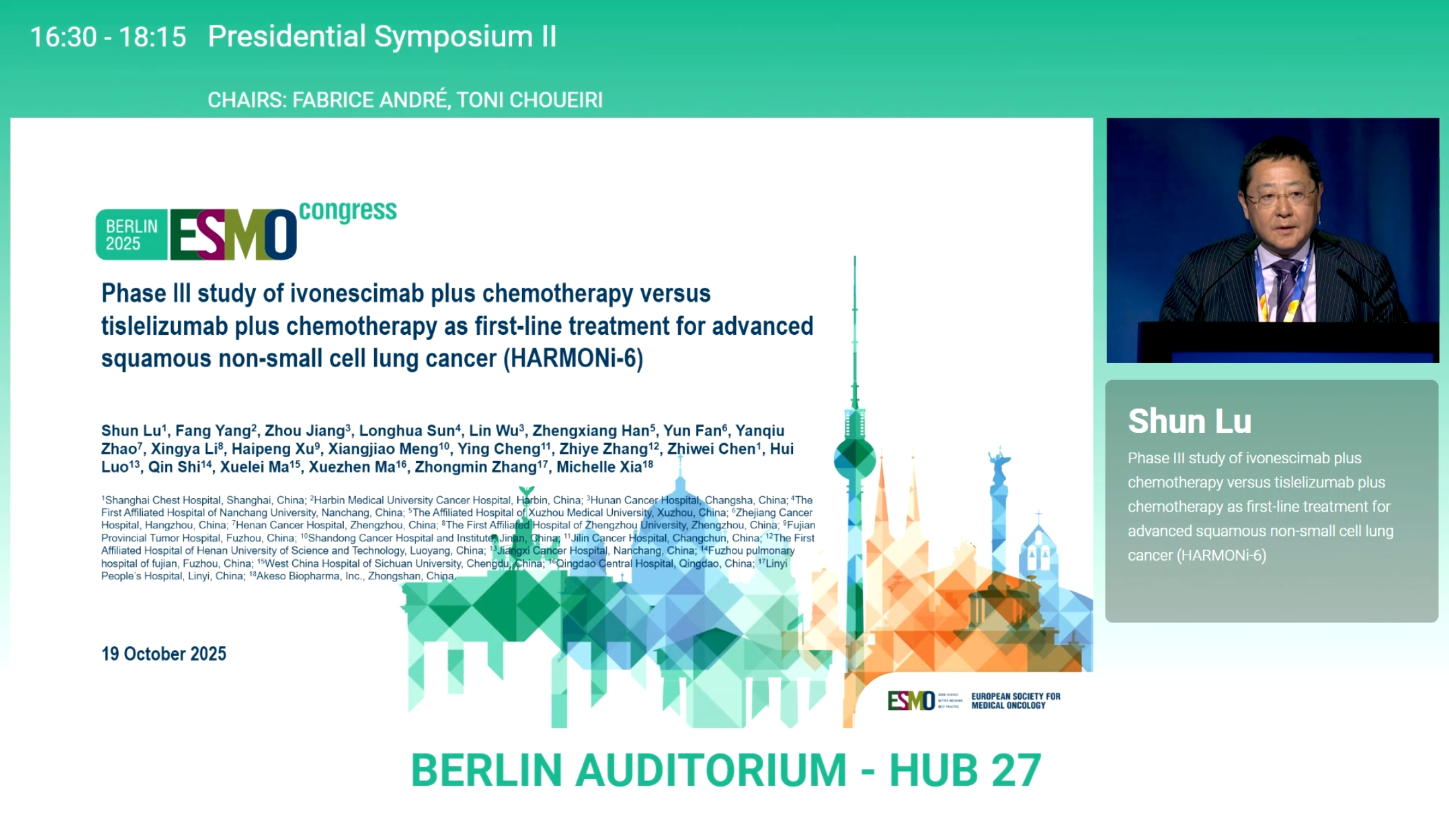
First-Line Treatment for sq-NSCLC: Head-to-Head Results of Ivonescimab vs. Tislelizumab
Ivonescimab is a PD-1/VEGF bispecific antibody that simultaneously blocks the binding of PD-1 to PD-L1/PD-L2 and VEGF to its receptors, theoretically achieving a synergistic "1+1>2" antitumor effect. Following the success of the HARMONi-6 study comparing ivonescimab with pembrolizumab as first-line treatment for PD-L1-positive NSCLC, this research further evaluated the efficacy of ivonescimab combined with chemotherapy versus a PD-1 inhibitor combined with chemotherapy as first-line treatment for sq-NSCLC.
The study enrolled previously untreated patients with stage IIIB-IV squamous NSCLC, who were randomized 1:1 to receive either ivonescimab (20 mg/kg Q3W) or tislelizumab (200 mg Q3W), both combined with paclitaxel (175 mg/m²) and carboplatin (AUC5) for four cycles, followed by ivonescimab or tislelizumab monotherapy as maintenance treatment.
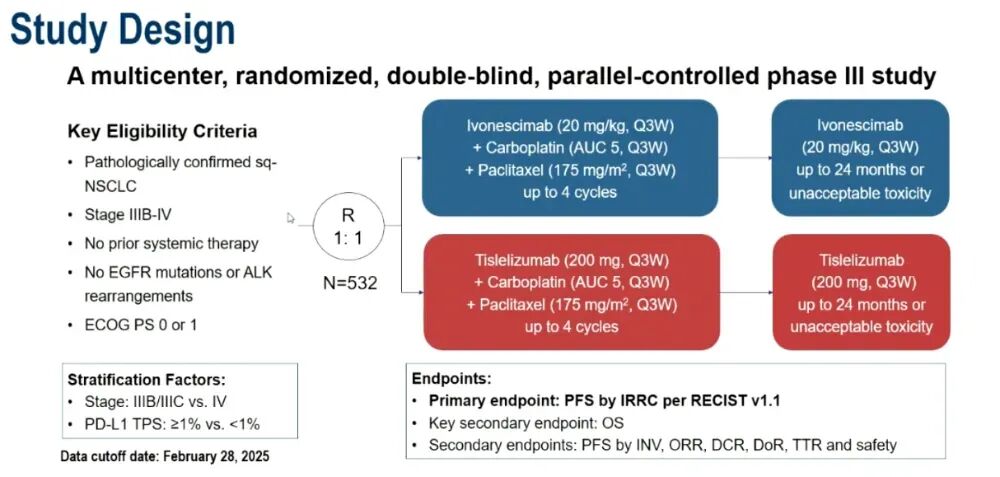
Figure 1: HARMONi-6 Research Design
Randomization was stratified by disease stage (IIIB/IIIC vs. IV) and PD-L1 expression (TPS: ≥1% vs. <1%). The primary endpoint was progression-free survival (PFS) as assessed by an Independent Radiographic Review Committee (IRRC) according to RECIST v1.1. Overall survival (OS) was a key secondary endpoint.
Efficacy Results
A total of 532 patients were enrolled, with 266 in each group. At baseline, 63.2% of patients had central tumors, 8.8% had tumor cavitation, and 17.5% had major vessel invasion. Baseline characteristics were well-balanced between the two groups.
Compared to tislelizumab combined with chemotherapy, ivonescimab combined with chemotherapy demonstrated a statistically significant improvement in PFS (HR = 0.60, 95% CI = 0.46–0.78; P < 0.0001). The median PFS was 11.1 months in the ivonescimab group versus 6.9 months in the tislelizumab group, as assessed by IRRC.
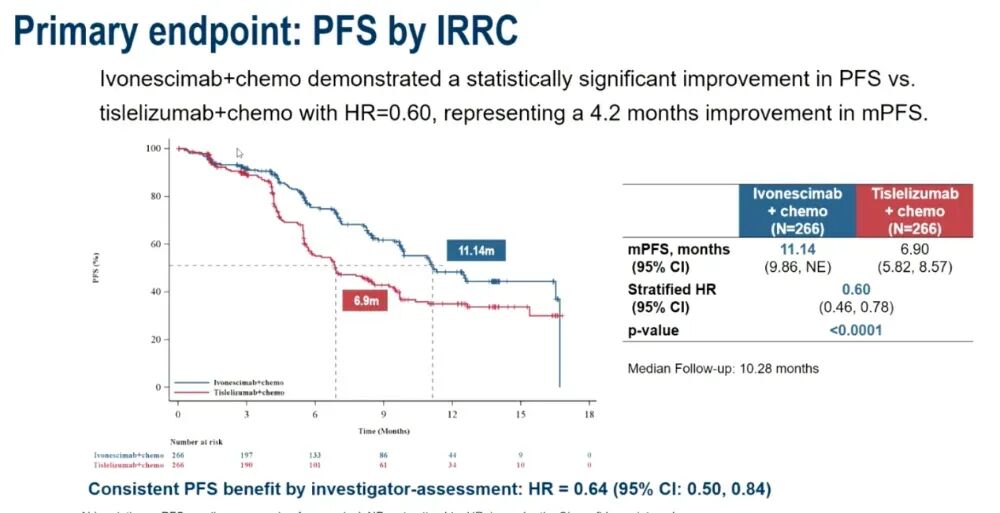
Figure 2: Research Result
Consistent benefits were observed across key subgroups:
-
In PD-L1 negative (TPS <1%) patients, median PFS was 9.9 months vs. 5.7 months (HR = 0.55, 95% CI = 0.37–0.82).
-
In PD-L1 positive (TPS ≥1%) patients, median PFS was 12.6 months vs. 8.6 months (HR = 0.66, 95% CI = 0.46–0.95).
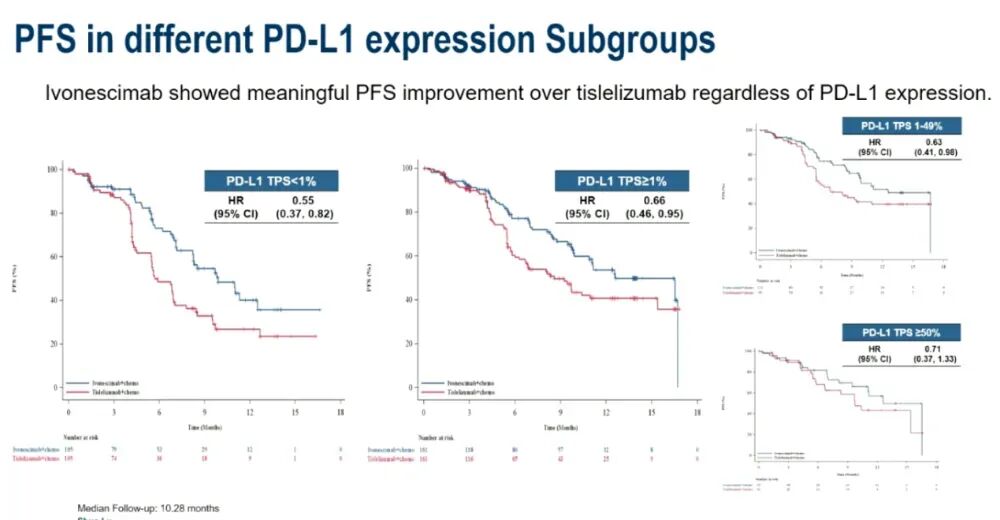
Figure 3: Research Subgroup Analysis Results
Safety Profile
Regarding safety, the incidence of treatment-related serious adverse events (SAEs) was 32.3% in the ivonescimab group and 30.2% in the tislelizumab group. The incidence of Grade ≥3 bleeding events was 1.9% and 0.8%, respectively.
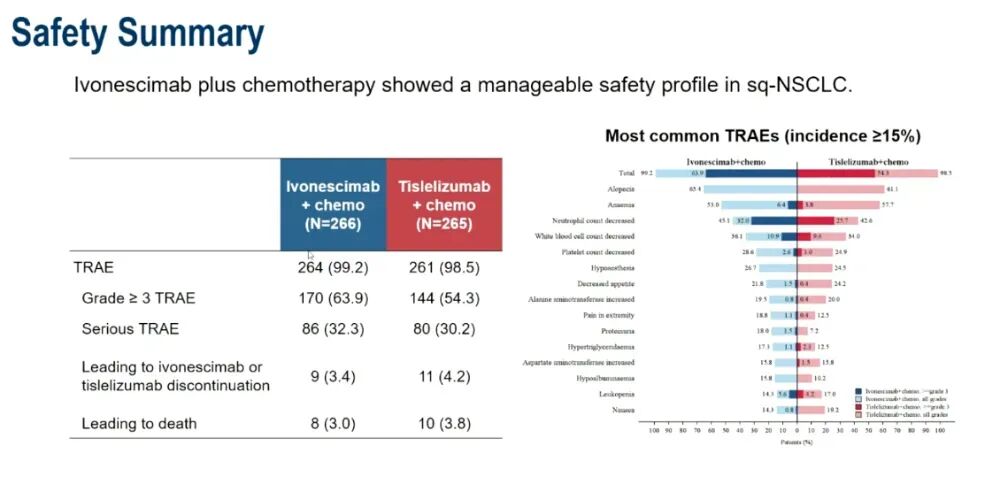
Figure 4: Data of Safety
Dr. Shun Lu stated in the presentation: "Compared to tislelizumab combined with chemotherapy, ivonescimab combined with chemotherapy significantly improved PFS as first-line treatment for advanced sq-NSCLC, with a manageable safety profile, potentially establishing a new standard of care for advanced sq-NSCLC."
In July 2025, based on the outstanding results of the HARMONi-6 study, a supplemental New Drug Application (sNDA) for ivonescimab combined with chemotherapy as first-line treatment for sq-NSCLC was accepted for review by the Center for Drug Evaluation (CDE) of China's National Medical Products Administration (NMPA). The application is currently under review, offering hope for more patients. Additionally, the global multicenter Phase III HARMONi-3 study, comparing ivonescimab combined with chemotherapy versus pembrolizumab combined with chemotherapy as first-line treatment for advanced NSCLC (both squamous and non-squamous), is ongoing.
Reference:
-
Shun Lu et al. Phase III study of ivonescimab plus chemotherapy versus tislelizumab plus chemotherapy as first-line treatment for advanced squamous non-small cell lung cancer (HARMONi-6).2025 ESMO, LBA4.

