


A multicenter study led by the Head and Neck Radiation Oncology team at Fudan University Shanghai Cancer Center was recently published online in JAMA Oncology. The study is the first to show that sequential chemoradiotherapy, or SCRT, is noninferior to the traditional regimen of induction chemotherapy plus concurrent chemoradiotherapy, or IC plus CCRT, for locoregionally advanced nasopharyngeal carcinoma, while significantly reducing acute toxicity. It therefore provides high-level evidence for optimizing treatment of this disease worldwide. MedJ invited Prof. Chaosu Hu, Prof. Xiayun He, and Dr. Fen Xue, key participants in the study, to discuss its background, results, innovation, and future directions.
Breaking the Toxicity Dilemma: A Three-Step Sequential Strategy Achieves “De-Concurrent Chemotherapy”
Nasopharyngeal carcinoma is a common malignancy in China, which accounts for about half of all cases worldwide. About 70% of patients are already in stage III to IVA when first diagnosed. Traditional treatment has centered on IC plus CCRT and can achieve 5-year survival rates above 80%, but acute toxicities during the concurrent chemotherapy phase, including mucositis, nausea, and vomiting, often interrupt treatment and impair both quality of life and adherence.
Prof. Chaosu Hu said that once efficacy has already become relatively satisfactory, the next urgent clinical question is how to reduce toxicity without compromising survival. With the improvement in local control brought by intensity-modulated radiation therapy, or IMRT, and the potential of adjuvant chemotherapy to reduce distant metastasis, the team designed this multicenter phase III noninferiority randomized trial.
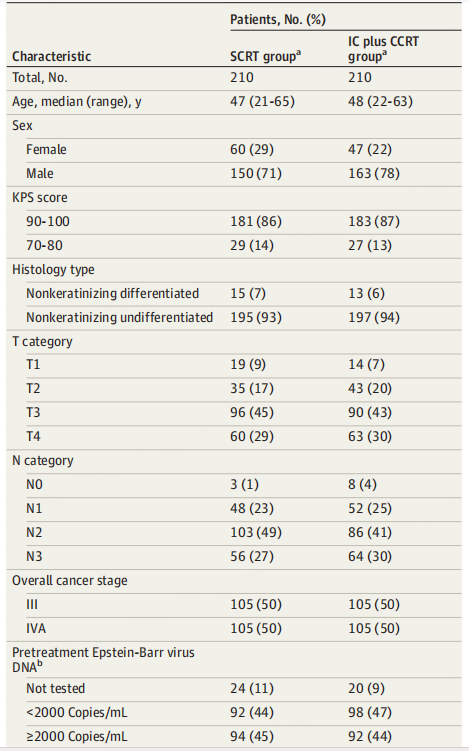
The study enrolled 420 patients aged 18 to 65 years with newly diagnosed stage III to IVA nonkeratinizing undifferentiated or differentiated nasopharyngeal carcinoma and randomly assigned them in a 1:1 ratio to two groups. The SCRT group received two cycles of gemcitabine plus cisplatin induction chemotherapy, followed by IMRT alone, and then two cycles of gemcitabine plus cisplatin adjuvant chemotherapy. The IC plus CCRT group received two cycles of gemcitabine plus cisplatin induction chemotherapy followed by IMRT with weekly cisplatin at 30 mg per square meter concurrently.
The primary endpoint was 3-year failure-free survival, with a prespecified noninferiority margin of HR = 1.6. Secondary endpoints included overall survival, local failure-free survival, distant failure-free survival, and toxicity.
Comparable Efficacy, Significantly Lower Toxicity in the SCRT Group
After a median follow-up of 50 months, the two groups showed comparable efficacy. In terms of early response, the objective response rates after induction chemotherapy and at the end of radiotherapy were 86.7% versus 84.4% and 99.5% versus 99.0% in the SCRT and IC plus CCRT groups, respectively. At 3 months after radiotherapy, the complete remission rates were 92.9% and 93.8%.
For the primary endpoint, the 3-year failure-free survival rate was 83.7% in the SCRT group and 79.5% in the IC plus CCRT group. SCRT was therefore noninferior to IC plus CCRT, with an HR of 0.77 and a 95% confidence interval of 0.50 to 1.19, whose upper limit remained below the prespecified noninferiority boundary of 1.6. There were also no significant differences between the two groups in 3-year overall survival, 97.6% versus 94.7%, local failure-free survival, 91.6% versus 87.8%, or distant failure-free survival, 93.3% versus 91.6%.

