


The 2026 European Society for Medical Oncology (ESMO) Congress is being held in Madrid, Spain, from October 23 to 27 (local time). MedJie has launched the “Just Now” series, focusing on major events at the ESMO Congress and capturing the pulse of cancer treatment. Here, we bridge time zones to bring you the cutting edge.
Just now! At 11:03 a.m. Spain time on October 25 (18:03 Beijing time), Prof. Wenfeng Fang of Sun Yat-sen University Cancer Center presented the prespecified final overall survival (OS) analysis of the OptiTROP-Lung04 study in the special session on metastatic non-small cell lung cancer (abstract number: LBA67). The study evaluated the efficacy of sacituzumab tirumotecan (sac-TMT) versus platinum-based chemotherapy in patients with EGFR-mutated (EGFRm) non-small cell lung cancer (NSCLC) after progression on EGFR tyrosine kinase inhibitor (EGFR-TKI) therapy. MedJie has compiled this report for readers.

Article Key Points
- Phase 3, n=376 in China: sacituzumab tirumotecan versus pemetrexed plus platinum after EGFR-TKI progression
- Final OS analysis at 32.3 months of median follow-up: median OS 25.9 versus 17.4 months
- Death risk reduced by 31% (HR 0.69, 95% CI 0.54-0.89; one-sided P=0.0021)
- 24-month OS rate 54.1% versus 37.2%; 30-month OS rate 40.5% versus 28.4%
- OS benefit consistent across all prespecified subgroups
- 22.6% of the chemotherapy arm received a subsequent ADC, which may dilute the OS difference
- After RPSFT adjustment for subsequent ADC: HR 0.57 (95% CI 0.42-0.75), median OS 25.9 versus 16.6 months
- Grade 3 or higher TRAEs 58.5% versus 53.8%; serious TRAEs lower with the ADC (10.1% versus 18.1%)
- Evidence status: final OS analysis presented as LBA67 at ESMO 2026; earlier analyses published in NEJM
Background and Design
Sacituzumab tirumotecan is an antibody-drug conjugate targeting TROP2, built with a bifunctional linker and a belotecan-derived topoisomerase I inhibitor payload. A previous prespecified interim OS analysis of the same trial already showed improved PFS and OS versus platinum-based chemotherapy. The presentation reported the prespecified final OS analysis after extended follow-up.
OptiTROP-Lung04 (NCT05870319) is a randomized, multicenter, open-label phase 3 study in patients with locally advanced or metastatic non-squamous NSCLC with a sensitizing EGFR mutation, an ECOG performance status of 0 or 1, and prior progression on EGFR tyrosine kinase inhibitor (EGFR-TKI) therapy. A total of 376 patients were randomized 1:1 to sacituzumab tirumotecan at 5 mg/kg by intravenous infusion every 2 weeks, or to pemetrexed plus carboplatin or cisplatin followed by pemetrexed maintenance. The primary endpoint was PFS assessed by blinded independent central review (BICR), with OS, objective response rate (ORR) and safety as key secondary endpoints.
Because patients in the chemotherapy arm could receive a subsequent ADC after progression, the analysis used a rank-preserving structural failure time (RPSFT) model to adjust for subsequent ADC treatment.
Overall Survival: The Benefit Persists
As of the Aug 6, 2026 data cutoff, median follow-up was 32.3 months. The statistically significant OS benefit observed in the interim analysis was maintained. Median OS was 25.9 months (95% CI 22.2-27.5) with sacituzumab tirumotecan and 17.4 months (95% CI 15.7-20.3) with chemotherapy, an extension of 8.5 months, with a 31% reduction in the risk of death (HR 0.69, 95% CI 0.54-0.89; one-sided P=0.0021).
By survival rate, the 24-month OS rate was 54.1% with sacituzumab tirumotecan and 37.2% with chemotherapy, and the 30-month rates were 40.5% and 28.4%.
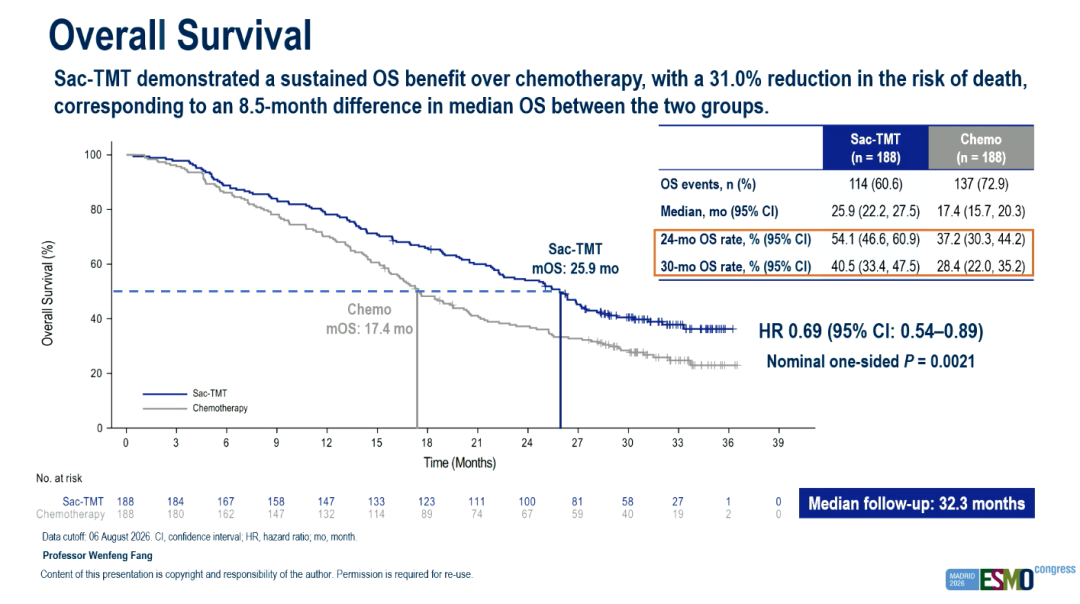 Fig.1.OptiTROP-Lung04 Study Overall Survival Curve (Median Follow-up of 32.3 Months)
Subgroup analyses showed OS benefit with sacituzumab tirumotecan over chemotherapy across all prespecified subgroups, including sex, age, smoking history, ECOG score, prior EGFR-TKI treatment, presence of brain or liver metastases, EGFR mutation type, T790M status and sites of metastasis.
Adjustment for Subsequent Therapy
In the chemotherapy arm, 22.6% of patients received a subsequent ADC, which could have diluted the OS difference.
After adjustment with the prespecified RPSFT model, median OS remained 25.9 months with sacituzumab tirumotecan and fell to 16.6 months with chemotherapy, with a 43% reduction in the risk of death (HR 0.57, 95% CI 0.42-0.75). The 24-month OS rates were 54.1% and 32.1%. The adjusted hazard ratio was lower than the unadjusted value, indicating that the observed benefit may be larger once the influence of subsequent ADC therapy is removed.
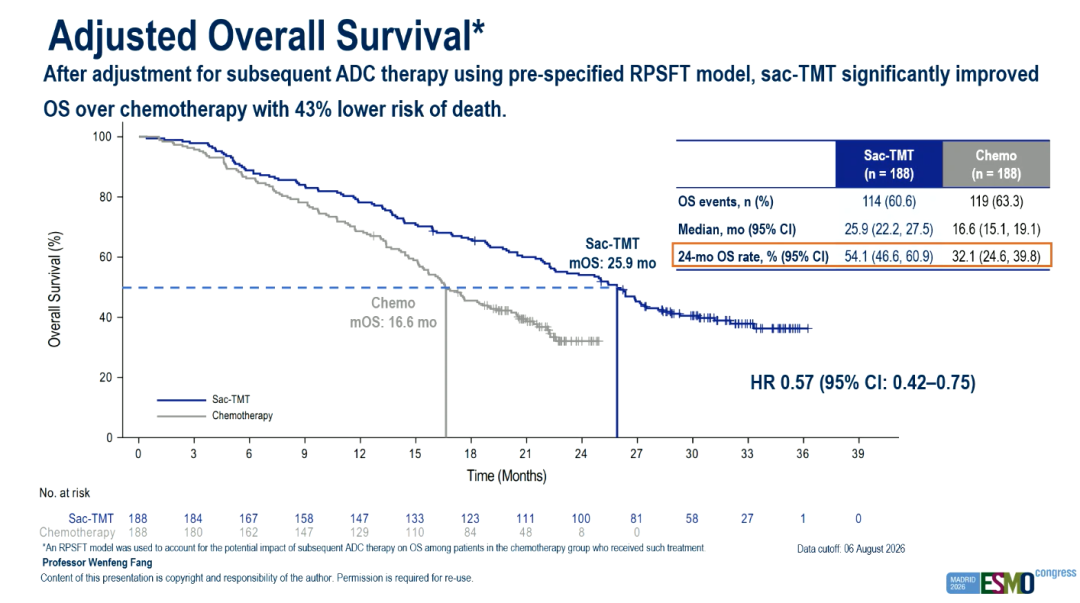 Fig. 2. Overall Survival after Adjustment for Subsequent ADC Treatment
Safety
The safety population included 370 patients, 188 in the sacituzumab tirumotecan group and 182 in the chemotherapy group, with median treatment exposure of 9.6 and 4.9 months, respectively.
Any-grade treatment-related adverse events (TRAEs) occurred in 100% and 98.4% of patients, and grade 3 or higher TRAEs in 58.5% and 53.8%. Serious TRAEs were less frequent with sacituzumab tirumotecan, at 10.1% versus 18.1%. Discontinuation due to TRAEs occurred in 0 and 0.5% of patients, and fatal TRAEs in 0.5% of patients in each group.
Interstitial lung disease or pneumonitis was reported in 1 patient with sacituzumab tirumotecan and 2 with chemotherapy, all grade 1 or 2. Ocular surface toxicity occurred in 10.6% of patients in the sacituzumab tirumotecan group, all grade 1 or 2.
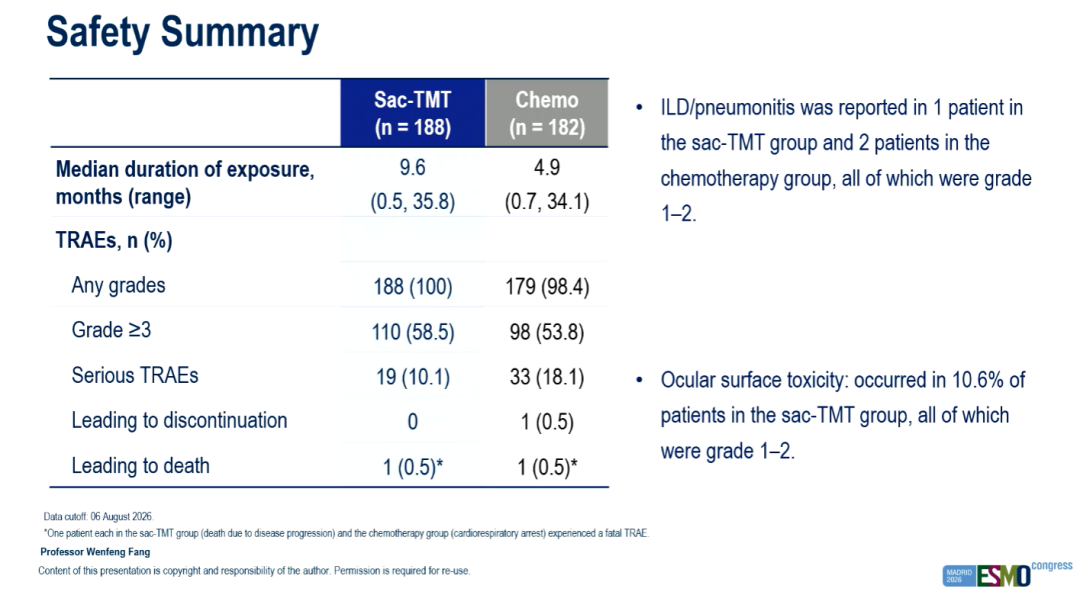 Fig.3. Summary of Safety in both Arms, Data Cutoff Aug 6, 2026
The most common TRAEs were hematologic, with thrombocytopenia less frequent than with chemotherapy. Stomatitis was mostly grade 1 or 2 and manageable, with grade 3 events in 4.8%. With follow-up extended to 32.3 months, no new safety signals were observed.
Conclusions
The investigators concluded that in the final OS analysis, at 32.3 months of median follow-up, sacituzumab tirumotecan showed sustained and clinically meaningful OS benefit versus platinum-based chemotherapy. The analysis accounting for subsequent ADC treatment supports the intention-to-treat population result (HR 0.57). Extended follow-up revealed no new safety signals, with hematologic toxicity and stomatitis as the most common adverse events. Sacituzumab tirumotecan may be a treatment option for patients with EGFR-mutated advanced non-squamous NSCLC after progression on TKI therapy.

