


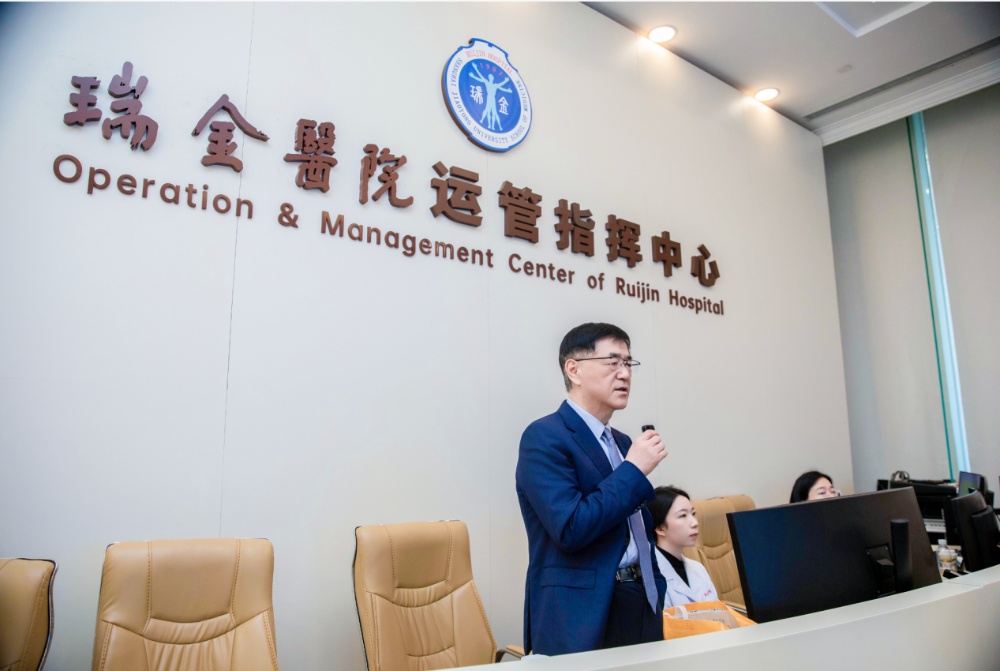
The China Metabolic Analytics Project (ChinaMAP) innovation results were presented on World Diabetes Day, November 14, 2026, at Ruijin Hospital, Shanghai Jiao Tong University School of Medicine. Prof. Guang Ning, an academician of the Chinese Academy of Engineering and president of Ruijin Hospital, and Prof. Weiqing Wang, director of the Department of Endocrinology and Metabolism at Ruijin Hospital and director of the National Clinical Research Center for Endocrine and Metabolic Diseases, attended with seven innovations from the hospital.
Article Key Points
• ChinaMAP pools 5 million people and tens of millions of biosamples; data applications open globally
• BPROAD in NEJM: intensive BP control to systolic <120 mmHg cut major cardiovascular events by 21%
• BPROAD cognition study in BMJ: first RCT to assess cognition and MRI brain imaging with BP targets
• Intensive BP control did not raise dementia or MCI risk and slowed white matter lesion progression
• MMC now covers 32 provincial regions, more than 2,200 hospitals and over 4 million managed patients
Released under the theme “early detection and early action in diabetes”, the seven results run from analysis of metabolic patterns in Chinese populations through clinical evidence, standardised diagnosis and treatment, precision measurement, digital management and lifestyle intervention, linking data foundations, research progress and translation of results into a replicable model for metabolic disease prevention and control.
From Data Foundations to Peer-Reviewed Evidence
At the presentation, the National Clinical Research Center for Endocrine and Metabolic Diseases, which is based at Ruijin Hospital, reported the latest progress of ChinaMAP and announced that data applications would open globally.
According to the hospital, the programme brings together research resources from 5 million people and tens of millions of biological samples, integrating national cohort studies and randomised controlled trials led by Ruijin Hospital. On the basis of deep genomic and fine-grained phenotypic data from Chinese populations, it maps the metabolic profile of the Chinese population and provides an original data foundation for the precise prediction and intervention of metabolic disease.
Ning said that through the ChinaMAP website, researchers can submit study proposals, which are approved by a committee before analyses are run in a cloud sandbox. The model, he said, keeps data within the country in line with law and regulation, while allowing models and knowledge to reach a global audience.
A direct example is the BPROAD study, which draws on the large-scale cohort and clinical trial resources integrated under ChinaMAP and has already provided new, high-quality evidence for the clinical management of patients with diabetes worldwide.
According to the hospital, BPROAD was carried out at 145 centres nationwide and enrolled 12,821 patients with type 2 diabetes. The main study, published in the New England Journal of Medicine, showed that in patients with type 2 diabetes, intensive blood pressure control targeting systolic pressure below 120 mmHg reduced the risk of major cardiovascular events by 21%. The result prompted the American Heart Association, the American Diabetes Association and other international academic bodies to revise their recommendations on blood pressure management, giving new support for blood pressure targets in patients with diabetes.
The BPROAD team has now turned to brain health. The BPROAD cognition study was recently published in the BMJ. It is the first randomised controlled trial worldwide to assess clinical cognitive outcomes, multi-domain cognitive function and magnetic resonance brain imaging together in the setting of blood pressure targets in diabetes, filling the gap left by the shortage of high-quality evidence on the effect of intensive blood pressure control on cognition.
Wang said the latest study shows for the first time that intensive blood pressure control does not increase the risk of dementia and mild cognitive impairment, and clearly delays the progression of brain white matter lesions. White matter lesions are an important structural basis of cognitive impairment, and with longer follow-up the cognitive benefit of intensive blood pressure control may become more apparent.
Wang noted that international guidelines have already been updated on the basis of such evidence, but that in clinical practice only about 20% of patients have systolic pressure below 120 mmHg, and that some physicians worry that too low a blood pressure could impair perfusion of vital organs. “Our evidence did not show that risk, and the cardiovascular benefit is clear. The team will continue to promote intensive blood pressure control so that more patients benefit.”

From cardiovascular benefit to cognitive safety and brain protection, and from clinical outcomes to imaging findings, BPROAD has added key cognitive and brain imaging data to the evidence chain for intensive blood pressure control and has provided high-quality evidence from China for international guideline updates. In the setting of accelerating population ageing and a rising burden of cognitive impairment, the significance of this work extends beyond blood pressure itself and provides a data foundation for further exploring the links between metabolism and brain health.
Five More Innovations Bring Metabolic Management Into Daily Practice
The presentation also reported the latest progress of the National Standardized Metabolic Disease Management Center (MMC), which works on the principle of “one center, one-stop service, one standard” for standardised long-term management of metabolic disease.
At an MMC, a metabolic all-in-one machine completes one-stop testing and assessment of the various complications of diabetes, establishes a personal health record at the same time and supports long-term follow-up and tracking. According to the hospital, MMC now covers 32 provinces, municipalities and autonomous regions, with more than 2,200 hospitals taking part and more than 4 million patients managed to date, using unified care pathways and regional chronic disease systems to push standardised metabolic services closer to patients.
Four further innovations for clinical care and daily health management were also launched.
The first is a linked cluster of ten human digital metabolic chambers built by Ruijin Hospital, which uses indirect calorimetry to quantify human energy metabolism. The team developed domestic digital metabolic chambers jointly with Shanghai Jiao Tong University. The chambers carry more than 60 high-precision sensors, can monitor more than 80 indicators in real time, and can adjust temperature and light colour temperature to simulate hypoxic conditions at altitudes from 0 to 6,500 metres.
According to the hospital, the application of the metabolic chambers has extended from routine physiological parameter measurement to research on clinical metabolic diseases such as diabetes and its complications, and to the study of the mechanism of action of innovative drugs, with more than 5,000 people taking part so far. The chambers can also be used to assess how workers adapt to high-altitude environments.

The second is the new RuiWatch 3 health watch, which adds electrocardiogram analysis to blood pressure, heart rate, blood oxygen and sleep monitoring, combines monitoring, alerting and one-touch emergency calling, and links with Ruijin Hospital’s health management mini-programme and the clinician management backend to form a closed loop of monitoring, alerting and intervention.
The third is the Rui99 project, which builds a quantified coordinate system for personal health across nine health systems and nine assessment dimensions, brings laboratory, imaging, medical history and follow-up data into a single framework, and assesses organ age, tumour risk and cardiometabolic risk to provide a quantified basis for individualised health intervention.
The fourth is a healthy diet agent. On the basis of evidence-based research on the Jiangnan dietary pattern, Ruijin Hospital and Ant Health worked with Ant’s health assistant AFu to offer personalised dietary guidance and daily diet recording, so that evidence-based glycaemic control can be built into everyday meals.
From analysing metabolic patterns in Chinese populations, to producing high-quality clinical evidence, to bringing precision measurement, standardised care and digital health management into daily life, Ruijin Hospital and the National Clinical Research Center for Endocrine and Metabolic Diseases are working to translate metabolic medicine research into accessible and usable health services, and to provide a practical path for the early identification, precise intervention and long-term management of metabolic disease.

