


From November 11 to 14, 2026, the 46th Congress of the Société Internationale d’Urologie (SIU) was held in Florence, Italy. As an important platform for academic exchange in international urology, the congress has consistently worked to advance global education in urology, research collaboration and clinical practice.
This year’s programme brought together experts from many countries around three themes: robot-assisted prostate and kidney surgery, first-line treatment of advanced urothelial carcinoma, and the clinical value of chemotherapy in the era of new treatment. MedJ has selected several of the reported studies and the arguments made around them.
Article Key Points
• A 2025 meta-analysis found less blood loss, shorter stay and less pain with single-port robotic prostatectomy
• For partial nephrectomy, single-port surgery lengthened warm ischaemia time but shortened hospital stay and pain
• EV-302 at 3.5 years: median overall survival 33.6 versus 15.9 months with chemotherapy, HR 0.53, no new safety signals
• Confirmed complete response reached 45.1% with EV-302, and 66.2% of these had first achieved only partial response
• CheckMate 901, JAVELIN Bladder 100 and NIAGARA keep chemotherapy central, but cost and access limit newer combinations
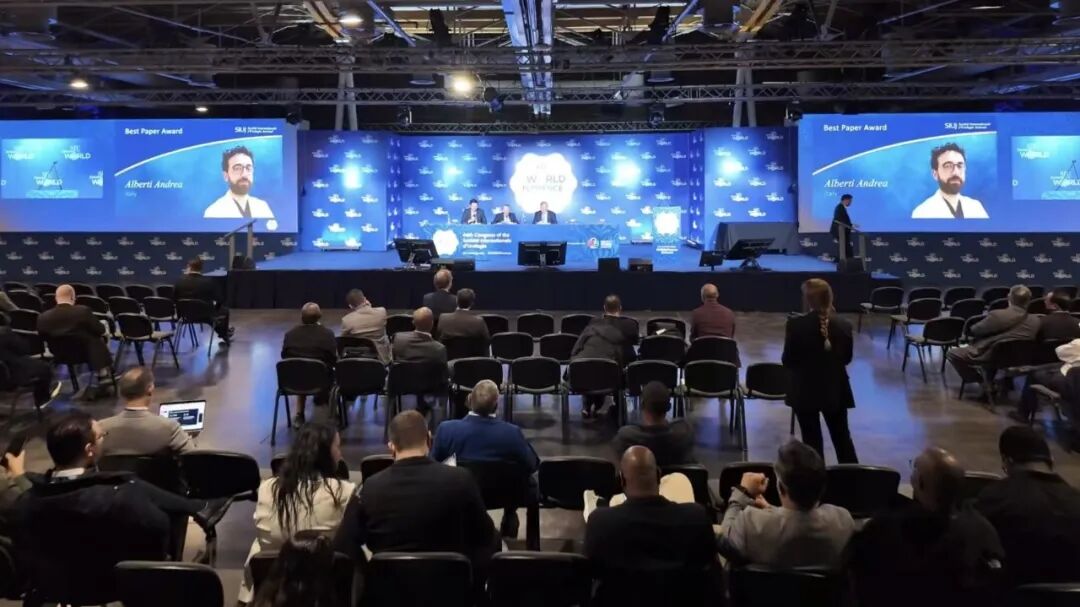 Fig. 1. Photograph: MedJ
Single-Port or Multiport? Evidence in Robotic Prostate and Kidney Surgery
Single-port robotic surgery received approval from the US Food and Drug Administration in 2018 and was subsequently applied in urology, mainly to robot-assisted radical prostatectomy, simple prostatectomy and partial nephrectomy. To evaluate the clinical differences between the two approaches, the team of Prof. Vincenzo Ficarra carried out a systematic review and meta-analysis in 2025, published in European Urology, comparing single-port and multiport robotic techniques in prostate and kidney surgery.
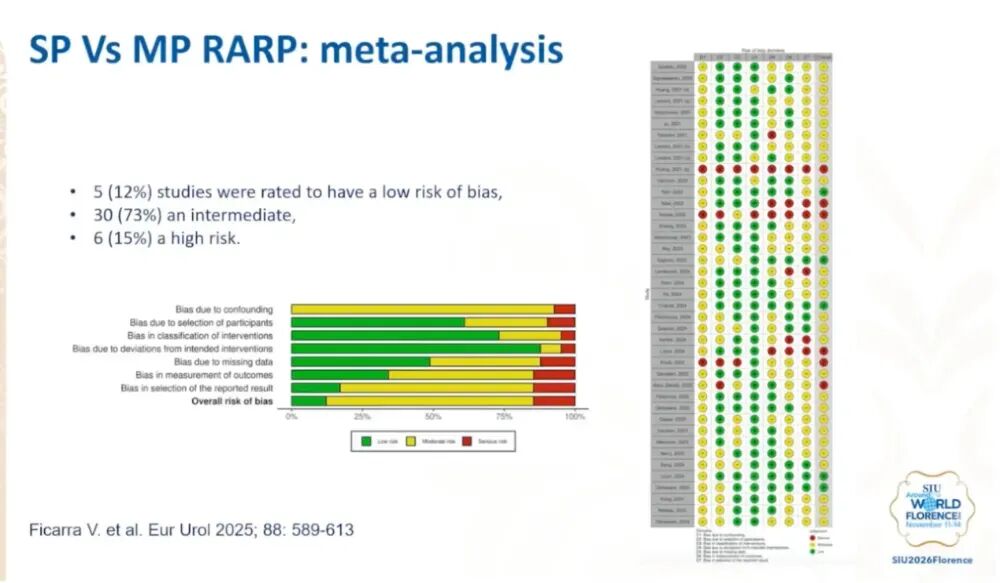 Fig. 2. Meta-Analysis of Single-Port versus Multiport Robot-Assisted Radical Prostatectomy by the Team of Prof. Vincenzo Ficarra
In robot-assisted radical prostatectomy, the meta-analysis showed no clear difference in operating time between the two approaches. The single-port group did, however, show advantages in estimated blood loss and length of hospital stay, together with lower postoperative pain scores and lower use of opioid analgesics, while functional and oncological outcomes, including the rate of positive surgical margins, were comparable.
In robot-assisted partial nephrectomy, warm ischaemia time (WIT) was significantly longer with the single-port approach, but length of hospital stay and pain scores on postoperative day 1 significantly favoured the single-port approach.
Prof. Ficarra noted that single-port robotic surgery is currently carried out mainly in centres with extensive experience, and whether these clinical results can be extended to ordinary healthcare institutions remains to be verified. Overall, the single-port technique offers a new option for minimally invasive surgery, but more high-quality comparative studies are needed, with attention to surgical platform development, surgeon training and long-term clinical benefit.
ADC-Immunotherapy Combinations Reshaping First-Line Advanced Urothelial Carcinoma
In advanced urothelial carcinoma, platinum-based chemotherapy had long been an important first-line option, and with the rapid development of antibody-drug conjugates (ADCs) and immunotherapy, this treatment landscape is changing. At the congress, Prof. Parminder Singh set out the advances brought by enfortumab vedotin (EV) with pembrolizumab (Pembro) in first-line treatment of advanced urothelial carcinoma.
Prof. Singh pointed out that gemcitabine with cisplatin or carboplatin had been an important treatment for advanced urothelial carcinoma over the past decades, but gains in efficacy had gradually plateaued, and adverse events such as nephrotoxicity and myelosuppression had affected the treatment experience of patients. The EV-302 study changed this situation. Data presented at the 2026 American Society of Clinical Oncology (ASCO) showed that, at a median follow-up of 42.8 months, median overall survival (OS) in the EV-302 combination arm was 33.6 months, significantly longer than 15.9 months in the chemotherapy arm; the 42-month OS rate was 44.0% versus 24.6%, and no new safety signals were seen.
In terms of depth of response, the confirmed complete response (CR) rate reached 45.1% in the EV-302 combination arm, well above 32.8% in the chemotherapy arm, and 66.2% of these complete responses were converted from patients who had achieved only partial response (PR).
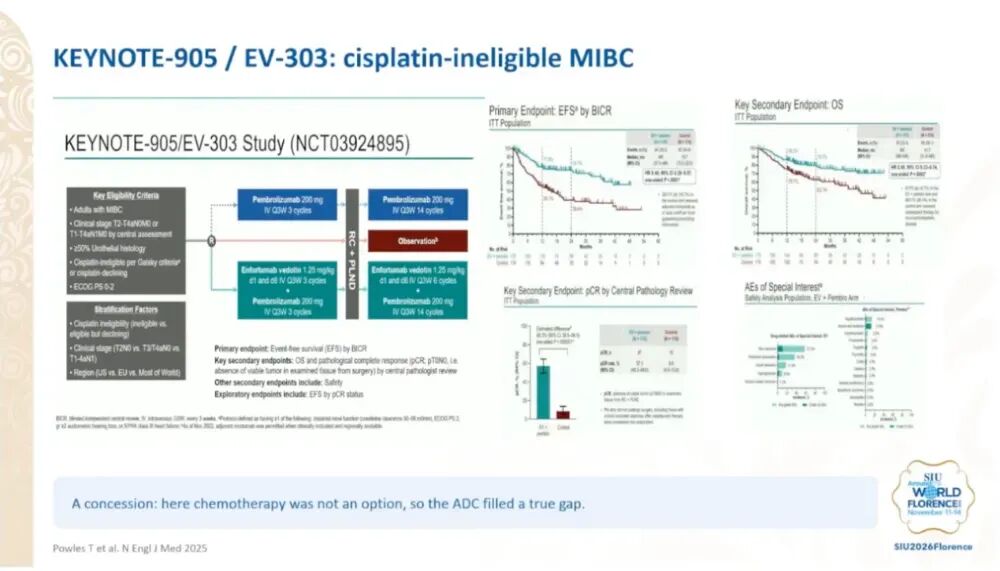 Fig. 3. EV-302 Study Results
Prof. Singh also stressed that a treatment breakthrough does not mean that safety can be ignored. With EV and pembrolizumab, particular attention should be paid to peripheral neuropathy, hyperglycaemia and severe skin adverse reactions, and some patients may discontinue treatment because of treatment-related toxicity. Establishing standardised systems for the monitoring and management of adverse reactions is therefore essential.
In addition, efficacy in patients with special histological types, the treatment strategy for patients who progress after treatment, and whether treatment can be stopped safely once a complete response has been achieved all remain to be explored. Overall, the EV-302 regimen has shown durable remissions and long-term overall survival, and it opens a new route to longer survival in advanced or metastatic urothelial carcinoma.
Does Chemotherapy Still Have a Place in the Era of New Treatment?
From the perspective of clinical treatment sequencing, perioperative management and drug access, Prof. Karima Oualla set out the continuing value of chemotherapy in bladder cancer from a modern viewpoint. Prof. Oualla first emphasised that the important advances achieved by immunotherapy in recent years do not mean that chemotherapy has lost its role, and cited several studies in support.
CheckMate 901 showed that, in cisplatin-eligible patients with advanced urothelial carcinoma, nivolumab with gemcitabine and cisplatin improved survival outcomes compared with chemotherapy alone, indicating that immunotherapy combined with platinum chemotherapy can deliver additional benefit.
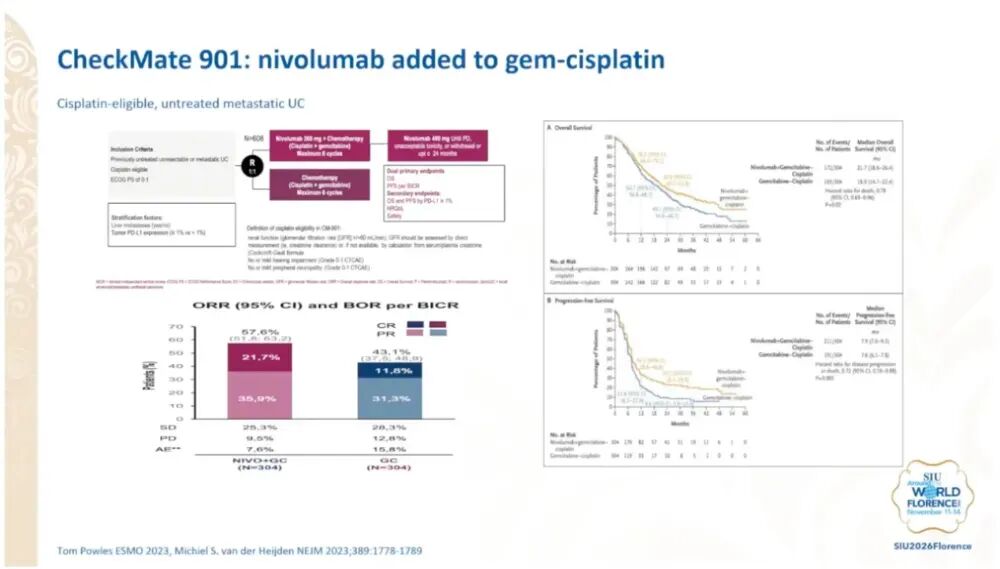 Fig. 4. CheckMate 901 Study
The JAVELIN Bladder 100 study established the value of switching to avelumab maintenance after platinum-based chemotherapy. For patients whose disease had not progressed after first-line platinum chemotherapy, subsequent maintenance treatment further improved survival outcomes. This also shows that chemotherapy continues to play an important role in selecting patients suitable for subsequent maintenance treatment and in building a treatment strategy across the whole course of disease.
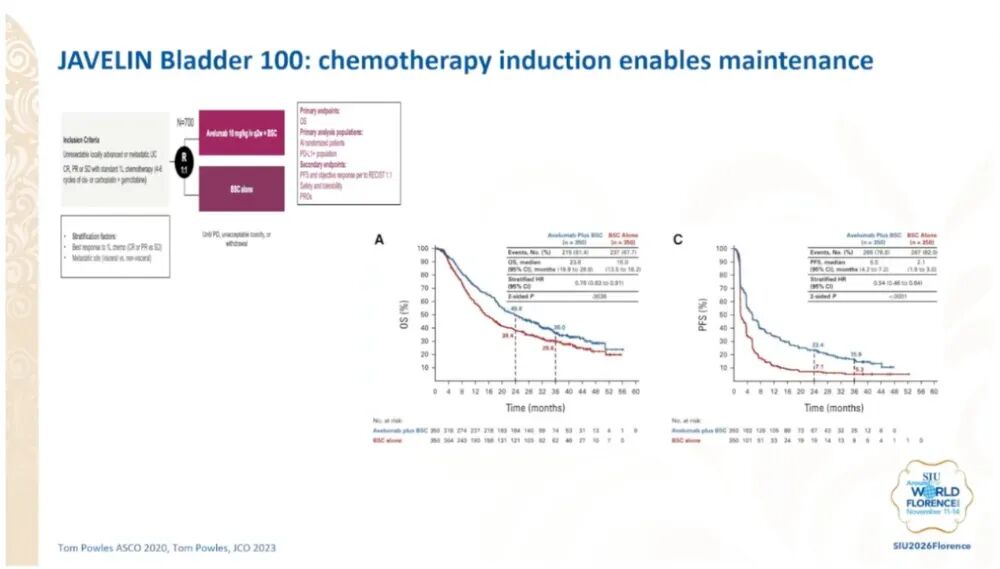 Fig. 5. JAVELIN Bladder 100 Study
Of note, the NIAGARA study used durvalumab with gemcitabine and cisplatin as neoadjuvant treatment, with durvalumab continued as adjuvant treatment after surgery, and reported positive results for event-free survival (EFS) and pathological complete response. This further shows that the addition of immunotherapy has not completely replaced chemotherapy, but has improved patient prognosis through combination treatment.
For patients who wish to preserve the bladder, trimodality therapy (TMT) is also an important clinical option, comprising maximal transurethral resection of bladder tumour, radiotherapy and concurrent chemotherapy. At present, chemotherapy remains an important component of this bladder-preserving strategy.
Prof. Oualla also emphasised drug access and treatment cost. In some countries and regions with limited medical resources, innovative drugs such as EV are not yet widely available, and the cost of a single cycle of the conventional gemcitabine with cisplatin regimen differs greatly from that of EV with pembrolizumab, which fully reflects the difference in economic burden between treatment options. Prof. Oualla concluded that chemotherapy still has an important role in immunotherapy combinations, switch maintenance treatment, subsequent therapy after EV with pembrolizumab, bladder-preserving strategies, and in settings where innovative drugs are not accessible.
Closing
From the technical exploration of single-port robotic surgery, to the reshaping of first-line treatment in advanced urothelial carcinoma by EV with pembrolizumab, to the renewed recognition of the value of chemotherapy in the era of new treatment, the academic reports at the 2026 SIU congress showed continued renewal in thinking in urology.
Technological innovation is not simple substitution, and treatment breakthroughs do not mean that traditional options lose their value. The future of urology requires continued innovation in technology and medicines, but also a stand on evidence-based medicine that takes account of patient disease characteristics, treatment tolerance and access to medical resources, so that more precise and reasonable individualised treatment strategies can be developed.

