


From October 15 to 18, 2026, the 37th Great Wall International Congress of Cardiology and Asian Heart Society Congress 2026 (GW-ICC/AHS 2026) was held at the China National Convention Center in Beijing. During the congress, the Great Wall Dialogue, the official branded column launched jointly by the MedJ Cardiovascular Channel and GW-ICC, presented a session on arrhythmia and transition, from radiofrequency to pulsed field. The session was chaired by Prof. Jian Li of Huashan Hospital, Fudan University, with Prof. Sana M. Al-Khatib, President of the Heart Rhythm Society (HRS) for 2026-2027 and professor of medicine at Duke University, and Prof. Chenyang Jiang of Sir Run Run Shaw Hospital, Zhejiang University School of Medicine, as guests.
The discussion ranged from the efficacy and safety of pulsed field ablation (PFA), through risk assessment for patients who already have a pacemaker, to treatment selection in patients with atrial fibrillation (AF) and bradycardia. One question ran through both technology and practice: with an increasingly rich set of options, how should existing evidence and the circumstances of the individual patient be combined to make the more appropriate treatment decision?
Article Key Points
• ADVENT randomised 607 drug-refractory paroxysmal AF patients; PFA was non-inferior but not superior to thermal ablation
• At 1 year the primary effectiveness endpoint was met in 73.3% of PFA patients and 71.3% of thermal ablation patients
• Rates of the primary safety endpoint were 2.1% with PFA and 1.5% with thermal ablation
• MANIFEST-17K reported a 0.98% major complication rate in 17,642 patients, with coronary spasm in 0.14%
• Five patients in MANIFEST-17K developed haemolysis-related acute kidney injury requiring dialysis
• Shorter procedure time and successful acute pulmonary vein isolation do not establish long-term benefit
• Device function and programming should be assessed before ablating a patient with a pacemaker or defibrillator
• Neither AF with bradycardia nor tachy-brady syndrome has a single correct order of treatment
• New energy sources and new devices require operator training and standardised pathways of care
Expert Profile: Prof. Chenyang Jiang

• Chief physician, doctor of medicine and doctoral supervisor
• Deputy director of the Department of Cardiology, Sir Run Run Shaw Hospital, Zhejiang University School of Medicine
• Director of the Arrhythmia and Cardiomyopathy Center, Sir Run Run Shaw Hospital
• Chair of the Cardiac Electrophysiology Branch, Chinese Biomedical Engineering Society
• Secretary general of the Atrial Fibrillation Center of the Cardiovascular Disease Quality Improvement (CDQI) initiative
• Member of the Electrophysiology and Pacing Group, Chinese Society of Cardiology
• Member of the Expert Committee on Atrial Fibrillation Centers
• Member of the Committee of Arrhythmology Specialty, Chinese Medical Doctor Association
• Standing committee member of the Cardiac Electrophysiology and Electrocardiography Branch, Chinese Medical Promotion Association
• Deputy chair of the Zhejiang Electrophysiology and Pacing Branch
• Deputy chair of the Cardiac Electrophysiology Branch, Zhejiang Biomedical Engineering Society
Expert Profile: Prof. Sana M. Al-Khatib
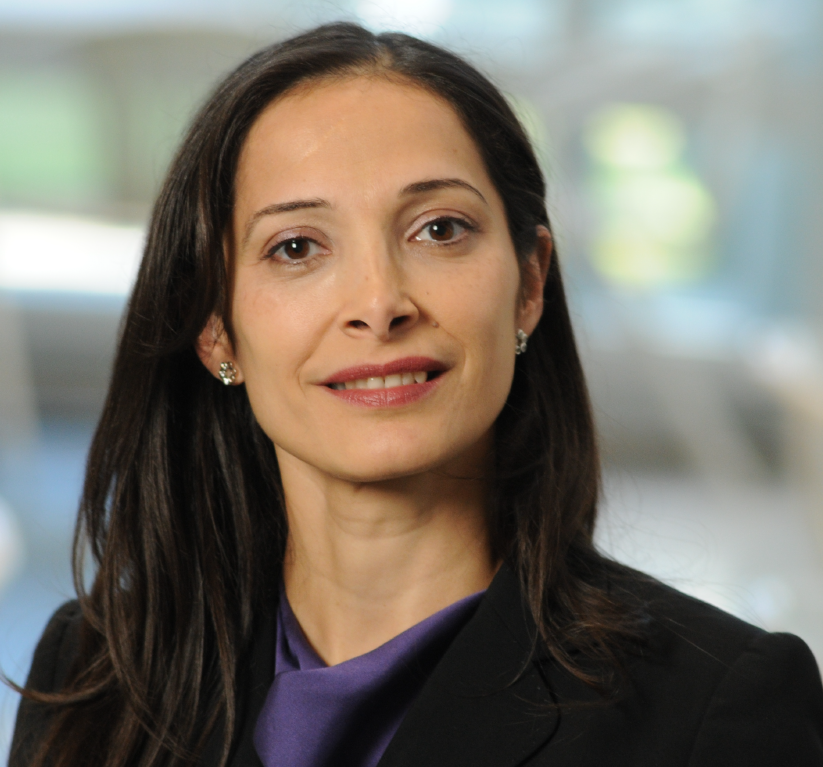
• President, Heart Rhythm Society (HRS), 2026-2027
• Professor of medicine and cardiac electrophysiologist, Duke University
• Long-standing work in evidence-based research on arrhythmias, cardiac implantable device therapy and clinical guideline development
Expert Profile: Prof. Jian Li

• Doctor of medicine, chief physician and doctoral supervisor, Huashan Hospital, Fudan University
• Currently works in the Department of Cardiology at Huashan Hospital, Fudan University, with a clinical and research focus on interventional treatment of cardiovascular disease
• Deputy director in charge of day-to-day work, Party branch secretary and director of the diagnostic teaching and research group of the Department of Cardiology, Huashan Hospital; chief electrocardiology expert of the National Infectious Diseases Medical Center
• Member of the 12th Cardiovascular Medicine Committee, Shanghai Medical Association; standing committee member and deputy head of the electrophysiology group of the 11th Cardiac Electrophysiology Society (SHRS), Shanghai Biomedical Engineering Society
• Vice chair of the Brain-Heart Co-treatment Committee, Shanghai Society of Integrated Traditional Chinese and Western Medicine; standing committee member of the Arrhythmia Branch, Chinese Medical Education Association; deputy chair of the first Cardiovascular Medicine Committee, Shanghai Health Science and Technology Association
• Member of the 5th Cardiovascular Medicine Committee, Shanghai Society of Integrated Traditional Chinese and Western Medicine; expert and secretary of the Cardiovascular Specialist Training Expert Group, Shanghai
Is PFA Faster, and Is It Also Better on Efficacy and Safety?
Unlike radiofrequency catheter ablation (RFCA), which relies on thermal energy to create lesions, PFA acts on target tissue through irreversible electroporation and has a degree of myocardial tissue selectivity. Prof. Jiang pointed out that this feature may reduce some oesophageal, vascular and nerve injuries, but tissue selectivity does not mean that complications can be avoided entirely.
Clinical evidence gives a more specific answer. The ADVENT randomised trial enrolled 607 patients with drug-refractory paroxysmal AF. At 1 year, the primary composite effectiveness endpoint was met in 73.3% of the PFA group and 71.3% of the conventional thermal ablation group, and estimated rates of the primary safety endpoint were 2.1% and 1.5% respectively. The trial supports non-inferiority of PFA against thermal ablation in this population; it did not demonstrate overall superiority over radiofrequency or cryoablation.
Real-world data likewise suggest that any safety advantage should be read together with the residual risk. The MANIFEST-17K registry enrolled 17,642 patients who received PFA, with a major complication rate of 0.98%. No oesophageal complications, symptomatic pulmonary vein stenosis or persistent phrenic nerve injury were reported, but coronary artery spasm was recorded in 0.14% and 5 patients developed haemolysis-related acute kidney injury requiring dialysis. Not observing a given event in a study does not mean that its risk is zero.
Prof. Jiang added a further caution: shorter procedural time and successful acute pulmonary vein isolation (PVI) do not amount to long-term benefit. How long isolation is maintained, what the recurrence rate of AF is, and especially the effect of ablation outside the pulmonary veins in areas such as the left atrial posterior wall, all require longer and more complete follow-up.
PFA in Patients with an Implanted Pacemaker or Defibrillator
As PFA becomes more widely used, clinicians regularly encounter patients who need catheter ablation for AF but already have a pacemaker or an implantable cardioverter-defibrillator. The physician then has to consider both whether the ablation targets can be treated effectively and whether the pulse energy will interfere with the normal function of the cardiac implantable electronic device (CIED).
Prof. Al-Khatib emphasised that the interaction between PFA and implanted devices is not yet fully defined. This is particularly true in patients whose heart rate depends on a pacemaker: if abnormal sensing or pacing inhibition occurs during the procedure, serious consequences may follow. Device function and programming needs should therefore be assessed before ablation, the procedure should be monitored closely with emergency pacing prepared, and device status should be re-checked afterwards. The operator must also pay attention to the spatial relationship between the catheter and the leads.
Prof. Jiang agreed and added that the risk also depends on where the ablation takes place. Pulmonary vein isolation in the left atrium and ablation of ventricular tachycardia (VT) or of right-sided structures cannot be handled on the same safety experience. For targets close to an implanted lead, whether to use PFA and how to contain the extent of energy delivery both require more cautious individualised assessment.
Atrial Fibrillation with Bradycardia: Ablate First or Device First?
The conversation then moved to a harder question: when AF, bradycardia and reduced left ventricular function are all present, should normal rhythm be restored first, or should the pacing problem be solved first? There is no single order of treatment that applies to every patient.
Prof. Al-Khatib’s view was that the first step is to judge how much of the ventricular dysfunction is attributable to AF. In some patients, even without an obvious rapid ventricular rate, a persistent irregular rhythm may contribute to the decline in left ventricular function. If the patient is a suitable candidate for rhythm control, AF may be addressed first and ventricular function reassessed once sinus rhythm has been restored. If, however, AF has been present for a long time with marked atrial remodelling, or if antiarrhythmic drugs that could worsen bradycardia are still expected after ablation, the timing of pacemaker implantation should be reassessed.
Prof. Jiang said that in some patients with tachy-brady syndrome, catheter ablation can be evaluated first, but that in patients with clear severe bradyarrhythmia, a risk of syncope or an independent pacing indication, implanting a device first may be the safer option. The two experts pointed to the same principle: the sequence of treatment should be determined by symptoms, the cause of the arrhythmia, ventricular function and the drugs expected to be used, and not by the convenience of one particular technique.
For atrioventricular node ablation combined with pacing, Prof. Al-Khatib explained that his team usually considers this approach when strategies including drug treatment and catheter ablation of AF still fail to achieve satisfactory control. This reflects the order of choices in his own clinical practice, however, and does not mean that all patients must fail repeated ablation before atrioventricular node ablation can be accepted.
Bringing New Technology into More Hospitals: Keeping Standards in Step
The discussion was not confined to ablation energy. Conduction system pacing (CSP), leadless pacemakers and the extravascular implantable cardioverter-defibrillator (EV-ICD) are all widening the options for arrhythmia treatment. Prof. Al-Khatib stressed that the more technologies there are, the more clearly the advantages and disadvantages of each option must be explained to patients so that decisions are made jointly. Prof. Jiang placed the emphasis for introducing new technology on operator training and procedural standards.
Peri-procedural anticoagulation is an equally unavoidable practical question. For patients taking a direct oral anticoagulant (DOAC), whether to interrupt it before device implantation and when to restart afterwards cannot be applied mechanically on a fixed schedule; it should be judged in combination with thromboembolic risk, renal function, the type of procedure and the haemostasis achieved. Even if sinus rhythm is restored after AF ablation, whether to continue long-term anticoagulation still depends on stroke risk assessment, and stopping the drug on one’s own is not appropriate.
From pre-procedural assessment and intra-procedural monitoring to device programming and long-term follow-up, the safe application of new technology depends on a complete pathway of care. For centres offering PFA, familiarity with catheter manipulation is only the baseline; the ability to recognise abnormalities promptly, manage complications and coordinate between different specialist teams is equally important.
Closing
PFA has given patients with AF a new ablation option, but this does not mean that radiofrequency ablation, which has been validated over many years, has lost its value. The discussion at the congress reminded clinicians that a new technology should not be judged only on whether the procedure is faster or easier to perform, but on long-term efficacy, on the boundaries of its safety profile, and on whether it suits the patient in front of you. Technology keeps iterating, and treatment decisions must rest even more firmly on the individual condition and on reliable evidence.

