


The 2026 American Society of Clinical Oncology (ASCO) Annual Meeting was held from May 29 to June 2, 2026 in Chicago, USA. As the largest and most academically influential annual event in global oncology, numerous major studies were unveiled. Next-generation antibody-drug conjugates (ADCs), represented by trastuzumab deruxtecan (T-DXd), have achieved successive breakthroughs in the DESTINY-Lung01, DESTINY-Lung03, and DESTINY-PanTumor02 series, owing to their unique mechanisms of action. At this congress, the primary analysis results from Part 1 of the DESTINY-PanTumor03 study were released, validating for the first time the robust efficacy and manageable safety of T-DXd in Chinese patients with HER2 IHC 3+ solid tumors (including NSCLC), thus filling a domestic evidence gap.
Taking this opportunity, MedJ's Oncology Channel invited Prof. Zhou Caicun from Shanghai East Hospital to provide an in-depth interpretation of the latest data regarding HER2-overexpressing NSCLC and its impact on the clinical landscape, as well as to discuss future exploration directions, aiming to inform clinical practice.
From a Difficult Target to a Precision Breakthrough: T‑DXd Ushers in a New Era for HER2-Overexpressing NSCLC
Human epidermal growth factor receptor 2 (HER2) is a key driver and prognostic biomarker in non-small cell lung cancer (NSCLC). Its aberrations primarily manifest as gene mutations, gene amplification, and protein overexpression [1]. In the NSCLC population, the incidence of HER2 protein overexpression is approximately 18% (IHC 2+: 14%; IHC 3+: 4%) [2,3]. Previous studies have confirmed that HER2 overexpression is closely associated with increased tumor aggressiveness, higher risk of metastasis, and shortened survival, establishing it as a distinct poor prognostic factor. Regarding the current treatment landscape, unlike HER2 mutations, HER2-overexpressing NSCLC patients derive limited benefit from conventional therapeutic regimens, having long faced the dilemma of a "clear target but no effective drug," representing a critical unmet clinical need [4,5].
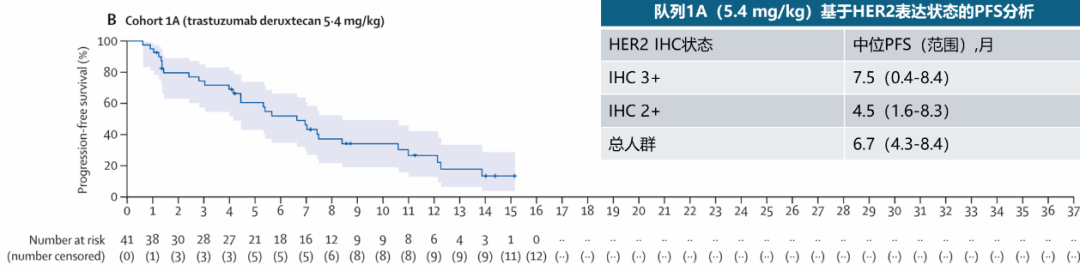
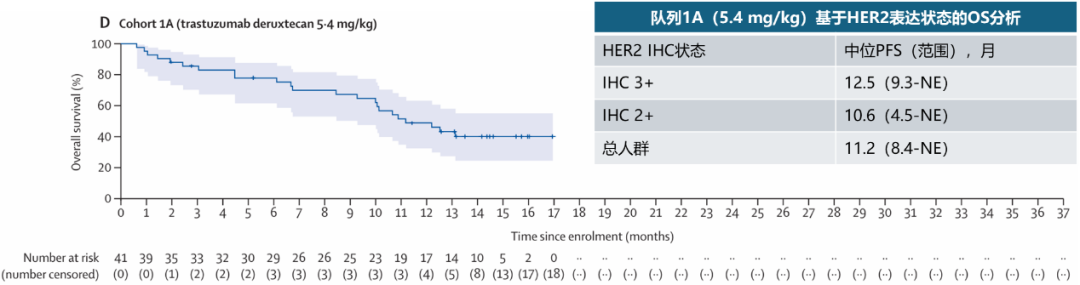
Next-generation ADC drugs, represented by T-DXd, have achieved a historic breakthrough in the field of HER2-overexpressing NSCLC due to their unique mechanism of action. The pivotal Phase II DESTINY-Lung01 (DL01) study was the first to systematically evaluate the efficacy of T-DXd in previously treated patients with HER2-overexpressing NSCLC [2]. The results showed that in the 5.4 mg/kg dose group, the confirmed objective response rate (ORR) in the overall population was 34.1%, median progression-free survival (PFS) was 6.7 months, and median overall survival (OS) was 11.2 months. Notably, the efficacy in the IHC 3+ subgroup was even more pronounced, with an ORR of 52.9%, median PFS of 7.5 months, and median OS of 12.5 months.
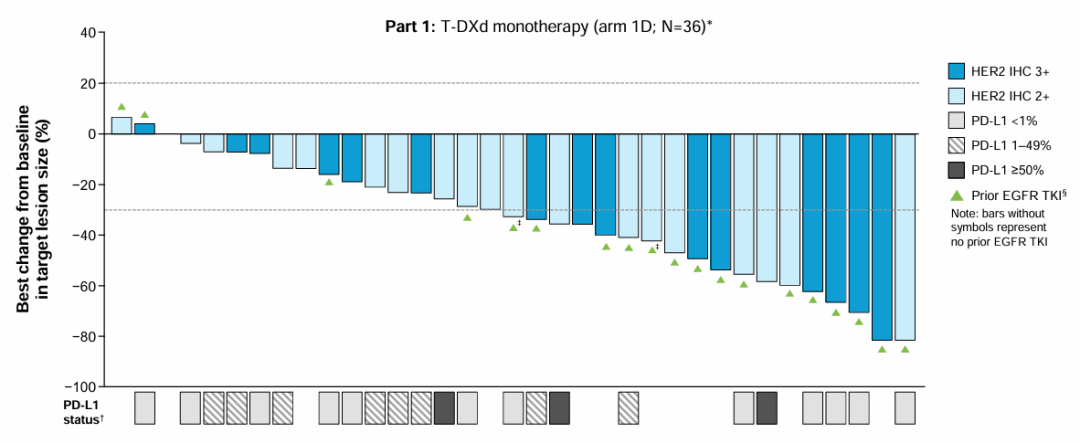
Subsequently, the DESTINY-Lung03 (DL03) study, presented at the 2024 World Conference on Lung Cancer (WCLC), further confirmed these findings [6]. The study showed that in previously treated patients with HER2-overexpressing advanced NSCLC, T-DXd 5.4 mg/kg achieved an ORR of 44.4%, a median duration of response (DoR) of 11.0 months, a median PFS of 8.2 months, and a median OS of 17.1 months. Subgroup analysis indicated a confirmed ORR of 56.3% in IHC 3+ patients. The EGFR TKI-pretreated subgroup also demonstrated favorable efficacy, with an ORR of 68.4%, a median PFS of 8.2 months, and a median OS of 19.6 months. These results further highlight the strong correlation between higher HER2 expression levels and improved efficacy.
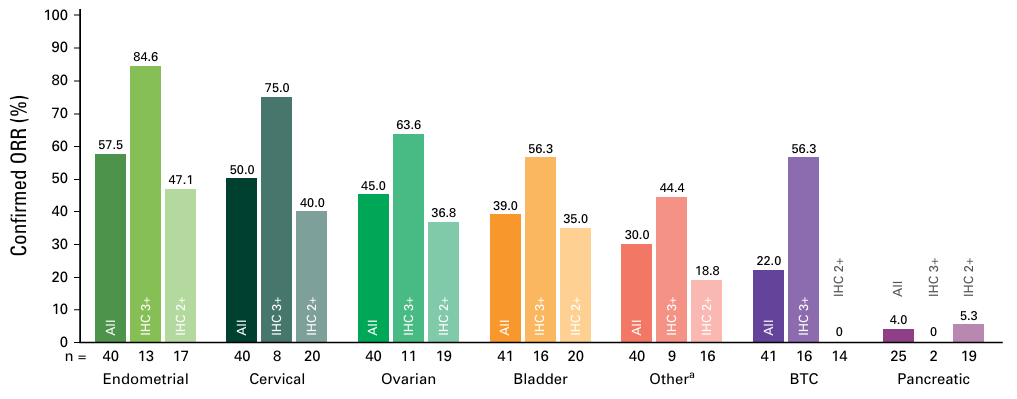
Meanwhile, the DESTINY-PanTumor02 (DPT02) study extended the evidence for T-DXd to pan-tumors [7]. The study demonstrated a confirmed ORR of 37.5% in the overall population, with a median PFS of 6.9 months and a median OS of 13.4 months. Among patients with HER2 IHC 3+ expression, the ORR reached 61.3%, with a median PFS of 11.9 months and a median OS of 22.1 months.
A New Chapter for Chinese Evidence: DESTINY‑PanTumor03 Study Solidifies T-DXd's Pan-Tumor Position
The DESTINY-PanTumor03 (DPT03) study is a key supplement to T-DXd's global pan-tumor evidence strategy, specifically targeting the Chinese population. The Part 1 results released at this ASCO conference focus on Chinese patients with HER2 IHC 3+ advanced solid tumors, covering multiple tumor types including NSCLC, colorectal cancer, biliary tract cancer, cervical cancer, endometrial cancer, and ovarian cancer. This open-label, single-arm, Phase II study (NCT06271837) enrolled patients with locally advanced/unresectable/metastatic HER2 IHC 3+ solid tumors (excluding breast and gastric cancer) who had received ≥1 prior systemic therapy [8].
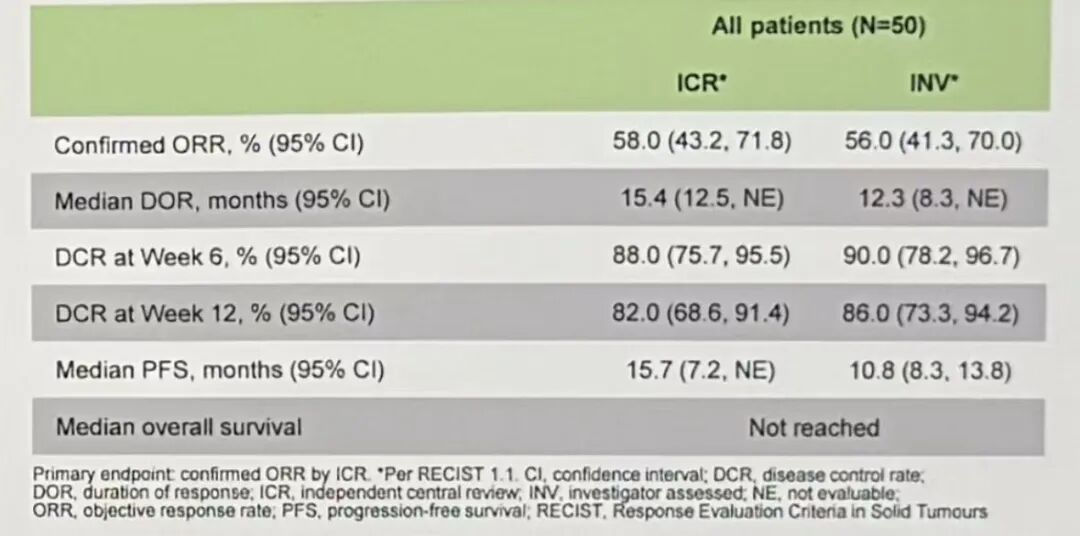
As of the data cutoff (November 28, 2025), 50 patients were enrolled, with a median follow-up of 9.9 months and a median of 2 prior lines of therapy. By independent central review (ICR), the confirmed ORR was 58.0% (95%CI: 43.2%-71.8%), median DoR was 15.4 months (95%CI: 12.5-NE), disease control rate (DCR) at Week 6 was 88.0% (95%CI: 75.7%-95.5%), and median PFS was 15.7 months (95%CI: 7.2-NE). The investigator-assessed ORR was 56.0% (95%CI: 41.3%-70.0%), and median OS was not reached.
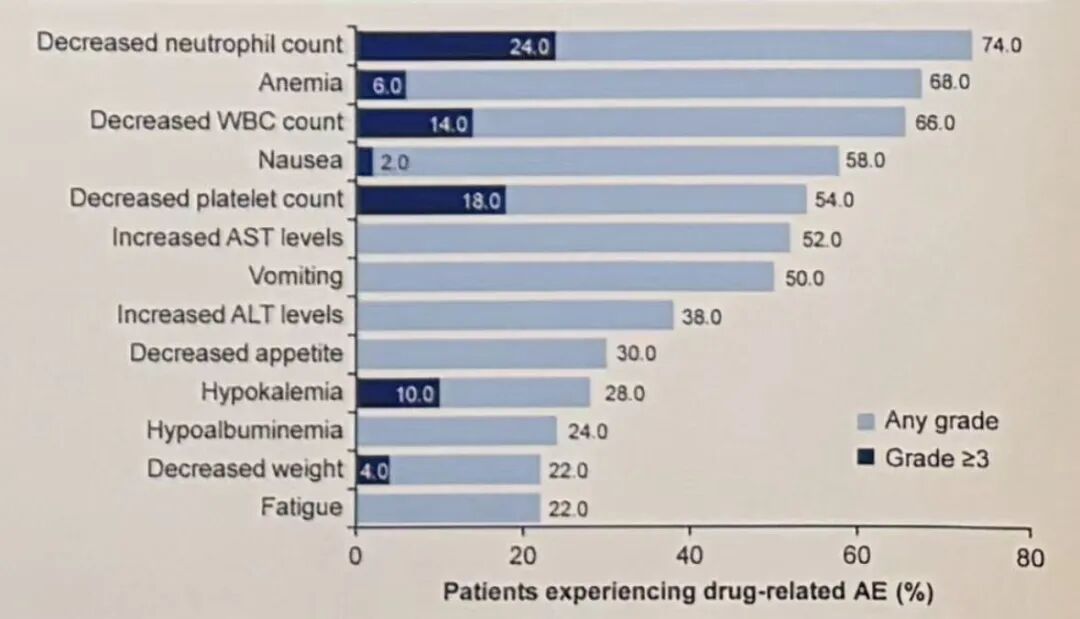
Regarding safety, the overall safety profile of T-DXd in the Chinese population was consistent with known data, with no new safety signals. The rate of Grade ≥3 treatment-related adverse events was 62.0%. The adjudicated rate of drug-related interstitial lung disease/pneumonitis was 8.0% (3 cases Grade 2, 1 case Grade 3 [2.0%]), with no Grade 4 or 5 events.
The DPT03 study provides the first large-scale Chinese data validating the robust efficacy of T-DXd in HER2 IHC 3+ pan-tumor patients. The ORR, PFS, and DoR were highly consistent with data from the IHC 3+ population in the DPT02 study, with no new safety signals. Multiple tumor subtypes, including NSCLC, showed clear clinical benefit, providing tangible local evidence for Chinese patients with HER2 IHC 3+ advanced solid tumors and further consolidating T-DXd's central role in precision pan-tumor therapy.
Evidence Loop Drives Change: Reshaping the HER2-Overexpressing NSCLC Treatment Landscape
With the sequential release of data from the DL01, DL03, DPT02, and now DPT03 studies [2,6-8], T-DXd has established a complete evidence chain in HER2-overexpressing cancers – from lung cancer to pan-tumors, and from global to Chinese populations. This evidence loop not only strengthens the clinical status of HER2 IHC 3+ as an independent predictive biomarker but also profoundly reshapes the clinical management of HER2-overexpressing NSCLC.
First, HER2 IHC 3+ has been officially upgraded from a "poor prognostic marker" to an "actionable therapeutic target." The DESTINY series confirms that HER2 overexpression (especially IHC 3+) has become a key target for intervention. When facing patients with HER2 IHC 3+ advanced NSCLC, clinicians can not only inform them of a worse prognosis but also proactively offer an effective precision treatment option. Consequently, HER2 IHC testing has become a crucial biomarker guiding clinical decision-making in NSCLC.
Second, the "pan-tumor" treatment concept is materializing. The DPT02 study first demonstrated at the pan-tumor level that, regardless of tumor origin, patients meeting the HER2 IHC 3+ criteria have a substantial chance of benefiting from T-DXd. The DPT03 study presented at this ASCO further extends this conclusion to Chinese patients with solid tumors, with the NSCLC cohort showing particularly prominent efficacy. The domestic indication for T-DXd is currently under regulatory review, providing a basis for clinical use from a regulatory perspective.
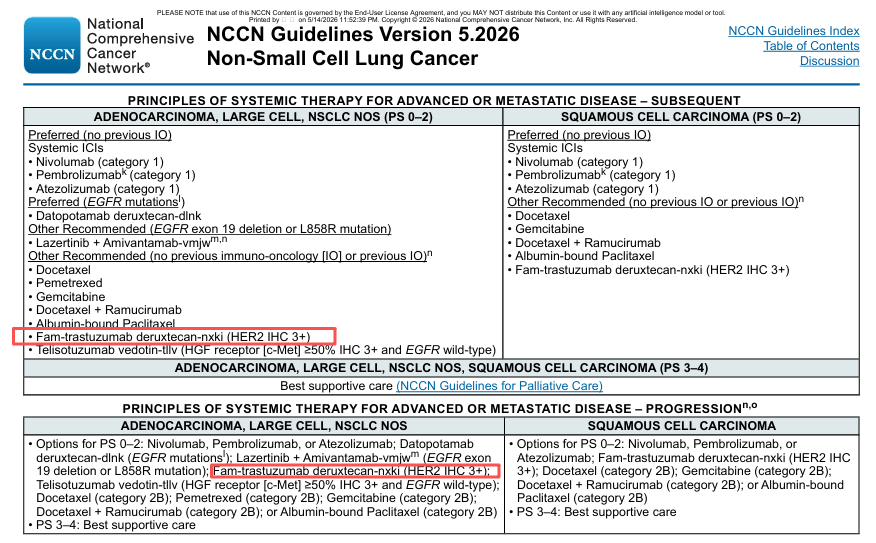
Third, guideline updates are driving treatment paradigm shifts. The 2026 NCCN NSCLC Guidelines explicitly list T-DXd as an option for second-line and later-line treatment of HER2-overexpressing (IHC 3+) NSCLC [9]. The 2025 CSCO NSCLC Guidelines included HER2 overexpression testing as a Class III recommendation for the first time, and the 2026 CSCO guidelines maintain this recommendation level [10]. Furthermore, the "Expert Consensus on the Diagnosis and Treatment of HER2-Altered Advanced Non-Small Cell Lung Cancer (2025 Edition)" explicitly lists T-DXd as a later-line option (Recommendation: Strong; Evidence Level: 3) [11].
Furthermore, the US FDA granted accelerated approval in April 2024 to T-DXd for pretreated, unresectable or metastatic HER2 IHC 3+ solid tumors, making it the world's first HER2-targeted ADC approved for pan-tumors. In March 2026, based on the DPT03 study, China's NMPA granted priority review to T-DXd monotherapy for pretreated patients or those without satisfactory alternative options with unresectable or metastatic HER2 IHC 3+ solid tumors.
For Chinese patients, DPT03 provides prospective, large-sample clinical data from a Chinese population, filling the evidence gap for precision treatment of HER2 IHC 3+ solid tumors (including NSCLC) in China, meaning clinical decisions no longer rely on extrapolating global data. The results are expected to support the availability of T-DXd for this indication in China, further driving domestic guideline updates and allowing more Chinese patients to receive standardized ADC targeted therapy.
Future Directions: Clinical Landscape and Key Explorations in HER2-Overexpressing NSCLC
With the release of Chinese data from DPT03, T-DXd's clinical value in HER2 IHC 3+ pan-tumors and NSCLC is further validated. However, several critical questions in HER2-overexpressing NSCLC remain to be urgently addressed.
Standardizing testing is the priority. Although the 2025 "Expert Consensus on Pan-Tumor HER2 Protein Overexpression Testing" unified interpretation criteria, progress is still needed in clinical implementation, homogenizing pathological interpretation, and establishing external quality assessment systems to ensure precise patient selection. Second, data on special populations like those with brain metastases are needed. The incidence of brain metastases in HER2-overexpressing NSCLC is approximately 30%. Prospective data on T-DXd's intracranial efficacy in this population are still awaited. Furthermore, mechanisms of ADC resistance, holistic patient management, and real-world long-term survival data are clinical questions requiring urgent answers.
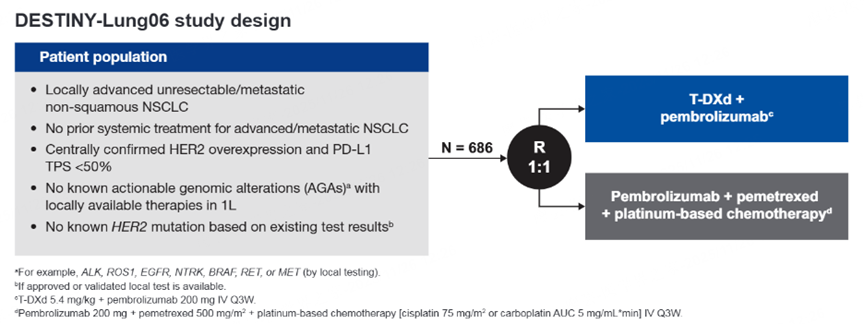
Regarding clinical development, T-DXd is moving from "effective" to "better," from "later-line" to "front-line," and from "monotherapy" to "combinations." The global Phase III DESTINY-Lung06 (DL06) study is evaluating T-DXd plus pembrolizumab versus platinum-based chemotherapy plus pembrolizumab as first-line treatment for patients with HER2-overexpressing (IHC 2+/3+), PD-L1 TPS <50% non-squamous NSCLC [12]. The first patient in China was dosed in October 2025, potentially pioneering a "chemo-free" first-line "ADC + immunotherapy" model. Concurrently, combinations of T-DXd with bispecific antibodies like PD-1×CTLA-4 and PD-1×TIGIT are being actively explored. Several other investigational HER2-targeting ADCs are also in clinical development, promising more diverse options for patients in the future.
In summary, based on the comprehensive evidence from the DESTINY‑Lung and DESTINY‑PanTumor series, T-DXd has rewritten the treatment landscape for HER2-overexpressing NSCLC. The DPT03 data translate global cutting-edge outcomes into a tangible, reliable treatment option for Chinese patients. As testing becomes standardized, treatment moves to earlier lines, combination strategies evolve, and patient coverage broadens, the management of HER2-overexpressing NSCLC will advance towards a more precise, standardized, and individualized stage, ultimately helping more patients achieve long-term survival with improved quality of life.

