


Recently, a multicenter phase 2 study led by Prof. Yupei Zhao, Academician of the Chinese Academy of Engineering, of Peking Union Medical College Hospital, Chinese Academy of Medical Sciences, was published in Signal Transduction and Targeted Therapy. It is the first to systematically evaluate the efficacy and safety of nab-paclitaxel combined with S-1 (SnP regimen) as first-line induction therapy for locally advanced pancreatic cancer (LAPC), offering a new approach to LAPC treatment, an area that has long been mired in a clinical bottleneck [1].
At present, although chemotherapy regimens such as FOLFIRINOX have some therapeutic effect on LAPC, their clinical acceptance remains limited. Authoritative guidelines at home and abroad, including the NCCN guidelines, give only a category 2A recommendation for them. In addition, the limitations of these regimens in Asian populations are particularly pronounced: the incidence of grade 3–4 severe toxicities after treatment is relatively high, raising concerns about treatment safety and directly contributing to the extremely poor overall prognosis of Asian LAPC patients.
Against this background, S-1 — an oral fluoropyrimidine widely used in Asian populations, with good tolerability and non-inferior efficacy to gemcitabine — provides an ideal partner for building a new combination regimen.
 Fig. 1. Study Screenshot
Study Design: Multicenter Exploration Driven by Rigorous Hypotheses
1.Study Population
This study was an open-label, single-arm, multicenter phase 2 clinical trial conducted at four centers in China. It enrolled 60 previously untreated patients with histologically confirmed LAPC. Enrolled patients received a 21-day induction chemotherapy regimen of nab-paclitaxel (120 mg/m², IV, d₁ and d₈) plus S-1 (80–120 mg/day based on body surface area, PO, d₁–d₁₄), for up to 8 cycles.
2.Study Endpoints
Rather than blindly choosing median progression-free survival (PFS) or overall survival (OS) as the primary endpoint, the investigators prudently set the 6-month PFS rate as the primary endpoint. This choice carries significant implications:
- l On one hand, the 6-month time window is sufficient to screen out patients sensitive to chemotherapy who can benefit from subsequent local therapy (such as chemoradiotherapy or surgery).
- l On the other hand, based on the approximately 30% 6-month PFS rate of S-1 or gemcitabine monotherapy in the GEST study [2], the investigators set the efficacy threshold at 48%, reflecting both their expectation of efficacy improvement with the combination and the feasibility of sample-size calculation in a single-arm study.
Secondary endpoints comprehensively covered median PFS, OS, objective response rate (ORR), disease control rate (DCR), R0/R1 resection rate, and safety.
Efficacy Analysis: Multi-Dimensional Data Demonstrate Clinical Value
1.Survival Benefit: From Numbers to Clinical-Meaningful Interpretation
- l Primary endpoint: In the 60-patient intention-to-treat (ITT) population, 29 patients (48.3%) completed all 8 cycles of induction therapy. At a median follow-up of 15.6 months, the primary endpoint — the 6-month PFS rate — was 71.0% (Fig. 2a), well above the pre-specified 48% efficacy threshold and surpassing the historical control by nearly20 percentage points. This means that, in this LAPC population with a very high risk of progression, the SnP regimen establishes a robust “disease-control barrier,” buying a precious time window for subsequent treatment.
- l Secondary endpoints: Median PFS reached 11.1 months, and median OS was 20.2 months. The 12-month OS rate was as high as 83.3% (Fig. 2b). In cross-study comparison with the LAPACT study (GnP regimen, median OS 18.8 months) and the SCALOP study (gemcitabine/capecitabine, median OS 12.7 months), the SnP regimen demonstrated a competitive survival-improvement trend.
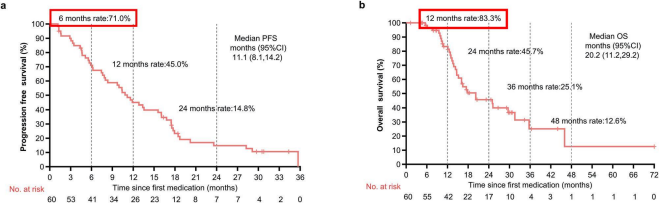 Fig. 2. PFS (a) and OS (b) in the ITT Population
It is worth reflecting that the OS curve in this study entered a relatively flat plateau after12 months, suggesting that for patients who responded to SnP induction, the subsequent surgery or chemoradiotherapy they received may have played a key consolidating role — which precisely reflects the deeper value of “induction therapy” in selecting and creating opportunities for subsequent curative-intent interventions.
2.Tumor Response and Biomarkers: The Prognostic Code of Deep Response
In terms of efficacy assessment, by RECIST 1.1, ORR was 26.7% and DCR was as high as 90.0%. Although ORR appears modest, read together with DCR, the core advantage of the SnP regimen lies in “broad-spectrum control” rather than simply “shrinking the tumor” — a particularly important point for LAPC patients, since stabilizing local disease and preventing rapid progression into critical vessels is key.
More noteworthy is the waterfall-like decline in the tumor marker CA19-9.
Among the 46 patients with abnormal baseline CA19-9, 69.6% had a CA19-9 decline of more than 50%, 58.7% a decline of more than 70%, and 37.0% returned to normal. Such deep biomarker remission carries clinical implications that go far beyond a simple judgment of “good efficacy.”
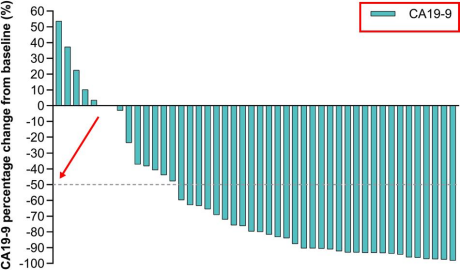 Fig. 3. Best Percentage Change in CA19-9 During Treatment
Prior studies have established that a rapid, deep CA19-9 decline is a prognostic factor independent of imaging response, and is even closely correlated with the degree of postoperative pathological remission. In the present study, 10 patients achieved R0/R1 resection, and almost all of these belonged to the deep CA19-9-decline subgroup.
This suggests that dynamic CA19-9 changes may be more accurate than mere imaging partial response / stable disease (PR/SD) at identifying the “biological responders” who can truly benefit from SnP induction and have conversion potential.
3.Surgical Conversion Rate: From “Imaging-Unresectable” to “Biologically Resectable”
The most clinically exciting finding of this study is the high surgical exploration rate of 18.3% and the R0/R1 resection rate of 90.9% after SnP induction. Among the 10 patients who underwent successful resection:
- l 3 underwent distal pancreatectomy with en bloc celiac axis resection (DP-CAR);
- l 6 underwent superior mesenteric vein / portal vein (SMV/PV) resection and reconstruction.
This indicates that, even for T4 lesions that initially invade critical vessels, radical en bloc resection remains possible after SnP induction.
Traditional LAPC resectability assessment depends heavily on imaging, but “vessel contact” on imaging is not equivalent to “biological unresectability.” The value of the SnP regimen lies not only in tumor shrinkage (imaging downstaging), but also in “flushing away” the active invasive components in the peritumoral microenvironment through potent systemic cytotoxicity, creating a separable “biological plane” at the vessel interface that originally appeared “adherent.”
In this study, 1 patient achieved pathologic complete response (pCR) after surgery, and another 9 patients achieved varying degrees of tumor regression (Evans grade II–IV), providing direct histological evidence for the “biological downstaging” hypothesis.
Safety Analysis: The Balancing Art of Efficacy and Tolerability
In terms of safety, the SnP regimen demonstrated good tolerability matching its efficacy. The all-grade treatment-related adverse event (TRAE) rate was 96.7%, but the grade ≥3 TRAE rate was only 53.3%. The most common grade ≥3 TRAEs were neutropenia (38.3%) and leukopenia (21.7%); febrile neutropenia occurred in only 1 patient (1.7%), and could be effectively managed with conventional granulocyte colony-stimulating factor (G-CSF).
Notably, although the all-grade incidence of peripheral neuropathy was as high as 45.0%, the grade ≥3 incidence was only 3.3%. This aligns with the significant reduction in neurotoxicity after nab-paclitaxel replaced traditional paclitaxel, safeguarding patients’ long-term quality of life.
No treatment-related deaths were reported in this study. The significance of this safety profile is that the SnP regimen preserves sufficient physical and organ-function reserve for subsequent local treatments such as radiotherapy or surgery, avoiding the FOLFIRINOX-regimen’s frequent cumulative gastrointestinal and neurological toxicity, which can constrain subsequent treatment decisions.
New Thinking on the LAPC Treatment Paradigm
Looking at the history of LAPC treatment research, this study is the first to provide system-level evidence for the application of the SnP regimen in LAPC, and its significance goes well beyond “yet another positive phase 2 study”:1. Filling the LAPC-specific evidence gap:
1.Against the backdrop of studies such as NEOLAP and JCOG1407 exploring different induction regimens, the SnP regimen offers Asian patients a preferred strategy backed by sufficient data.
2.Redefining the dimensions of “conversion therapy” assessment: The data from this study suggest that imaging ORR alone should not be the sole marker of successful conversion; the dynamic trajectory of CA19-9 and “biological regression” of the tumor may have greater decision-making value than mere diameter shrinkage.
3.Laying the groundwork for subsequent combination therapy: The 71% 6-month PFS rate means that, after SnP induction, most patients are in SD or remission, providing a highly favorable “disease platform” for subsequent precise radiotherapy target delineation and surgical timing.
● Study Limitations: Objectively, the single-arm design is an unavoidable limitation. The different sequential regimens chosen by investigators after induction, while reflecting the complexity of real-world clinical decision-making, may also dilute the direct survival effect of the SnP regimen itself. In addition, the R0/R1 resection rate was determined by pathological assessment at each center without centralized pathological review, which may introduce bias.
Conclusion
This study confirms that nab-paclitaxel combined with S-1, as an efficient, low-toxicity and surgery-conversion-promoting induction regimen, enriches the peri-treatment strategy for LAPC. Going forward, large randomized controlled phase 3 studies are needed to further clarify the optimal treatment cycles for the SnP regimen, the best sequential treatment modality after induction, and individualized application indications in different populations — to promote it as a standardized first-line regimen for LAPC.
References
[1] Cao Z, Qiu J, Luo W, et al. Nab-paclitaxel plus S-1 induction chemotherapy for patients with locally advanced pancreatic cancer: a multicenter, open-label phase 2 study. Signal Transduction and Targeted Therapy. 2026;11(1):243.
[2] Ueno H, et al. Randomized phase III study of gemcitabine plus S-1, S-1 alone, or gemcitabine alone in patients with locally advanced and metastatic pancreatic cancer in Japan and Taiwan: GEST study. J Clin Oncol. 2013;31(13):1640–8.

