


When Professor Yilong Wu of Guangdong Provincial People’s Hospital received the notification that he had won an award, his first reaction was to ask: “Is this a scam?”
In his experience, applying for awards had always required effort on the nominee’s part: forms to fill in, recommenders to line up, and achievements packaged into a submission. Years earlier, he had set himself a rule — he would not take part in any prize that required him to prepare his own application materials.
“We just focus on our own work; we don’t care whether there are awards or not,” he said. This time, however, not a single form had been filled in; he was simply told he had won. Once he understood the reasoning, the picture became clear: the award looks at a person’s accumulated contributions to a field over time, and at whether they have genuinely changed how others understand a disease or its treatment.
“There really are people quietly doing the work, contributing their small efforts to slowly change the world,” he wrote.
On August 9, 2026, in Shanghai, the seventh Mount Tai Value-Based Healthcare Awards, hosted by MedJ, were announced. Wu, now 70, received the Clinical Medicine Research Award. A lifetime director at Guangdong Provincial People’s Hospital and chair of the Chinese Thoracic Oncology Group (CTONG), he is referred to by colleagues and patients as the “father of targeted therapy” in China and, with affection, as a “medical knight.”
Over more than forty years, his SCI-indexed publications have accumulated an impact factor exceeding 1,000 and have been cited more than 90,000 times, according to MedJ. Trials he has led have been incorporated into 27 lung cancer guidelines across 15 countries and regions.
More importantly, in the largely uncharted territory of precision treatment for lung cancer, he has helped blaze the first trail.
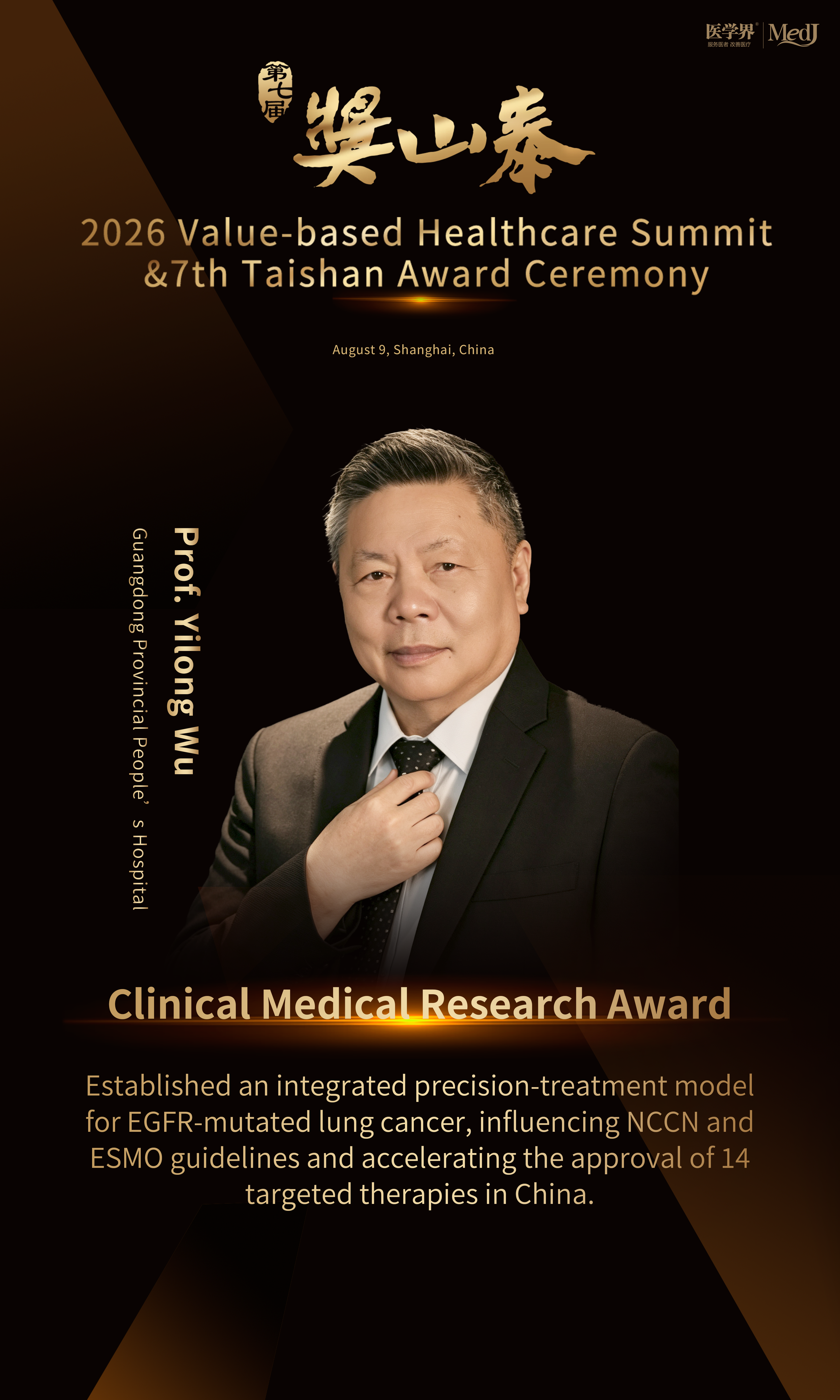
Choosing the Path No One Wanted
In the early 1980s, the dormitory of Zhongshan Medical College in Guangzhou was separated from the Affiliated Tumor Hospital by only a corridor. As a medical student, Wu would often hear relatives wailing from the building opposite after evening self-study.
Cancer treatment at the time relied on what he would later call the “three axes” — surgery, radiotherapy and chemotherapy. Once those failed, doctors could mostly only watch. That sense of powerlessness, he later said, may have been where his life’s work began.
Yilong Wu was born in 1956 in Shantou, Guangdong. In the early 1970s, he was sent to the countryside as a “sent-down youth” during the “sent-down” movement and spent six years there. During that period, he was seconded as a substitute primary-school teacher, teaching Chinese, arithmetic and English.
When the national college entrance examination was restored in 1977, he did not hesitate. “I just wanted to keep studying. Any school would do.” When filling out his preferences, he chose Zhongshan Medical College over South China Normal University.
At the time, teaching and medicine were considered steady professions that would always provide a living. But because his family background had been classified as that of children who could be “re-educated,”his eligibility to sit the exam was uncertain, until a policy clarification one month before the test finally allowed him to do so. He was admitted to his first choice.
At university, Wu was not a student who buried himself only in textbooks. He wrote essays for the campus wall newspaper, founded a publication called Chinese Medical Students, interviewed medical experts around the country, and, with a few classmates, compiled an informal history of medicine out of pure enthusiasm.
When he graduated in 1982, the saying among students was “gold is ophthalmology, silver is surgery.” Oncology was grueling, exhausting and meant dealing with death every day — few wanted it. Wu chose that unfashionable path and joined the thoracic and abdominal oncology department of the Affiliated Tumor Hospital of Zhongshan Medical College (now Sun Yat-sen University Cancer Center).
He recalled holding as many as six bodies in a single day during that period.
He also remembered operating with Li Guocai, a renowned hepatobiliary surgeon and one of the hospital’s founding figures. A patient’s liver had just been opened when severe bleeding began. Li pressed to stop the bleeding with his bare hands; when he tired, he passed the task to Wu. The two took turns pressing for ten hours straight. In that moment, Wu said, he truly felt how fragile life could be.
In 1988, Wu went to West Berlin Chest Hospital in Germany for further training in lung cancer surgery. During one case discussion, he noticed two white-haired elderly people sitting in the room, while the doctors respectfully reported the patient’s condition and the pros and cons of each treatment option to them in turn.
He initially assumed they were senior supervising professors, only to learn later that they were the patients whose treatment plans were being discussed that day — and that the patients themselves would choose the approach. The scene left a deep impression.
From then on, his clinical and research perspective carried an additional vantage point: putting the patient at the center.
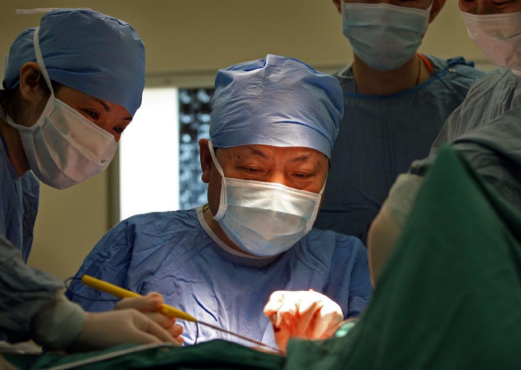 Fig. 1. Yilong Wu is Performing Surgery
Becoming the “Father of Targeted Therapy” in China
In the late 1990s, the median overall survival for Chinese patients with advanced lung cancer was only about 10 months. Targeted therapy was the approach that broke this deadlock, and the person who brought it to China was Wu.
In 2000, at age 44, Wu traveled to the United States to attend an international lung cancer conference. On the flight, he happened to sit next to a scientist working on a new lung cancer drug. They discussed gefitinib (Iressa), a drug designed to enter cells and block EGFR mutations. He had an intuition that this might be a new direction.
The following year, a critically ill lung cancer patient in Guangdong reached out to him. Wu thought of the new drug, but the clinical trial had not included China. He wrote to the drug company’s headquarters, with no immediate response. Turning to the regulations, he found that customs had kept an opening for individuals to apply for life-saving medicines. Eventually, this patient became the first in China to receive this targeted therapy.
The decision did not bring applause at the time. To introduce the drug, Wu organized a small discussion meeting; about two-thirds of the senior experts present accused him of treating patients with a “fake drug” (a drug not yet approved for the Chinese market). Under the pressure, he chose to act quietly without publicizing the work. Two years later, the patient died of a sudden cerebrovascular event, not from lung cancer.
In 2004, the international research community confirmed that EGFR mutations were an important driver in lung cancer. Wu then led China’s first large-scale genetic testing effort and found that the EGFR mutation rate among Chinese patients was far higher than in Western populations — about 30% of non-small cell lung cancer (NSCLC) cases in China, compared with less than 10% in Western populations.
This conclusion was, at the time, a sensitive one — suggesting that a drug worked differently across populations could easily be labeled as implying “racial discrimination.” “At the time, no one dared to say it,” Wu said.
In 2005, a Western study reported no survival difference between patients taking Iressa and those taking placebo. The U.S. Food and Drug Administration (FDA) tightened the indication, and the pharmaceutical company voluntarily withdrew Iressa’s European marketing application. Wu disagreed, since he had by then accumulated more than one hundred Chinese patients who had responded to the drug.
In 2006, Wu and Tony Mok of the Chinese University of Hong Kong, together with seven clinical scientists from Japan, Thailand and elsewhere, launched the Iressa Pan-Asia Study (later known as IPASS). Since standardized genetic testing methodology was still unsettled, the team used two clinical features — a history of never smoking and adenocarcinoma on pathology — to select patients, the population most likely to harbor EGFR mutations.
In 2009, IPASS was published in The New England Journal of Medicine (NEJM): among patients with EGFR mutations, gefitinib extended progression-free survival to 9.5 months, clearly superior to chemotherapy; patients without the mutation, in contrast, did worse on gefitinib than on chemotherapy. Long-term follow-up showed a median overall survival of 22 months and a response rate above 70%.
In an Asian population, the study demonstrated the advantage of targeted therapy over traditional chemotherapy, overturning the pessimism that had prevailed in some European and U.S. research circles, and helped establish a principle that still holds today: conduct genetic testing first, then decide on treatment.
Over the following decade and more, multiple studies led by Wu’s team in the area of targeted therapy were incorporated into U.S., European, Japanese and other guidelines, earning him the label "father of targeted therapy" in China. To date, he has helped bring 14 lung cancer targeted drugs to approval in China.
“Staying Discontent”: Helping Set the Global Pace
In 2015, the 16th World Conference on Lung Cancer (WCLC) awarded its Distinguished Science Award to Wu. He was the first scholar of Chinese heritage to receive the prize since the International Association for the Study of Lung Cancer (IASLC) established the award, with the citation noting that he “represents the contribution of China to the history of lung cancer research.”
“Staying discontent” — being unsatisfied with the blunt-instrument approach of the "three axes" and with always repeating work that others had already done — became a self-description that runs through his career. This almost stubborn drive has pushed him into empty fields again and again.
The ADJUVANT study, launched in 2011, was the first to move an EGFR-targeted drug from advanced disease into the post-operative adjuvant setting. In 2015, Wu led the Phase III CheckMate-078 trial of a PD-1 inhibitor in advanced NSCLC, an effort widely regarded as a starting point of immuno-oncology research in China. In 2020, the ADAURA study reported that adjuvant osimertinib, a third-generation targeted drug, was associated with a 51% reduction in the risk of post-operative death in EGFR mutation-positive patients. In 2024, the ALINA study was published in NEJM — the team's fifth paper on the journal — and reported that alectinib could serve as an alternative to chemotherapy, associated with a 76% reduction in the risk of post-operative recurrence in ALK-positive patients. In 2026, LIBRETTO-432 — the team’s seventh NEJM paper — reported that adjuvant selpercatinib in early-stage RET fusion-positive lung cancer was associated with an 83% reduction in the risk of recurrence or death.
To date, Wu has served as global principal investigator on 16 international clinical trials and led more than 110 domestic multi-center trials, with results incorporated into 27 guidelines across 15 countries and regions. Several of these original studies have been classified as the highest level of evidence by the U.S. National Comprehensive Cancer Network (NCCN) and the European Society for Medical Oncology (ESMO).
In 2017, the team also designed a “broad-eligibility” trial for advanced patients who could not otherwise be enrolled in conventional studies. Published in Nature Medicine in 2023, it has been described as one of the world's first truly "patient-centered" clinical trial designs, predating regulators' later requirements for such trials by about five years.
Also driven by the same “discontent,” Wu, together with Zhang Li, Lu Shun, Zhou Caicun and others, founded CTONG in 2007, with the aim of ending the era of Chinese investigators working in isolation.
According to MedJ, the group has grown from 11 founding member institutions to more than 40 today, has conducted over 60 clinical trials and enrolled close to 10,000 patients, has published in journals including The Lancet, and has made multiple oral presentations at meetings of the American Society of Clinical Oncology (ASCO), ESMO and WCLC.
As a result, Chinese lung cancer researchers have gradually moved from the audience to the podium.
These advances have also redrawn the survival curve for patients. Early in his career, Wu was once teased that “ lung cancer doctor has no patient friends who last more than a year.” By 2020, patients receiving post-operative adjuvant targeted therapy had reached a median overall survival of 75.5 months, crossing the 60-month threshold that medicine uses as one marker for “chronic disease.”
As more and more advanced patients live longer with the disease, Wu has begun to ask new questions: after years on a targeted drug, can treatment be paused? Can an isolated metastatic lesion be surgically removed? To address these questions, he has reorganized physicians at Guangdong Provincial People's Hospital by driver gene and set up a dedicated “molecular clinic”to tackle the question of how to help patients live well after they have lived long.
A Nation Needs Many More “Yilong Wus”
Lung cancer is the most common malignancy in China. Data from the National Cancer Center show that in 2024, China recorded about 1.176 million new lung cancer cases and 743,000 deaths, with both figures trending upward year on year.
Faced with this situation, Wu has long argued that only by training many more “Yilong Wus” can there be more hope.
He has supervised more than 80 master's and doctoral students. He does not like students who simply agree with everything he says; when a student nods along, he frowns, because in his view, scientific questions need to be argued out.
His demands are also strict. When students prepare presentations, the first slide must list the relevant literature and how the world currently views the question at hand. Without that first slide, the presentation is sent back.
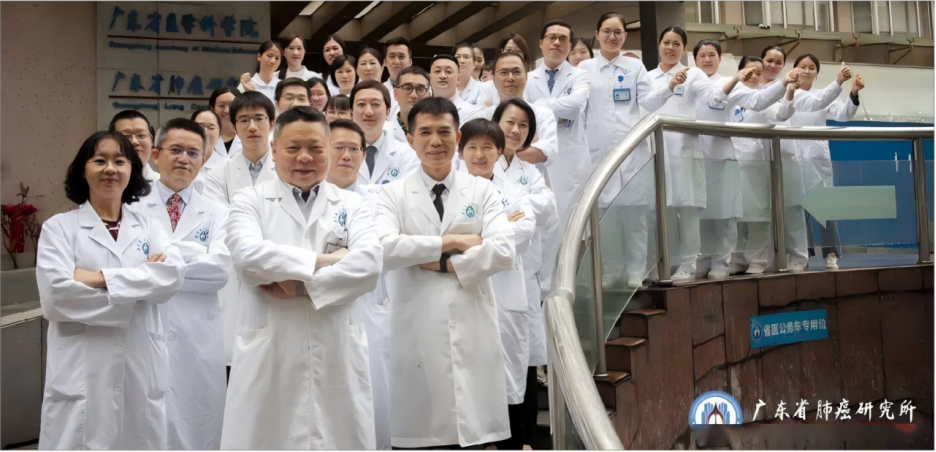 Fig. 2. “The Dragons’ Descendants” — Yilong Wu and His Students
Now in his seventies, Wu says he has more time to mentor students on interesting clinical questions, and that he enjoys teaching more than ever, often "showing off" his students' achievements on his WeChat Moments.
At each annual student gathering, a large group of students and their spouses reunite with Wu and his wife, calling themselves “dragons’ descendants." Many have already become well-known experts — Zhong Wenzhao (vice president of Guangdong Provincial People’s Hospital), Zhou Qing (president of the cancer center where Wu trained, now Sun Yat-sen University Cancer Center), and Wang Kun (a vice president there) all trained under him; the younger “third-generation dragons” are also emerging on the international stage.
To help younger researchers grow faster, Wu also established platforms such as CTONG YOUNG and CSCO YOUNG.
Harder than training students, he notes, is narrowing the differences in diagnosis and treatment between regions and between hospitals of different tiers. The “Wednesday ward round” he set up at Guangdong Provincial People's Hospital in 2002 has been expanded step by step into the province-wide “Guangdong Grand Rounds,” and in 2022 into the nationwide “China Thoracic Oncology Grand Rounds,” each session drawing 40,000 to 50,000 online participants.
The classic cases accumulated over twenty years have since been compiled into a book titled “Brother Long’s Ward Rounds.” In recent years, Wu and his team have run online training sessions for primary-care doctors in impoverished and western regions, sharing up-to-date, evidence-based practice through platforms such as “CTONG Experts on Lung Cancer.”
“We hope to use the internet to break down geographic barriers and standardize physician training. That way, no matter where they are, patients can receive the same standard of care,”Wu said.
From being a “sent-down youth” in the countryside to standing at the frontier of world medicine, Wu’s more than forty years almost constitute a microcosm of China’s lung cancer treatment history — from an era with only the “three axes,” to following the lead of Europe and the United States, to helping lead the formulation of international standards.
The “Healthy China 2030” initiative sets a goal of raising China’s overall five-year cancer survival rate to 46.6% by 2030. When the target was first raised a few years ago, Wu openly said his confidence was still limited; now, with new tools such as targeted therapies, immunotherapy and antibody-drug conjugates continually being added, he says, “this confidence is firmly established.”
Wu still maintains the habit of reading the literature every day, and is also thinking about how to use artificial intelligence to find the next breakthrough in precision treatment for lung cancer. A fan of wuxia (Chinese martial-arts fiction), he enjoys the unconstrained imagination of the genre: “Can you still call yourself a scientist without imagination?”

