


The 2026 American Society of Clinical Oncology (ASCO) Annual Meeting was held May 29–June 2, 2026, in Chicago, USA. As one of the most authoritative and influential global oncology conferences, the meeting brought together landmark innovations across cancer diagnosis and treatment. At the breast cancer oral session on the afternoon of May 30, a randomized, open-label, multicenter Phase III study led by Prof. Shao Zhimin of Fudan University Shanghai Cancer Center made its high-profile debut (LBA660), reporting—for the first time—the key results of the novel HER2 bispecific antibody anituzumab (KN026) in the neoadjuvant setting for HER2-positive early or locally advanced breast cancer.
Limitations of Current Standard Regimen Demand Efficacy Breakthroughs
Trastuzumab plus pertuzumab plus docetaxel (THP) ± carboplatin dual-HER2-targeted chemotherapy is the current standard neoadjuvant regimen for HER2-positive Stage II–III early and locally advanced breast cancer. Despite its widespread use, the total pathological complete response (tpCR) rate of this regimen ranges from only 39.3% to 56.0%, meaning more than half of patients fail to achieve pathological complete response and carry a high risk of relapse and metastasis. Moreover, some existing sequential regimens involve prolonged treatment durations and relatively high overall toxicity, highlighting the urgent clinical need for a more efficacious and better-tolerated new treatment strategy.
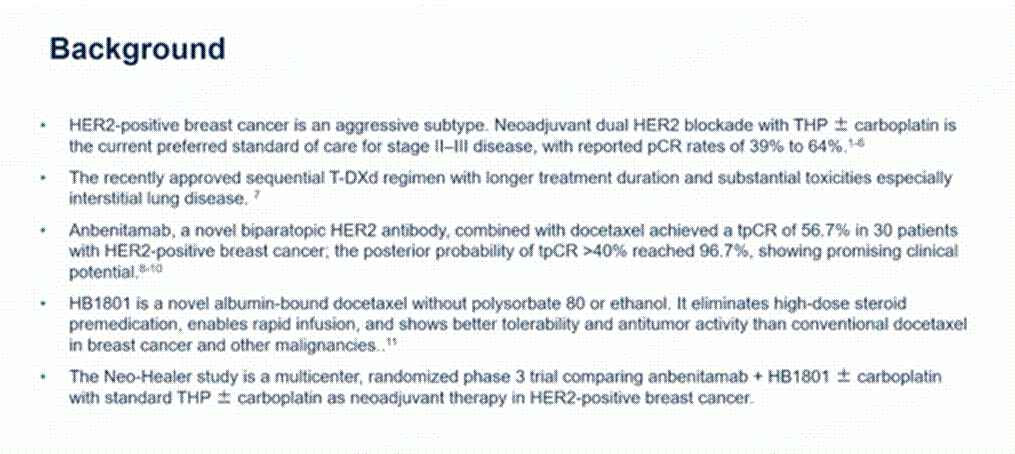
Anituzumab is a novel HER2 bispecific antibody developed in China that simultaneously targets HER2 domain II and IV, achieving dual blockade of HER2 signaling pathways. Compared with conventional monoclonal antibodies, it demonstrates superior antiproliferative and antimetastatic activity. Previous Phase II clinical studies had preliminarily validated its clinical potential, with a tpCR rate of 56.7% when combined with chemotherapy.
The study also incorporated nab-paclitaxel (albumin-bound docetaxel), which does not require premedication and can be rapidly infused—offering better tolerability and superior antitumor activity compared with conventional docetaxel—providing a solid foundation for the positive Phase III outcomes. The investigators therefore conducted this large-scale Phase III trial to compare head-to-head the efficacy and safety of the new anituzumab-based regimen versus standard THP, in search of a superior neoadjuvant treatment option.
Rigorous Multicenter Phase III Trial Design
This study (NCT06747338) was a randomized, open-label, multicenter Phase III clinical trial enrolling patients with pathologically confirmed HER2-positive early or locally advanced breast cancer, with HER2 positivity defined as IHC 3+ or FISH-positive, and all patients having adequate organ function and meeting neoadjuvant treatment criteria.
Patients were randomized 1:1 to two treatment arms: the experimental arm received anituzumab plus nab-docetaxel ± carboplatin, and the control arm received the standard THP regimen (trastuzumab plus pertuzumab plus docetaxel) ± carboplatin. Both arms received 6 cycles of neoadjuvant treatment. Stratification factors closely reflected clinical reality, including clinical stage, hormone receptor status, and planned carboplatin use, ensuring balanced comparability between arms.
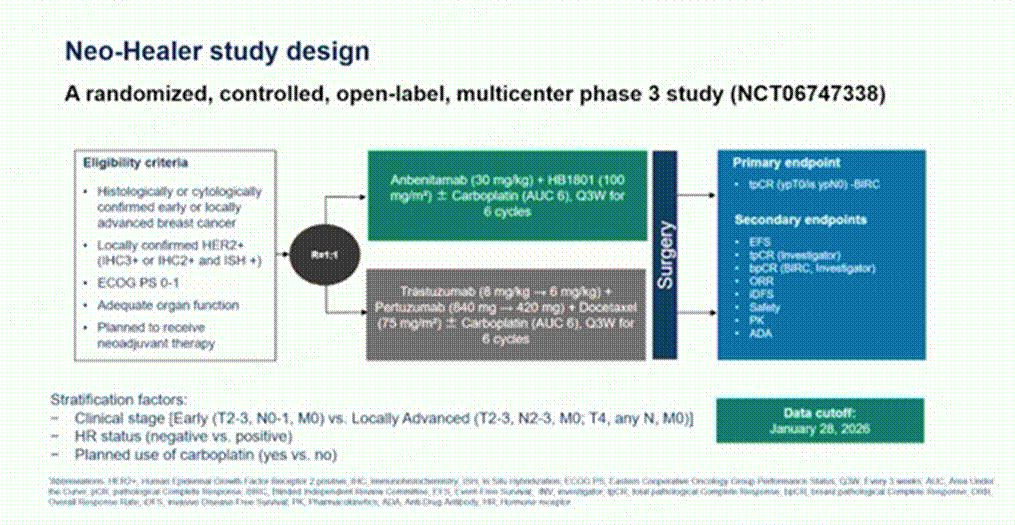
Enrollment began on December 16, 2024, and was completed by August 29, 2025. A total of 612 patients were screened, with 521 eligible participants enrolled—267 in the experimental arm and 254 in the control arm. All enrolled patients were included in the intent-to-treat (ITT) analysis set. The primary endpoint was tpCR (ypT0/is, ypN0) as assessed by a blinded independent review committee (BIRC); secondary endpoints included investigator-assessed tpCR, breast pCR, objective response rate (ORR), and safety.
Multidimensional Efficacy Improvement: Universal Benefit Across All Subgroups
1. Primary Endpoint: Significant Improvement in tpCR Rate
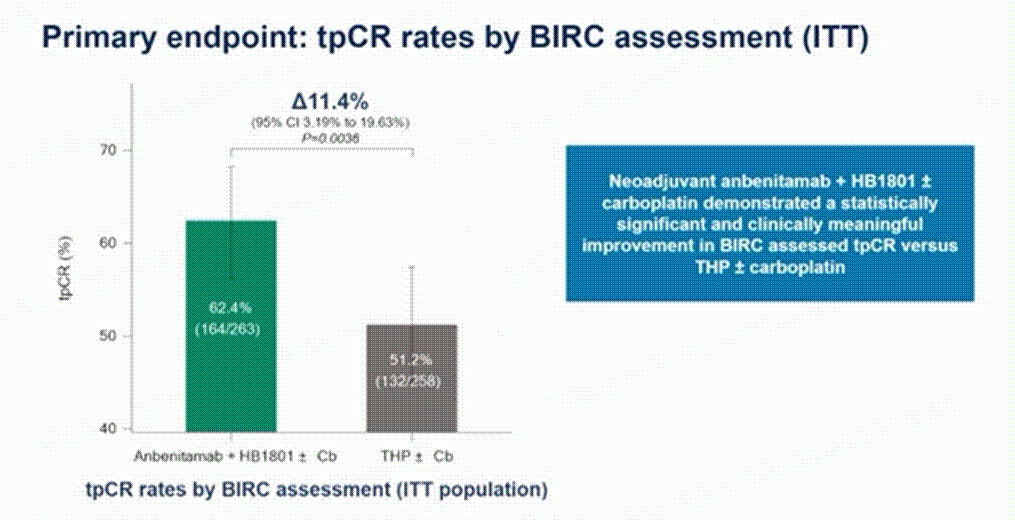
The study successfully met its prespecified primary endpoint. BIRC assessment showed that the tpCR rate in the anituzumab experimental arm was 62.4% (95% CI: 56.2–68.2), significantly higher than the 51.2% (95% CI: 44.9–57.4) in the standard THP control arm. The standardized absolute difference between arms was 11.4% (95% CI: 3.2–19.6), with a one-sided P=0.0036, indicating a statistically significant and clinically meaningful benefit.
Investigator-assessed tpCR results were highly consistent with BIRC assessment, further confirming efficacy stability: the experimental arm tpCR rate was 63.9% (95% CI: 57.8–69.7) versus 51.2% (95% CI: 44.9–57.4) in the control arm (one-sided P=0.0011), once again validating the efficacy advantage of the anituzumab-based regimen.
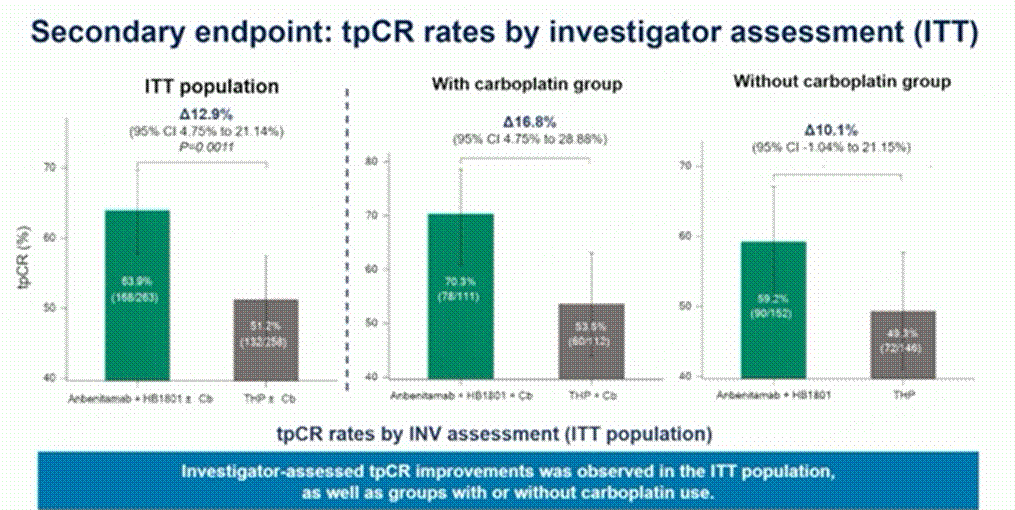
2. Subgroup Analysis: Superior Efficacy Regardless of Carboplatin Use
Subgroup stratification analysis showed that the anituzumab regimen demonstrated a consistent efficacy advantage whether or not carboplatin was added. In the carboplatin-treated population, the tpCR rate was 66.7% in the experimental arm versus 54.5% in the control arm, an improvement of 12.3%. In the non-carboplatin population, the tpCR rate was 59.2% versus 48.2%, an improvement of 11.0%.
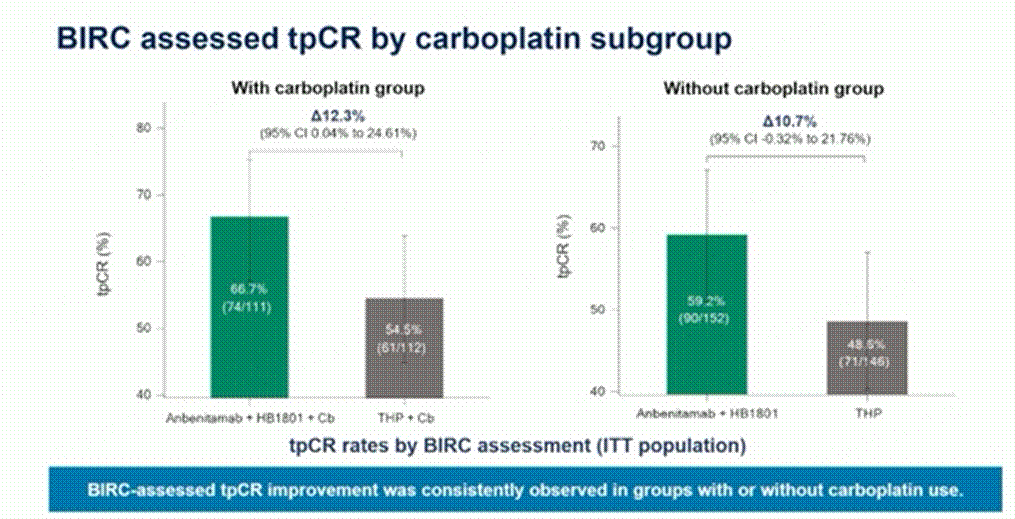
Consistent benefit trends were observed across all prespecified subgroups—including hormone receptor-positive/negative and early/locally advanced breast cancer—with the anituzumab regimen demonstrating a statistically significant tpCR advantage over THP in every subgroup, with no population showing inferior benefit, underscoring its broad applicability.
3. Secondary Endpoints: Simultaneous Improvement Across Multiple Efficacy Metrics
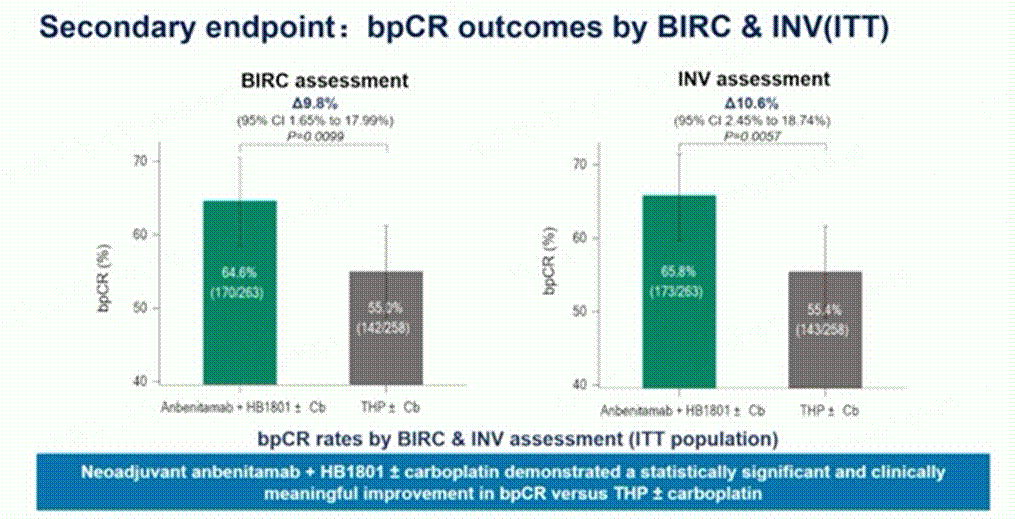
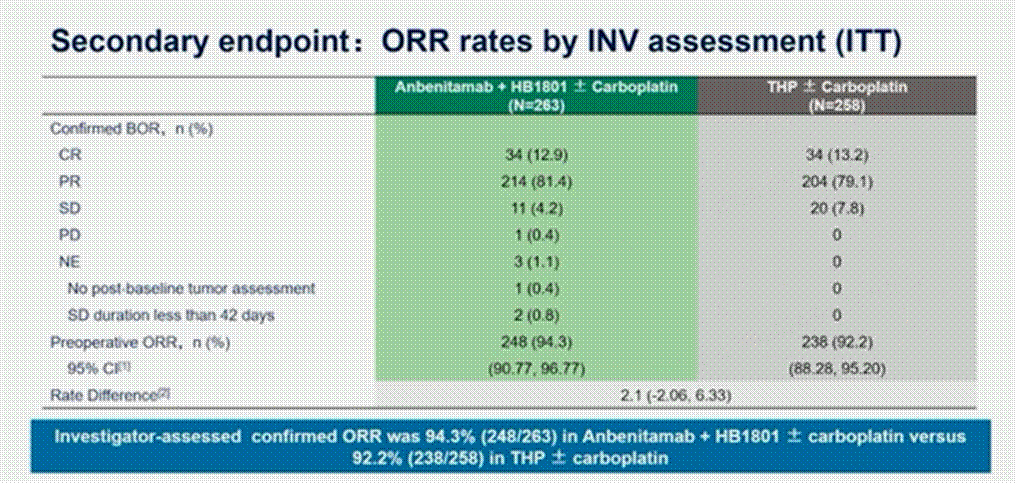
Secondary endpoint data were equally impressive: BIRC-assessed breast pCR rate was 64.6% in the experimental arm versus 55.0% in the control arm (one-sided P=0.0099), a statistically significant difference. Investigator-assessed breast pCR showed an absolute improvement of 10.6%. The experimental arm also achieved a 2.21% higher ORR compared with the control arm, reflecting a comprehensive improvement in tumor response rate and fully confirming the potent antitumor activity of the anituzumab-based regimen.
Manageable and Tolerable Toxicity: No New Safety Signals
Safety is a critical prerequisite for new treatment regimens to enter clinical practice. The study results confirmed that the safety profile of the anituzumab-based regimen was highly consistent with the standard regimen and was excellent overall.
The overall incidence of treatment-emergent adverse events (TEAEs) was nearly identical between arms: 98.5% in the experimental arm and 98.8% in the control arm. The incidence of grade ≥3 severe TEAEs was comparable, at 29.3% versus 28.3%, with no meaningful increase in toxicity. The most common grade ≥3 adverse events in both arms were neutropenia (11.4% vs. 10.9%) and leukopenia (7.6% vs. 8.5%), both well-known hematologic toxicities associated with chemotherapy and clinically manageable.
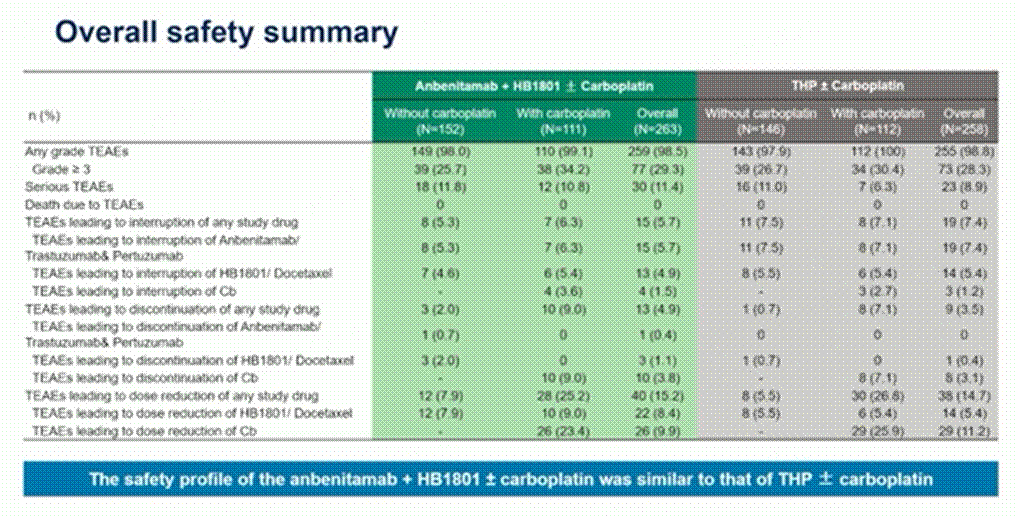
Regarding treatment interruptions and discontinuations, study drug interruptions due to TEAEs occurred in 5.7% of experimental arm patients, lower than the 7.4% in the control arm. Permanent discontinuation occurred in 4.9% versus 3.5%, with overall discontinuation and interruption risks being manageable. No treatment-related deaths occurred during the study, and no unexpected safety signals were identified. Additionally, the convenience of nab-docetaxel—which requires no premedication and allows rapid infusion—further enhanced patient tolerability and ease of treatment.
Conclusion
Compared with the internationally established THP ± carboplatin standard neoadjuvant regimen, the anituzumab plus nab-docetaxel ± carboplatin combination regimen significantly improves the tpCR rate in patients with HER2-positive early and locally advanced breast cancer, with an overall efficacy improvement exceeding 10% and universal benefit across all subgroups, while demonstrating a manageable safety profile and good tolerability.
From a clinical perspective, this innovative regimen overcomes the efficacy ceiling of traditional dual-HER2 regimens without prolonging treatment duration or increasing significant toxicity burden, balancing efficacy, safety, and treatment convenience. As a domestically developed HER2 bispecific antibody, the breakthrough results of anituzumab not only provide a superior neoadjuvant treatment option for HER2-positive breast cancer patients, but also mark a major milestone for Chinese innovative oncology drugs in precision breast cancer therapy.

