


On April 9, 2026, a joint research team led by Prof. Xia Feng of the Department of Anesthesiology and Dr. Ce Tang of the Precision Medicine Research Institute at the First Affiliated Hospital of Sun Yat-sen University (FAH-SYSU) published their findings in The BMJ (impact factor 42.7). The study systematically evaluated preventive strategies for postoperative pulmonary complications (PPCs) following abdominal surgery, offering the most comprehensive body of evidence in the field to date. It lays a critical foundation for developing perioperative lung protection protocols and clinical guidelines.
Prof. Xia Feng serves as the corresponding author, and Dr. Ce Tang as co-corresponding author. Associate Chief Physician Dr. Chanyan Huang, Dr. Xu Zhao, and master's candidate Siyu Geng are joint first authors.
Given the study's clinical significance, The BMJ simultaneously published an invited editorial by Prof. Ben Creagh-Brown, Professor of Critical Care and Perioperative Medicine at the University of Surrey, UK.
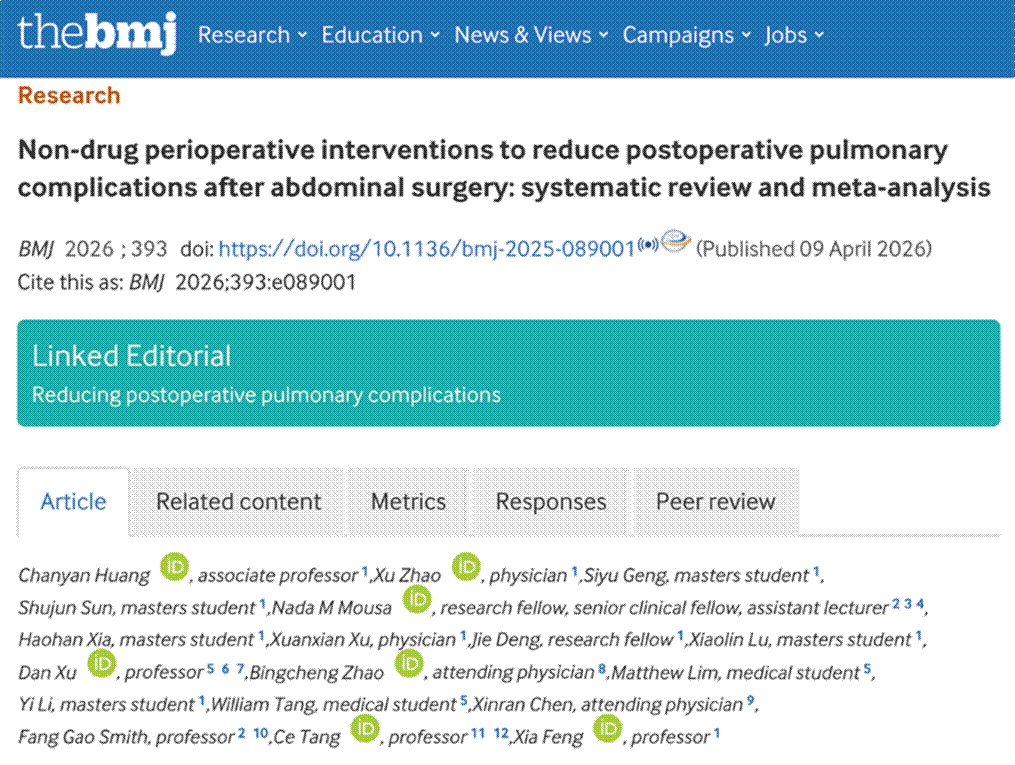
Fig. 1. Research article published in The BMJ
Fig. 1 Simultaneous invited editorial in The BMJ
A Long-Underestimated Clinical Problem: Postoperative Pulmonary Complications
More than 300 million surgeries are performed worldwide every year, with abdominal surgery among the most common. Yet postoperative pulmonary complications remain a systematically underestimated problem. Unlike surgical complications such as postoperative hemorrhage or anastomotic leakage — which tend to receive prompt attention — PPCs, particularly seemingly minor early presentations such as the need for low-flow supplemental oxygen, are routinely dismissed as "routine atelectasis."
In reality, PPCs affect up to 40% of patients undergoing major abdominal surgery, a rate exceeding that of cardiac complications, and are strongly associated with prolonged hospital stay and elevated one-year mortality. Prof. Ben Creagh-Brown explicitly highlighted this long-neglected clinical reality in his editorial. Despite the wide use of various preventive measures in practice, high-quality, systematic evidence identifying which interventions genuinely reduce PPCs has been lacking.
Study Design
To address this question, the research team collaborated with investigators from the University of Birmingham (UK), Curtin University (Australia), Nanfang Hospital of Southern Medical University, and the Affiliated Traditional Chinese Medicine Hospital of Southwest Medical University. The team systematically screened 22,716 publications and ultimately included 255 randomized controlled trials involving 55,260 patients. Risk of bias was assessed using the Cochrane RoB 2.0 tool, evidence certainty was graded using GRADE methodology, and trial sequential analysis was performed to determine whether existing sample sizes are sufficient to support current conclusions. Perioperative interventions were classified into 10 categories and 39 subtypes — the most granular classification framework established in this field to date.
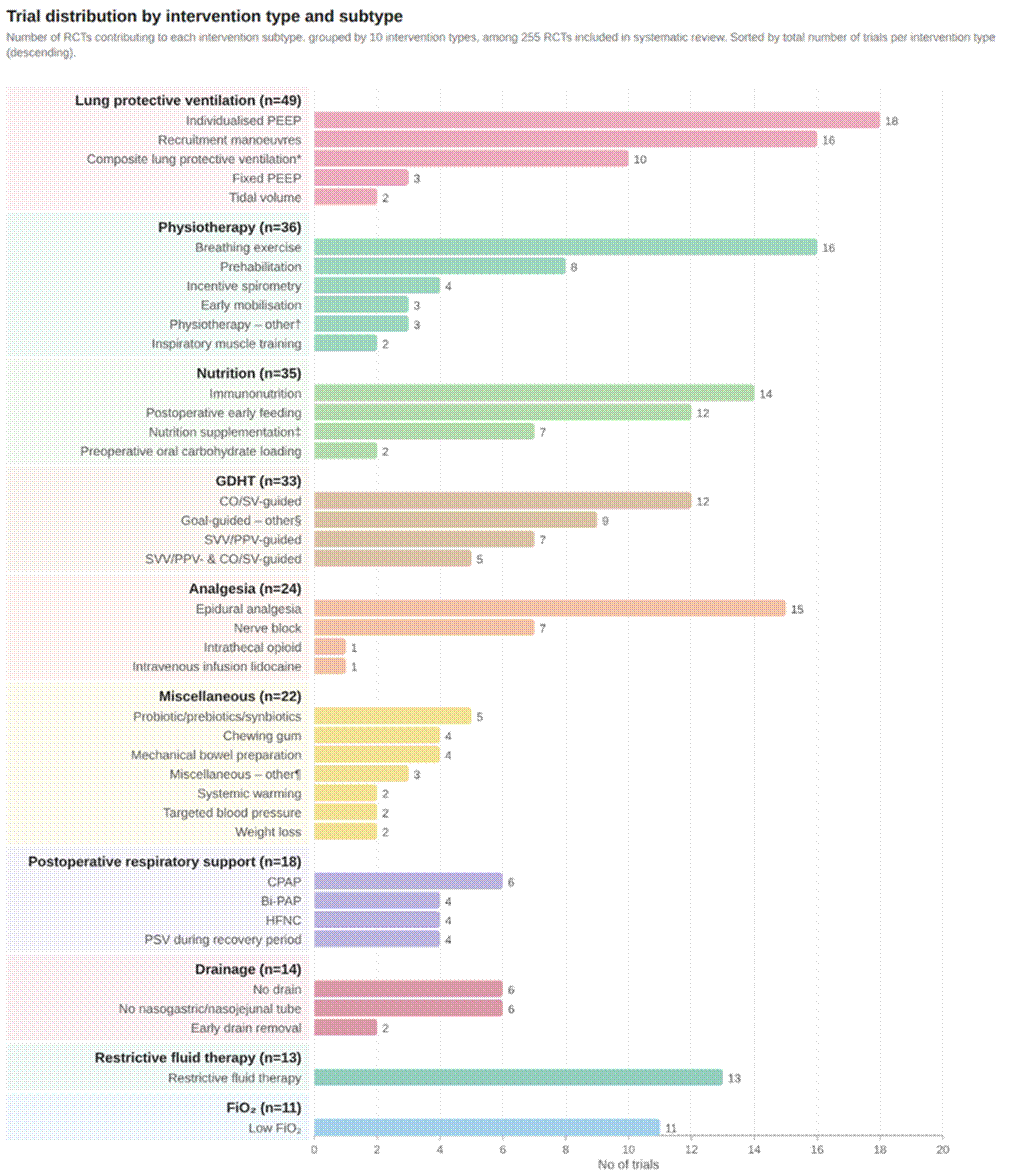
Fig. 2 Distribution of 255 trials across 10 intervention categories and 39 subtypes
Low FiO₂: The Only Intervention Supported by High-Certainty Evidence
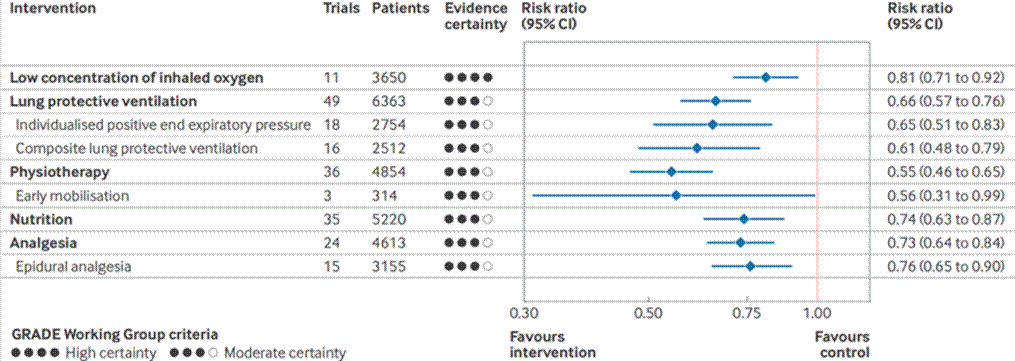
The study found that intraoperative maintenance of a low fraction of inspired oxygen (FiO₂ 30–40%) reduces the risk of PPCs by 19%. This is the only intervention to receive high-certainty evidence support, filling a longstanding evidence gap in this area.
Beyond low FiO₂, four additional intervention categories demonstrated moderate-certainty evidence of benefit: lung-protective ventilation strategies (34% risk reduction), physiotherapy (45%), analgesic techniques (27%), and nutritional interventions (26%). At the subtype level, individualized PEEP, combined lung-protective ventilation (PEEP + low tidal volume + lung recruitment), early mobilization, and epidural analgesia each showed positive effects.
Conversely, several interventions showed no benefit for PPC prevention, including goal-directed hemodynamic therapy (GDHT), target blood pressure management, restrictive fluid therapy, and postoperative bilevel positive airway pressure (BiPAP). These conclusions were supported by moderate-certainty evidence.
Clinical Implications
First, perioperative lung protection can begin with simple, scalable measures. Simply reducing intraoperative FiO₂ from the commonly used 60–80% to 30–40% is sufficient to lower PPC risk. This requires no additional cost and can be implemented immediately in any setting, from major tertiary hospitals to primary care facilities. As Prof. Creagh-Brown noted in his editorial, the real challenge is not technical but conceptual: clinicians must overcome the deep-seated belief that high FiO₂ provides a protective buffer against intraoperative hypoxia.
Second, PPC prevention requires a multimodal approach. Lung-protective ventilation (intraoperative), physiotherapy (pre- and postoperative), optimized analgesia (intraoperative and postoperative), and nutritional support (pre- and postoperative) each independently reduce risk across the entire perioperative continuum. Prof. Creagh-Brown specifically emphasized that closing the implementation gap for effective interventions may be just as valuable as discovering new ones.
Third, clinical management must shift from experience-driven to evidence-driven practice. Certain interventions — such as GDHT, which requires additional equipment and considerable cost — showed no benefit for PPC prevention, and their routine use warrants reconsideration.
Significance
Systematic reviews and meta-analyses occupy the highest tier of the evidence-based medicine pyramid and serve as the cornerstone for clinical guideline development. This study is the first to establish, with high-certainty evidence, the core strategies for preventing PPCs after abdominal surgery. It marks a major advance in evidence-based medicine research by FAH-SYSU. The research team plans to continue systematic investigations into perioperative organ protection and complication prevention, with the goal of translating high-quality evidence into clinical practice for the benefit of patients.
Fig. 3 The evidence-based medicine pyramid: systematic reviews and meta-analyses occupy the highest tier
This study was funded by the Key Support Project of the Regional Innovation and Development Joint Fund of the National Natural Science Foundation of China, the National Science and Technology Major Project for Prevention and Control of Emerging Infectious Diseases, the General Program of the National Natural Science Foundation of China, and the Guangdong Basic and Applied Basic Research Fund.

