


If sperm can penetrate the physiological barriers of the reproductive tract, could the same principle be used to carry drugs and break through other barriers in the human body to treat disease?
Prof. Yu Zhang's team at the School of Pharmacy of Shenyang Pharmaceutical University recognized the enormous potential in that idea and ultimately turned it into reality. On March 27, the team published its findings in Science Advances. Using pig semen, the researchers developed an "anticancer eye drop" that can achieve treatment simply by being applied to the ocular surface.
The study showed that, in a mouse model of retinoblastoma, the eye drops nearly wiped out the cancer cells, and the vision of the diseased mice was indistinguishable from that of healthy mice.
The work also drew attention from Nature. Beyond the treatment of ocular cancer, Nature, citing expert analysis, noted that the technology could help drugs cross other similarly difficult barriers, such as the blood-brain barrier, for the treatment of a range of diseases, including Alzheimer disease.
Eye Drops Kill Tumors
Retinoblastoma is the most common intraocular malignant tumor in children. It mainly occurs in infants and young children under 5 years of age, with an incidence of about 1 in 15,000 to 1 in 20,000, and it can cause blindness, disability, and death. Statistics show that China reports about 1,000 new cases of retinoblastoma each year, the highest number in the world.
In 2019, five Chinese government departments designated retinoblastoma as one of the first ten major pediatric diseases to receive organized treatment and management.
At present, conventional treatment for retinoblastoma includes intraocular drug injection, chemotherapy, and laser therapy, but these treatments often cause severe structural damage to the eye and systemic toxicity. Prof. Zhang's team therefore attempted to develop a new therapy that would require no invasive procedure yet could carry drugs across the blood-retinal barrier directly to the cancer cells.
Among all possible noninvasive treatment formats, eye drops were undoubtedly the most convenient, accessible, and safe option the researchers could envision.
According to the study, the structural framework of these eye drops was derived from pig semen.
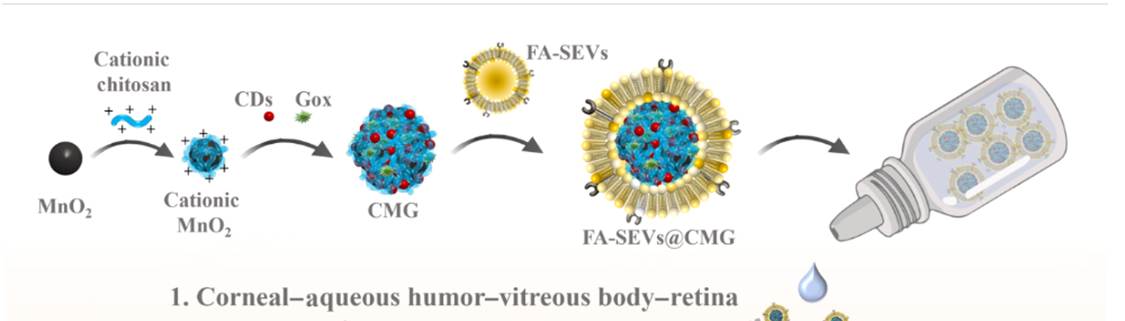
The team extracted exosomes from fresh semen collected from Duroc boars aged 10 to 18 months. Exosomes are nanoscale vesicles naturally secreted by cells. They have good biocompatibility, low immunogenicity, and the ability to cross biological barriers.
On that basis, the team loaded the exosomes with a "nanozyme weapons system" containing carbon dots, manganese dioxide, and glucose oxidase. After entering cancer cells, these components act synergistically to generate reactive oxygen species with tumor-killing capacity.
Finally, because folate levels are much higher in retinoblastoma than in healthy cells, the team also loaded folate molecules onto the exosomes to improve drug targeting.
Animal experiments showed that after only 30 days of treatment, the intraocular tumor volume in mice given the eye drops was reduced by about 97.65% compared with that in control mice. The control mice developed severe neovascularization and intraocular clouding, whereas the eyes of treated mice remained nearly physiologically transparent.
Histopathology confirmed that the eye drops, through comprehensive intraocular penetration, delivery, and killing effects, strictly confined the tumor to the lens-retina interface and prevented its spread and metastasis. Electroretinography showed that vision in treated mice was comparable to that in healthy mice, whereas retinal function in untreated mice was almost completely destroyed.
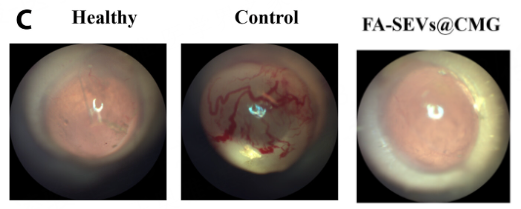
Of note, the researchers also evaluated the treatment effect of the nanozymes used alone. The results showed that without the semen-exosome coating, the eye drops could not penetrate the barriers surrounding the eyeball, and the tumors in the mice continued to grow and began to spread to other parts of the eye.
Why Pig Semen?
Although the current 5-year survival rate for retinoblastoma can exceed 90%, that is largely limited to regions with abundant medical resources. In less developed areas, survival remains far below that level.
In addition, because of the ocular barrier, patients with retinoblastoma and other posterior-segment eye diseases must contend with the ocular damage and systemic toxicity caused by invasive treatment. Some children already at high risk even have to undergo enucleation.
In an interview with the well-known biopharmaceutical media outlet Fierce Biotech, Prof. Zhang said: "During sperm migration, exosomes help sperm penetrate the physiological barriers of the female reproductive tract. That made us wonder whether these particles might also cross the barriers of the eye noninvasively."
The reason for choosing pig semen is that pig-semen exosomes are easy to obtain, well characterized, and have surface proteins similar to those seen in human biology. In addition, with the rapid development of xenotransplantation involving pig kidneys, pig livers, and other organs in recent years, substantial experience and evidence have accumulated regarding the safety of pig-derived biologics.
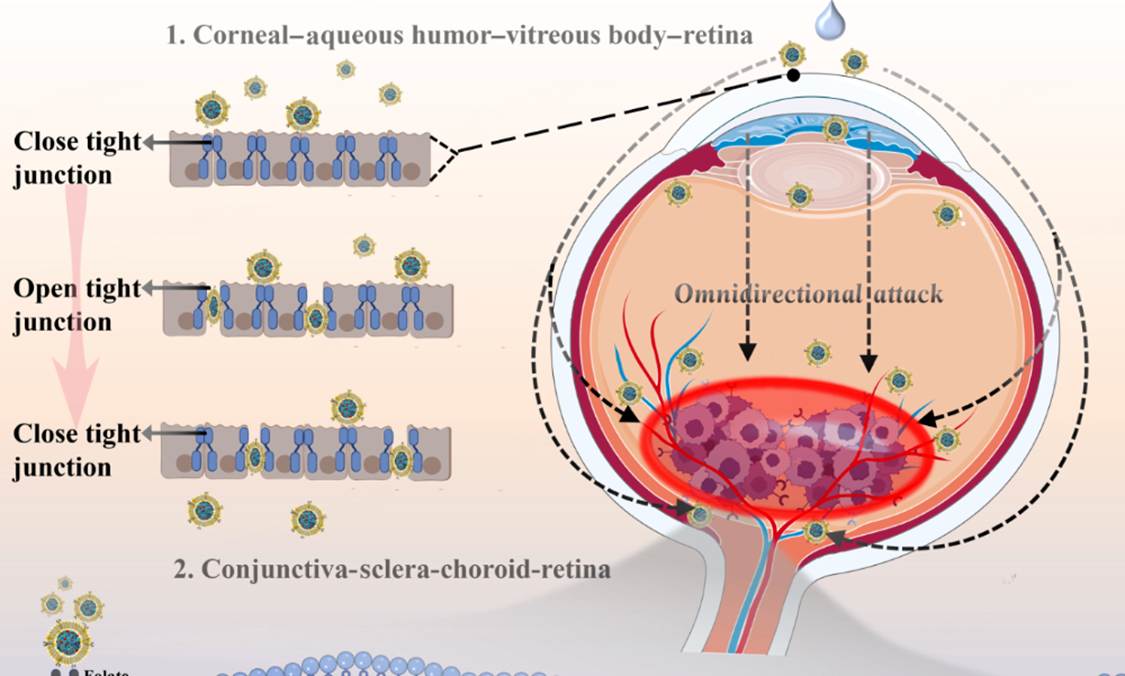
Prof. Zhang's team also found that, unlike the mechanism used to "open" the reproductive barrier, semen exosomes in the eye rely on a protein called EGF, or epidermal growth factor, to activate relevant receptors on the surface of corneal epithelial barrier cells, open a passage, and then reach the retina through the corneal and conjunctival routes in sequence, thereby surrounding the tumor on all sides.
More importantly, this temporarily "opened gate" closes again soon after treatment, restores the natural intraocular barrier reversibly, and does so without damaging any structures.
The study attracted widespread attention from international media. International Business Times commented that any therapy capable of simplifying medical management could have a major impact on health care systems. Drug delivery based on semen-derived exosomes could reshape the treatment landscape of retinoblastoma.
David Greening, a molecular proteomics researcher at the Baker Heart and Diabetes Institute in Melbourne, told Nature that an eye-drop formulation is less invasive than intraocular injection. He also noted, however, that the study remains a proof of concept and still requires human trials. It is also crucial to determine whether continuous use for more than 30 days would produce adverse effects.
Under the current study conditions, no adverse effects were detected in major organs such as the liver and kidneys of mice after 30 days of treatment, and no damage was found in the posterior ocular structures. Studies in rabbit eyes also showed that long-term use of the anticancer eye drops could significantly reduce corneal irritation and maintain stable intraocular pressure.
Prof. Zhang said that research on exosomes as drug carriers is now relatively mature. Exosomes can also carry other types of therapeutic agents, cross different kinds of biological barriers, and be explored for the treatment of other diseases.
According to reports, Prof. Zhang's team is continuing its work on pig-semen exosomes and is also examining cattle semen, in the hope of eventually advancing the therapy into human trials, although "there is still a long way to go before that step."

