


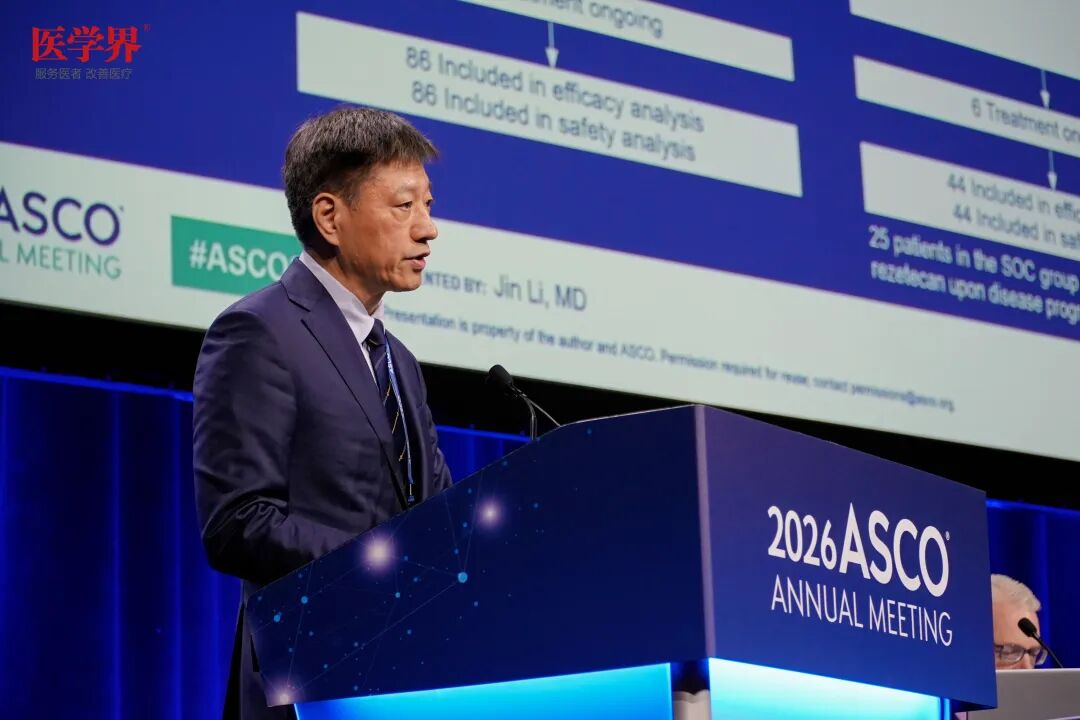
At the 2026 American Society of Clinical Oncology (ASCO) Annual Meeting, multiple original studies led by Chinese expert teams were presented. On May 31 at 9:24 local time, the phase 3 HORIZON-CRC01 trial, co-led by Prof. Jin Li from Shanghai Gaobo Cancer Hospital Affiliated to China Pharmaceutical University and Prof. Ying Yuan from the Second Affiliated Hospital, Zhejiang University School of Medicine, was released as an oral presentation.
The study evaluated the novel HER2-directed antibody-drug conjugate (ADC) trastuzumab rezetecan versus standard of care (SOC) in patients with chemotherapy-refractory, HER2-positive advanced colorectal cancer (CRC), offering a new clinical option for this difficult-to-treat population in the later-line setting. The results drew great attention from international colleagues. MedJ has compiled the key findings for our readers.
Study Design: Rigorous randomized controlled design
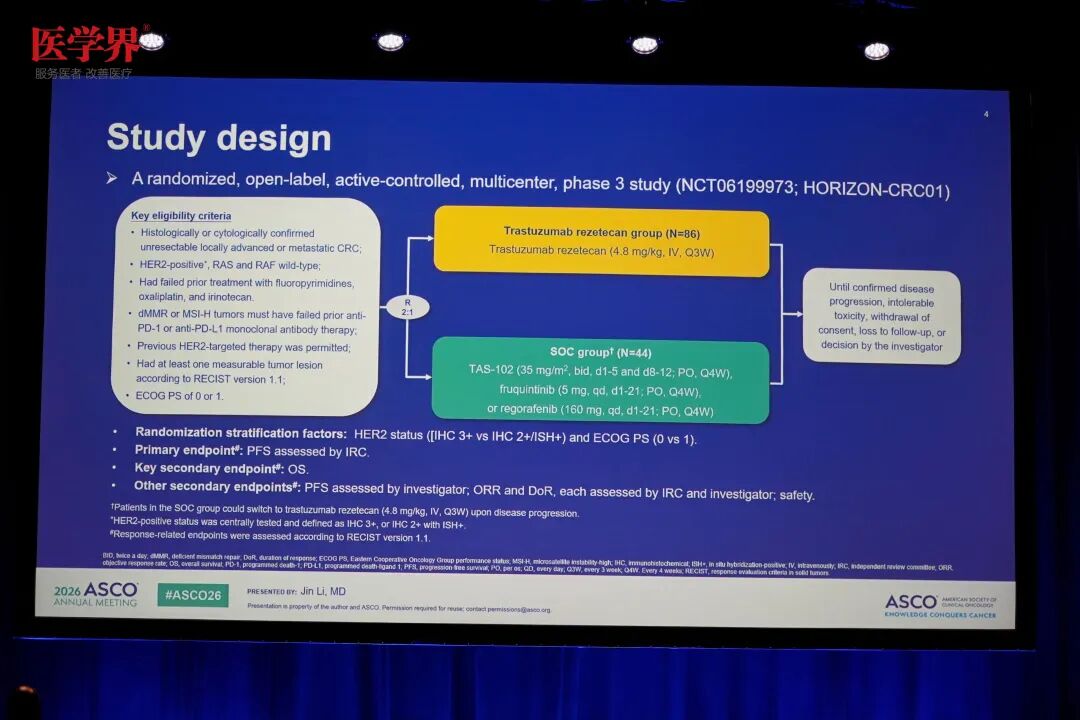
This randomized, open-label, multi-center phase 3 clinical trial enrolled 130 patients with advanced CRC who had progressed after standard second-line therapy, were HER2-positive, and had RAS and RAF wild-type status. Baseline data showed that 70.8% of patients had HER2 IHC 3+ expression, and 57.7% had an ECOG PS of 1.
Patients were randomized 2:1 to the trastuzumab rezetecan arm (n=86) (4.8 mg/kg IV on day 1 of a 21-day cycle) or the SOC arm (n=44), in which patients received current oral standard-of-care regimens including TAS-102 (35 mg/m² BID on days 1-5 and 8-12), fruquintinib (5 mg QD on days 1-21), or regorafenib (160 mg QD on days 1-21) in a 28-day cycle. The primary endpoint was progression-free survival (PFS) assessed by independent review committee (IRC) per RECIST v1.1. A key secondary endpoint was overall survival (OS).
Core Results: Significant PFS benefit
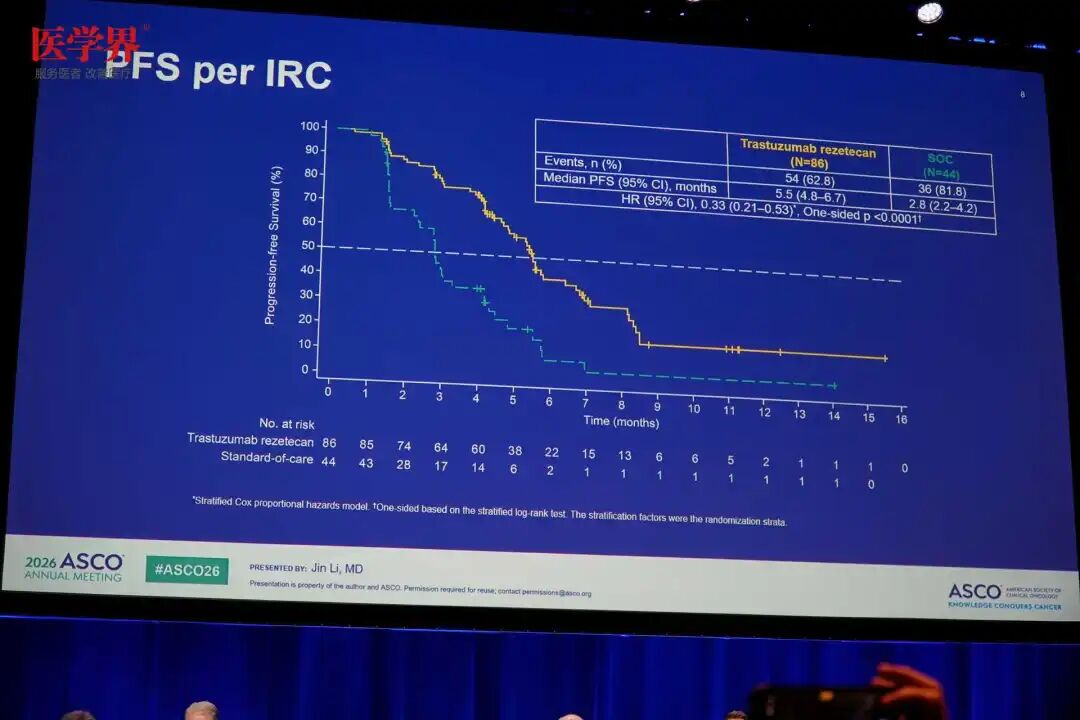
As of the data cutoff (October 31, 2025), the median follow-up duration was 9.6 months. Compared to the SOC arm, the trastuzumab rezetecan arm showed significantly prolonged PFS by IRC assessment, with median PFS of 5.5 months and 2.8 months, respectively (HR=0.33; 95% CI: 0.21–0.53; one-sided p<0.0001).
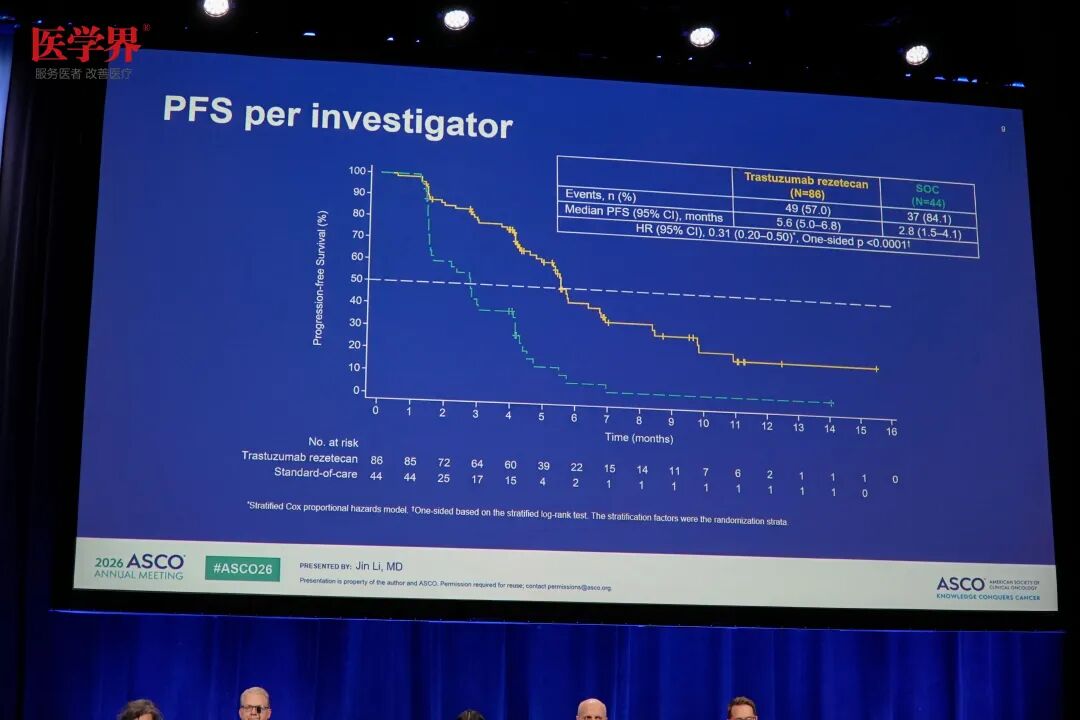
Median OS data are currently immature (not reached in either arm), but a favorable survival trend was observed in the trastuzumab rezetecan arm, with a 23% reduction in the risk of death versus the SOC arm (HR=0.77; 95% CI: 0.35–1.73). Investigator-assessed efficacy results were consistent with IRC assessments, with PFS of 5.6 months vs. 2.8 months (HR=0.31).
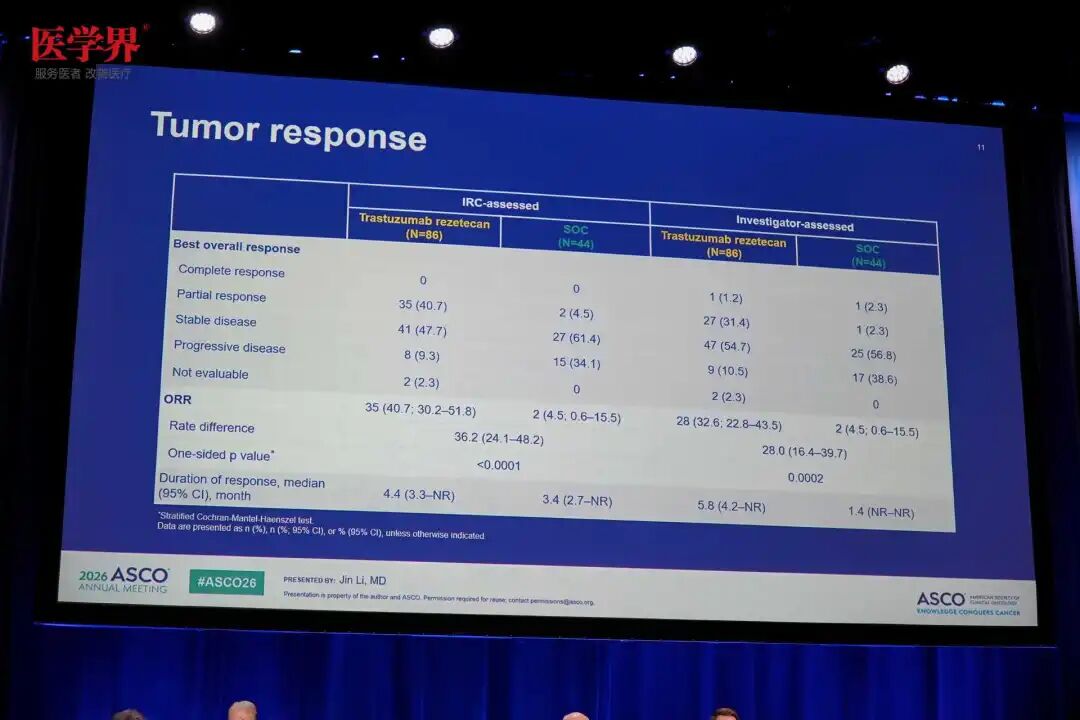
Furthermore, the IRC-assessed objective response rate (ORR) was 40.7% in the trastuzumab rezetecan arm versus only 4.5% in the SOC arm (rate difference 36.2%, p<0.0001). The median duration of response (DoR) by IRC assessment was 4.4 months in the trastuzumab rezetecan arm, superior to 3.4 months in the control arm.
Overall manageable safety profile with no new safety signals
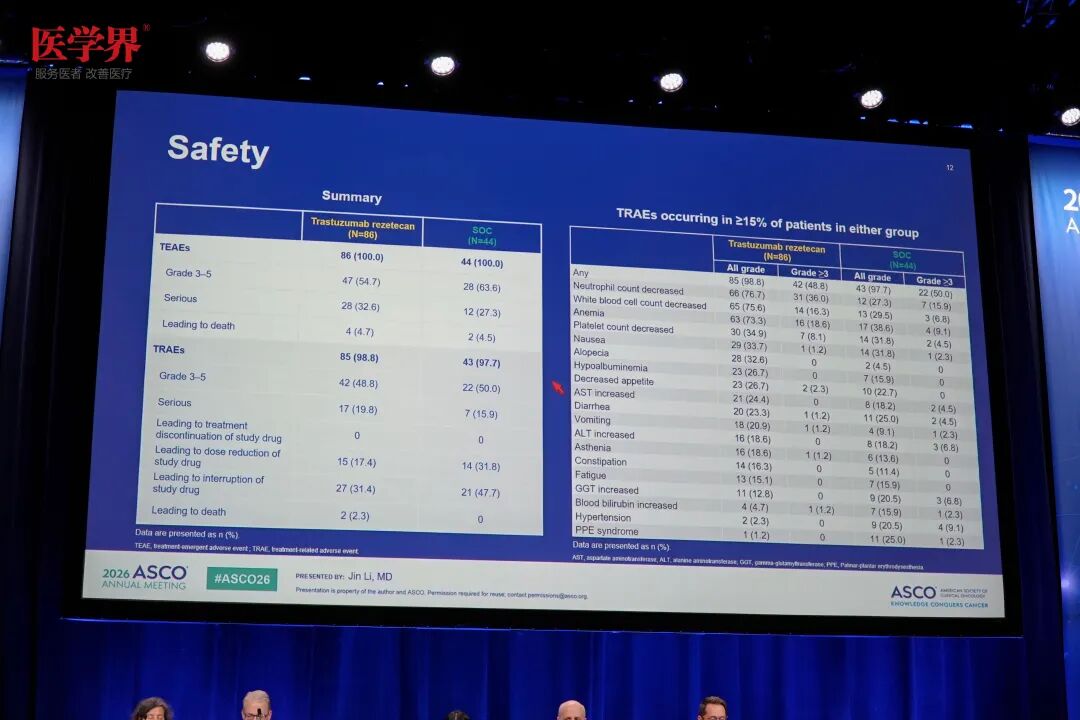
The incidence of grade ≥3 treatment-related adverse events (TRAEs) was 48.8% in the trastuzumab rezetecan arm and 50.0% in the SOC arm. No patient discontinued treatment due to TRAEs. Two treatment-related deaths (septic shock and bone marrow suppression) were reported in the trastuzumab rezetecan arm (2.3%). Overall, the safety profile of this novel ADC regimen was tolerable and manageable.
No options left for later-line CRC? This China-originated ADC may fill the treatment gap
This phase 3 study is the first to demonstrate that in patients with HER2-positive advanced CRC who have failed at least two prior lines of chemotherapy, the next-generation China-originated HER2 ADC trastuzumab rezetecan, compared to current oral standard-of-care regimens, significantly prolongs PFS and improves tumor response rate, with an overall manageable safety profile.
Based on its clear advantages in PFS and ORR, trastuzumab rezetecan is expected to challenge and upgrade the existing later-line standard of care, offering a new treatment option for patients with chemotherapy-refractory, HER2-positive advanced CRC.

