


The 2026 American Society of Clinical Oncology (ASCO) Annual Meeting is currently underway in Chicago, with multiple original clinical studies from China being presented on the global stage. The TQB2450-III-11 study (Abstract No. LBA8507), led by Prof. Yuankai Shi from the National Cancer Center/Cancer Hospital, Chinese Academy of Medical Sciences, was unveiled as a late-breaking abstract.
This phase 3 study demonstrated that the regimen of benmelstobart plus chemotherapy, followed by sequential maintenance with benmelstobart plus anlotinib, significantly improved progression-free survival in patients with EGFR/ALK/ROS1 wild-type advanced non-squamous non-small cell lung cancer (nsq-NSCLC), with a manageable overall safety profile. It has the potential to become a new first-line preferred option for this patient population. MedJ has compiled the key findings for our readers.
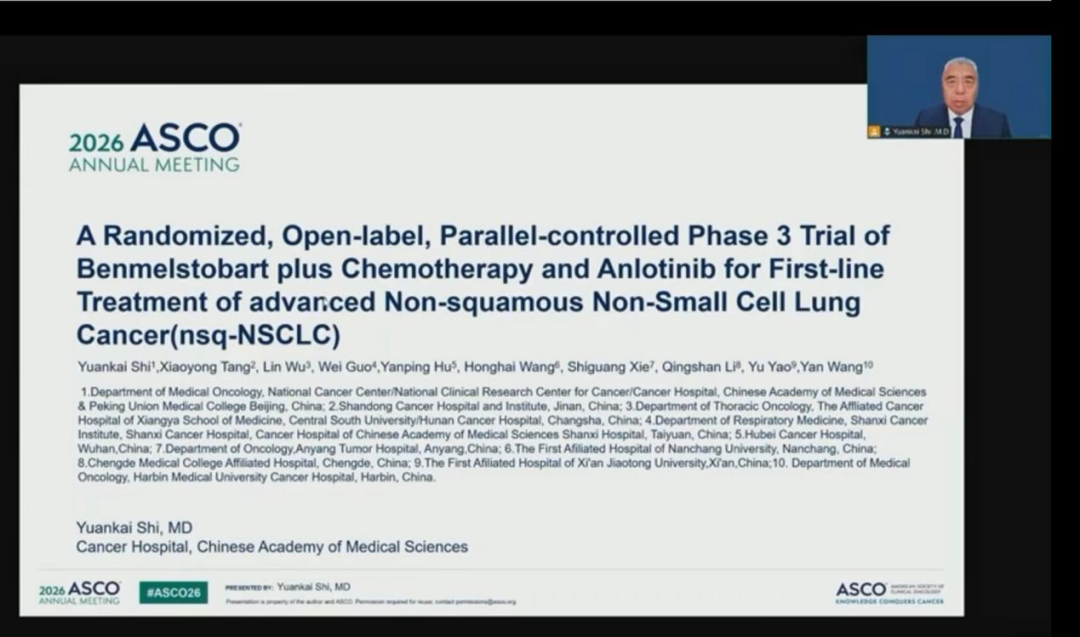
TQB2450-III-11 Study: A “Triple Combination” of Immunotherapy + Anti-Angiogenic Therapy + Chemotherapy Adds Another Chinese Regimen for First-Line Advanced nsq-NSCLC
Background: Combining Immunotherapy and Anti-Angiogenic Agents to Break Current Treatment Bottlenecks
Currently, PD-1/PD-L1 inhibitors combined with chemotherapy are the standard first-line treatment for patients with EGFR/ALK/ROS1 wild-type advanced non-squamous NSCLC. However, in clinical practice, some patients still have a poor response to existing immunotherapy combinations, and subsequent options after resistance are limited. There is an urgent need for more effective combination treatment strategies.
Extensive preclinical studies have confirmed that anti-angiogenic agents can effectively remodel the tumor microenvironment and reverse immunosuppression, working synergistically with immune checkpoint inhibitors. Benmelstobart is a PD-L1 monoclonal antibody that blocks the PD-L1 pathway and reactivates the body‘s anti-tumor immunity. Anlotinib is a domestically developed multi-target anti-angiogenic small-molecule drug that inhibits tumor angiogenesis. Combining these two with chemotherapy to create an “immuno+anti-angiogenic+chemotherapy” regimen is theoretically expected to achieve multiple synergistic effects, bringing greater survival benefits to patients with advanced lung cancer. This was the core rationale for conducting this study.
Study Design: A Randomized Controlled Phase 3 Trial Challenging the Standard Regimen
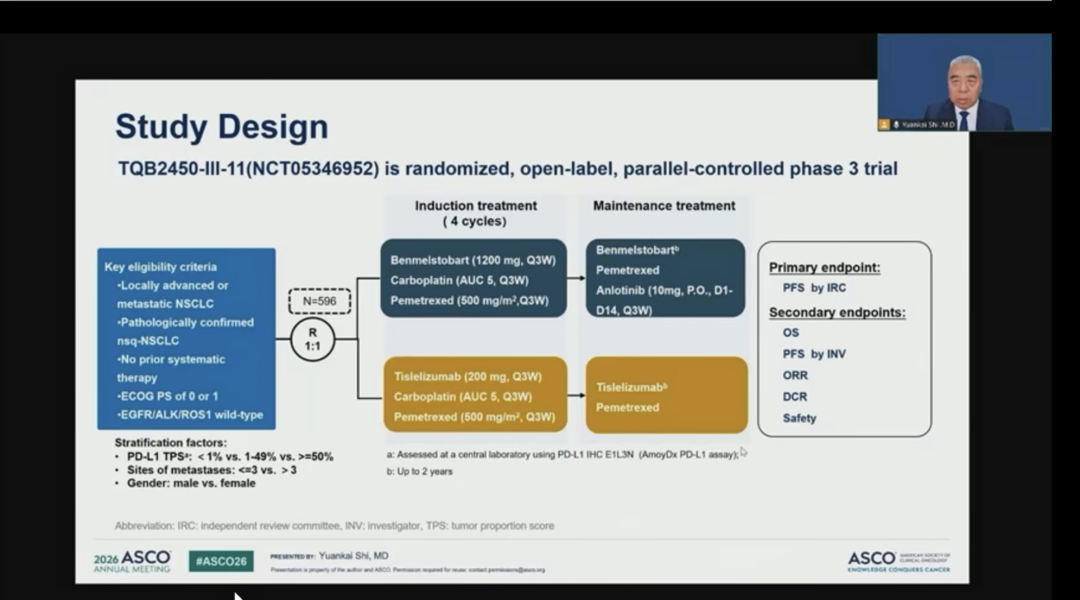
Key inclusion criteria for this study were as follows: patients had stage IIIB/C locally advanced (unsuitable for surgery or curative chemoradiotherapy) or metastatic nsq-NSCLC; had received no prior systemic therapy for advanced disease; were aged 18-75 years with ECOG performance status 0-1; and were confirmed to have EGFR wild-type, no ALK or ROS1 gene fusions.
Treatment Arms and Regimens
All patients were stratified by PD-L1 TPS expression level (<1%, 1%-49%, ≥50%) and then randomized in a 1:1 ratio into two groups:
· Experimental Arm (Bemmelstobart Arm): Benmelstobart 1200 mg (every 3 weeks) combined with platinum + pemetrexed for 4 cycles, followed by maintenance therapy with benmelstobart + anlotinib (10 mg) + pemetrexed until disease progression or unacceptable toxicity.
· Control Arm (Tislelizumab Arm): Tislelizumab 200 mg (every 3 weeks) combined with platinum + pemetrexed for 4 cycles, followed by maintenance therapy with tislelizumab + pemetrexed until disease progression or unacceptable toxicity.
Results: Significantly Prolonged PFS, Broad Subgroup Benefits, and Manageable Safety
1. Baseline Characteristics
From January 24, 2022, to May 8, 2023, a total of 596 eligible patients were enrolled and randomized 1:1. Baseline clinical characteristics were balanced between the two groups, laying the foundation for the objectivity and reliability of the study results.
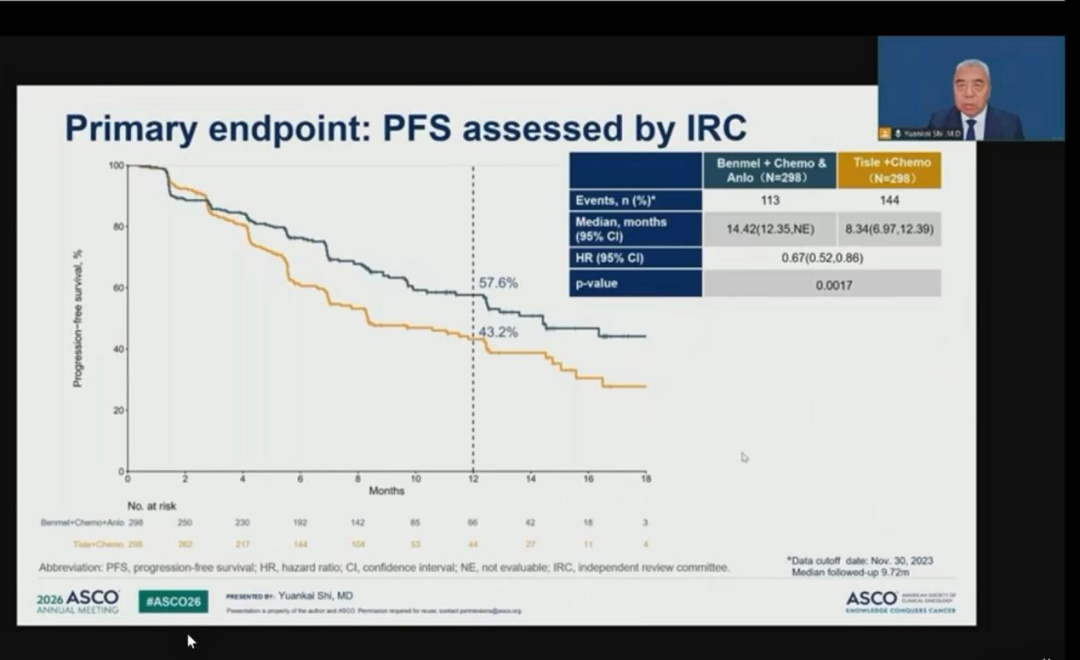
2. Primary Endpoint: Significant PFS Benefit with Substantial Reduction in Disease Progression Risk
Efficacy data showed that the median progression-free survival in the experimental arm was 14.42 months (95% CI: 12.35–NE), compared to 8.34 months (95% CI: 6.97–12.39) in the control arm. The between-group HR was 0.67 (95% CI: 0.52–0.86, P=0.0017), representing a statistically significant 33% reduction in the risk of disease progression.
3. Subgroup Analysis: Benefit Across All Populations, Bringing New Hope for Vulnerable Groups
Subgroup analysis results suggest that nearly all patient subgroups derived benefit from the benmelstobart-based regimen. Two groups showed particularly prominent benefits: patients with ECOG performance status 0 had an HR of 0.36 (95% CI: 0.20–0.65), representing a 64% reduction in disease progression risk; patients with low PD-L1 expression (TPS <1%) had an HR of 0.61 (95% CI: 0.43–0.86), effectively addressing the shortfall of traditional immunotherapy in this group.
4. Safety: Comparable Overall Safety Profile with No New Safety Signals
The overall safety profiles of the two groups were similar, and no unexpected adverse events were observed.
· Incidence of any-grade treatment-emergent adverse events: 92.28% in the benmelstobart arm vs. 90.94% in the tislelizumab arm.
· Incidence of grade ≥3 TEAEs: 56.38% in the benmelstobart arm vs. 48.66% in the tislelizumab arm.
· Incidence of immune-related adverse events: 19.13% vs. 18.46%, respectively, indicating overall comparable rates.
Overall survival data are currently immature, and long-term survival results await further follow-up.
Summary
TQB2450-III-11 is a landmark clinical study and one of the earliest phase 3 trials to explore a PD-L1 inhibitor combined with chemotherapy followed sequentially by an anti-angiogenic agent for first-line treatment of advanced non-squamous NSCLC. Several notable highlights include:
1. Significant efficacy improvement: The median PFS differed by more than 6 months between the two groups, providing patients with longer progression-free survival compared to the current standard regimen.
2. Broad applicability: The regimen is effective across PD-L1 expression levels and performance statuses, particularly benefiting the clinically challenging population with low PD-L1 expression.
3. All-China innovative drugs: The regimen consists entirely of domestically developed innovative drugs, once again demonstrating China’s strength in anti-cancer drug R&D and contributing a Chinese option to global lung cancer care.
4. Favorable safety profile: The safety characteristics are similar to traditional regimens, with good tolerability, supporting broad clinical adoption.
The positive results announced at ASCO confirm that the benmelstobart plus chemotherapy followed by sequential anlotinib regimen has the potential to reshape the first-line treatment landscape for advanced nsq-NSCLC. We await the mature OS data and hope to see this innovative all-China combination approved and implemented soon, bringing new treatment options and hope for survival to more lung cancer patients.

