


In the second half of 2026, cardiovascular drug development awaits a Phase III readout that may reshape an entire field. Novartis’s pelacarsen, an antisense oligonucleotide (ASO) targeting LPA mRNA, is approaching the final analysis of the Lp(a) HORIZON trial. LPA encodes apolipoprotein(a), the key structural component of the Lp(a) particle. The HORIZON trial — a large cardiovascular outcomes study enrolling 8,323 patients — is taking Lp(a) development to a decisive step: after demonstrating ~80% Lp(a) reduction, the next question is whether this biochemical improvement translates into reductions in myocardial infarction, stroke, and cardiovascular death. If the answer is yes, pelacarsen may become the world’s first drug specifically targeting Lp(a) with cardiovascular event reduction as its therapeutic goal, a genuine first-in-class. More importantly, it would validate the target itself, turning a risk marker identified in the 1960s into an actionable therapeutic axis.
Behind pelacarsen, Amgen’s olpasiran, Lilly’s lepodisiran, and the first oral small-molecule Lp(a) inhibitor muvalaplin have formed a strong second wave. Competition is shifting rapidly from “can we lower Lp(a)?” to “who can lower Lp(a) more deeply, more durably, and more conveniently — and ultimately reduce cardiovascular events?”
This makes Lp(a) one of the very few targets in cardiovascular medicine that combines a massive potential patient base, clear genetic evidence, multiple competing drug technologies, and tens of billions of dollars in commercial potential.
A 60-Year Therapeutic Void
Lp(a) is not a routine cholesterol. Structurally, it is built on a low-density lipoprotein (LDL)-like particle containing apolipoprotein B-100 (apoB-100), but is additionally linked through a disulfide bond to a unique apolipoprotein(a), or apo(a). This extra apo(a) confers pro-inflammatory and potential pro-thrombotic properties beyond the atherogenic activity of ordinary LDL. Lp(a) is therefore implicated in atherosclerosis, inflammation, and thrombosis, and is associated with elevated risk of coronary heart disease, myocardial infarction, ischemic stroke, and calcific aortic valve stenosis. Globally, approximately 20-25% of the population has elevated Lp(a) — a potential population approaching one billion.
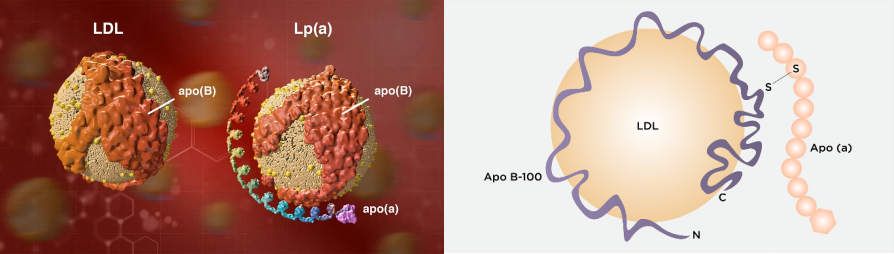 Fig. 1. Schematic of Lp(a) (lipoprotein(a)) structure
Sources: left, Amgen; right, Family Heart Foundation
Lp(a) stands apart from standard lipids because of its biology. Circulating Lp(a) is largely determined by the LPA gene; levels are usually stable across adulthood and are largely set from childhood. Diet, exercise, and weight loss can improve many cardiovascular risk factors, but rarely move Lp(a). Statins cannot effectively reduce Lp(a) and may even modestly raise it in some cases. This explains why Lp(a) has occupied a peculiar position for decades: clinicians know it is dangerous and can identify high-risk individuals through blood testing, yet no drug has been approved specifically to lower it.
Proprotein convertase subtilisin/kexin type 9 (PCSK9) inhibitors can reduce Lp(a) modestly as a side benefit, but their core therapeutic target remains LDL-C, leaving the Lp(a) treatment gap open. In 2026, this state of affairs took on new significance: the updated ACC/AHA dyslipidemia management guideline now formally recommends that all adults have Lp(a) measured at least once in their lifetime, with Lp(a) ≥125 nmol/L or ≥50 mg/dL regarded as an enhanced atherosclerotic cardiovascular disease (ASCVD) risk factor. Lp(a) has thus completed its transition from a relatively peripheral lab marker to a routine cardiovascular risk factor. With the theoretical foundation in place, the next critical step is clinical data from drug development.
From “Can’t Lower It” to >90%: Nucleic Acid Drugs Open the Lp(a) Door
Lp(a) drug development advanced substantially with the maturation of liver-targeted nucleic acid technology. The great majority of human apo(a) is synthesized in the liver, and the core abnormality of Lp(a) is driven directly by the LPA gene — an almost ideal setting for nucleic acid intervention, which can reduce apo(a) production at its source rather than trying to clear already-formed complex lipoprotein particles from circulation.
Pelacarsen takes the antisense oligonucleotide (ASO) route. Through N-acetylgalactosamine (GalNAc) conjugation, it targets hepatocytes; once inside, it binds LPA mRNA and reduces apo(a) protein synthesis, ultimately lowering Lp(a) from the source. GalNAc hepatocyte targeting markedly improved ASO exposure in hepatocytes, lifting potency substantially over earlier ASO generations. In a Phase II study of 286 patients with cardiovascular disease, pelacarsen showed clear dose-dependent activity: the highest regimen reduced Lp(a) by a mean of 80%, and 98% of patients ultimately reached <50 mg/dL.
Small interfering RNA (siRNA) drugs then pushed this further. Amgen’s olpasiran also targets LPA mRNA but uses an siRNA mechanism. After hepatocyte entry, its antisense strand is loaded into the RNA-induced silencing complex (RISC), where it repeatedly recognizes and degrades LPA mRNA to suppress apo(a) synthesis. Because a single RISC can act on many mRNA molecules, siRNA generally offers very durable activity. In the Phase II OCEAN(a)-DOSE study, olpasiran administered every 12 weeks reduced Lp(a) by more than 95% at higher doses, with some dose groups approaching a mean 100% reduction.
Lilly’s lepodisiran extends the durability advantage further. In the Phase II ALPACA study, 400 mg lepodisiran achieved a placebo-adjusted mean Lp(a) reduction of 93.9% over days 60-180; after a single 400 mg dose, the time-averaged reduction from day 30 to day 360 still reached 88.5%.
The field has therefore completed a striking technological leap. The question a few years ago was “can this genetically determined lipoprotein be lowered at all”; today’s question is “by 80%, 90%, or 95%, and how long does a single dose last?”
Lilly has opened a fundamentally different route alongside siRNA. Its oral small-molecule candidate muvalaplin, developed for elevated Lp(a)-associated ASCVD, does not enter hepatocytes to intervene at the RNA level; instead, it directly blocks Lp(a) particle formation. Lp(a) generation requires apo(a) first to engage apoB in a non-covalent interaction, then to form a stable covalent disulfide bond. Muvalaplin blocks the initial step of apo(a)-apoB assembly, preventing intact Lp(a) particles from forming. It is the first oral small-molecule formation inhibitor to enter human development and to demonstrate meaningful Lp(a) reduction, and is therefore a first-in-class in both mechanism and route of administration.
Pelacarsen’s Phase III Verdict
The Lp(a) HORIZON trial will mark the field’s transition from biomarker improvement to clinical-outcome validation. This Phase III study enrolled 8,323 patients with established cardiovascular disease and Lp(a) ≥70 mg/dL; pelacarsen is administered at 80 mg subcutaneously once monthly. Primary endpoints include cardiovascular death, non-fatal myocardial infarction, non-fatal stroke, and urgent coronary revascularization requiring hospitalization, with separate evaluation of the higher-risk subgroup with baseline Lp(a) ≥90 mg/dL.
The trial will provide critical evidence on the clinical value of Lp(a) as a cardiovascular therapeutic target. The association between Lp(a) and cardiovascular disease already rests on extensive genetic, epidemiologic, and mechanistic data, but drug development must ultimately answer a more rigorous question: does lowering Lp(a) change clinical outcomes?
The LDL-C treatment paradigm was built on a continuous stream of randomized trials validating cardiovascular outcome benefits. Lp(a) is now taking the same decisive step: demonstrating that significant Lp(a) reduction yields further reductions in major adverse cardiovascular events. Lp(a) is crossing the same threshold.
Novartis CEO Vas Narasimhan offered a notable framing in July 2026: if pelacarsen ultimately delivers a 13-15% relative reduction in cardiovascular events, the company would regard it as a clinically meaningful success. The study is statistically powered around higher risk-reduction magnitudes in the overall ≥70 mg/dL population and the ≥90 mg/dL high-level subgroup, respectively.
Lp(a) HORIZON will simultaneously validate pelacarsen’s clinical value and the druggability of Lp(a) as an independent cardiovascular target. If positive, Lp(a) could form a new intervention pathway alongside existing LDL-C management, and provide important clinical evidence to support the development of olpasiran, lepodisiran, and other follow-on agents.
Best-in-Class on an Empty Field
Although no Lp(a)-specific therapy has yet reached the market, the best-in-class contest is already heating up. Pelacarsen has first-mover advantage but faces strong challenges from later entrants.
Amgen’s olpasiran has entered the OCEAN(a)-Outcomes Phase III study with 7,297 patients, given every 12 weeks, evaluating risk of coronary heart disease death, myocardial infarction, and urgent coronary revascularization in patients with established ASCVD; the trial is expected to complete in 2028.
More notably, Amgen has pushed competition into primary prevention. OCEAN(a)-PreEvent plans to enroll approximately 11,000 individuals without prior major cardiovascular events but with elevated Lp(a) plus multiple risk factors or evidence of atherosclerosis, directly testing whether olpasiran can prevent the first major cardiovascular event. The commercial implications are substantial: secondary prevention targets patients who have already experienced MI, stroke, or a confirmed cardiovascular diagnosis, whereas primary prevention targets a much larger population of “high Lp(a) + high risk but event-naive” individuals. If Lp(a) ultimately enters primary prevention, the market boundary extends from a defined high-risk cardiovascular patient population to truly population-scale risk management.
Lilly’s strategy is even more aggressive. The ACCLAIM-Lp(a) Phase III study of lepodisiran plans to enroll approximately 17,300 patients, including both patients with established ASCVD and individuals at high risk of a first cardiovascular event, with completion expected in 2029. Lilly is not, however, choosing between siRNA and an oral small molecule — it is pursuing both. Its small-molecule candidate muvalaplin has entered the MOVE-Lp(a) Phase III outcomes study with approximately 10,450 patients, again covering both prior ASCVD populations and those at high risk of a first event, with an anticipated timeline extending to 2031. This gives Lilly a rare dual-platform play: lepodisiran representing an ultra-long-acting injectable nucleic acid, and muvalaplin representing a once-daily oral small molecule.
If both ultimately demonstrate cardiovascular benefit, the Lp(a) market could split along product tiers familiar from other large chronic-disease categories: some patients choosing long-acting injectables dosed at multi-month intervals, others better served by daily oral medication. By then, the core competition will no longer be first-in-class but rapidly best-in-class.
A Multi-Billion-Dollar Market
From a patient-base and clinical-need perspective, Lp(a) has the foundations of a major cardiovascular drug class. The 2026 ACC/AHA dyslipidemia management guideline pushes Lp(a) testing further into routine risk assessment, explicitly recommending that all adults be tested at least once. The guideline notes that approximately 20% of the population has Lp(a) ≥50 mg/dL, a level associated with roughly a 40% relative increase in ASCVD risk; at ≥100 mg/dL, ASCVD risk approximately doubles. Lp(a) is also largely genetically determined, with high levels often implying decades of sustained risk exposure.
These factors form Lp(a)’s strongest commercial underpinning: a massive eligible patient population, mature testing infrastructure, growing guideline endorsement of screening, and a specific treatment gap that remains unfilled. Even within the most immediate secondary-prevention opportunity, Ionis estimates that more than 8 million people globally already have both cardiovascular disease and elevated Lp(a) — a base large enough to support a major specialty drug market. As primary-prevention studies advance, the eligible population could expand further.
Capital markets have priced this opportunity accordingly. Needham estimated in 2026 that the addressable treatment market for high-risk Lp(a) patients exceeds $8 billion, and on the assumption of a 20-25% major cardiovascular event risk reduction in HORIZON, projected peak annual sales of pelacarsen at approximately $2.7 billion. Novartis lists pelacarsen as a core asset with potential peak sales in the multi-billion-dollar range.
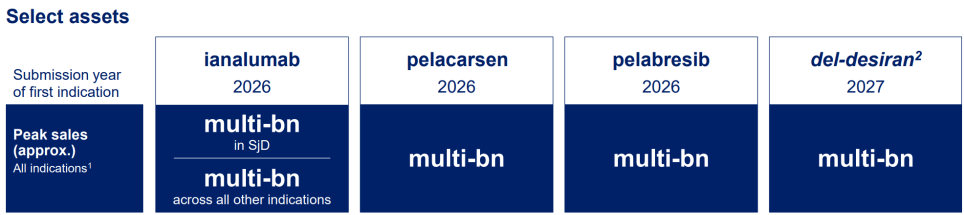 Fig.2. Sales Forecast for Novartis Pipeline Assets
Source: Novartis
Pelacarsen represents only the first asset to reach this commercial inflection point. Argus estimated in 2026 that the Lp(a)-driven cardiovascular risk-reduction market could reach $15-20 billion annually, with further growth expected as screening expands and guideline endorsement deepens. Its peak-sales projection for Amgen’s olpasiran already sits at $3-6 billion. Different institutions use different patient-range, pricing, and penetration assumptions, but the projections converge on a clear direction: Lp(a) is forming a major cardiovascular market capable of accommodating multiple blockbuster agents.
The commercial moment HORIZON is approaching may well mark the start of a megablockbuster drug category. Cardiovascular medicine rarely sees a target that simultaneously combines a vast patient base, a clear genetic foundation, durable treatment demand, and competition across multiple drug modalities. Once cardiovascular outcome trials complete their key validation, Lp(a) has the conditions to grow rapidly from a long-identified risk factor into a multi-billion-dollar therapeutic franchise.
References
[1] New treatments for common cardiovascular risk factor near the market, with billions at stake. STAT. 26.08.2026.
[2] 2025 Annual Shareholders Meeting Corporate Update. Ionis Corporate Presentation. Jun. 2025.
[3] Novartis growth story. Novartis Corporate Presentation. 12.01.2026.
[4] Lipoprotein(a): A Genetically Determined, Causal, and Prevalent Risk Factor for Atherosclerotic Cardiovascular Disease: A Scientific Statement From the American Heart Association. Arterioscler Thromb Vasc Biol. 2022;42:e48-e60. DOI:10.1161/ATV.0000000000000147
[5] Lipoprotein(a) Reduction in Persons with Cardiovascular Disease. N Engl J Med 2020;382:244-255. DOI:10.1056/NEJMoa1905239
[6] Design and Rationale of Lp(a) HORIZON Trial: Assessing the Effect of Lipoprotein(a) Lowering With Pelacarsen on Major Cardiovascular Events in Patients With CVD and Elevated Lp(a). American Heart Journal. Volume 287, September 2025, Pages 1-9. <https://doi.org/10.1016/j.ahj.2025.03.019>
[7] Lepodisiran — A Long-Duration Small Interfering RNA Targeting Lipoprotein(a). N Engl J Med 2025;392:1673-1683. DOI:10.1056/NEJMoa2415818
[8] Argus Weekly Staff Report. Vol. 93, No. 69. 25.05.2026.

