


From March 25 to 28, 2026, the European Lung Cancer Congress (ELCC 2026) was grandly held in Copenhagen, Denmark, bringing the latest clinical research advances and academic achievements in lung cancer to experts, scholars, and professionals worldwide.
Among the highlights, a Phase Ib/II study led by Prof. Yilong Wu from Guangdong Provincial People’s Hospital, entitled “A Phase Ib/II Study Evaluating the Efficacy and Safety of the HER3-Targeted Antibody–Drug Conjugate (ADC) SHR-A2009 in Combination with the Third-Generation EGFR-TKI Aumolertinib in First-Line and Later-Line Treatment of EGFR-Mutant Non-Small Cell Lung Cancer (NSCLC),” was presented as an oral report [1], attracting widespread attention.
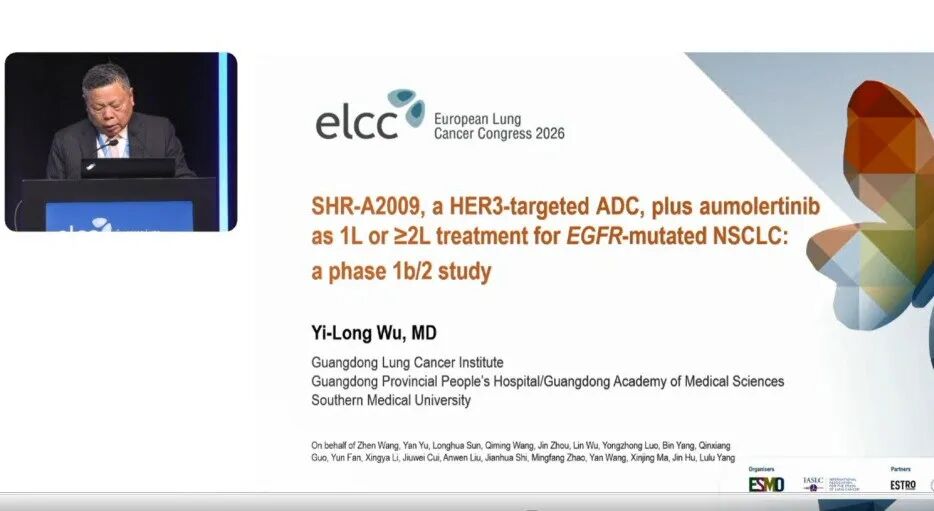
Fig. 1. Presentaion by Prof. Yilong Wu
SHR-A2009 Plus Aumolertinib: Precision Targeted Combination Opens New Exploration in First-Line Therapy
SHR-A2009 is a novel HER3-targeted ADC composed of an anti-HER3 IgG1 monoclonal antibody, a cleavable linker, and a DNA topoisomerase I inhibitor payload. This is a multi-part Phase Ib/II clinical study designed to explore the optimal dose, safety, and efficacy of SHR-A2009 in combination with aumolertinib in advanced EGFR-mutant NSCLC.
The core data presented in this report were derived from two cohorts: PA1 (later-line treatment cohort) and PA2 (first-line treatment cohort). In the PA2 cohort, treatment-naïve patients were randomized to either a continuous combination group (R1: SHR-A2009 6 mg/kg + aumolertinib 110 mg) or a combination followed by aumolertinib monotherapy maintenance group (R2), to determine the optimal dosing strategy for subsequent pivotal studies [1].
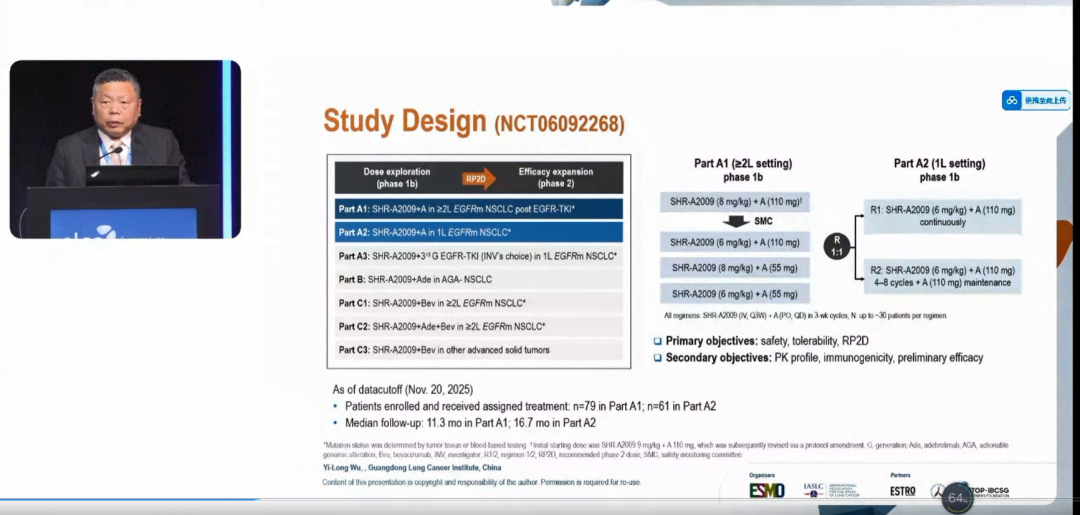
Fig. 2. Study Desgin
Efficacy Results
As of the data cutoff on November 20, 2025, the study results showed that among the 61 patients receiving first-line treatment (PA2) (96.7% with ECOG performance status 1; 98.4% with stage IV disease), the median follow-up time was 16.7 months [1].
Among efficacy-evaluable patients, the confirmed objective response rate (ORR) in the R1 group (continuous combination therapy) reached 77.4% (24/31; 95% CI 58.9–90.4), while the ORR in the R2 group (combination followed by monotherapy maintenance) was 66.7% (20/30; 95% CI 47.2–82.7).
The disease control rate (DCR) exceeded 90% in both groups, at 96.8% and 90.0%, respectively. The median duration of response (mDoR) had not yet been reached (NR) at a median follow-up of 16.7 months. Progression-free survival (PFS) data were still immature, with only 18% maturity; however, the 12-month PFS rate was as high as 87.2% (95% CI 75.0–93.7). These data indicate that SHR-A2009 combined with aumolertinib as first-line therapy can induce deep and durable tumor responses.
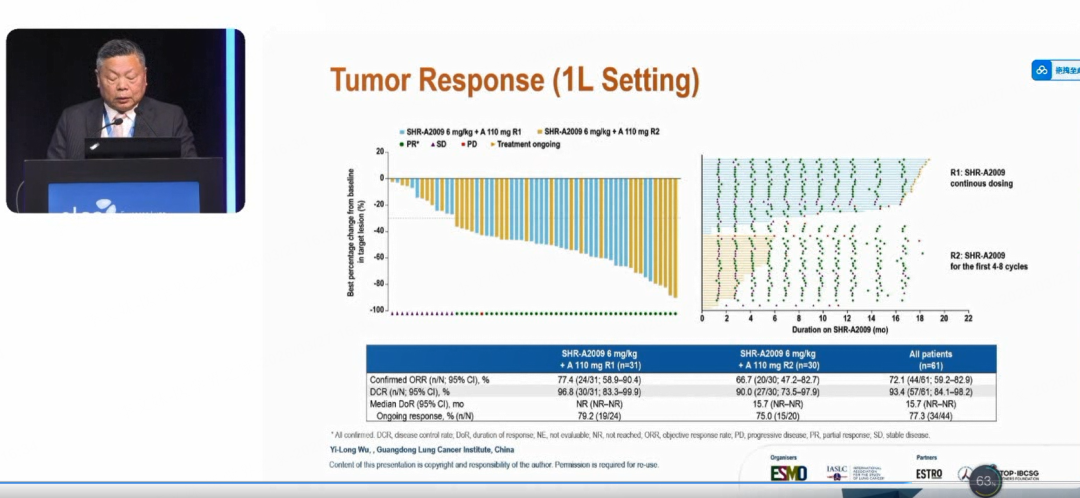
Fig. 3. Tumor Response in First-Line Treatment
In the later-line treatment cohort (PA1), the SHR-A2009 6 mg/kg + aumolertinib 110 mg group (n = 32) achieved an ORR of 43.8% and a median PFS of 8.1 months, demonstrating clear antitumor activity in previously treated patients [1].
Safety Results
In terms of safety, in the first-line cohort (PA2), the incidence of grade ≥3 treatment-related adverse events (TRAEs) was 31.3%. Discontinuation due to TRAEs occurred in 13.1% of patients for SHR-A2009 and 4.9% for aumolertinib. The incidence of interstitial lung disease (ILD) was 4.9% (with 1.6% being grade ≥3) [1].
In the later-line cohort (PA1), the incidence of grade ≥3 TRAEs was 59.5%. Discontinuation due to TRAEs occurred in 7.6% of patients for both SHR-A2009 and aumolertinib. The incidence of ILD was 7.6% (with 3.8% being grade ≥3). One treatment-related death occurred during the study (in the PA2 cohort; cause unknown) [1].
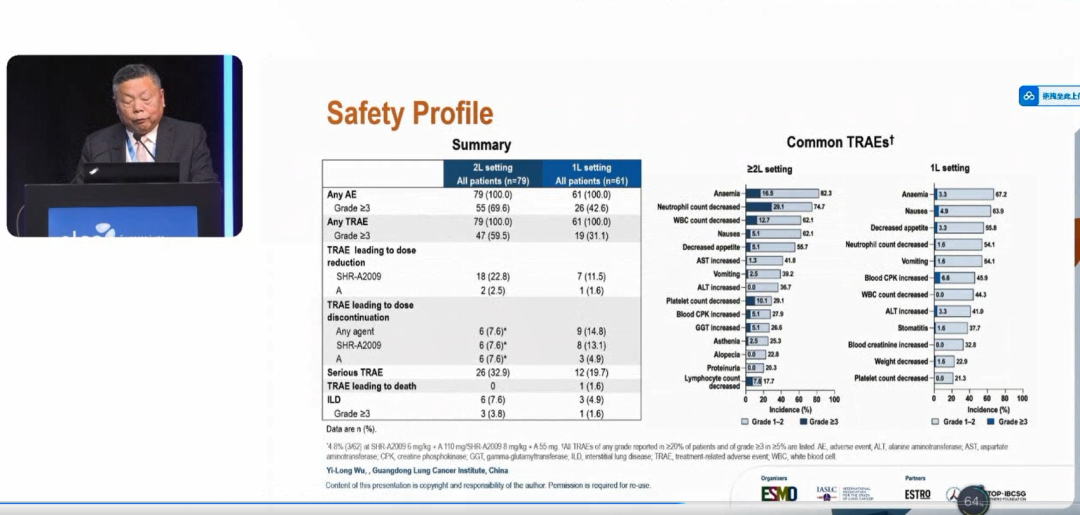
Fig. 4. Safety Results
Prof. Yilong Wu stated during the presentation: “The SHR-A2009 plus aumolertinib regimen has demonstrated encouraging antitumor activity and manageable safety in both first-line and later-line treatment of advanced EGFR-mutant NSCLC, bringing new therapeutic hope to patients. Based on the results of this study, the continuous dosing regimen of SHR-A2009 6 mg/kg combined with aumolertinib 110 mg has been selected as the pivotal study regimen for first-line treatment.”
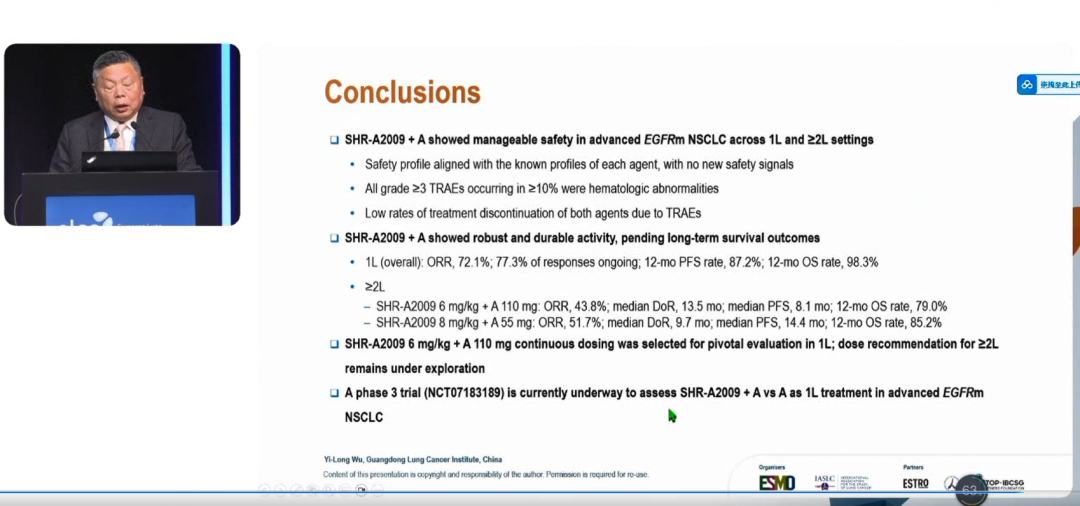
Fig. 5. Study Conclusion
Phase III Study Underway, Promising Future Ahead
Currently, a Phase III clinical trial (NCT07183189) evaluating SHR-A2009 plus aumolertinib versus aumolertinib monotherapy as first-line treatment for EGFR-mutant NSCLC is ongoing. This study is expected to provide confirmatory evidence for this innovative combination strategy and may further reshape the first-line treatment landscape for advanced EGFR-mutant lung cancer.
Reference:
[1]Wu Y, et al. SHR-A2009, a HER3-targeted ADC, plus aumolertinib (A) as 1L or ≥2L treatment for EGFR-mutated (EGFRm) NSCLC: A phase Ib/II study. 2026 ELCC. 10MO.

