


A recent publication in the Journal of Hematology & Oncology reports a complete translational medicine investigation that addresses a key unmet need in primary central nervous system large B-cell lymphoma (PCNS-LBCL): the difficulty of conventional drugs in crossing the blood-brain barrier, and the substantial toxicity and poor tolerability of high-dose methotrexate (MTX)-intensified chemotherapy. The study demonstrates the efficacy and monitoring value of orelabrutinib — a highly selective BTK inhibitor — combined with MTX as first-line treatment for newly diagnosed PCNS-LBCL. This article, reviewed by Prof. Hui Zhou and Prof. Caiqin Wang of Hunan Cancer Hospital, presents a comprehensive interpretation of the study.
Expert Profile: Prof. Hui Zhou
• Doctor of Oncology, Professor, Chief Physician, Master's Supervisor
• Member of the Party Committee and Vice President, Hunan Cancer Hospital
• Member, Expert Committee on Lymphoma Quality Control, National Cancer Quality Control Center
• Vice Chair, Lymphoma Specialty Committee, China Anti-Cancer Association
• Vice Chair, Integrated Rehabilitation of Lymphoma Specialty Committee, China Anti-Cancer Association
• Director, Hunan Provincial Lymphoma Diagnosis and Treatment Center
• Director, Hunan Provincial Engineering Research Center for Precision Diagnosis and Treatment of Lymphoma
• Member, Lymphoma Group, Oncology Branch, Chinese Medical Association
• Member, Translational Oncology Group, Oncology Branch, Chinese Medical Association
• Standing Member, Lymphoma Expert Committee, Chinese Society of Clinical Oncology (CSCO)
• Vice Chair-elect, Oncology Internal Medicine Specialty Committee, Hunan Provincial Medical Association
Expert Profile: Dr. Caiqin Wang
• Attending Physician, Department of Lymphoma and Hematology, Hunan Cancer Hospital
• Main research direction: mechanisms and clinical-translation research on drugs that enhance anti-tumor immune responses
• Has published multiple papers as first/corresponding author in Journal for ImmunoTherapy of Cancer, Cancer Communications, Journal of Advanced Research, Journal of Translational Medicine, and other journals, including three with an impact factor above 10
• Holds one authorized invention patent as first inventor
• Principal investigator on two national- and provincial-level grants, plus one postdoctoral startup fund
• Member, Tumor Immunotherapy Specialty Committee, Chinese Elderly Health Care Association
• Member, Stem Cell Therapy and CAR-T Cell Therapy Branch, Guangdong Health Science Popularization Promotion Association
 Fig. 1. Study Screenshot
A Full-Dimensional Translational Evidence Chain: A Stratified, Progressive Study Design
The study builds a complete evidence chain spanning “basic mechanism → animal model → prospective clinical → real-world → liquid biopsy”:
1. Basic Molecular Mechanism Experiments.
The study included 30 PCNS-LBCL tumor tissue samples, comparing PIM1 expression between MyD88 wild-type and MyD88L265P-mutant samples. Co-immunoprecipitation, protein co-localization, ubiquitination/phosphorylation and protein half-life experiments were used to dissect the interaction-regulatory pathways among MyD88, BTK and PIM1. The effect of orelabrutinib on PIM1 at the protein and transcriptional levels was verified in primary tumor cells, and PIM1 overexpression was used to confirm its functional role in orelabrutinib’s anti-proliferative and pro-apoptotic effects.
2. Intracranial Xenograft Preclinical Models.
Cell-line-derived (CDX) and patient-derived (PDX) intracranial tumor-bearing mouse models were constructed, with three treatment arms: orelabrutinib monotherapy, MTX monotherapy, and the two-drug combination. Drug blood-brain barrier penetration efficiency and brain-tissue drug exposure were measured, and tumor burden, apoptosis levels and Ki67 proliferation index were compared across arms.
3. Prospective Dose-Escalation Clinical Cohort.
A BOIN dose-escalation design enrolled 13 newly diagnosed PCNS-LBCL patients, who received the orelabrutinib + MTX induction regimen (ORMD); patients achieving complete remission (CR/CRu) continued on orelabrutinib maintenance.
4. Single-Center Real-World Propensity-Score-Matched Analysis.
The study enrolled real-world patients from Huashan Hospital; 1:2 propensity-score matching yielded 27 patients receiving the ORMD regimen and 54 patients receiving the conventional rituximab + MTX (RMD) induction regimen. Multivariable regression compared objective response rate (ORR), progression-free survival (PFS) and overall survival (OS) between the two groups, identifying independent prognostic factors.
5. CSF / Plasma / Tissue ctDNA Comparative Study.
A total of 47 paired tumor-tissue, CSF and peripheral-plasma samples were collected; a 475-gene sequencing panel compared mutation-spectrum concordance among the three. CSF ctDNA was dynamically monitored in the prospective cohort to analyze the association of ctDNA clearance or fluctuation with efficacy and disease relapse.
Study Results
1.Core Molecular Mechanism: MyD88L265P Stabilizes PIM1 via BTK, and Orelabrutinib Reverses the Process
- l MyD88L265P mutation stabilizes the PIM1 oncoprotein by enhancing BTK–PIM1 interaction, significantly upregulating tissue PIM1 protein expression. BTK phosphorylates PIM1 at the S36 and S261 sites; S36 phosphorylation protects PIM1 from proteasomal degradation and extends its half-life, forming a sustained oncogenic signal.
- l Orelabrutinib does not change PIM1 transcription, but regulates protein stability: it significantly reduces PIM1 phosphorylation, increases ubiquitination levels, and shortens PIM1 half-life. Forced PIM1 overexpression directly counteracts orelabrutinib’s anti-tumor effects — inhibiting proliferation and inducing apoptosis — confirming that PIM1 degradation is the drug’s core pathway of action.
2.Animal Models: Orelabrutinib Efficiently Penetrates the BBB and Synergizes with MTX Against Tumor
In animal experiments, orelabrutinib’s blood-brain barrier penetration efficiency in mice reached 11.78% ± 7.82%. In intracranial models, combination with MTX produced higher apoptosis, lower Ki67 and more pronounced tumor-burden reduction than either monotherapy.
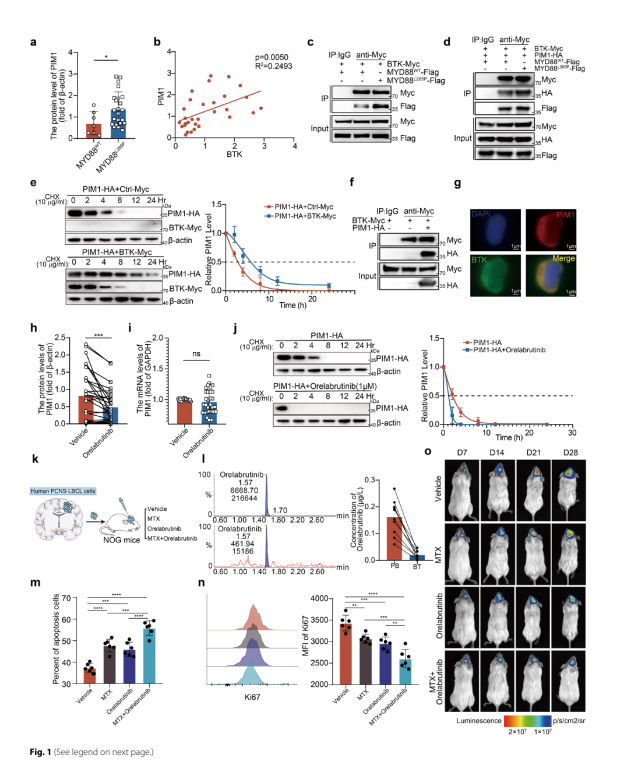
Fig. 2. MyD88L265P–BTK–PIM1 Axis and Mechanism of Orelabrutinib-Induced PIM1 Degradation, with Intracranial Model Validation
3.Prospective Clinical Cohort: ORMD Achieves Excellent Response Rates with Adequate CSF Drug Exposure
- l CSF drug concentration: CSF/plasma free-drug exposure ratio was 51.5%–65.5% across three dose levels, confirming that the drug can effectively act on central lesions.
- l Efficacy: Overall ORR was 84.6%, with a CR/CRu rate of 76.9%; CR/CRu rates across the three dose levels were 66.7%, 80.0% and 100.0%, respectively. Median follow-up was 24.97 months, median PFS was 25.3 months, and median OS had not yet been reached.
- l Safety: During dose escalation, only one Grade 3 pulmonary infection and one Grade 3 transaminase elevation were observed; overall tolerability was good, but the limited sample size precludes full assessment of long-term toxicity.
4.Real-World Matched Data: Orelabrutinib Combination Independently Improves ORR and Extends PFS
After multivariable adjustment, the ORMD regimen was independently associated with higher ORR (OR = 4.838, 95% CI 1.358–22.189); it also significantly reduced the risk of disease progression and extended PFS (HR = 0.421, 95% CI 0.223–0.798). OS benefit has not yet reached statistical independent difference and requires longer follow-up for validation.
5.Liquid Biopsy: CSF ctDNA Outperforms Plasma and Can Serve as an Early Relapse-Warning Biomarker
- l Mutation-spectrum concordance: Cohen’s κ between tumor tissue and CSF ctDNA was 0.48, versus -0.20 between tissue and plasma; CSF more closely reflects the true molecular characteristics of the central tumor. MyD88 and CD79B driver mutations were stably detected only in CSF.
- l Dynamic monitoring value: All patients achieving CR/PR had complete CSF ctDNA clearance. Four patients with fluctuating ctDNA during maintenance subsequently all had confirmed disease progression, providing earlier-than-imaging relapse warning.
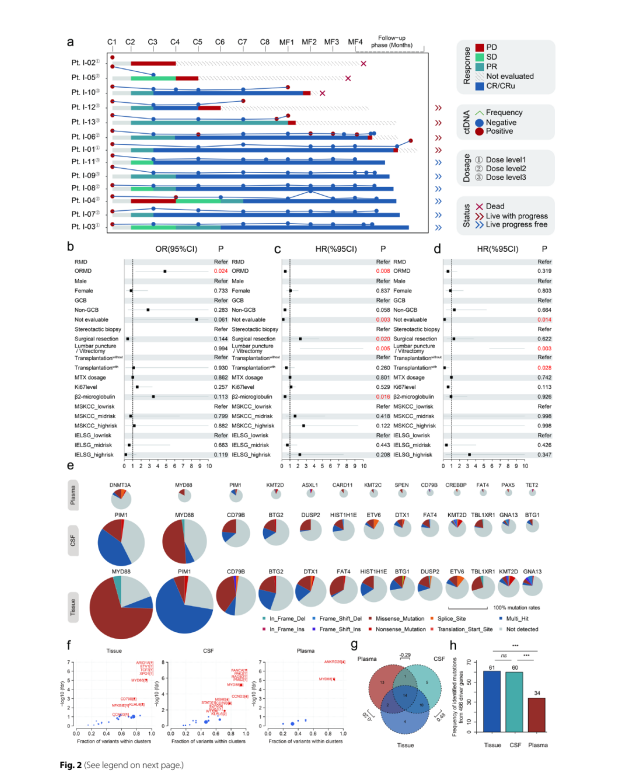 Fig. 3. Prospective Cohort Efficacy, Real-World Multivariable Analysis and Tissue–CSF–Plasma ctDNA Comparison
Study Conclusions
1.The study proposes and validates the MyD88L265P–BTK–PIM1 oncogenic axis in PCNS-LBCL: MyD88L265P enhances BTK signaling, and BTK stabilizes PIM1 through phosphorylation; orelabrutinib blocks this process, promoting PIM1 ubiquitination and degradation, and produces stronger anti-tumor effects combined with MTX in intracranial models. This mechanism provides clear biological rationale for moving BTK inhibitors into the first-line setting.
2.Clinically, the ORMD regimen containing orelabrutinib achieved an ORR of 84.6% and a CR/CRu rate of 76.9% in a small prospective cohort, and was associated with higher response rates and longer PFS in real-world matched analysis.
3.CSF ctDNA reflects tumor-tissue molecular characteristics better than plasma, and may be used for efficacy and relapse monitoring.
Overall, orelabrutinib frontline combination and CSF MRD monitoring both have strong translational potential, but multi-center randomized studies are still needed to verify net clinical benefit.
Reasons to Recommend This Study
1.Closed-loop translational medicine design. Rather than reporting a small treatment cohort alone, the study starts from the protein interaction and degradation mechanism among MyD88L265P, BTK and PIM1, then proceeds through primary cells, intracranial animal models, pharmacokinetic exposure, prospective cohort and real-world validation, forming a closed loop of “mechanism discovery → drug action → clinical signal.”
2.Focus on the core clinical challenge in PCNS-LBCL. How to add a CNS-penetrating targeted agent on top of high-dose MTX to deepen response and extend disease control. Orelabrutinib not only has CSF exposure but also offers a mechanistic rationale distinct from simple BCR signaling inhibition — namely, PIM1 degradation.
3.A new MRD monitoring system for CNS lymphoma. The study incorporates CSF ctDNA throughout the treatment course, demonstrating that its molecular spectrum is closer to tumor tissue than that of plasma, and observing concordance between ctDNA fluctuation and subsequent progression. This provides an important basis for establishing a reproducible, minimally invasive molecular MRD system for PCNS-LBCL, and for future MRD-guided studies of treatment-duration adjustment and maintenance therapy.
Expert Commentary
The most prominent strength of this study is its integration across basic and clinical research. The authors do not merely describe orelabrutinib’s efficacy; they also explain “why it may work”: MyD88L265P maintains PIM1 protein stability through BTK, and orelabrutinib can lift this protection. PIM1 overexpression partially reverses the drug’s pro-apoptotic and anti-proliferative effects, making the causal chain more compelling. The intracranial PDX/CDX models, CSF drug concentrations and serial ctDNA monitoring further strengthen the study’s relevance to the real-world scenario of CNS lymphoma.
However, its clinical evidence still needs cautious interpretation. The prospective dose-escalation cohort includes only 13 patients, with no synchronous control. The real-world comparison is single-center; despite propensity-score matching, unmeasured confounding and treatment-selection bias cannot be eliminated. The ORMD and RMD groups may also differ in surgery, transplant consolidation, maintenance therapy and disease biology. Median OS is not yet mature, the dose-escalation cohort’s safety sample is insufficient, and the article is in Correspondence format — some protocol details and toxicity data are in the supplementary material.
Therefore, the best positioning of this article is “clinical proof-of-concept with strong mechanistic support.” It is sufficient to support a multi-center randomized controlled study, but not yet sufficient to demonstrate that ORMD should fully replace the current standard-of-care high-dose MTX-based regimen outside of research settings. Future studies should unify induction, consolidation and maintenance strategies, pre-specify MyD88/CD79B/PIM1 stratification and CSF ctDNA clearance endpoints, and verify whether early molecular negativity can guide shortening of treatment, selection of maintenance therapy, or relapse warning. If these questions are answered, the MyD88L265P–BTK–PIM1 axis may evolve from a mechanistic marker into a treatment decision node in PCNS-LBCL.

