


The 2026 Obesity Conference (COC 2026) was held in Beijing from August 7–9, 2026, under the theme “Systematic and Standardized Prevention and Treatment of Obesity.” Bringing together experts from bariatric and metabolic surgery, endocrinology and metabolism, clinical nutrition, and other disciplines, the conference focused on clinical practice and frontier advances in obesity management. Prof. Li Nong Ji, executive chair of the conference and Professor at Peking University People’s Hospital, noted in his keynote that obesity prevention and treatment face “six challenges”: (1) patients’ insufficient understanding of the disease — failure to recognize obesity as a chronic relapsing metabolic disease, and of its long-term multi-organ damage, and confusion between medical weight management and aesthetic goals; (2) difficulty correcting obesity-related lifestyle factors; (3) obesity stigma that may affect help-seeking and long-term management; (4) patients’ inadequate cognitive and psychological preparation for long-term drug treatment, lack of awareness of standard course duration and post-discontinuation relapse risk, with premature discontinuation common; (5) drug tolerability and accessibility undermining treatment persistence; and (6) imperfect physician–patient communication and continuity of chronic care.
In the endocrinology and metabolism sub-forum, Prof. Ji delivered a special report on advances in novel anti-obesity drug development, systematically reviewing the challenges of balancing efficacy and tolerability in weight-loss drugs based on glucagon-like peptide-1 receptor agonists (GLP-1RAs), and highlighting the exploration and progress of dual-biased GLP-1/glucose-dependent insulinotropic polypeptide (GIP) receptor agonists (GLP-1/GIPRAs).
I. Unmet Need: The Contradiction Between Weight-Loss Efficacy and Gastrointestinal Tolerability
Obesity is a chronic relapsing disease requiring long-term treatment to sustain health benefits. The Obesity Diagnosis and Treatment Guideline (2024 Edition) recommends that most overweight and mildly obese patients set a goal of 5%–15% weight loss over 3–6 months and maintain it, while moderate-to-severe obese patients may set higher targets [1,2]; guidelines from the American Association of Clinical Endocrinology (AACE) and the American Diabetes Association (ADA) similarly emphasize long-term, individualized weight management [3,4].
GLP-1RAs have become the mainstay of pharmacotherapy for overweight/obesity, but the weight-loss needs of patients with moderate-to-severe obesity are still not fully met, and the rate of gastrointestinal side effects and treatment discontinuation remains high. Real-world studies show a 64.8% one-year discontinuation rate for GLP-1RA treatment in overweight/obese patients without type 2 diabetes [5]; GI intolerance is one of the main reasons for early discontinuation [6].
Notably, a mediation analysis of the STEP 1–3 studies, after correcting for placebo effect, showed that less than 1% of the percentage weight loss from semaglutide 2.4 mg at 68 weeks relative to baseline was mediated by GI adverse events [7], suggesting that weight-loss efficacy does not depend on GI side effects.
II. Mechanistic Basis: GIP/GLP-1 Synergy and Inhibition of Nausea and Vomiting
Dual-target agonists of the GLP-1 and GIP receptors can reduce food intake, body weight and fat mass by modulating appetite [1]. At the same time, evidence shows that GIP receptor agonism can activate γ-aminobutyric acid (GABA)-ergic neurons in the area postrema of the medulla, locally inhibiting nausea- and vomiting-mediating responses triggered by GLP-1 receptor-positive neurons, without affecting satiety signaling in the solitary tract nucleus. This suggests that GIP receptor agonism may improve GI tolerability while preserving weight-loss efficacy [9,10].
Preclinical studies suggest that GIP receptor agonism may have the potential to suppress nausea and vomiting. The SURMOUNT-5 head-to-head trial showed that, at 72 weeks, tirzepatide achieved 20.2% weight loss, outperforming semaglutide at 13.7%; tirzepatide did not increase GI adverse events relative to semaglutide (see Fig. 1) [11].
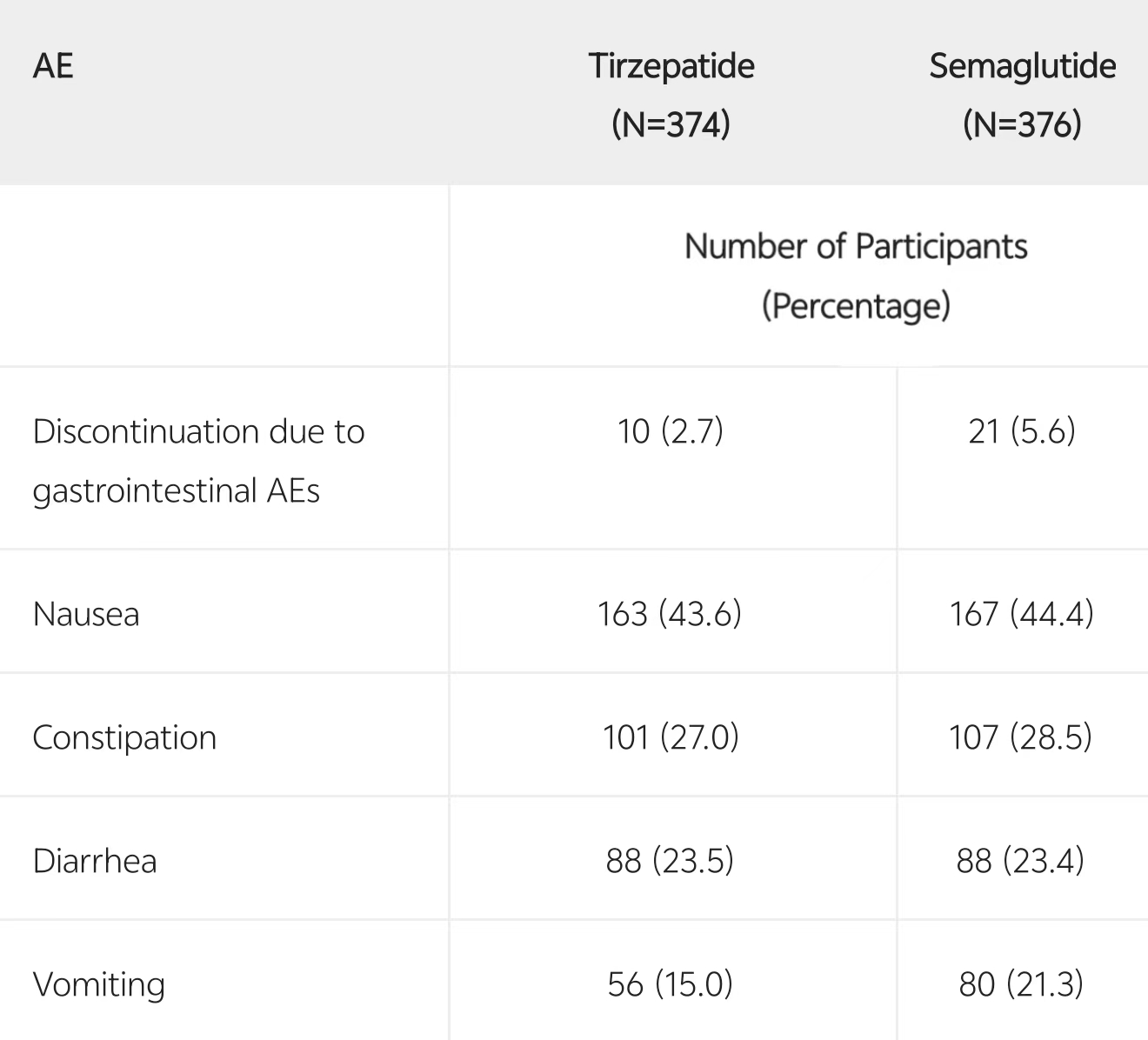 Fig.1. Tirzepatide vs Semaglutide Head-to-Head Prospective RCT — Safety Data
III. From Single-Biased to Dual-Biased: Evolution of Receptor Signaling Bias Design
Both GLP-1 and GIP receptors are G protein-coupled receptors (GPCRs); upon activation, they concurrently activate the cAMP and β-arrestin downstream pathways to exert biological and pharmacological effects. In vitro studies show that β-arrestin recruitment can lead to receptor internalization and desensitization. Biased agonists preferentially activate the cAMP pathway and reduce β-arrestin recruitment, thereby reducing receptor internalization and prolonging pharmacological activity — a profile that may translate clinically into enhanced weight-loss efficacy [12]. Single-target biased GLP-1RAs (e.g., eniglutide) and a GLP-1-receptor-biased dual agonist (tirzepatide) have both entered clinical use [13,14].
On this basis, a dual-biased design (GLP-1 receptor bias + GIP receptor bias) is expected to confer dual benefits: the combined GLP-1 and GIP receptor bias may synergistically promote weight loss, while GIP receptor bias helps suppress nausea and vomiting and improves tolerability [10,15].
IV. Olapeptide: Initial Clinical Validation of a Dual-Biased GLP-1/GIPRA
Olapeptide, independently developed by Hansoh Pharmaceuticals, is a GLP-1/GIP dual receptor agonist. In vitro cellular studies presented at ENDO 2026 showed that olapeptide’s effects on both the GLP-1 and GIP receptors display biased characteristics: efficient activation of cAMP signaling, with significantly reduced β-arrestin2 recruitment and receptor internalization, validating its dual-target, dual-biased molecular design [15].
Top-line data from the Phase III weight-loss study of olapeptide (NCT06839664, 604 overweight/obese adults), released in March 2026, showed that at 48 weeks the maximum weight reduction from baseline was 19.3%, and up to 97.2% of participants achieved ≥5% weight loss; the average incidence of nausea was <10%, and of vomiting <5% [16]. Additional data from this Phase III study will be presented at EASD 2026.
V. Summary
The chronic-disease nature of obesity means that weight-loss treatment must balance long-term adherence, and tolerability is a key element of this. Existing GLP-1 drugs have made significant progress in weight-loss efficacy, but some patients still face challenges with GI tolerability, which may affect treatment persistence. The dual-target, dual-biased GLP-1/GIPRA olapeptide, based on its molecular design, has preliminary Phase III top-line data (up to 19.3% weight loss, with average nausea <10% and vomiting <5%) suggesting that the drug may combine strong weight-loss efficacy with improved GI tolerability. Its subsequent data warrant continued clinical attention.
References
[1] National Health Commission Medical Administration Bureau of the People’s Republic of China. Chinese Journal of Digestive Surgery. 2024;23(10):1237–1260.
[2] Chinese Society of Endocrinology. Chinese Journal of Endocrinology and Metabolism. 2024;40(07):545–564.
[3] Nadolsky K, et al. Endocr Pract. 2025;31(11):1351–1394.
[4] American Diabetes Association Professional Practice Committee for Obesity. BMJ Open Diabetes Res Care. 2026;13(Suppl 1):e005729.
[5] JAMA Netw Open. 2025;8(1):e2457349.
[6] Gorgojo-Martínez JJ, et al. J Clin Med. 2022;12(1):145.
[7] Wharton S, et al. Diabetes Obes Metab. 2022;24(1):94–105.
[8] Diabetes Obes Metab. 2025;27:1079–1095.
[9] Nauck MA, et al. Lancet. 2026;407(10531):892–908.
[10] Douros JD, et al. Front Endocrinol (Lausanne). 2025;16:1530985.
[11] Aronne LJ, et al. N Engl J Med. 2025;393(1):26–36.
[12] Rodriguez R, et al. Cell Rep Med. 2025;6(6):102156.
[13] Ji L, et al. Lancet Diabetes Endocrinol. 2025;13(9):777–789.
[14] Willard FS, et al. JCI Insight. 2020;5(17):e140532.
[15] Wang T, et al. Presented at: ENDO 2026; Chicago, IL. Poster SAT-684.

