


Losing weight is not easy, and neither is maintaining the results of weight loss! After all, weight management is a long-term endeavor, not something achieved overnight.
Are you frustrated with weight regain? In fact, you may not be at fault for the weight regain! It's because your body has "remembered" your obesity, making weight regain almost inevitable.
Recently, the top international academic journal Nature published a research paper titled "Adipose tissue retains an epigenetic memory of obesity after weight loss."
This study, conducted by ETH Zurich, shows that:
After successful weight loss, the body's fat cells still carry the "memory" of obesity—the epigenetic obesogenic memory. This "memory" is due to the experience of obesity causing changes in the epigenome, thereby affecting the expression of a series of genes in fat cells.
More importantly, these epigenomic changes persist even after the body weight is reduced to a healthy level. This discovery helps explain why it is difficult to maintain a healthy weight after weight loss.
Mouse experiments also found that "once fat" fat cells tend to absorb more sugar and fat, and once exposed to high-fat foods, they cause mice to regain weight at a faster rate.
To reveal why weight regain occurs so quickly after weight loss, how did the researchers gradually uncover the mystery step by step?
Step One: After weight loss surgery, the gene expression of fat cells still shows obesity-related patterns.
Research Methods and Process: The research team analyzed the fat tissue of a group of severely obese individuals and a control group of individuals who have never been obese. The obese individuals achieved successful weight loss through weight loss surgery, with a BMI decrease of at least 25% two years later. The research team conducted single-nucleus RNA sequencing (snRNA-seq) analysis on the subjects' white fat tissue, analyzing changes in gene transcription at the single-cell level.
The human fat tissue samples used in the study came from three weight loss surgery-related clinical studies: MTSS, LTSS, and NEFA, with subcutaneous fat (scAT) and omentum fat (omAT) samples taken before surgery (T0) and two years after surgery (T1). Data from individuals with healthy body weight served as the control group.
Research Results: The snRNA-seq results showed 18 cell clusters in the omAT samples, with no significant difference in cell composition between T0 and T1. However, many differentially expressed genes (DEGs) that were dysregulated at T0 remained so at T1; similar results were observed in scAT. Further analysis showed that gene expression related to fat cell metabolism and function was downregulated, while gene expression related to fibrosis and apoptosis was upregulated (Figure 2).
That is to say, the transcriptional changes in fat tissue cells induced by obesity did not return to normal even after weight loss. They lost a lot of weight, but the gene expression of their fat cells still showed obesity-related patterns.
The research team stated that it is currently unclear how long the body's "memory" of obesity will last. This "memory" may disappear after a period of time, but we do not yet know how long that period is.
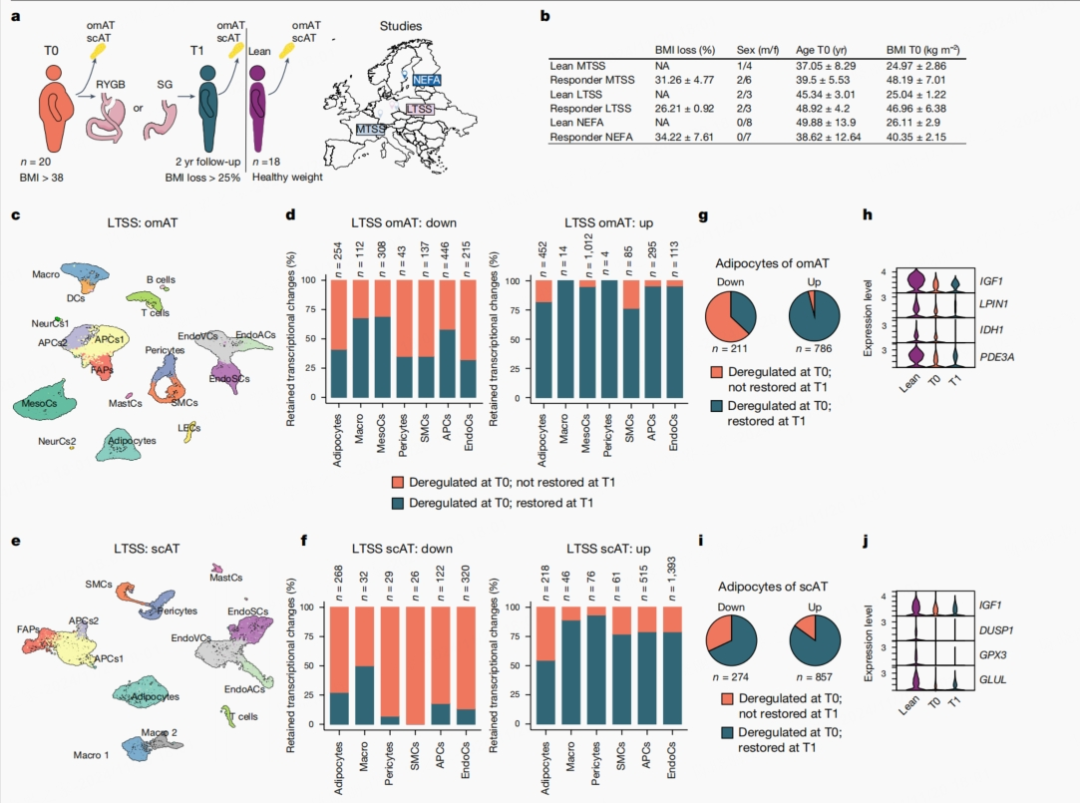
Figure 2: Obesity-induced adipose tissue retains cellular transcriptional changes even after weight loss surgery.
Step Two: Mouse studies are consistent with human studies, and the "fat memory" caused by long-term obesity is stronger.
To further verify the above conclusions, the research team constructed an obese mouse model through a high-fat diet and then allowed these obese mice to lose weight. A few months after these mice became thinner, the research team found that, consistent with human study results, their epigenomic changes still persisted (Figure 3), as if these fat cells "remembered" that they had once been in an obese body.
Research Methods: Researchers first fed mice a high-fat diet to make them obese over a certain period, then switched back to a low-fat diet to allow them to lose weight to a normal weight within 4-8 weeks.
Research Results: Consistent with the sequencing results of human tissue, the differentially expressed genes caused by obesity in the epididymal fat cells of mice still persisted after weight loss. Those that were upregulated included genes related to lysosomal activity, cell apoptosis, and other inflammatory pathways, indicating the presence of endoplasmic reticulum and cellular stress; those that were downregulated were mainly genes related to fat metabolism, indicating potential dysfunction in fat tissue even after weight loss.
Interestingly, researchers noticed that in mice fed a high-fat diet for a longer time, none of the differentially expressed genes returned to normal expression after weight loss, which was more severe than in mice fed a high-fat diet for a shorter time. Researchers believe that this indicates that the "fat memory" caused by long-term obesity has a stronger impact.
Researchers analyzed the causes of "fat memory" and determined that epigenetics are mainly to blame. After weight loss, 57%-62% of the downregulated differentially expressed genes and 68%-75% of the upregulated differentially expressed genes can be explained by epigenetics.
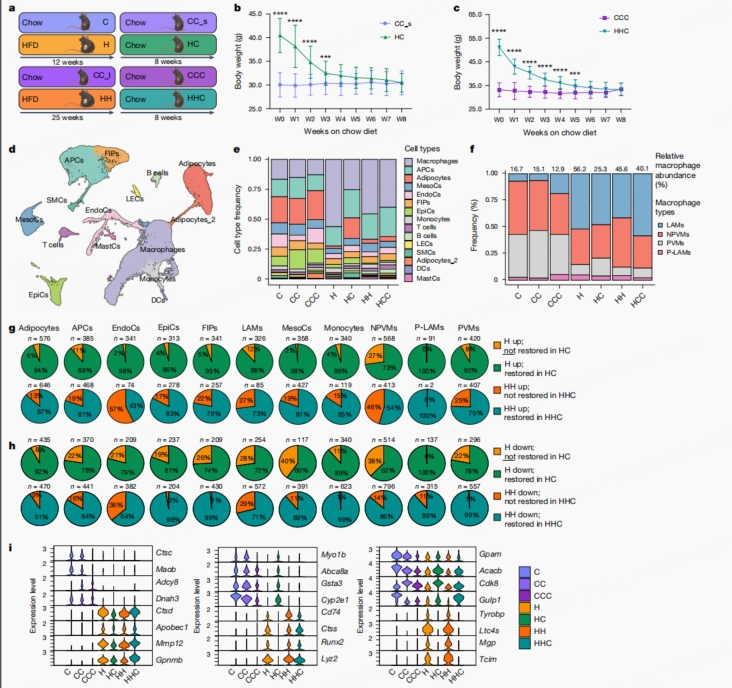
Figure 3: Transcriptional changes in epididymal fat tissue persist after weight loss.
Step Three: The negative impact of "fat memory"—faster weight regain.
To better understand the impact of this "memory," the research team analyzed the fat cells of mice that became obese and then lost weight. The study found that these cells absorbed more sugar and fat than the fat cells of the control group mice (mice that had never been obese), and under a high-fat diet, the previously obese mice gained weight faster than the control group mice (Figure 4), meaning that after successful weight loss, once dietary restrictions are lifted, weight regain will be faster.
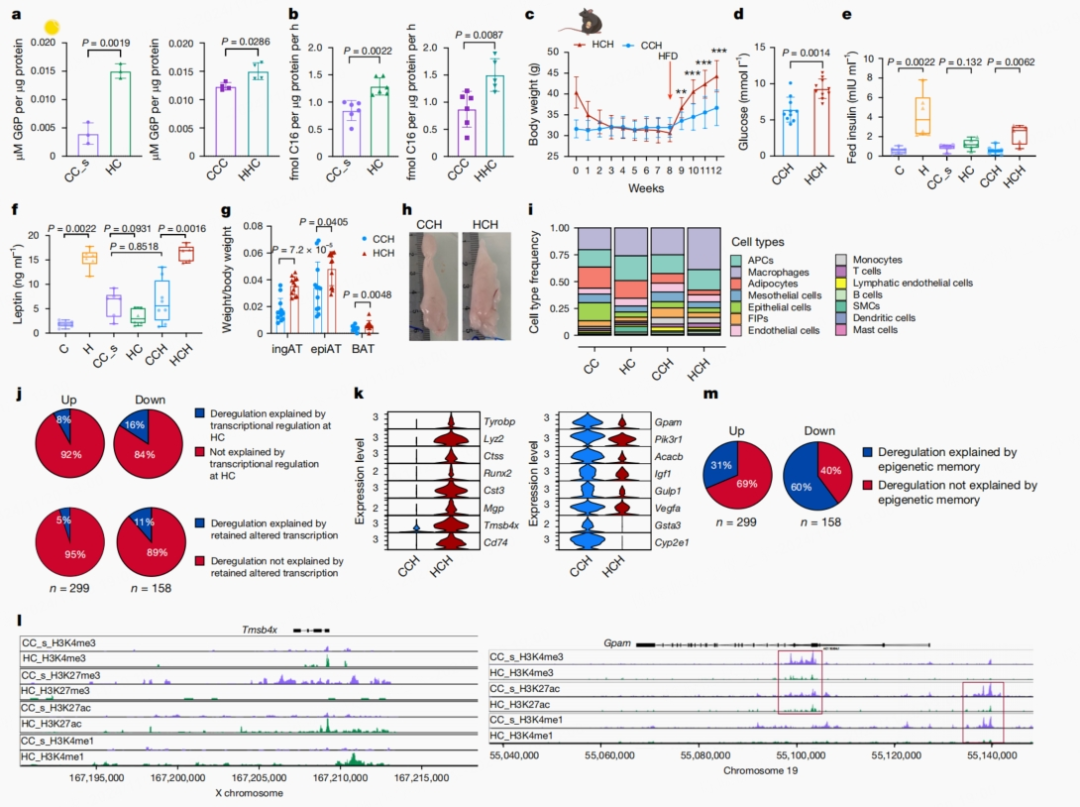
Figure 4: "Fat memory" accelerates the response of fat cells and mice to obesogenic stimuli.
In conclusion
Researchers summarized that there is a "fat-promoting memory" in mouse fat cells and possibly other cell types, mainly based on stable epigenetic changes. These changes seem to prepare the cells for pathological responses in an obesogenic environment, leading to the common and problematic "yo-yo" effect often seen in dieting. In the future, these changes can be targeted to consider how to improve long-term weight management and health outcomes.
Now it seems that the top priority in weight management is still "prevention first," to prevent the occurrence of overweight/obesity! After all, once you're fat, the body will "remember" it.

