


On July 23rd, local time, Robin Warren, Nobel Prize winner in Physiology or Medicine and Professor Emeritus at the University of Western Australia in Australia, passed away at the age of 87 after a long illness.
In a career spanning nearly 40 years, Warren made remarkable contributions to human medicine. He was the first pathologist to attempt to prove the existence of disease-causing bacteria in the stomach, and in the midst of skepticism, Warren, along with partner Barry Marshall, revealed the relationship between
In the face of skepticism, Warren, with his partner Barry Marshall, revealed the link between Helicobacter pylori and gastric ulcers and gastritis, revolutionizing centuries of medical knowledge about the cause of gastric ulcers.
Thanks to his research, gastric ulcers, which had no cure, became a short-term curable disease, and the door was opened to exploring the link between bacteria and chronic inflammation. The Nobel Prize committee commented, “Their indomitable spirit and prepared minds challenged the prevailing dogma.”
Amit Chakma, president of the University of Western Australia, describes Warren as a medical pioneer “who, along with Barry, defied his critics and dedicated himself to proving a theory that would improve global health and change the lives of countless people.”
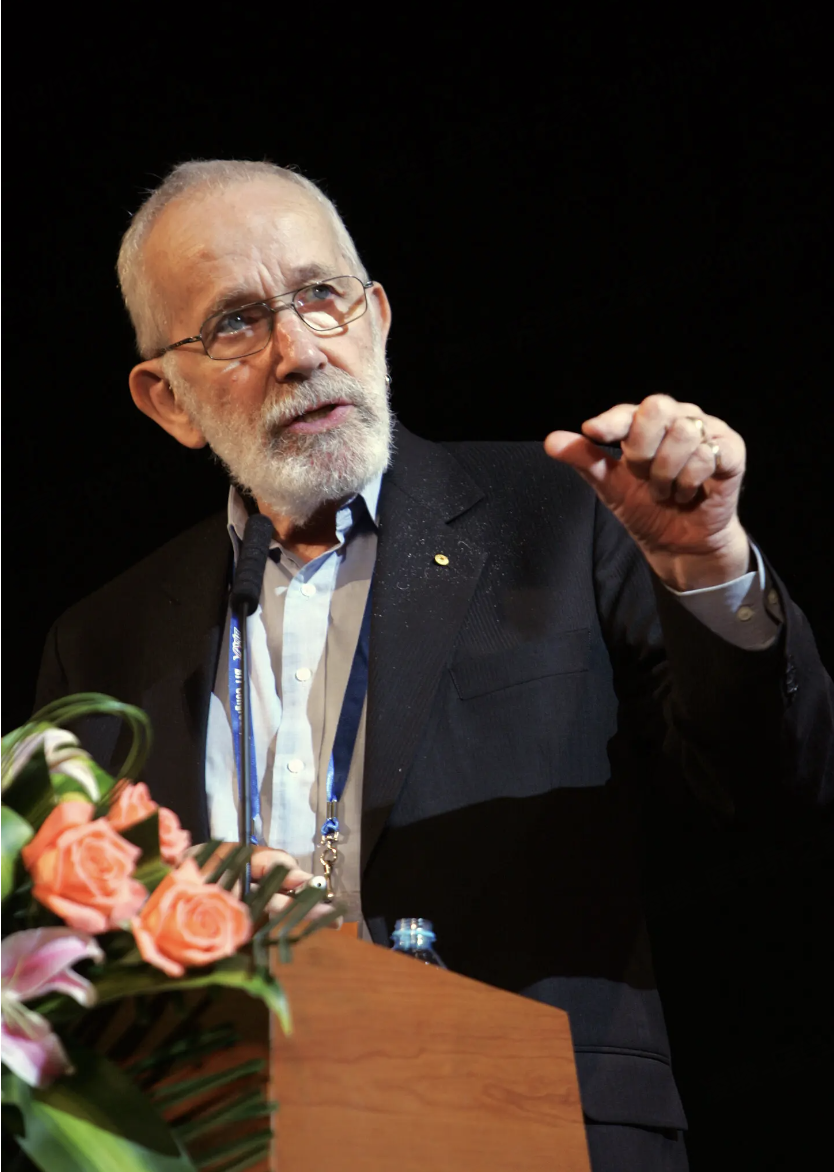
Robin Warren speaking at a conference in China in 2012
“I see them”
On June 11, 1979, Warren's 42nd birthday, he stayed in the lab as usual, studying pathology samples from patients. The difference was that on that day Warren observed, for the first time under a microscope, bacterial growth on the surface of a gastric biopsy of pathologic tissue.
Translating such an observation into a meaningful clinical finding meant breaking with centuries of medical dogma. Because gastric juices are acidic and corrosive, the scientific community has always believed that the stomach is a sterile environment and that diseases associated with inflammation of the stomach are caused by stress, alcohol or spicy food. Pharmaceutical companies, on the other hand, mainly produce drugs that help reduce acid production in the stomach and are used in the standard treatment of stomach ulcers.
Although Warren was still only an unknown pathologist at the time, he seemed more inclined to believe what he saw with his own eyes than with academic authorities. He wrote in this patient's pathology report, “CONCLUSION: These bacteria have the morphology of Campylobacter. They are not contaminants and appear to be actively growing. I am not sure of the significance of these unusual findings, but further investigation of the patient's dietary habits, gastrointestinal function, and microbiology may be worthwhile.”
Warren had a certain “genius scientist” stubbornness about him, and Marshall, who won the Nobel Prize with him, later recalled, “He was a bit 'eccentric. But when you're a pathologist who lives in a basement and dissects cadavers and things like that, it means you don't have to be good at dealing with people to do your job.”
Warren's dedication to medicine was also heavily influenced by his mother, who had aspired to become a doctor but ultimately chose to train as a nurse due to the family's poverty. Warren suffered a severe seizure after entering medical school in 1955, and family and friends, including doctors, advised him that he should stay home and quit school, while his mother, as always, supported Warren's choice.
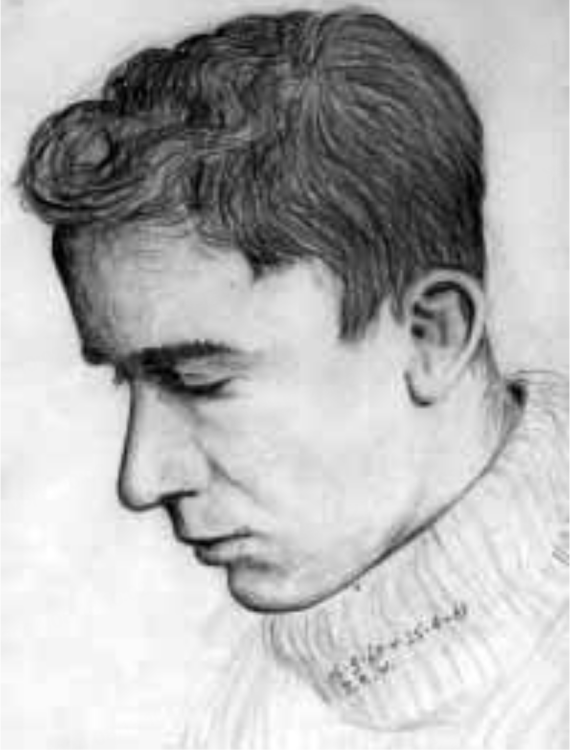
Warren enjoyed drawing and photography, and before graduating in 1960, he painted a self-portrait of himself
After graduating from medical school and completing his residency training, Warren wanted to be a psychiatrist, but lost out in the “race to the top”. Of the few remaining positions, he immediately chose clinical pathology.
It proved to be a perfect fit for Warren, “My main job was blood tests, but I also had to deal with parasites in feces and fungi in skin and nails. ...... I put my drawing skills to use and made detailed sketches of various microorganisms, which gave a more holistic feel for pathology.” Warren wrote in his Nobel Prize autobiography.
Also around the same time, flexible endoscopic techniques gradually began to become commonplace in clinical practice, which gave doctors the ability to safely remove a small piece of biopsy-ready tissue from a patient's stomach and intestines. Warren also became very interested in this new technology and attempted his own refinement of the bacterial stains used for tissue sectioning.
To his colleagues, this was extremely “odd”. While most doctors were looking for a broader field to pursue, Warren was the only one tinkering with his microscope every day, specializing in an extremely niche area.
From the moment he saw bacteria in a stomach pathology sample on his 42nd birthday, Warren began to push his research even further. For the next two years, he traveled around collecting and organizing cases, trying to prove that bacteria are commonly associated with the development of inflammation in the stomach.
This was far more difficult than he thought. Negative controls were needed for the study, but at the time, “healthy” stomach biopsies were extremely rare, and Warren was able to collect only 20 “healthy samples” in two full years. To add to his frustration, virtually no one in the academic community looked at his research as ludicrous, a blasphemy against the very idea of medicine, and the discovery of bacteria as a result of contamination of laboratory samples.
“It annoyed me a bit that people didn't believe it, but I didn't really care. I continue to do my work and I believe I'm right because I see them.” Warren said.
End of war
Initially, no doctors were willing to work with Warren, “As long as there are bacteria, gastritis will always be there. But I couldn't take my research any further because I only specialize in pathology. I couldn't convince any clinicians to collaborate; they thought it was a load of garbage ......” Warren wrote in his autobiography.
It wasn't until 1981 that Marshall, then a junior internist, came to Warren's hospital for a training rotation and, after hearing Warren's presentation, became deeply interested in the novel discovery.
Marshall was more clinically oriented than Warren and could be responsible for providing better biopsy samples, patient histories, and endoscopic findings.In 1982, Warren and Marshall co-designed a prospective trial that studied biopsies from 100 patients, performed bacterial cultures, and attempted to isolate the causative organisms from gastric mucosa cultures.
After two years and dozens of failed studies, on June 16, 1984, The Lancet officially published Warren and Marshall's research paper. The paper, which has since transformed gastroenterology research, was entitled “Unidentified Campylobacter in the Stomachs of Patients with Gastritis and Peptic Ulcers,” in which the pair noted that “the presence of a bacterium that appears to belong to the genus Campylobacter in almost all patients with active chronic gastritis, duodenal ulcers or gastric ulcers may be an important factor in the causation of the disease. ”
A few years later, this bacterium was further identified as a Helicobacter genus and officially named “Helicobacter pylori”.
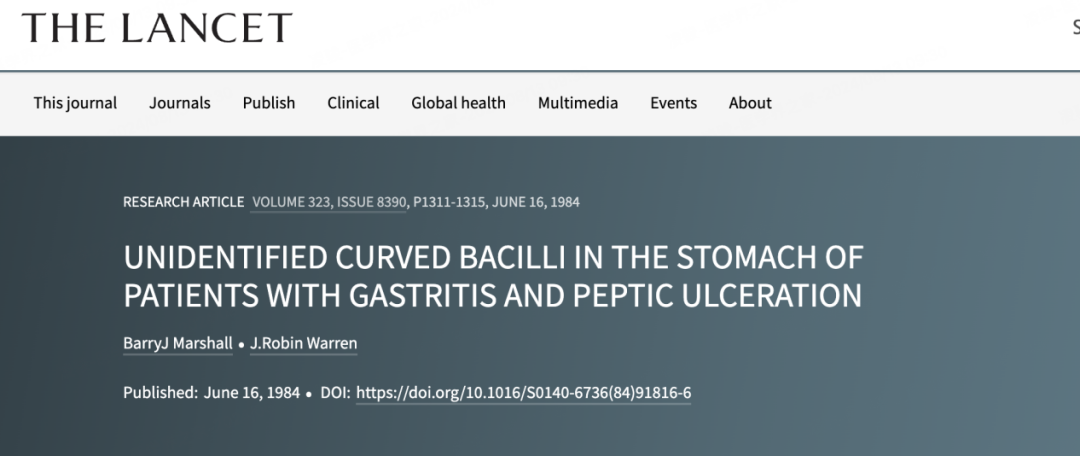
On June 16, 1984, The Lancet published Marshall and Warren's study
Although the results of the study were published in a topical journal, most gastroenterologists still refused to recognize the reliability of the study. In a fit of rage, Marshall even drank broth containing H. pylori in order to prove that his study was correct, and he developed a stomach ulcer as a result.
In the following years, Warren and Marshall conducted a large study to prove that eradication of H. pylori could reduce the recurrence of duodenal ulcers. This study lasted seven years and concluded by clearly demonstrating the rarity of peptic ulcer recurrence after successful treatment of H. pylori infection. Warren was also involved in the development of the carbon 14 breath test, which is still the gold standard for screening for H. pylori infection.
“It was the 'fun' decade.” Warren recalls that their conclusions prompted more researchers to devote themselves to the study of H. pylori, many of whom were repeating the test process with the goal of proving the idea wrong, “but in the end, the results of the tests, they all came to similar conclusions as ours.”
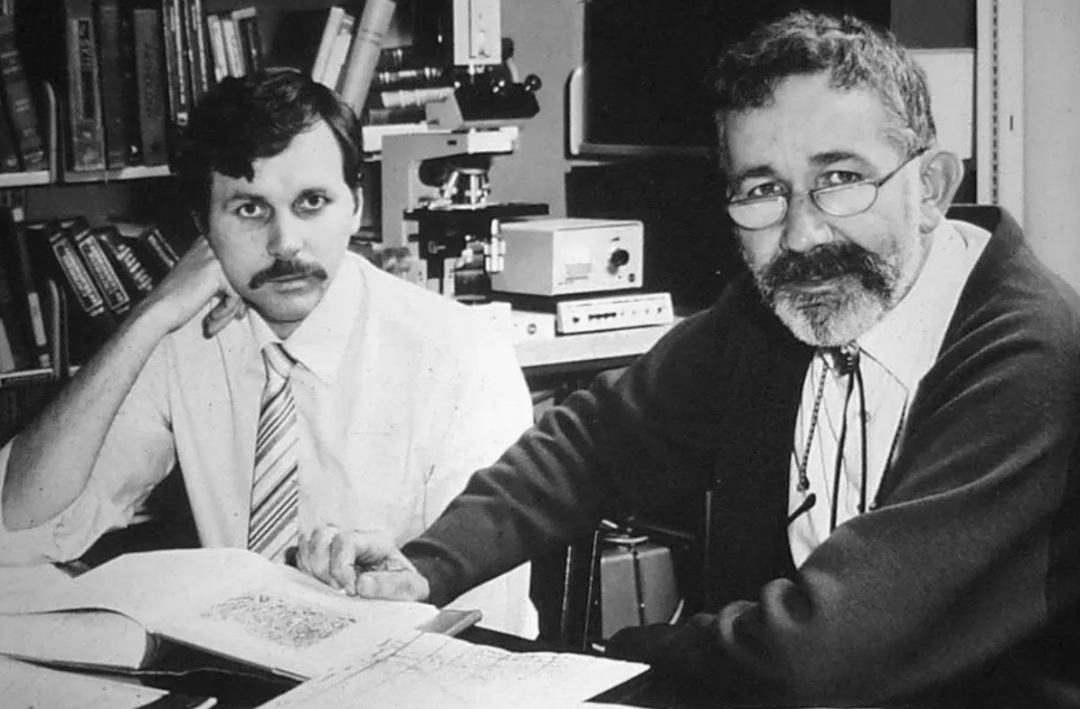
Warren (right) and Marshall in the lab in 1984
As more and more studies came out, the medical community finally accepted the concept of “Helicobacter pylori”, and its association with chronic gastritis, peptic ulcers, gastric cancer and other diseases has since been articulated by the academic community.
In 1994, the National Institutes of Health (NIH) issued guidelines recognizing that most peptic ulcers are caused by H. pylori infection and recommending antibiotic treatment. That same year, the World Health Organization/International Agency for Research on Cancer (WHO/IARC) officially designated H. pylori as a Class I carcinogen.
“In 1996, I was invited to Japan for a lecture tour. The following year I was invited to give lectures in Germany and other European countries. This showed that our work was finally being truly recognized and the battle was over.” Warren said.
The revelation of the link between H. pylori infection and disease has also led to a succession of public health prevention and control programs in various countries.A 2023 study noted that the global prevalence of H. pylori declined from 58.2% between 1980-1990 to 43.1% between 2011-2022.
In 2005, 26 years after Warren observed Helicobacter pylori, he and Marshall were jointly awarded the Nobel Prize in Physiology or Medicine. The award citation reads that they broke with conventional wisdom by discovering that peptic ulcers, the most common disease in humans, are caused by a bacterial infection of the stomach, making it possible to achieve a permanent cure for this otherwise chronic and disabling disease with antibiotics, to the benefit of countless patients.
Passed away peacefully surrounded by his family
Honors followed, but Warren's wife, Winifred Williams, was tragically diagnosed with pancreatic cancer in 1997. Winifred, who is also a physician, was the only person who supported Warren's research and encouraged him to persevere until she met Marshall.
“As a doctor, she was very aware at the time that 'stomach sterility' was the consensus in the academic community. She could have implied that I was 'crazy' but chose to stand by me and quietly supported me in my most difficult times.” Warren eulogized his wife during his Nobel Prize presentation.
In 1997, Warren chose to leave the job he had held for nearly 40 years. In those years, some people hinted that he had a chance to get the Nobel Prize, but Warren thought it was a “fantasy”, “I just cultivated some bacteria in my stomach, who would get a Nobel Prize for that?”
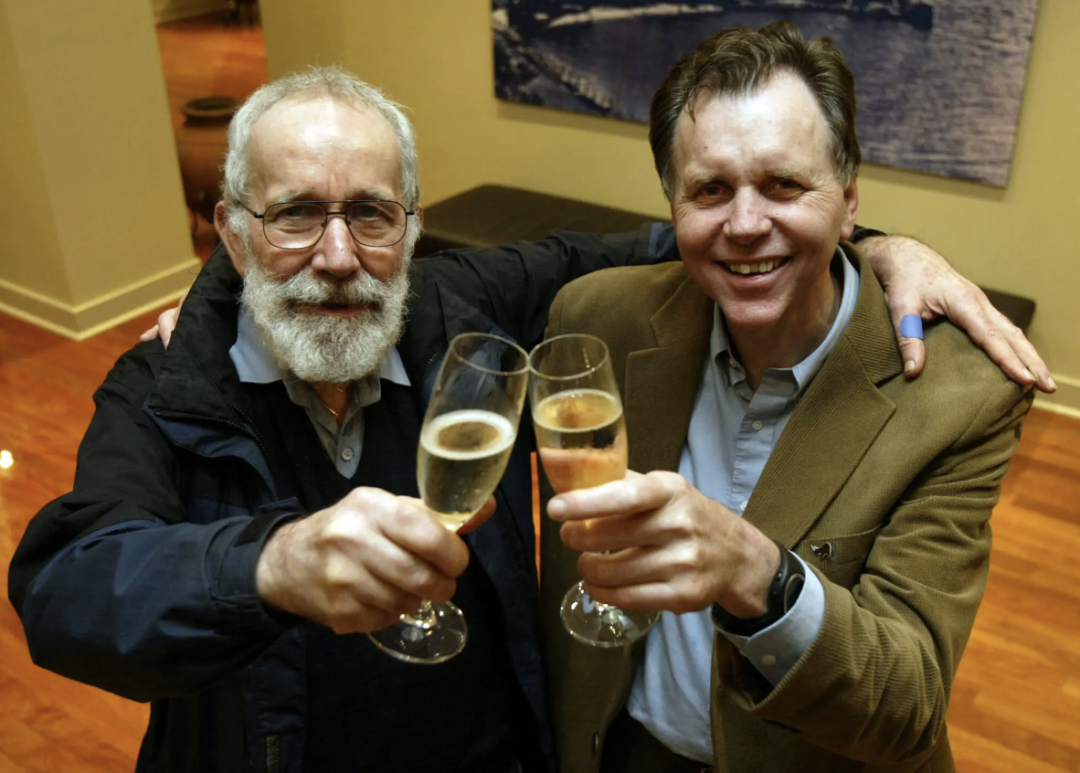
When Warren (left) and Marshall learned that their research had won the Nobel Prize in 2005, they toasted at a restaurant to celebrate
Warren is not very good at “out-of-lab stuff” and does not like to be involved in all kinds of social occasions. In a 2008 interview, he described attending the Nobel Prize ceremony as “unpleasant”, “In addition to the ceremony, there are all sorts of receptions on the day of the award, several every day,” he said. In a 2008 interview, he described attending Nobel Prize events as “unpleasant”: “In addition to the award ceremony, there are all kinds of receptions, several every day. To socialize, I had to stand there and everyone wants to talk to you. ...... Since then, I've tried to avoid every reception I can.”
Warren, who is 14 years older than Marshall, often laments his partner's “energy.” Compared to Marshall, who is still active in promoting academic work around the world, Warren seems to prefer to be a “happy bystander” after retirement, and has resumed his hobby of photography and spending time with his children and grandchildren.
After winning the Nobel Prize, Warren is still invited to participate in some academic exchanges in various countries every year, although he has tried to control the frequency. Warren adopted a dog after the death of his wife, who died in 2007. He wanted to get another, but his numerous “academic trips” forced him to abandon that plan. “I couldn't leave my little dog behind. That's the only reason I don't like the Nobel Prize.” Warren said in an interview.
“He had been ill for some time and finally passed away peacefully surrounded by his family.” Marshall eulogized the close friend who had worked alongside him, “Professor Warren's research has had a profound impact on reducing the incidence of diseases such as gastric ulcers and gastric cancer and will always be remembered.”
Reference
J. Robin Warren, Who Proved That Bacteria Cause Ulcers, Dies at 87https://www.nytimes.com/2024/08/09/health/j-robin-warren-dead.html2.Vale Robin Warrenhttps://www.uwa.edu.au/news/article/2024/july/vale-robin-warren3.Farewell to a giant of pathology and medicinehttps://www.medicalrepublic.com.au/farewell-to-a-giant-of-pathology-and-medicine/1093454.The Nobel Prize in Physiology or Medicine 2005https://www.nobelprize.org/prizes/medicine/2005/press-release/5.Dr Robin Warren, pathologisthttps://www.science.org.au/learning/general-audience/history/interviews-australian-scientists/dr-robin-warren-pathologist6.Swallowing the Sciencehttps://www.innovation-intelligence.com/bios/j-robin-warren-and-barry-j-marshall7.The Rediscovery of H. pylori Bacteria in the Gastric Mucosa by Robin Warren, and Implications of this Finding for Human Biology and Diseasehttps://link.springer.com/article/10.1007/s10620-013-2863-y

