


In order to burp smoothly, 19-year-old Xiao Zhang is nearly driven mad.
Since childhood, he has suffered from severe gastrointestinal bloating, unable to eat more than a few mouthfuls before his chest and abdomen swell. The only way to expel gas is to wait for it to slowly move downward and turn into flatulence. Standing at 1.8 meters tall, he weighs only 54 kilograms.
It wasn't until 2019 that Xiao Zhang's condition was officially named by the medical community: Retrograde Cricopharyngeal Dysfunction (R-CPD), commonly known as "Inability to Burp Syndrome."
With the definition in place, treatment plans began to emerge. Xiao Zhang started with a stack of medical literature, seeking medical advice and treatment all over China....
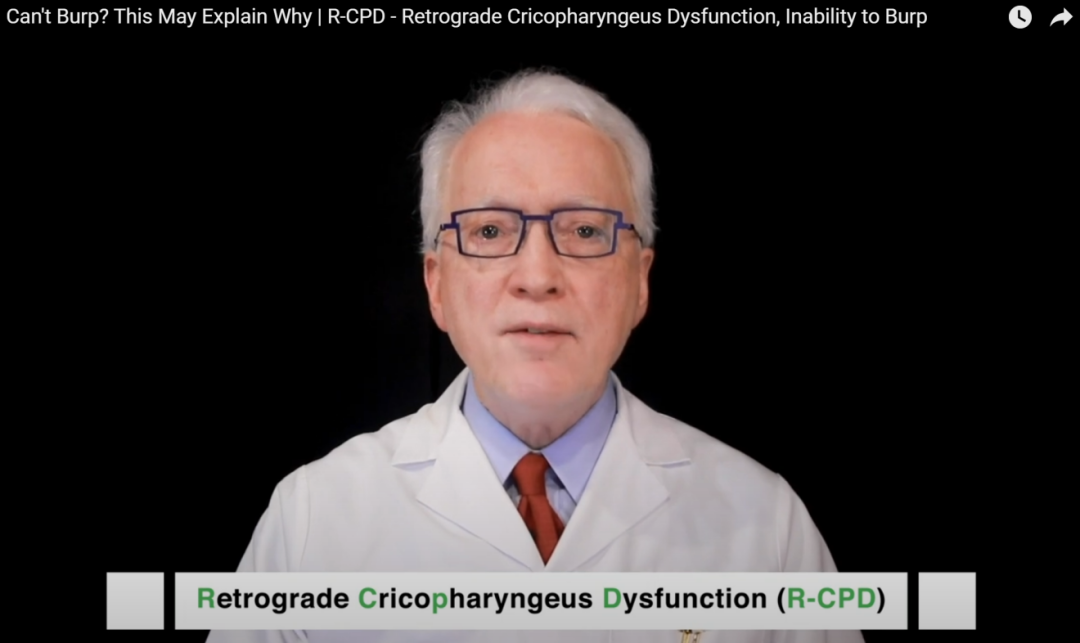
American otolaryngologist Robert Bastian has recorded numerous videos about R-CPD. Image source/Laryngopedia
The inability to burp is painful, but there is a lack of clinical awareness.
Wu Yacen, the director of the Rehabilitation Department II at Hunan Provincial People's Hospital, has heard similar diagnostic and treatment stories at an academic conference, thus understanding the pain of not being able to burp, as well as the twists and turns these patients go through in seeking medical help.
Wu Yacen told "MedJ" that cricopharyngeal dysfunction, represented by the Inability to Burp Syndrome, is not rare, but the medical community both domestically and internationally has far from enough understanding of it.
In layman's terms, the cricopharyngeal muscle is a "gate" located between the throat and the esophagus, usually in a closed state. It briefly opens a gap during swallowing or vomiting to allow food and other substances to pass. Once the cricopharyngeal muscle becomes overly tense or dysfunctional, some patients will experience difficulty swallowing, and in severe cases, they can't even swallow water.
"There are mainly two types of causes. First, secondary to brainstem lesions and post-stroke, the chance of patients developing cricopharyngeal muscle disorders is as high as 80%. Second, after radiotherapy for head and neck tumors, the muscles become severely fibrotic, stiff like leather, and unable to open and close normally," said Wu Yacen.
The Inability to Burp Syndrome is another more special type of cricopharyngeal muscle dysfunction. Wu Shaoling, the chief physician of the Rehabilitation Medicine Department at Sun Yat-sen Memorial Hospital of Sun Yat-sen University, explained to "Medical Circle" that when gas in the stomach pushes upward and enters the esophagus, if the cricopharyngeal muscle cannot open normally, the gas in the esophagus will not be able to be expelled and will be pressed back into the stomach.
Over time, the main manifestation of these patients is the inability to burp.
American otolaryngologist Robert Bastian is hailed as the "father of research" for the Inability to Burp Syndrome. In 2019, he and his team were the first to name and report the disease, and they were the first to explore feasible treatment plans.
"I rarely participate in social activities because it's hard to explain to others that these indecent manifestations are a disease, a disease that prevents burping," Amy, now 52 years old, has tried methods like inducing vomiting by sticking her fingers down her throat to expel gas. Sometimes, the more she vomits, the more pronounced the bloating becomes. She even feels that her chest is about to burst, causing pain akin to a heart attack.
In order to get rid of the troubles brought by the disease, Amy has seen many doctors, but they are all powerless and warn Amy that inducing vomiting carries risks such as damaging the vocal cords. "The solution the doctors offer is to reduce anxiety and choose food carefully."
Wu Yacen frankly stated that patients with cricopharyngeal dysfunction like Amy commonly face difficulties in seeking medical treatment. "Every time I have an outpatient clinic, I ask patients how they found their way to the rehabilitation department. They have often seen otolaryngologists, oral surgeons, and respiratory specialists, and have been to several hospitals."
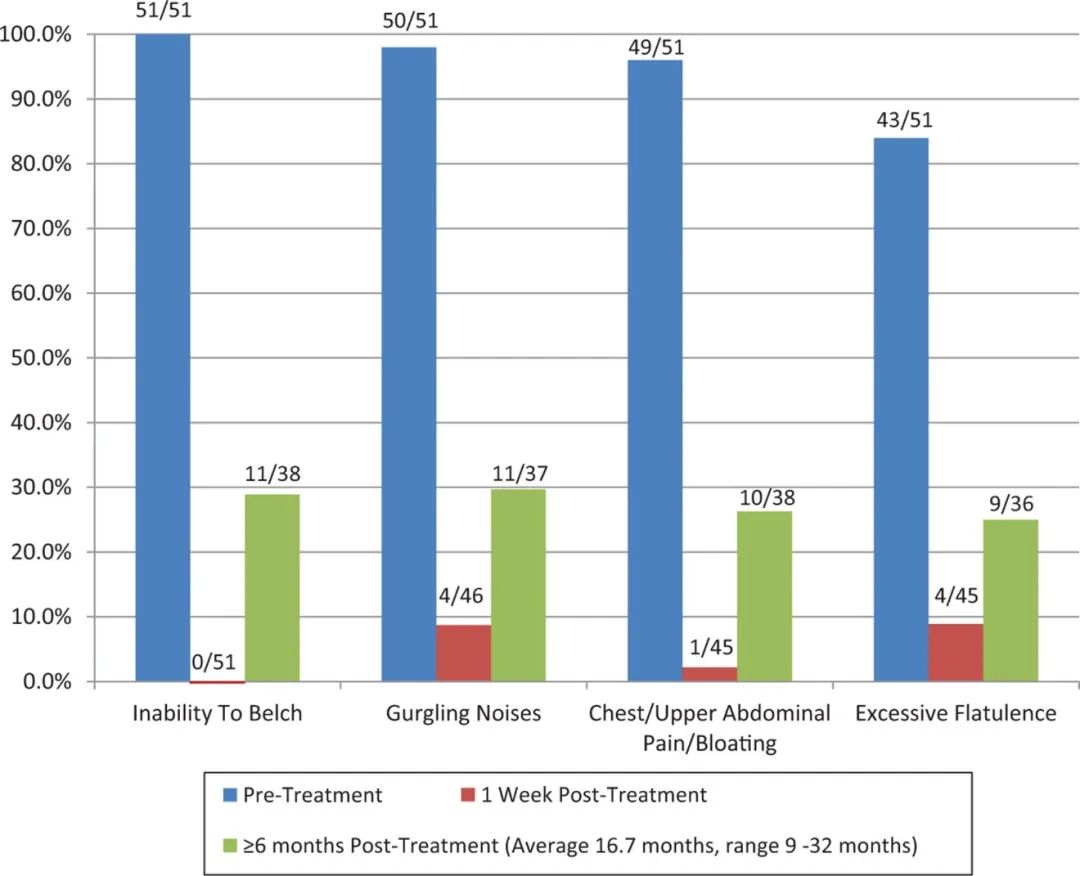
A 2019 literature review indicates that the inability to burp is the most common symptom among R-CPD patients
Patients Drive Medical Progress
In recent years, an increasing number of patients with Inability to Burp Syndrome have been sharing their experiences on social media, bringing the disease into the medical spotlight.
Last year, at the National Laryngology and Voice Annual Conference held in our country, Li Jinrang and others from the Sixth Medical Center of the People's Liberation Army Hospital first elaborated on the disease in the field of otolaryngology. Li Jinrang stated that for gastroenterologists unfamiliar with the disease, almost everyone would consider it as "indigestion, gastrointestinal dysfunction," and so on.
In fact, most doctors first learn about the disease from patients, with some patients even bringing medical papers and other disease materials to the clinic to "educate" doctors, hoping for diagnosis and treatment.
"Medical Circle" synthesized the content of the topic discussions and found that 98% of patients reported that the disease began in their childhood, but during medical visits, their electronic fiber nasal pharyngoscopy, endoscopic swallowing function, and electronic gastroscopy examination results were all normal.
To date, the pathological and physiological characteristics of Inability to Burp Syndrome are still unclear, and diagnosis is mainly based on symptoms such as inability to burp and severe abdominal bloating. Some scholars have attempted to use high-resolution esophageal manometry to assist in diagnosis, but the results are still not significant.
"As a doctor, I didn't understand at first why, with a normal cricopharyngeal muscle structure and the ability to swallow food, one couldn't burp," admitted Michael Kim, an American otolaryngologist in his fifties, stating that doctors' cognitive limitations might conceal the true incidence of the disease.
With no clinical help available, many patients choose self-help and mutual aid. They share their self-treatment secrets, which have been learned through long-term illness. In addition to diet recipes, Amy has also done burping training, sometimes successfully burping.
The one who first found an effective treatment plan is the "father of Inability to Burp Syndrome"—Robert Bastian. He injects a small dose of botulinum toxin into the patient's cricopharyngeal muscle to block the release of acetylcholine from nerve endings, cutting off the signal transmission between nerves and muscles, allowing the high-tension muscles to relax.
In fact, this is a medical breakthrough case initiated and driven by patients.
At the end of 2015, 25-year-old Daryl Moody heard Bastian's keynote report online about the use of botulinum toxin in swallowing disorders. Moody took the initiative to seek help, believing that since it's a cricopharyngeal muscle issue, if botulinum toxin can treat the inability to eat, it can also treat the inability to burp.
In 2019, Bastian introduced the treatment results of 51 patients in his first report on Inability to Burp Syndrome. After a single injection of 50U botulinum toxin, 50 people's excessive bloating, abdominal distension, and throat gurgling sounds were relieved. Among the 38 people who were followed up for at least 6 months after the injection, 11 relapsed. Some patients still responded well after being reinjected with botulinum toxin.
Treatment attempts also had adverse reactions, including mild reflux and transient swallowing difficulties, with most patients' symptoms disappearing a few days or weeks after the injection. Some people had more significant side effects, such as uncontrollably burping when laughing.
After a series of clinical explorations, some "pioneers" who completed the treatment began to share their experiences online, guiding everyone on how to burp skillfully and controllably to alleviate treatment side effects.
So far, the number of people participating in the "Inability to Burp" topic discussion has exceeded 30,000. The "Journal of Clinical Medicine" stated in its January 2024 issue, "Patients are continuously updating the list, introducing doctors who have treated Inability to Burp Syndrome. Moreover, an increasing number of patients are conveying online information to doctors, helping more professionals to raise awareness."
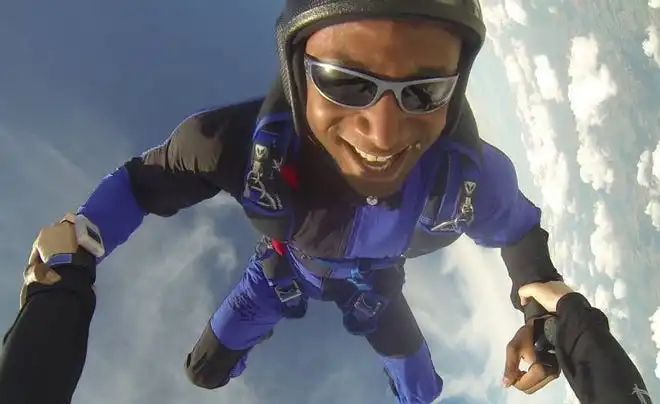
Daryl Moody is the first documented patient to receive Botox treatment for Inability to Burp Syndrome. Due to severe bloating, he had to give up his skydiving hobby. Image source/KFF
Chinese Doctors Can Treat It Too
After the treatment breakthrough, patient Xiao Zhang received a single botulinum toxin injection treatment at the Rehabilitation Department of the Third Affiliated Hospital of Sun Yat-sen University. Subsequently, the medical team wrote a case report specifically for this. This is also the only case of Inability to Burp Syndrome treatment published by Chinese scholars in international journals found in public searches.
In 2023, a Chinese netizen posted online that they followed the aforementioned paper to seek medical treatment and also received effective treatment at the same hospital. Regarding whether the rehabilitation department can solve the problem of swallowing disorders, both Wu Shaoling and Wu Yacen stated, "The specialty is very relevant," because the core concept of rehabilitation medicine lies in compensating for and rebuilding the functional deficiencies of patients.
At the end of 2017, the Rehabilitation Medicine Department of Sun Yat-sen Memorial Hospital, Sun Yat-sen University, where Wu Shaoling is located, took the lead in initiating swallowing disorder rehabilitation treatment in China. The main intervention measure in the early stage was balloon dilation, aiming to mechanically expand and stretch the cricopharyngeal muscle repeatedly through changes in the diameter of the balloon, ultimately rebuilding and restoring the brain's regulatory effect on the swallowing center.
Some patients have a sensitive pharynx and cannot tolerate the balloon, so the department has also successively carried out botulinum toxin injection, electrical stimulation, sensory stimulation, swallowing manual training, etc., for the cricopharyngeal muscle.
According to Wu Yacen, "Botulinum toxin injection is a common method in the rehabilitation department, and it can be used for torticollis, intractable pain, high muscle tone, etc., we use it more than the aesthetic department."
However, injecting botulinum toxin into the cricopharyngeal muscle is not easy. Wu Yacen explained, "The cricopharyngeal muscle is located deep in the neck, at the entrance of the esophagus, only 2 millimeters thick, thin and small, with important nerves, blood vessels, and other distributions around it, and the injection needs to be very delicate."
To solve this problem, Wu Shaoling and the team have specifically studied precise positioning methods. Considering that the hospital's ultrasound-guided pain injection technology has been carried out for many years, they ultimately chose "percutaneous ultrasound-guided cricopharyngeal muscle botulinum toxin injection."
For difficult and complex patients, Wu Yacen also suggests doing "three-dimensional guidance," using percutaneous ultrasound combined with balloon dilation positioning, supplemented by electromyography guidance. If botulinum toxin is ineffective, esophageal speech and other rehabilitation training can also help these patients burp.
Even so, there are still many mysteries about Inability to Burp Syndrome. The "Journal of Clinical Medicine" pointed out that it is currently unclear which patients need myotomy and why the surgical treatment effects are uneven. At the same time, there is a lack of prospective studies on the dosage of botulinum toxin injection, leading to varying clinical dosages.

