


At the 2026 American Society of Clinical Oncology (ASCO) Annual Meeting, Prof. Wan Rui of the Cancer Hospital, Chinese Academy of Medical Sciences, presented—on behalf of Prof. Wang Jie's team—pooled results from the Phase I (HLX43-FIH101) and global Phase II (HLX43-NSCLC201) studies of HLX43, a novel anti-PD-L1 antibody-drug conjugate (ADC), in patients with advanced non-small cell lung cancer (NSCLC). The data demonstrated objective response rates (ORR) of 33.3%–36.8% in patients who had failed multiple prior lines of therapy, with responses unaffected by EGFR mutation status or PD-L1 expression level, offering a new treatment option for later-line NSCLC.
Fig. 1. Prof. Wan Rui presenting at the conference.
Structural Advantages Underpin HLX43's Broad-Spectrum Antitumor Potential
Compared with conventional targeted or immunotherapy agents, ADCs combine precision targeting with potent cytotoxicity, delivering toxic payloads directly to tumor cells and effectively addressing the drug-resistance challenges faced by patients with solid tumors. ADCs have emerged as a major new therapeutic direction for drug-resistant solid tumors.
HLX43, a next-generation PD-L1-targeting ADC developed in China, features a differentiated structural design: a high-affinity, self-internalizing PD-L1 monoclonal antibody as the targeting vehicle, coupled with a stability-optimized tripeptide cleavable linker and a potent tubulin inhibitor as the cytotoxic payload. The drug-to-antibody ratio (DAR) is 8, ensuring high drug loading and substantial antitumor potential.
Prof. Wan Rui noted that HLX43 relies on tumor microenvironment-specific linker activation to release its payload selectively at tumor sites while also inducing bystander killing, thereby enhancing antitumor activity while reducing systemic toxicity. The drug had previously demonstrated promising antitumor activity and manageable safety in multiple advanced solid tumors including cervical cancer, nasopharyngeal carcinoma, and esophageal squamous cell carcinoma. Based on these findings, Prof. Wang Jie's team initiated a large-scale clinical trial to further explore HLX43's clinical value in NSCLC.
Pooled I/II Phase Data: Broad Benefit Across Heavily Pretreated Populations
The current publication presents pooled data from the HLX43-FIH101 (Phase I) and HLX43-NSCLC201 (global Phase II) studies. The trial employed a multi-dose escalation design with intravenous administration every three weeks at doses ranging from 1.0 mg/kg to 4.0 mg/kg. Phase Ia enrolled solid tumor patients; Phase Ib enrolled Chinese patients with locally advanced NSCLC; the Phase II component was a global multicenter randomized controlled study.
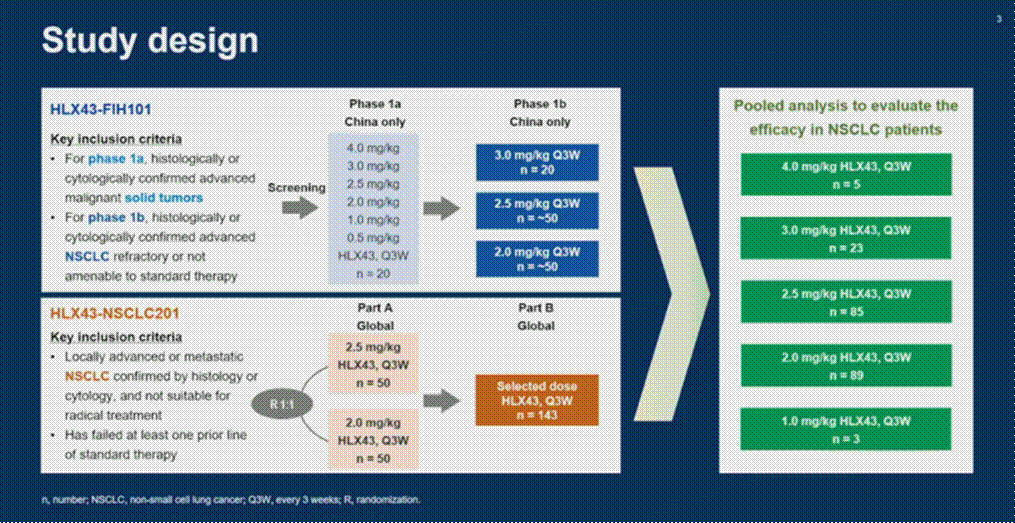
Fig. 2. Study design.
As of February 28, 2026, 205 patients with advanced NSCLC were enrolled, with a median follow-up of 7.5 months. Patients were enrolled across the United States, Australia, and China, providing broad ethnic diversity and high reference value.
At baseline, the median age was 60 years; 46.3% had squamous cell carcinoma and 53.7% had non-squamous histology; 41.5% had a tumor proportion score (TPS) <1%, indicating low or negative PD-L1 expression in nearly half the patients. All participants had received a median of 2 prior lines of therapy; 99.0% had received prior platinum-based chemotherapy and 82.0% had received prior immunotherapy—a population representative of heavily pretreated, multidrug-resistant patients.
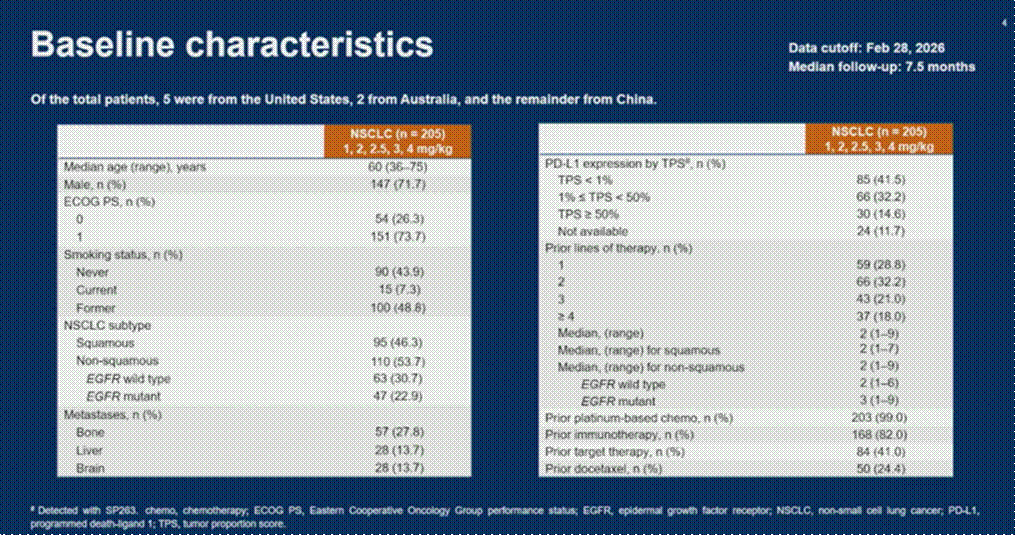
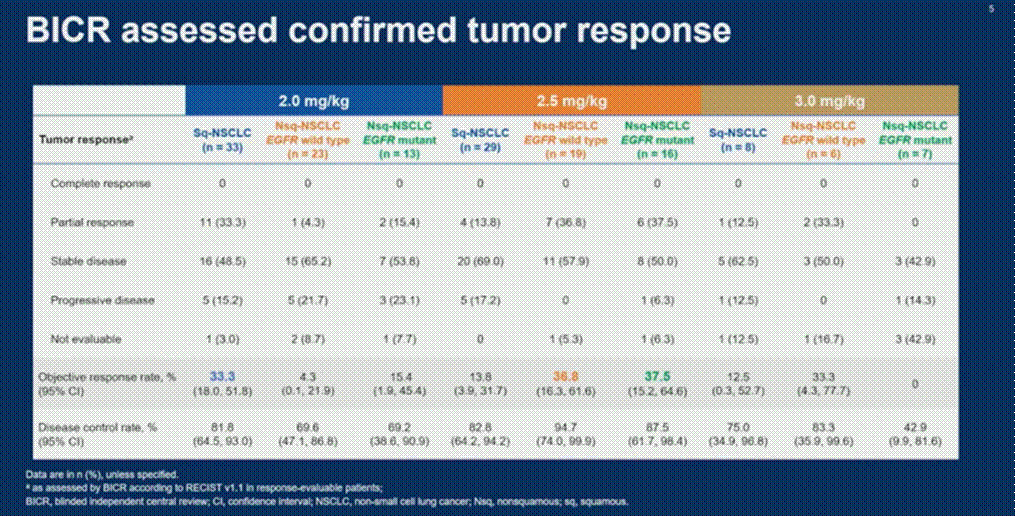
Fig. 3. Baseline clinical characteristics of enrolled patients.
Biomarker-Independent Efficacy: Significant Benefit Across All Subgroups
Based on blinded independent central review (BICR) assessment, HLX43 demonstrated robust antitumor activity across all subgroups, with efficacy unaffected by tumor histology, EGFR mutation status, PD-L1 expression level, or brain metastasis status.
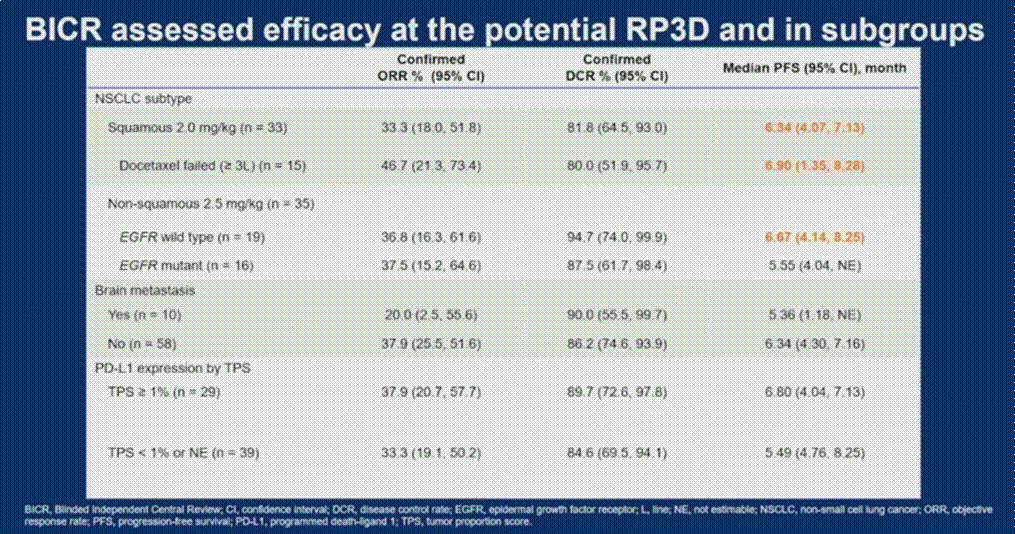
Fig. 4. Efficacy summary across key subgroups at RP3D and PFS data.
At the recommended Phase III dose (RP3D), the 2.0 mg/kg cohort in squamous cell carcinoma patients achieved an ORR of 33.3% with a median PFS (mPFS) of 6.34 months. In the high-risk subgroup of third-line and beyond squamous NSCLC patients who had failed docetaxel, the ORR rose to 46.7% with an mPFS of 6.90 months, surpassing the efficacy ceiling of later-line chemotherapy.
In the non-squamous population at the 2.5 mg/kg dose, results were equally impressive: ORR was 36.8% in EGFR wild-type patients and 37.5% in EGFR-mutant patients, with mPFS of 6.6 and 5.55 months, respectively. Notably, even in patients with low PD-L1 expression (TPS <1%) or brain metastases—who carry a poor prognosis—HLX43 still achieved an ORR exceeding 30%, conclusively overcoming the constraint of biomarker-based patient selection in later-line lung cancer treatment.
Manageable Safety Profile: Hematologic Toxicities Predominate
Safety is a critical factor limiting the broader clinical adoption of ADCs. This study provided comprehensive adverse event data across all dose levels, confirming that HLX43's safety profile is compatible with prolonged later-line use.
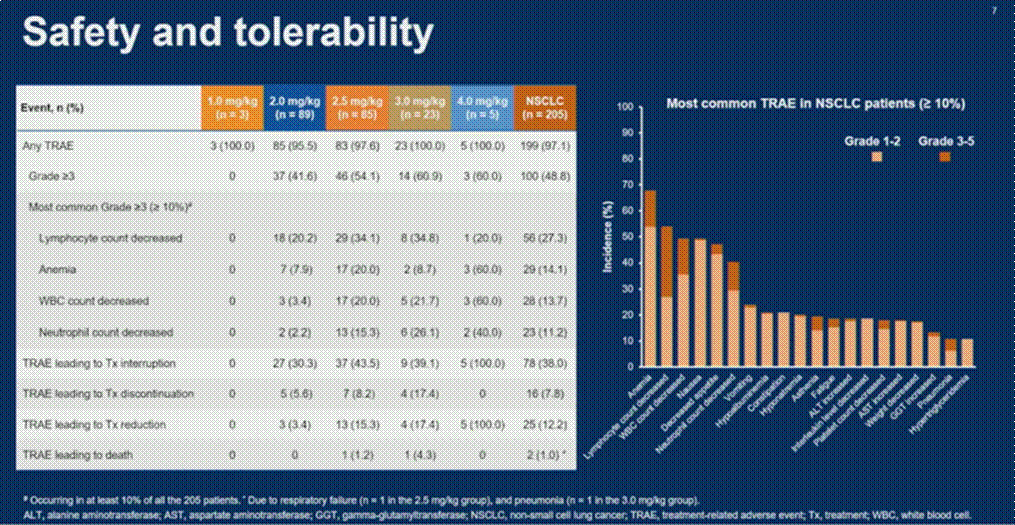
Fig. 5. Safety data summary.
Overall, the incidence of grade ≥3 treatment-related adverse events (TRAEs) was 48.8%. Predominant toxicities were hematologic, including decreased lymphocyte count, anemia, decreased white blood cell count, and decreased neutrophil count—all clinically predictable and manageable adverse events.
Regarding treatment management, 38.0% of patients required dose interruptions due to adverse events, 12.2% required dose reductions, and only 7.8% permanently discontinued treatment, reflecting good drug tolerability. Throughout the study, only 2 patients died due to TRAEs (respiratory failure and severe pneumonia), representing a treatment-related mortality rate of 1.0%—favorable compared with similar later-line therapies.
Conclusion
In her closing remarks, Prof. Wan Rui summarized: 'Against the backdrop of clinical stagnation in multidrug-resistant advanced NSCLC, HLX43, with its biomarker-agnostic broad-spectrum antitumor efficacy, differentiated structural design, and manageable safety profile, addresses an unmet need in patients with low PD-L1 expression and multidrug-resistant lung cancer.'
The global Phase II/III clinical trial of HLX43 in advanced squamous NSCLC has been formally initiated, and further data are eagerly awaited. As research advances, HLX43 has the potential to rewrite the later-line treatment guidelines for NSCLC and become a preferred therapeutic option for patients with multidrug-resistant, refractory disease.

