


Hypereosinophilic syndrome (HES) is a highly heterogeneous group of disorders defined by marked eosinophilia and eosinophil (EOS)-mediated clinical manifestations. Disease severity varies widely, often involving multiple organ systems; being a rare disease, diagnosis and treatment are frequently significantly delayed. Because EOS-driven inflammation and end-organ damage are central to HES pathophysiology, therapies that precisely and efficiently reduce EOS levels can provide patients with meaningful clinical benefit.
Benralizumab is a humanized monoclonal antibody that binds to the interleukin (IL)-5 receptor α subunit (IL-5Rα) expressed on the surface of EOS and, via antibody-dependent cell-mediated cytotoxicity (ADCC), rapidly and efficiently depletes EOS in peripheral blood, bone marrow, airway sputum, skin, esophagus, and gastrointestinal tissue. A phase 2 study in FIP1L1::PDGFRA (F/P fusion gene)-negative HES patients confirmed that after 12 weeks of treatment, 90% of patients achieved a ≥50% reduction in absolute eosinophil count (AEC) from baseline, tissue EOS infiltration improved in severely affected patients, and the response was durable. On March 31, 2026, the world-leading medical journal Nature Medicine published the results of the phase 3 NATRON clinical trial, which systematically evaluated the efficacy and safety of benralizumab versus placebo in FIP1L1::PDGFRA-negative HES patients.
Dramatic Reduction in Flares, Efficacy Confirmed: Benralizumab Reduces HES Flare Risk by 65%
NATRON was a 24-week, multicenter, randomized, double-blind, placebo-controlled phase 3 trial with an open-label extension period. Eligible patients were aged ≥12 years, FIP1L1::PDGFRA-negative, had AEC ≥1,000/μL, a recent history of HES flares, and were on a stable treatment regimen. During the double-blind period, patients were randomized to receive benralizumab 30 mg every 4 weeks (n=67) or placebo (n=66).
A total of 133 patients received at least one dose of study drug: 67 in the benralizumab arm (30 mg every 4 weeks) and 66 in the placebo arm.
Baseline characteristics were well balanced between groups and consistent with the target HES population. Among enrolled patients, 75.2% had idiopathic HES (100/133) and 12.0% had lymphocytic-variant HES (16/133). The median time from diagnosis to enrollment was 1.9 years, and the median number of flares in the 12 months prior to enrollment was 2. At baseline (after the protocol-specified oral corticosteroid [OCS] responsiveness assessment and prior to randomization), the median AEC was 1,600/μL, and 76.7% of patients (102/133) were receiving systemic OCS as background therapy at enrollment.
Primary Endpoint
An HES flare was defined as clinical signs/symptoms or laboratory abnormalities leading to an increase in OCS to a prednisone-equivalent dose of ≥10 mg/day for ≥2 days; or the addition or initiation of cytotoxic drugs and/or immunosuppressants; or hospitalization. Thirteen patients (19.4%) in the benralizumab group experienced an HES flare versus 28 (42.4%) in the placebo group. Compared with placebo, benralizumab significantly delayed the time to first HES flare, reducing the risk of flare by 65% (HR 0.35, 95% CI: 0.18–0.69; P=0.0024).
To assess the effect of background therapy adjustments during the double-blind period on time to first flare, a sensitivity analysis was performed. Censoring at the time of potential relevant treatment adjustments in 9 patients (5 in the benralizumab group, 4 in the placebo group) yielded results consistent with the primary analysis. Furthermore, the treatment benefit of benralizumab over placebo was consistent across all pre-specified subgroups, all favoring benralizumab.
Key Secondary Endpoints
At week 24, the proportion of patients with an HES flare or withdrawal from the study was 22.4% (15/67) in the benralizumab group versus 45.5% (30/66) in the placebo group. Compared with placebo, benralizumab significantly reduced the risk of flare or withdrawal by 69% (OR 0.31, 95% CI: 0.14–0.69; P=0.0033), with a 52% relative reduction in the proportion of patients with a flare (RR 0.48, 95% CI: 0.29–0.80; P=0.003).
The annual HES flare rate was 0.41 per year in the benralizumab group versus 1.23 per year in the placebo group, representing a 66% reduction (RR 0.34, 95% CI: 0.18–0.63; P=0.0008).
At week 24, the least-squares (LS) mean change from baseline in PROMIS Fatigue score was −8.6 points (95% CI: −10.6 to −6.6) in the benralizumab group versus −3.9 points (95% CI: −6.0 to −1.8) in the placebo group; the LS mean difference between groups was −4.72 (95% CI: −7.64 to −1.80; P=0.0017). This difference was already apparent at the first assessment at week 4, indicating that benralizumab rapidly and durably improves fatigue symptoms.
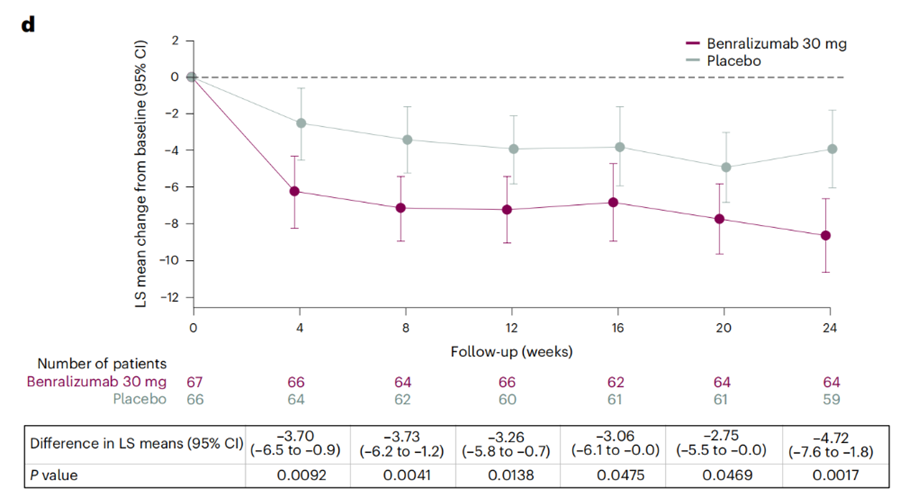
Figure 1. PROMIS Fatigue Scores in Both Groups
Other Secondary Endpoints
The proportion of patients with hematologic relapse or withdrawal was only 9.0% (6/67) in the benralizumab group versus 63.6% (42/66) in the placebo group (OR 0.05, 95% CI: 0.02–0.13; P<0.0001). Over 24 weeks, 91.0% of patients (61/67) in the benralizumab group maintained AEC <500/μL compared with only 12.1% (8/66) in the placebo group (OR 87.87, 95% CI: 26.09–295.97; P<0.0001).
During the double-blind period, the proportion of patients requiring an increase in corticosteroid dose was also lower in the benralizumab group: 25.4% (17/67) versus 48.5% (32/66) in the placebo group (OR 0.35, 95% CI: 0.16–0.73; P=0.005). Cumulative OCS exposure was likewise lower in the benralizumab group, with an LS mean difference of −344.9 mg (95% CI: −637.6 to −52.3; P=0.0213).
After the protocol-specified OCS responsiveness assessment, blood EOS levels in both groups were reduced at randomization. Notably, following treatment, blood EOS in the benralizumab group were rapidly and efficiently suppressed and remained consistently low, whereas blood EOS levels in the placebo group rebounded and were higher than those in the benralizumab group throughout the double-blind period.
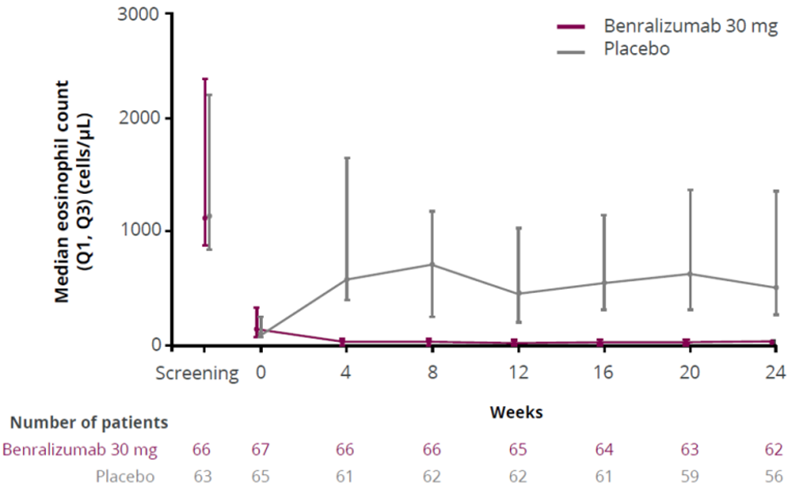
Figure 7. Rapid Reduction in Blood EOS in the Benralizumab Group
Well Tolerated: Safety Profile of Benralizumab Consistent with Known Data
During the double-blind treatment period, the proportion of patients experiencing adverse events was similar between the benralizumab group (64.2%; 43/67) and the placebo group (66.7%; 44/66). The most common adverse events were headache (16.4% vs. 7.6%), upper respiratory tract infection (7.5% vs. 7.6%), and COVID-19 (6.0% vs. 6.1%). Five patients in each group experienced serious adverse events, none of which were considered related to the study drug. Overall, the safety profile of benralizumab was consistent with its known data and demonstrated a favorable safety profile in adolescent patients as well.

